



Pulling down buildings is never the cleanest of jobs.
In one of Dubai's oldest communities, however, there are complaints that unwelcome visitors have slithered in and taken up residence as demolition crews go to work.
Snakes have been spotted in increasing numbers, some say.
Others reported rats around vacant buildings and debris on the streets as air conditioning and kitchen and bathroom fittings are ripped out.
Jebel Ali Village resident
Demolition work has started in Jebel Ali Village, where about 290 homes dating to the 1970s will be replaced with town houses and luxury villas.
As part of the redevelopment plans, residents of the Nakheel-owned community were served a 12-month notice to vacate last year.
While many tenants chose to sign tenancy contracts which expire in October, they said the construction work and a rise in pests make their living situation difficult.
“Quite frankly, it’s awful but it’s going to get much worse,” said Emma Copson, a British resident who has lived in the villas since 2020.
“[Nakheel] did promise us that demolition work would not start until after [all the tenants] had moved, but houses near Spinneys have already been torn down.
“One of the houses on our road recently became vacant and, within a day, there was a truck outside the front door and men were ripping out the AC units, sinks and toilets.”
Snakes spotted by tenants

Nader Elias said: “Because of the construction and demolition, there is a lot of disruption, a lack of security and properties around us have been prepared for demolition.
“We have started to see more snakes — they appeared inside our house twice — and the whole area has become dusty and [messy] because of the demolition.”
Mr Elias said he contacted the developer several times with his complaints but little has been done to resolve the issues.
British resident Euan Megson moved out of the area two weeks ago after living in his villa for seven years.
He said the area has gone “downhill so quickly”, which is why they decided to move out early.
“It’s really quite sad," he said.
“There's palm trees that are just dying. They've stripped empty villas of AC units, boilers, that type of stuff, and they are storing them in other vacant villas that still have windows and doors attached.
“There’s also hardware left behind as an eyesore for residents.
“None of this was supposed to start until the last person had moved out of the village [later this year].”
Mr Megson, who runs a communications firm in Dubai, added: “It has been quite emotional for residents who have lived here for years and it was hard to see the first demolition work, which started prematurely.”
After sending a complaint by email in March, Mr Megson said Nakheel confirmed that three villas were about to be demolished.
In their response on March 28, they said all required permits were obtained from the enforcing authority, along with formal inspection plans.
“The work will be carried out in a way which ensures safe options and compliance with all relevant legislation and reflects safety risk assessments which have been carried out and mitigation plans for this type of activity,” the statement read.
The National contacted Nakheel but they declined to comment.
Originally built for the British and Dutch staff at the nearby Jebel Ali Port in the mid 1970s, over the years the village has become popular with people from other nationalities, too.
As part of redevelopment plans released by Nakheel in March, three- and four-bedroom town houses and large villas will be part of a new gated community.
-

Jebel Ali Village will be transformed into a gated, hillside collection of luxury villas set among green spaces. Photo: Nakheel -

Houses in the new Jebel Ali Village will have four or five bedrooms. Photo: Nakheel -
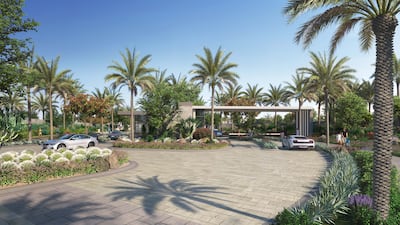
Nakheel say the new Jebel Ali Village development will be an upgrade on the old villas. Photo: Nakheel -

Onsite amenities will include a mosque, bike trails, jogging tracks, cycle paths, pools, parks and sports courts. -

A rendering of the new style of houses that will be built in the new Jebel Ali Village. Photo: Nakheel -
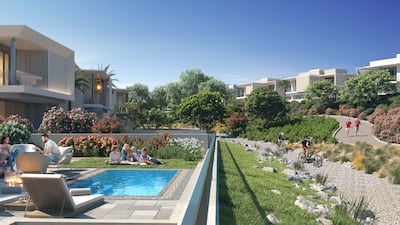
The first phase of four and five-bedroom villas is on sale from November 7. Photo: Nakheel



