

Read the latest updates on the Hajj pilgrimage here
It has been a long road to Hajj for Khaled Ibrahim as he prepares to finally follow in his family's footsteps.
The Emirati father of three has shared the joy of his eight brothers and three sisters as they embarked on the spiritual journey in previous years.
Their experiences only fuelled his desire to complete one of the five pillars of Islam himself. Now, his own date with destiny is only days away.
Mr Ibrahim, 31, will join thousands of people travelling from the UAE to Saudi Arabia on Saturday, all of whom will be taking part in Hajj for the first time.
“Watching my parents and siblings all go to Hajj and celebrating their return was great,” he said.
“We would all visit them as soon as they returned and have a feast but I always longed to go myself and secretly envied them. [However], something always came up.
“I got married then we had children and there was the [coronavirus] pandemic. This year, it is finally my turn to go with my wife and, hopefully, in later years, it will be my children’s time to go.”
Pilgrims return in greater numbers
Saudi Arabia will this year permit a million pilgrims to perform Hajj after greatly reducing numbers over the past two years because of the pandemic.
Only 1,000 pilgrims from within the kingdom were allowed to participate in 2020. The number was raised to 60,000 last year, with participants chosen through a lottery for fully vaccinated citizens and residents.
The quota for this year's pilgrimage, which will take place over five days, is less than half of the 2.5 million people who performed Hajj in 2019.
-
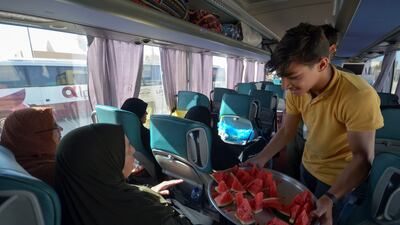
Volunteer Abdulrahman al Maani distributes watermelon slices to Hajj pilgrims leaving for Makkah, in Maan, Jordan. Reuters -
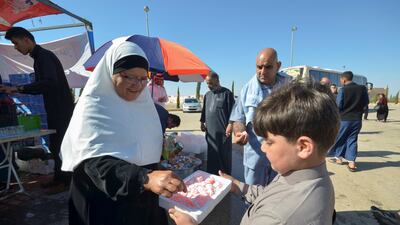
A boy offers sweets to Hajj pilgrims leaving for Makkah, in Maan, Jordan. Reuters -
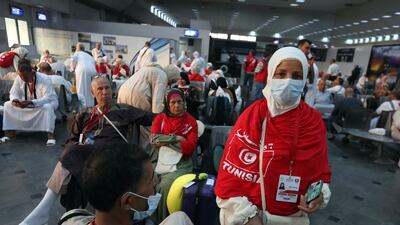
Tunisian Muslims travel to participate in Hajj in Makkah. EPA -
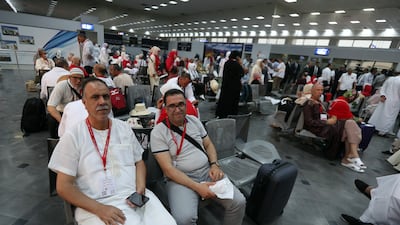
This year’s quota for Tunisians for the pilgrimage is 4,792, the country’s Minister of Religious Affairs Ibrahim Chaibi said. EPA -

Tunisian President Kais Saied greets some of those heading for Makkah. EPA -
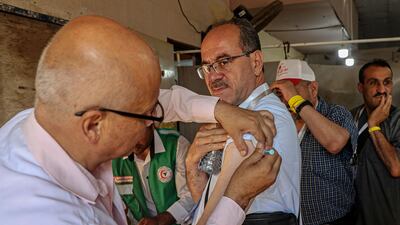
A Palestinian Muslim pilgrim receives a Covid-19 vaccine dose at the Rafah border crossing with Egypt as they head to Saudi Arabia for the annual Hajj pilgrimage. AFP -
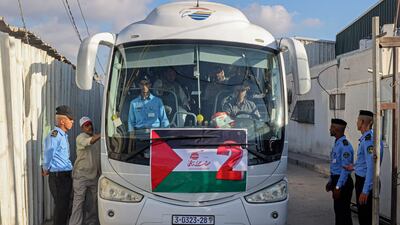
A bus carrying Palestinian Muslim pilgrims arrives at the Rafah border crossing. The Hajj is the largest annual pilgrimage in the world. AFP -

The Hajj pilgrimage is an Islamic religious duty that must be carried out at least once in the lifetime by every able-bodied Muslim who can afford to do so. AFP -

Millions of Muslims travel every year to Saudi Arabia to participate in the Hajj, although this was not the case over the past two years due to the coronavirus pandemic. AFP -
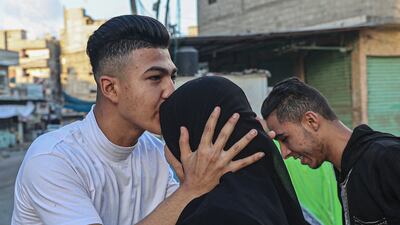
This pilgrim receives best wishes from her loved one before embarking on the journey to Makkah. AFP -
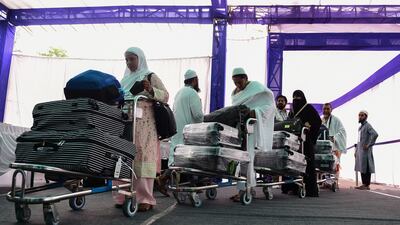
Muslims devotees bound to Makkah for the Hajj pilgrimage arrive at the airport in Ahmedabad, India. AFP -
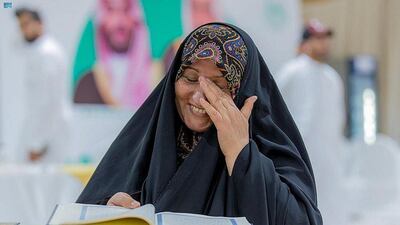
An Iraqi pilgrim at Jdeidet Arar port in northern Saudi Arabia. The port provides services to those performing Hajj. SPA -
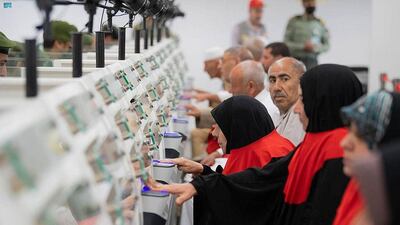
Members of the third group of Iraqi pilgrims arrive at the port. SPA -
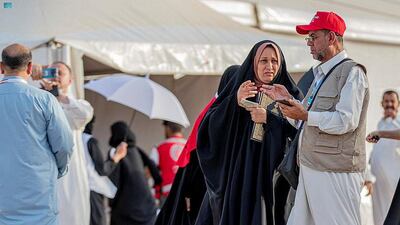
More than 4,000 pilgrims from Iraq have passed through the port. SPA -
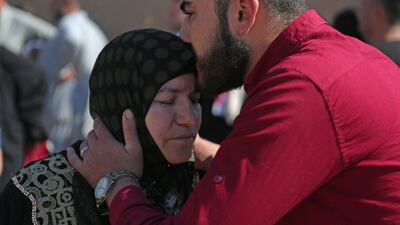
A Syrian pilgrim prepares to board a bus at the Bab Al Hawa border crossing with Turkey. AFP -
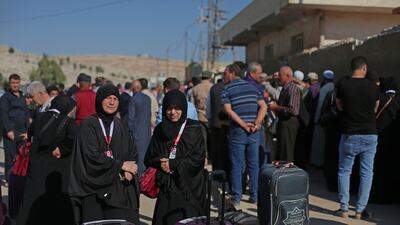
Syrians gather at the border crossing as they prepare to travel to Makkah. AFP -

All Muslims who are able to must perform Hajj during their lives. AFP -
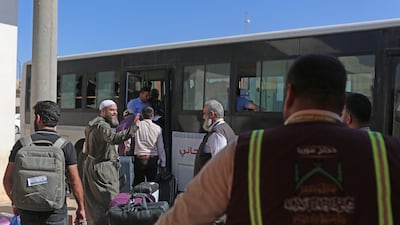
Hajj pilgrims begin their journey from the Bab Al Hawa crossing to Saudi Arabia. AFP -

More than 10,000 Syrians will perform the pilgrimage this year. AFP


With numbers still relatively limited, and against the backdrop of the pandemic, the UAE has set out a number of measures for those taking part.
Pilgrims must be under 65, must have never performed Hajj previously, must be fully vaccinated and should have received a booster shot to be able to travel to Saudi Arabia, the National Emergency Crisis and Disasters Management Authority and the General Authority of Islamic Affairs and Endowments said last month.
They must also present a negative PCR test result conducted within 72 hours of travelling to the kingdom.
Dr Nazura Siddiqi, an Abu Dhabi resident, will travel to Saudi Arabia from India with her son.
She is confident in the Covid-19 safety measures in place as people take the chance to travel to Makkah in larger numbers once more.
“We have a lot of faith and I have been trying for two years to go to Hajj,” said Dr Siddiqi, a specialist obstetrician gynaecologist.
“I do believe that if we were meant to get sick, then we will, regardless of where we are. But there will be many safety precautions in place that I am sure that we will be safe.”

