


The online trade in wildlife and endangered animals is flourishing with social media giant Facebook removing fewer than half of illegal adverts, a recent investigation found.
In two days, online researchers at global campaign group Avaaz identified 129 pieces of potentially harmful wildlife trafficking content.
Verified content included posts selling or seeking cheetahs, monkeys, pangolins and pangolin scales, lion cubs, elephant tusks, and rhino horn.
Once posts selling wildlife were reported to Facebook just 43 per cent were removed, Avaaz said.
Researchers found Facebook algorithms pushed users towards other harmful illegal wildlife trafficking content, aiding the multibillion dollar global industry.
Facebook’s parent company Meta said the research was too small a data set and only considered posts in three languages.
Endangered species found for sale by Avaaz researchers included baby tigers, African grey parrots and the world’s smallest monkey, the pygmy marmoset — all listed under the Convention on International Trade in Endangered Species of Wild Fauna and Flora (CITES).
“Avaaz’s research shows that, on Facebook, wildlife trafficking takes place in broad daylight,” said Ruth Delbaere, senior legal campaigner at Avaaz.
“Traffickers do not shy away from listing their goods for sale in public groups, nor from including their phone numbers in their posts.
“By insufficiently enforcing its own policies, Facebook is enabling an international trade that has devastating effects on biodiversity and the stability of natural ecosystems.”
Investigators said Facebook users were sucked into a rabbit hole of international wildlife trafficking, with more than half (54 per cent) of the recommendations made by algorithms directing people towards other wildlife adverts and related content.
In the weeks after collecting posts containing potentially harmful wildlife trafficking content, Facebook made 95 wildlife-focused recommendations to Avaaz researchers through notifications and Facebook’s “suggested groups” feature.
Additionally, 76 per cent (72) of recommendations directed researchers to groups with posts seeking to buy or sell live animals, most in violation of Facebook’s own policies.
Facebook committed to addressing issue
Facebook said the Azaaz research was a snapshot of the millions of posts accumulated daily and it was working hard to implement measures to stop online wildlife sales.
“This report is based on a questionable methodology and a very small sample size,” said a representative for Meta.
“The results don’t reflect the extensive work we've done to combat wildlife trafficking on Facebook.
“We’ve pioneered technology to help us find and remove this content; launched pop-up alerts to discourage people from participating in this trade; and cofounded the Coalition to End Wildlife Trafficking Online with experts like WWF, to share information across our industry.
“This is an adversarial space though, and the people behind this awful activity are persistent and constantly evolving their tactics to try and evade these efforts.”
Meta said its work to combat wildlife trafficking included reviewing policy and to educate users, content moderators and human reviewers.
If a user searches for a protected species combined with a commercial activity such as “tiger + buy,” a notification appears warning about Facebook policies and directs them towards wildlife educational sites.
Online coalition aims to pull down illegal advertising
In 2018, the World Wildlife Fund (WWF), Traffic, a wildlife trade monitoring network, and the International Fund for Animal Welfare launched the Global Coalition to End Wildlife Trafficking Online.
The initiative united technology, e-commerce, and social media companies in a bid to apply pressure on wildlife traffickers.
Facebook joined the coalition and made a commitment to reduce illegal online wildlife trade on its pages by 80 per cent by 2020.
Research published by the Alliance to Counter Crime Online (ACCO) in 2020 showed substantial wildlife trafficking activity continued on Facebook.
The group found 58 per cent of the Facebook pages or groups where wildlife was sold had the term “sale,” “sell” or “buy” in their title.
-
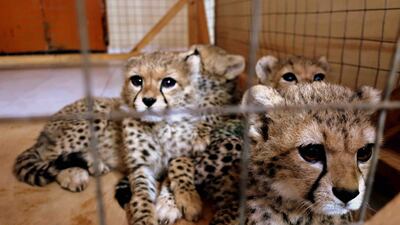
Four cubs confiscated by the Somaliland Ministry of Environment and Rural Development arrive at the CCF Safe House in Hargeisa. Photo: CCF -
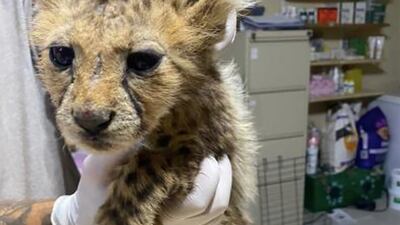
One of 10 cubs rescued by Somaliland Police. Photo: CCF -
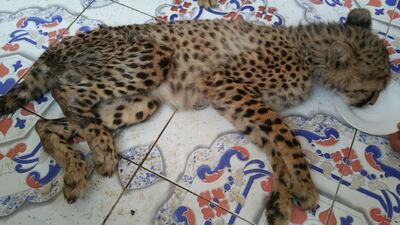
One of the six severely malnourished and dehydrated cubs confiscated from smugglers. The cub was so weak, it could not stand to drink but is now receiving proper veterinary care and nutrition. Photo: CCF -
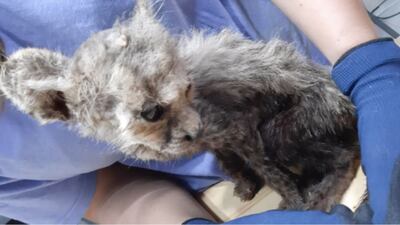
One of the cheetah cubs recovered from smugglers off the coast of Somaliland. Conservations believe the 12 animals were destined from the black market in the Arbian Peninsular. Photo: CCF -
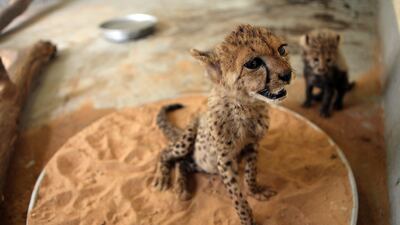
Despite a nationwide ban, exotic animals such as cheetah cubs continue to be sold on social media accounts. Sammy Dallal / The National -
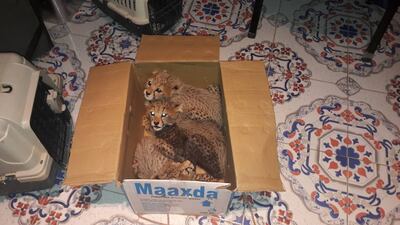
Conservationists in the Horn of Africa claim they are facing a poaching 'epidemic' as demand for cheetahs in the Gulf soars. Photo: CCF -

There are now fewer than 7,500 cheetahs in the wild. Photo: CCF -
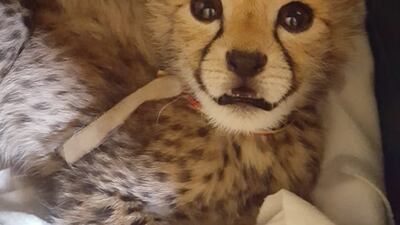
The Cheetah Conservation Fund says it is struggling to keep up with the rehabilitation of the animals as so many are being intercepted. Photo: CCF -
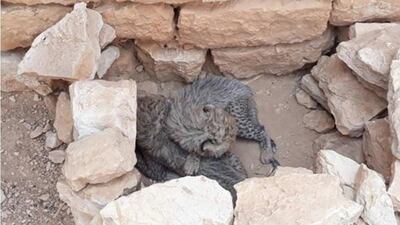
The Cheetah Conservation Fund is the global leader in the research and conservation of the animals. Photo: CCF -

Four cheetah cubs were rescued on the UAE-Saudi Arabia border, with two turned over to Al Ain Zoo by the Ministry of Environment and Climate Change. Reem Mohammed / The National


A 2016 ACCO investigation in partnership with the international Wildlife Justice Commission identified traffickers who sold $53.1 million worth of wildlife products, using Facebook and other platforms to connect with buyers.
“The great tragedy is that Facebook is sitting on an immense amount of data about the world's biggest wildlife criminals, but instead of using that data to help combat wildlife trafficking, their algorithms instead help criminals grow their business,” said Gretchen Peters, ACCO Executive Director.
Azaaz called on Facebook to expand its moderation efforts to detect illicit sales and policy violations, including in languages other than English.
It also advised restrictions were placed on search results when users combined endangered species terms with sale terms.
Between January and May 2021 in Indonesia and the Philippines, Facebook removed more than 1,900 Facebook Groups linked to wildlife trafficking.
International partnerships key to stopping crime gangs
In March the UAE announced a joint partnership with the UK to assist banks in spotting signs of payments linked to the illegal wildlife trade and online sales.
The guide included a list of red flags covering e-commerce, shipping, corruption, money laundering, client profiling and general transactions, and advice on how to act on suspicions.
Cheetah is one species most affected by online sales in recent years, although conservationists in East Africa reported a recent decline in the numbers trafficked for sale in the Middle East.
Dr Laurie Marker, executive director of the Cheetah Conservation Fund that has rescue centres in Namibia and Somaliland, said online market places fuelled demand.
“Social media helps drive the illegal wildlife trade, and it gives people the wrong impression,” she said.
“Cheetahs cubs are not good pets. They are wild animals, and they need to live in the wild.”

