



Latest: Abu Dhabi-Dubai passenger trains will transform UAE, says eco-traveller
Dubai is on course to make its ambitious urban master plan a reality by the year 2040, said a leading figure in the UAE transport sector.
Bernard Tabary, chief executive of Dubai Metro operator Keolis, said he was confident the plan would help transform the emirate into a global leader when it came to sustainable transport options.
The Dubai 2040 Urban Masterplan will divide the city into five key areas, which will have far-reaching implications for the future of transport in the emirate.
“The 2040 plan is a clear path forward and this city, and this country, have consistently shown its ambitions are not just dreams,” said Mr Tabary.
chief executive of Keolis
“If you take a look at where Dubai was just 15 years ago, it was nothing like it is now.
“I am confident it is going to happen.”
The urban transformation is set to play out against an explosion in Dubai’s population. The number of people living in the emirate is expected to grow by two million, meaning close to six million people are expected to call it home by the year 2040.
The city will be split into five urban areas. Deira and Bur Dubai will represent the emirate’s tradition and heritage; Downtown and Business Bay will symbolise the business and financial sector; Dubai Marina and JBR will serve as the hospitality and leisure centre of the city.
Two new zones are to be added – Expo 2020, which will offer affordable housing and will also be home to exhibitions and conferences, and Silicon Oasis, which has been earmarked as the new home of science and technology.
-
Al Rashidiya metro station at the southern end of Dubai's Red Line has been renamed Centrepoint, after the department store. -
The newly named Sobha Realty metro station on the Red Line. -
Al Jafiliya station has been renamed Max Fashion. -
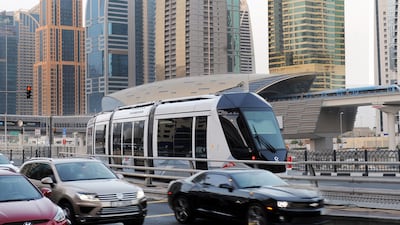
Dubai’s metro system consists of three lines – Red, Green and Route 2020. -
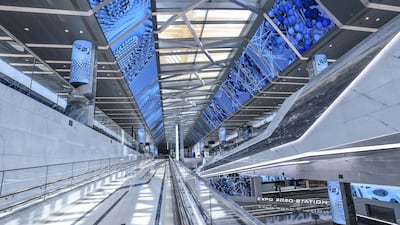
The Route 2020 stations – Jebel Ali, The Gardens, Discovery Gardens, Al Furjan, Jumeirah Golf Estates, Dubai Investment Park and Expo 2020 – are more futuristic than the original network. -
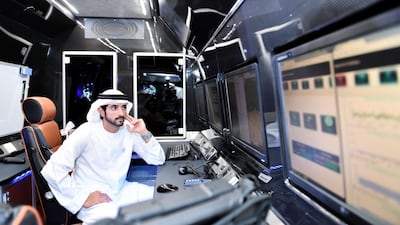
Sheikh Hamdan bin Mohammed, Crown Prince of Dubai, visits a monitoring suite for the transport network. -
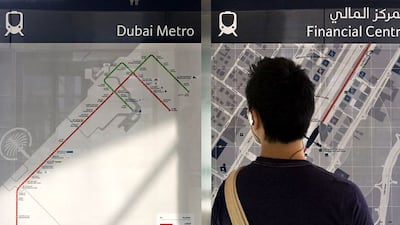
The Red Line starts at Centrepoint station and ends at UAE Exchange. The route has 29 stations – 24 elevated, four underground and one at ground level.


Mr Tabary was speaking on the sidelines of the opening day of the International Association of Public Transport (UITP) regional congress at Dubai World Trade Centre on Sunday.
One of the major challenges ahead is educating people and convincing them to swap their cars for public transport, he said.
“How do you move away from a world where some people live in households with two to three cars?” said Mr Tabary.
“It’s our job along with the Roads and Transport Authority (RTA) to convince people to take up public transport instead.”
One upside of the pandemic was people were more open to exploring alternative modes of transport.
“Public transport is essential to the attraction of living in any territory,” he said.
“The pandemic has seen an evolution in the patterns of mobility.
“There has been a significant rise in the number of people walking and using e-scooters for example.”
Many people who had to work from home due to the pandemic were reluctant to return to driving in gridlocked traffic during peak hours to reach the office, he said.
The inevitability that people needed to return to the office created opportunities for the public transport sector, according to Mr Tabary.
“People are eager to be together again,” he said.
“The opportunities for the public transport sector have evolved and we have to adjust to match that.”
He said the fact the congress was finally taking place in Dubai, after being postponed several times due to the pandemic, was further proof people were eager to meet in person to conduct business.
The transport industry in Dubai has no choice but to adapt to the ever-evolving needs of a growing population, said Mohammad Al Mulla, UITP chairman in the Mena region and RTA board member.
“There are plans for huge changes here and part of the reason for that is the number of people who want to live here,” he said.
“They want to come here because it’s one of the most secure cities in the world.
“Dubai is a global leader when it comes to delivering on what it has promised.”

