
A new vaccine from Chinese manufacturer Sinopharm CNBG has been approved for emergency use in the UAE.
The Ministry of Health and Prevention announced on Monday that a study had been carried out on the new “recombinant protein-based vaccine” in the UAE, and that it would be used as a booster for those who had previously received two doses of the inactive Sinopharm vaccine.
Recombinant protein vaccines target the spike protein that the virus uses to enter human cells.
The study showed improved immunity against the virus and was effective against variants.
The vaccine will be available to the public as a booster dose starting in January 2022 in further attempts to contain the spread of Covid-19.
The ministry also announced the new vaccine will be manufactured and distributed by Hayat Biotech, a joint venture between Sinopharm and G42.
Hayat-Vax is the locally-produced version of the inactive Sinopharm vaccine also made at the Hayat Biotech plant and is a key part of the UAE's strategy to support inoculation drives both at home and abroad.
Sinopharm's new booster shot is similar to Hayat-Vax in that it can be kept at normal fridge temperatures, making it easier to use in low-income countries than mRNA vaccines, which need ultra-cold storage.
The UAE recorded 1,732 new Covid-19 cases on Monday, bringing the total number of cumulative infections to 753,065.
One person died, taking the death toll to 2,159.
Another 608 people recuperated from the virus, raising the number of recoveries to 741,933.
The latest cases were identified as a result of the administration of an additional 325,097 PCR tests.
Daily case numbers have risen sharply this month, from less than 50 in early December.
But authorities have ramped up testing and introduced new rules to protect public health.
A look inside the UAE's Hayat-Vax production plant
-
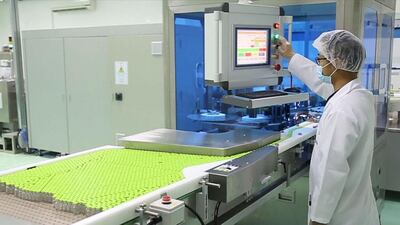
A technician oversees the production of the UAE's version of the Sinopharm vaccine - named Hayat-Vax - at drug maker Julphar's plant in Ras Al Khaimah. All photos are screengrabs of a video courtesy of G42 Healthcare / Julphar -
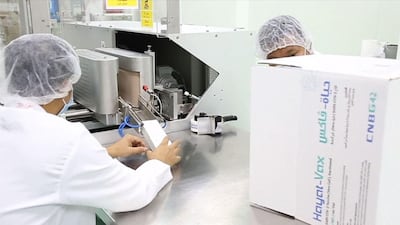
This video grab shows the Hayat-Vax being boxed up. Each packet contains one vial of the vaccine, which is identical to the Sinopharm vaccine that was made in Beijing and approved in December -
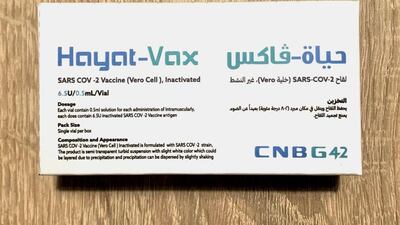
Hayat-Vax will be made in Ras Al Khaimah and later in a purpose-built facility in Abu Dhabi's Kizad industrial zone -
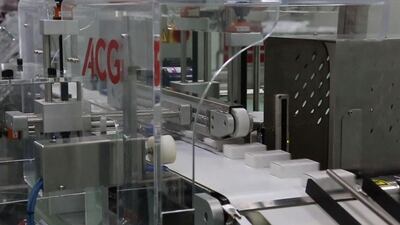
For now, production of Hayat-Vax will take place in Ras Al Khaimah's Julphar drug plant. It is capable of producing about two million doses per month -
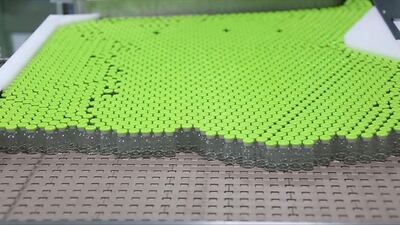
There is plans to build a dedicated vaccine plant in Abu Dhabi's Kizad industrial zone later in 2021 -
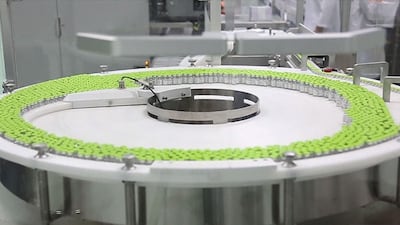
A video shows the production of Hayat-Vax in Ras Al Khaimah -

The deal to produce Sinopharm in the Emirates will allow the country to rapidly ship doses to countries, particularly in the developing world -
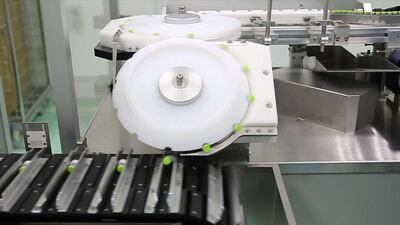
Sinopharm can be stored in a normal fridge, unlike other vaccines, meaning it is well-suited for use in the developing world
Jetour T1 specs
Engine: 2-litre turbocharged
Power: 254hp
Torque: 390Nm
Price: From Dh126,000
Available: Now
Living in...
This article is part of a guide on where to live in the UAE. Our reporters will profile some of the country’s most desirable districts, provide an estimate of rental prices and introduce you to some of the residents who call each area home.
Paatal Lok season two
Directors: Avinash Arun, Prosit Roy
Stars: Jaideep Ahlawat, Ishwak Singh, Lc Sekhose, Merenla Imsong
Rating: 4.5/5
Stan%20Lee
THE SPECS
Engine: 3.6-litre V6
Transmission: eight-speed automatic
Power: 285bhp
Torque: 353Nm
Price: TBA
On sale: Q2, 2020
While you're here
While you're here
Gavin Esler: Will 2021 be Boris Johnson's worst year?
Thomas Harding: US relations with Europe could change
Brodie Owen: How England’s new lockdown rules work
UAE%20Warriors%2045%20Results
Key recommendations
- Fewer criminals put behind bars and more to serve sentences in the community, with short sentences scrapped and many inmates released earlier.
- Greater use of curfews and exclusion zones to deliver tougher supervision than ever on criminals.
- Explore wider powers for judges to punish offenders by blocking them from attending football matches, banning them from driving or travelling abroad through an expansion of ‘ancillary orders’.
- More Intensive Supervision Courts to tackle the root causes of crime such as alcohol and drug abuse – forcing repeat offenders to take part in tough treatment programmes or face prison.
The burning issue
The internal combustion engine is facing a watershed moment – major manufacturer Volvo is to stop producing petroleum-powered vehicles by 2021 and countries in Europe, including the UK, have vowed to ban their sale before 2040. The National takes a look at the story of one of the most successful technologies of the last 100 years and how it has impacted life in the UAE.
Read part four: an affection for classic cars lives on
Read part three: the age of the electric vehicle begins
Read part one: how cars came to the UAE
Various Artists
Habibi Funk: An Eclectic Selection Of Music From The Arab World (Habibi Funk)
The candidates
Dr Ayham Ammora, scientist and business executive
Ali Azeem, business leader
Tony Booth, professor of education
Lord Browne, former BP chief executive
Dr Mohamed El-Erian, economist
Professor Wyn Evans, astrophysicist
Dr Mark Mann, scientist
Gina MIller, anti-Brexit campaigner
Lord Smith, former Cabinet minister
Sandi Toksvig, broadcaster
On Women's Day
Shelina Janmohamed: Why shouldn't a spouse be compensated fairly for housework?
Samar Elmnhrawy: How companies in the Middle East can catch up on gender equality
The National Editorial: Is there much to celebrate on International Women's Day 2021?
Justin Thomas: Challenge the notion that 'men are from Mars, women are from Venus'
Timeline
2012-2015
The company offers payments/bribes to win key contracts in the Middle East
May 2017
The UK SFO officially opens investigation into Petrofac’s use of agents, corruption, and potential bribery to secure contracts
September 2021
Petrofac pleads guilty to seven counts of failing to prevent bribery under the UK Bribery Act
October 2021
Court fines Petrofac £77 million for bribery. Former executive receives a two-year suspended sentence
December 2024
Petrofac enters into comprehensive restructuring to strengthen the financial position of the group
May 2025
The High Court of England and Wales approves the company’s restructuring plan
July 2025
The Court of Appeal issues a judgment challenging parts of the restructuring plan
August 2025
Petrofac issues a business update to execute the restructuring and confirms it will appeal the Court of Appeal decision
October 2025
Petrofac loses a major TenneT offshore wind contract worth €13 billion. Holding company files for administration in the UK. Petrofac delisted from the London Stock Exchange
November 2025
180 Petrofac employees laid off in the UAE
Who's who in Yemen conflict
Houthis: Iran-backed rebels who occupy Sanaa and run unrecognised government
Yemeni government: Exiled government in Aden led by eight-member Presidential Leadership Council
Southern Transitional Council: Faction in Yemeni government that seeks autonomy for the south
Habrish 'rebels': Tribal-backed forces feuding with STC over control of oil in government territory
More from Firas Maksad
While you're here
Thomas Harding: Johnson and Biden on collision course over Northern Ireland
Thomas Harding: Biden victory will rejuvenate America's relations with Europe
Gavin Esler: Can the world continue to trust Britain after move to break law?
US%20federal%20gun%20reform%20since%20Sandy%20Hook
GRAN%20TURISMO
Kareem Shaheen on Canada
GAC GS8 Specs
Engine: 2.0-litre 4cyl turbo
Power: 248hp at 5,200rpm
Torque: 400Nm at 1,750-4,000rpm
Transmission: 8-speed auto
Fuel consumption: 9.1L/100km
On sale: Now
Price: From Dh149,900
While you're here
Mina Al-Oraibi: Beirut's suffering is a direct result of a failed political system
Michael Young: From one crisis to the next, where is Lebanon headed?
Joyce Karam: US delegation to push for independent government
While you're here
Company%20profile
Why it pays to compare
A comparison of sending Dh20,000 from the UAE using two different routes at the same time - the first direct from a UAE bank to a bank in Germany, and the second from the same UAE bank via an online platform to Germany - found key differences in cost and speed. The transfers were both initiated on January 30.
Route 1: bank transfer
The UAE bank charged Dh152.25 for the Dh20,000 transfer. On top of that, their exchange rate margin added a difference of around Dh415, compared with the mid-market rate.
Total cost: Dh567.25 - around 2.9 per cent of the total amount
Total received: €4,670.30
Route 2: online platform
The UAE bank’s charge for sending Dh20,000 to a UK dirham-denominated account was Dh2.10. The exchange rate margin cost was Dh60, plus a Dh12 fee.
Total cost: Dh74.10, around 0.4 per cent of the transaction
Total received: €4,756
The UAE bank transfer was far quicker – around two to three working days, while the online platform took around four to five days, but was considerably cheaper. In the online platform transfer, the funds were also exposed to currency risk during the period it took for them to arrive.



