


Related: A guide to earning potential at government and private schools
Hundreds of teaching jobs are available as schools seek to recruit amid the declining effects of the Covid-19 pandemic in the Gulf region.
International experts said schools in the region were hiring teachers in large numbers for the January intake and before the next academic year, as the education market stabilises across the Gulf.
More than 600 jobs were available in the UAE and Qatar this week, with dozens more on offer in Saudi Arabia, Bahrain, Oman, Kuwait, on Tes – formerly the Times Educational Supplement – one of the largest job sites for the education sector.
“The teacher recruitment market across the Gulf region is particularly buoyant right now," said James Hayden, head of international account management at Tes.
Tes
“We are seeing a steady requirement from all countries – Saudi Arabia, Kuwait, the United Arab Emirates, Qatar, Bahrain, and Oman – for teaching positions.
“There is a wide range of roles being advertised and these positions are for both private and public schools.”
He said the arrival of so many new schools in the region had fuelled the recruitment need.
Dubai has 215 schools, 21 of which opened in the past three years.

The emirate's private school population is also edging back to pre-pandemic levels after increasing by 10,000 pupils in 12 months.
“This region is becoming an increasingly competitive marketplace for teacher recruitment and schools are advised to look for more holistic staff management solutions that help them attract, train and retain their staff," said Mr Hayden.
Roddy Hammond, chief executive of Worldteachers Recruitment in the UK, said: “There is a lot of stability returning to the market as pupils return to face-to-face classes.
"A lot of teachers left their positions or did not have their contract renewed due to the pandemic. This has resulted in greater activity in recruitment at this time of the year and still a lot of vacancies remain for January new starts.
“Some international schools have started recruiting teachers in advance of the August 2022 start.
“Due to the very recent travel restrictions from South Africa, there is a renewed demand for teachers already in the Gulf, as many teachers from South Africa are due to start a new position in January.”
-
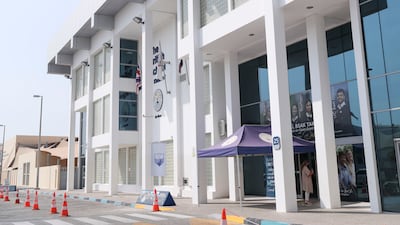
The story of the British School Al Khubairat in Abu Dhabi starts in 1968 on a plot of land on the Corniche donated by The Founding Father, Sheikh Zayed. All photos unless otherwise stated: Khushnum Bhandari / The National -
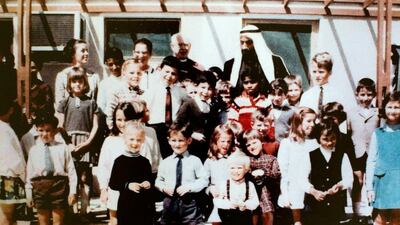
The Founding Father, Sheikh Zayed, visits British School Al Khubairat in 1968. Photo: The British School Al Khubairat -
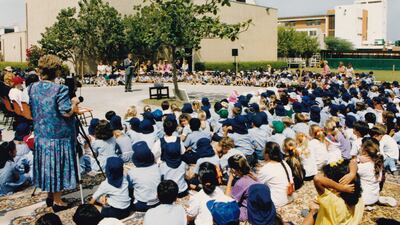
British School Al Khubairat in 1993. Photo: British School Al Khubairat -
Since then the school has been expanded and rebuilt. -
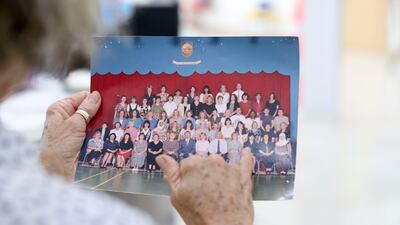
Veteran teacher Jo Fahey holds an image from the 1990s. -
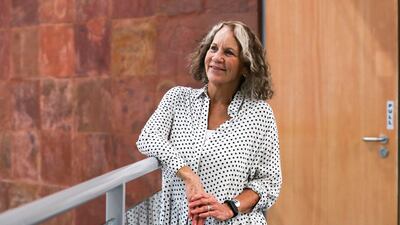
A member of staff at BSAK. -
What was known at the time as the Al Khubairat Community School was created out of a merger between the British Political Agency school and the Abu Dhabi Petroleum Company school – a merger between Britain and the UAE. -
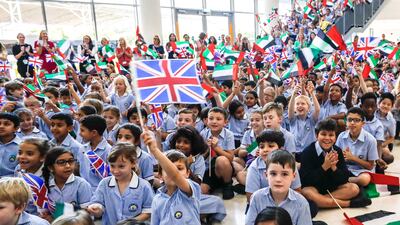
The links between the UK and the UAE are being marked during a year-long celebration at British School Al Khubairat. Victor Besa / The National -
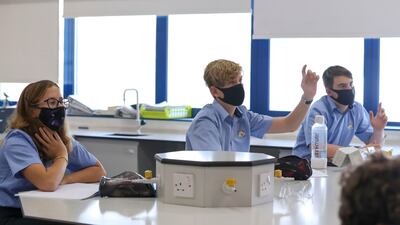
The school was later renamed the British School Al Khubairat (BSAK) in 1975. -
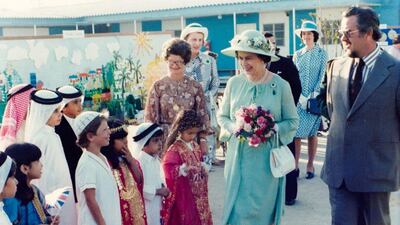
Britain's Queen Elizabeth II visits the British School Al Khubairat in 1979. Photo: The British School Al Khubairat -
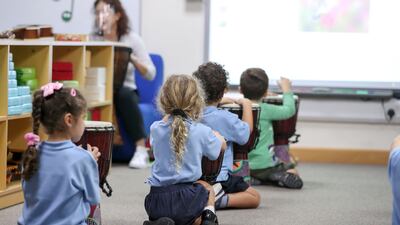
Kindergarten music class at the school, which now has a secondary school as well as a primary school. -

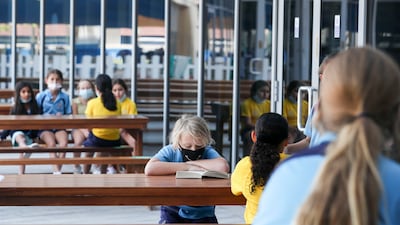
Students cross the playing field at the British School Al Khubairat in Abu Dhabi. The school has undergone dramatic and extensive redevelopment in the last decade to modernise its facilities. -
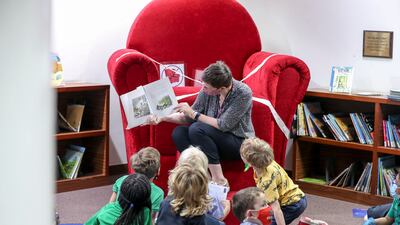
The whole school now holds approximately 1,900 pupils, aged 3 to 18.


Worldteachers Recruitment assists about 200 to 300 teachers with finding jobs at schools in the region every year.
Mr Hammond said his agency was particularly busy in the UAE and also faced a lot of demand from Saudi Arabia, Kuwait and Bahrain.
He said public schools in the region had been slower to recruit but were now playing catch up as there were strong requirements for teachers in early years, mathematics, science, and business and physical education.
What jobs are on offer?
Across the region, there are several opportunities advertised for teachers where schools are looking for an immediate start.
“There are vacancies right across the board. With kindergartens opening back up there is a higher demand for early years teachers," Mr Hammond said.
Secondary and high schoolteachers in mathematics, English and sciences are always in high demand, he said.
He said specialist subjects such as art, music and humanities had a lower supply so plenty of jobs were available in these areas.
"Physical education was hard hit by the pandemic so there is a significant increase in demand as PE lessons return. In Saudi Arabia, the universities are back teaching face to face so there is a large need for English teachers to help with the preparation year programmes," he said.
-
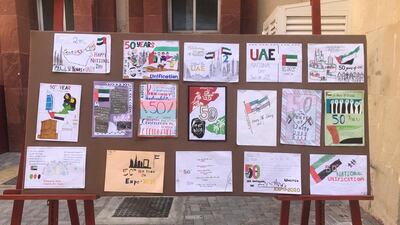
The Indian High Group of Schools celebrated the UAE’s Golden Jubilee with year-long initiatives and activities. All photos: The Indian High Group of Schools -
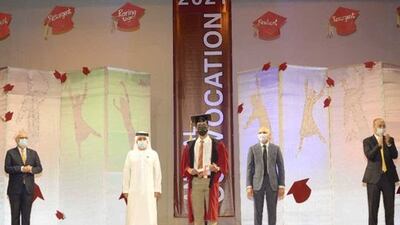
Grand celebrations took place across all three campuses. -
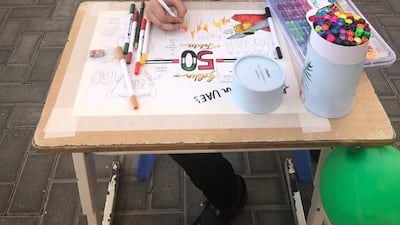
A pupil creates artwork to celebrate the UAE's 50th National Day. -
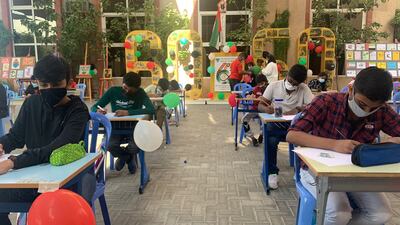
Balloons hang from desks and are displayed in classrooms. -
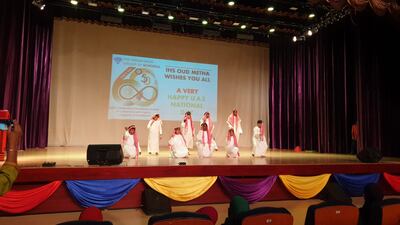
Young performers take to the stage for a Golden Jubilee event. -

A flower arrangement marks the UAE turning 50. -
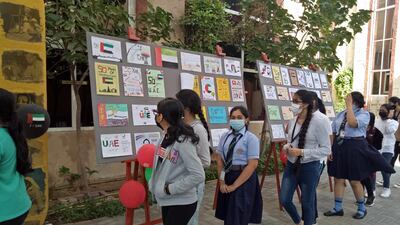
Pictures of the UAE drawn by pupils are displayed -
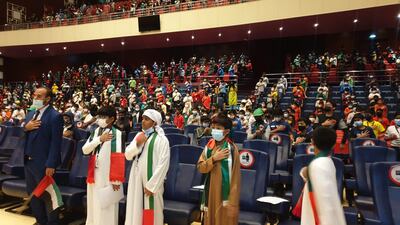
A series of formal events were also held. -
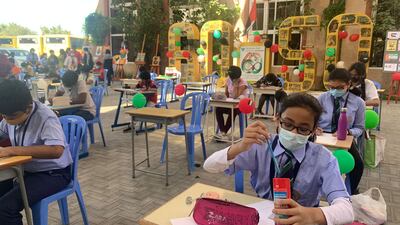
Pupils have gone to great lengths to mark the UAE's Golden Jubilee.


In Saudi Arabia, teachers have a wide variety of opportunities with jobs offered in music, aquatics, physics, English, economics and business studies, among other subjects.
British International School of Al Khobar in Saudi Arabia is looking for a music teacher to start in January.
Riyadh Schools for Boys and Girls is on the lookout for an elementary teacher and salaries range between $4,000 and $5,000 per month. The teacher would live in a fully furnished apartment and utilities would be paid for by the school.
British International School Riyadh is looking for a senior school English teacher to start in August 2022.
Knowledge Gate International School in Muscat has positions open for teachers in computer science, biology, mathematics, chemistry, physical education and business to start in August 2022.
Kuwait National English School is looking for early years teachers to join in September 2022.
In the UAE, Dubai English Speaking School is looking for an Arabic teacher to start in August.
Jumeria Baccalaureate School in Dubai is on the lookout for a physics teacher and a head of English who can start in August.
Gulf teacher salaries: how much can you expect to earn?
Teachers' salaries in the UAE can vary from one school to another.
Schools have not mentioned salaries in their postings but highlighted that teachers would receive tax-free salaries, furnished accommodation, medical insurance and annual air tickets.
On average, teachers in the UAE can expect starting salaries between Dh9,000 ($2,450) and Dh15,000 a month.
According to salaryexplorer.com, teachers in Qatar earn an average of QAR16a,600 ($4,560) per month, with salaries ranging from QAR7,970 to QAR30,300. This is the average monthly salary including housing, transport, and other benefits.
Mr Hammond said teacher salaries at private international schools in Kuwait averaged round KD1,000 to KD1,300 ($3,305-$4297).
"Salaries in the UAE vary enormously and the more senior the position, the more the variation," he said.
"The salaries are very similar in the region. In the UAE, what people are paid often depends on their experience and their training."
According to salaryexplorer.com, teachers in Saudi Arabia earn around SR17,700 ($4,717) a month. Mr Hammond said teachers could expect to earn between SR13,000-15,000.
What are the work requirements?
Common requirements include a bachelor's degree in education or subject-related degree and a PGCE / PGDE or equivalent teaching qualification.
Some American schools said experience of working in an American curriculum school would be desirable.
Most schools prefer people to have experience of their curriculum.
Some schools also ask for a minimum of one-year experience after graduation, while other institutions require a minimum of two or five years’ post-qualification experience.

