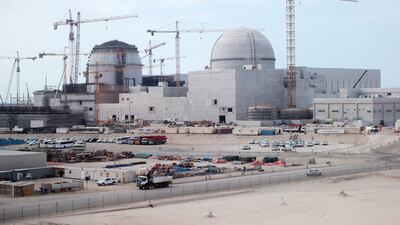
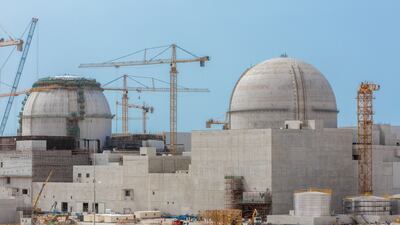
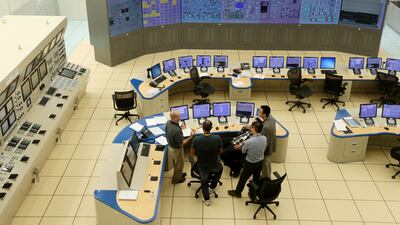
Emergency drill involving 170 countries concludes at Barakah nuclear power plant. Photo: Emirates Nuclear Energy Corporation

Emergency drill involving 170 countries concludes at Barakah nuclear power plant


Gillian Duncan
  • English
  • Arabic

A two-day emergency drill involving the UAE and international partners has concluded at Barakah nuclear power plant.

The ConvEX-3 exercise was designed to test the site’s readiness to respond to nuclear or radiological emergencies, in line with international emergency protocols.

The simulations, which took place over 36 hours, included several scenarios within units of the Barakah Plant and nearby area.

They aimed to highlight any potential areas of improvement in the safety management of the plant, and ensure it meets international standards.

A video released by Wam, the UAE’s news agency, showed workers in hazmat suits and members of the military carrying out inspections and taking samples of the sand and vegetation surrounding the site.

They were then brought back to the laboratory for analysis.

In other scenarios, the capabilities of the ambulance service and Emergency Operations Centre were tested.

Organised by the International Atomic Energy Agency, the drill was carried out under the supervision of the UAE National Emergency Crisis and Disaster Management Authority.

The complex exercise involved more than 170 countries and international organisations, as well as 10 local agencies, including Abu Dhabi Police, Abu Dhabi Agriculture and Safety Authority, the fire service, Emirates Red Crescent and others.

Barakah is the region’s first operational multi-unit nuclear plant.

Its power generation will significantly reduce the country's use of gas-fired power stations to generate electricity.

The UAE powered up the second unit at Barakah nuclear power plant in August, four months after commercial operations began using the first reactor.

Its four reactors will eventually meet about 25 per cent of the country's energy needs, eliminating up to 21 million tonnes of carbon emissions annually.

That is comparable to taking 3.2 million cars off the roads each year.

Barakah nuclear plan: in pictures

  • The UAE has issued an operating licence for the fourth and final unit of its Barakah Nuclear Energy Plant. FANR
    The UAE has issued an operating licence for the fourth and final unit of its Barakah Nuclear Energy Plant. FANR
  • Unit three of Abu Dhabi's Barakah Nuclear Energy Plant started commercial operations in February. Photo: Emirates Nuclear Energy Corporation
    Unit three of Abu Dhabi's Barakah Nuclear Energy Plant started commercial operations in February. Photo: Emirates Nuclear Energy Corporation
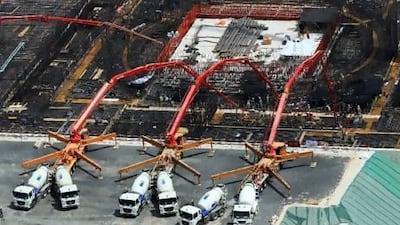
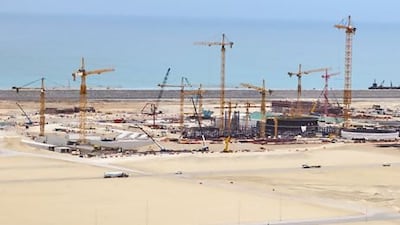
  • A view of the Barakah nuclear site under construction in 2012.
    A view of the Barakah nuclear site under construction in 2012.
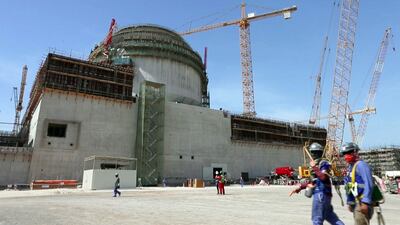
  • Unit 1 being built in 2013 in the Western region of Abu Dhabi.
    Unit 1 being built in 2013 in the Western region of Abu Dhabi.
  • The Emirates Nuclear Energy Corporation selected a Korean consortium in 2013 to build four APR-1400 reactors. Photo: Enec
    The Emirates Nuclear Energy Corporation selected a Korean consortium in 2013 to build four APR-1400 reactors. Photo: Enec
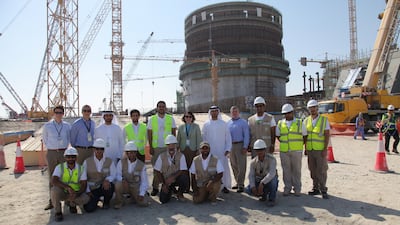
  • Kristine Svinicki, head of the US Nuclear Regulatory Commission, toured the Barakah site in November 2013. Photo: Enec
    Kristine Svinicki, head of the US Nuclear Regulatory Commission, toured the Barakah site in November 2013. Photo: Enec
  • By August 2014, more than 55 per cent of construction at Unit 1 had been completed. Photo: Enec
    By August 2014, more than 55 per cent of construction at Unit 1 had been completed. Photo: Enec
  • The first nuclear reactor at Barakah in 2016. Christopher Pike / The National
    The first nuclear reactor at Barakah in 2016. Christopher Pike / The National
  • The UAE's nuclear energy programme is based in Barakah in the Western Region of Abu Dhabi. Photo: Enec
    The UAE's nuclear energy programme is based in Barakah in the Western Region of Abu Dhabi. Photo: Enec
  • Trainees learn to deal with potentially catastrophic scenarios at this simulator in Barakah. Christopher Pike / The National
    Trainees learn to deal with potentially catastrophic scenarios at this simulator in Barakah. Christopher Pike / The National
  • Khalid Naqbi was part of the first batch of resident inspectors sent to the construction site by the Federal Authority for Nuclear Regulation. Ravindranath K / The National
    Khalid Naqbi was part of the first batch of resident inspectors sent to the construction site by the Federal Authority for Nuclear Regulation. Ravindranath K / The National
The burning issue

The internal combustion engine is facing a watershed moment – major manufacturer Volvo is to stop producing petroleum-powered vehicles by 2021 and countries in Europe, including the UK, have vowed to ban their sale before 2040. The National takes a look at the story of one of the most successful technologies of the last 100 years and how it has impacted life in the UAE. 

Read part four: an affection for classic cars lives on

Read part three: the age of the electric vehicle begins

Read part one: how cars came to the UAE


STAY%2C%20DAUGHTER
%3Cp%3E%3Cstrong%3EAuthor%3A%20%3C%2Fstrong%3EYasmin%20Azad%3C%2Fp%3E%0A%3Cp%3E%3Cstrong%3EPublisher%3A%20%3C%2Fstrong%3ESwift%20Press%3C%2Fp%3E%0A%3Cp%3E%3Cstrong%3EAvailable%3A%20%3C%2Fstrong%3ENow%3C%2Fp%3E%0A
Real estate tokenisation project

Dubai launched the pilot phase of its real estate tokenisation project last month.

The initiative focuses on converting real estate assets into digital tokens recorded on blockchain technology and helps in streamlining the process of buying, selling and investing, the Dubai Land Department said.

Dubai’s real estate tokenisation market is projected to reach Dh60 billion ($16.33 billion) by 2033, representing 7 per cent of the emirate’s total property transactions, according to the DLD.

UPI facts

More than 2.2 million Indian tourists arrived in UAE in 2023
More than 3.5 million Indians reside in UAE
Indian tourists can make purchases in UAE using rupee accounts in India through QR-code-based UPI real-time payment systems
Indian residents in UAE can use their non-resident NRO and NRE accounts held in Indian banks linked to a UAE mobile number for UPI transactions

Zidane's managerial achievements

La Liga: 2016/17
Spanish Super Cup: 2017
Uefa Champions League: 2015/16, 2016/17, 2017/18
Uefa Super Cup: 2016, 2017
Fifa Club World Cup: 2016, 2017

RESULT

Esperance de Tunis 1 Guadalajara 1 
(Esperance won 6-5 on penalties)
Esperance: Belaili 38’
Guadalajara: Sandoval 5’

Company profile

Name: Thndr

Started: October 2020

Founders: Ahmad Hammouda and Seif Amr

Based: Cairo, Egypt

Sector: FinTech

Initial investment: pre-seed of $800,000

Funding stage: series A; $20 million

Investors: Tiger Global, Beco Capital, Prosus Ventures, Y Combinator, Global Ventures, Abdul Latif Jameel, Endure Capital, 4DX Ventures, Plus VC,  Rabacap and MSA Capital

Mobile phone packages comparison
MATCH INFO

Aston Villa 1 (Konsa 63')

Sheffield United 0

Red card: Jon Egan (Sheffield United)


Updated: October 28, 2021, 7:06 AM