• Stunning image of the International Space Station crossing over the UAE and transiting the Moon. All photos: Florian Kriechbaumer
    Stunning image of the International Space Station crossing over the UAE and transiting the Moon. All photos: Florian Kriechbaumer
  • A timelapse image of the space station transiting the full Moon.
    A timelapse image of the space station transiting the full Moon.
  • The space station transiting the Sun.
    The space station transiting the Sun.
  • The Saturn and Jupiter conjunction captured next to the Burj Khalifa.
    The Saturn and Jupiter conjunction captured next to the Burj Khalifa.
  • The Orion Nebula captured from the UAE.
    The Orion Nebula captured from the UAE.
  • A panorama of the Milky Way core taken from the Abu Dhabi desert.
    A panorama of the Milky Way core taken from the Abu Dhabi desert.

Stunning image of space station over UAE skies captured by photographer


Sarwat Nasir
  • English
  • Arabic

A photographer in Dubai has captured a remarkable image of the International Space Station above the UAE.

Florian Kriechbaumer took the photo when there was a full Moon and clear skies.

The image shows the floating laboratory in crisp detail, its solar panels and craters on the lunar surface clearly visible.

“It was the first space station-Moon transit I attempted after a few months of monitoring its trajectory and the online alert tools from Nasa and others,” he told The National.

“These occasions happen only a few times a year at best and a lot of things need to come together: something close to a full Moon, good weather conditions and the angle for the ISS relatively close to Earth. And of course, being in the right location at the right time.”

The German citizen, who has lived in the Emirates since 2007, snapped the image this year.

The ISS began operations in 2000 when the first crew arrived on board and has been continuously occupied since.

Astronauts carry out research on the station, such as growing vegetables, vaccine development and infectious disease studies in microgravity.

Mr Kriechbaumer, 33, who works for a technology company, started astrophotography as a hobby five years ago.

“I don’t even use a telescope, just a normal mirrorless camera. I do love photography and its broad range of domains. The niche I really enjoy is combining astrophotography with traditional approaches and compositions,” he said.

“The last five years I took a deeper interest in astrophotography and the night sky. It’s a whole dedicated domain that requires a different approach and knowledge than other parts of photography, often with a lot more planning and patience involved, which makes it quite intriguing.”

Mr Kriechbaumer has captured other stunning images of the cosmos, including the Andromeda galaxy and the Jupiter and Saturn conjunction next to the Burj Khalifa.

In general, I just really enjoy planning and executing on photos that include the celestial elements of the universe together with earthly elements,” he said.

Key moments on the International Space Station - in pictures

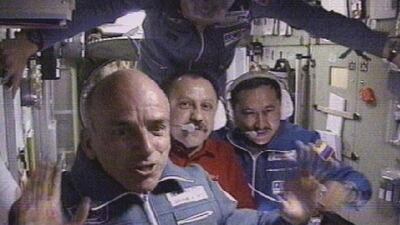
  • The world's first space tourist Dennis Tito waves in front of the International Space Station crew on April 30, 2001. Courtesy: RTV
    The world's first space tourist Dennis Tito waves in front of the International Space Station crew on April 30, 2001. Courtesy: RTV
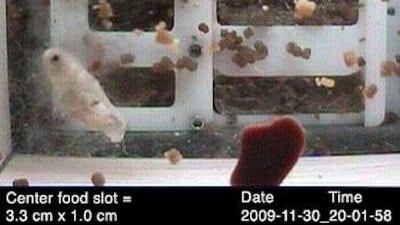
  • Painted Lady butterflies live in their habitat aboard the International Space Station. Courtesy: Nasa
    Painted Lady butterflies live in their habitat aboard the International Space Station. Courtesy: Nasa
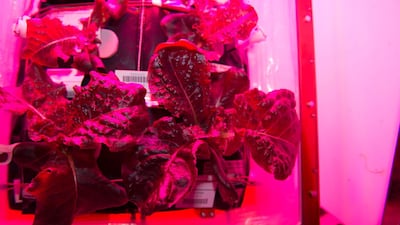
  • Red romaine lettuce was the first vegetable to grow in space in August 2015. Courtesy: Nasa
    Red romaine lettuce was the first vegetable to grow in space in August 2015. Courtesy: Nasa
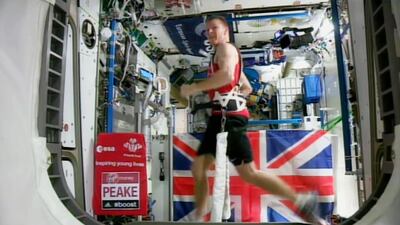
  • In 2016, British astronaut Tim Peake completed the fastest marathon in space. Courtesy: European Space Agency
    In 2016, British astronaut Tim Peake completed the fastest marathon in space. Courtesy: European Space Agency
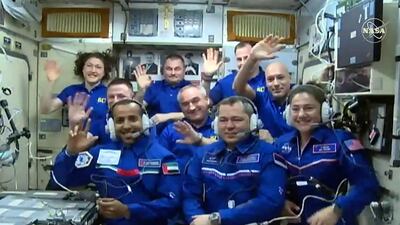
  • Maj Hazza Al Mansouri meets the rest of the team at the International Space Station shortly after docking. Courtesy: Nasa
    Maj Hazza Al Mansouri meets the rest of the team at the International Space Station shortly after docking. Courtesy: Nasa
UAE currency: the story behind the money in your pockets
MATCH INFO

Fixture: Ukraine v Portugal, Monday, 10.45pm (UAE)

TV: BeIN Sports

Key findings of Jenkins report
  • Founder of the Muslim Brotherhood, Hassan al Banna, "accepted the political utility of violence"
  • Views of key Muslim Brotherhood ideologue, Sayyid Qutb, have “consistently been understood” as permitting “the use of extreme violence in the pursuit of the perfect Islamic society” and “never been institutionally disowned” by the movement.
  • Muslim Brotherhood at all levels has repeatedly defended Hamas attacks against Israel, including the use of suicide bombers and the killing of civilians.
  • Laying out the report in the House of Commons, David Cameron told MPs: "The main findings of the review support the conclusion that membership of, association with, or influence by the Muslim Brotherhood should be considered as a possible indicator of extremism."
Quick facts on cancer
  • Cancer is the second-leading cause of death worldwide, after cardiovascular diseases 
  •  About one in five men and one in six women will develop cancer in their lifetime 
  • By 2040, global cancer cases are on track to reach 30 million 
  • 70 per cent of cancer deaths occur in low and middle-income countries 
  • This rate is expected to increase to 75 per cent by 2030 
  • At least one third of common cancers are preventable 
  • Genetic mutations play a role in 5 per cent to 10 per cent of cancers 
  • Up to 3.7 million lives could be saved annually by implementing the right health
    strategies 
  • The total annual economic cost of cancer is $1.16 trillion


Updated: October 19, 2021, 4:54 AM