

Sheikh Mohammed bin Rashid, UAE Vice President and Ruler of Dubai, has said pioneers of humanitarian work in the UAE are set to be granted golden visas.
Writing to mark International Humanitarian Day on Thursday, Sheikh Mohammed said he was proud of the UAE for its commitment to humanitarian aid since the country was founded in 1971.
The country has provided more than Dh320 billion ($87.13bn) in aid since it was founded, he said.
We announce that the pioneers of humanitarian work in the UAE have been granted golden residency," Sheikh Mohammed said.
"Aid workers are ambassadors of the UAE and role models instilling pride in us all. Giving is embedded in the fabric of Emirati society and culture, and we aspire to be the most vibrant humanitarian destination in the next fifty years.
"The UAE has always led impactful humanitarian initiatives and empowered those implementing them, and in the year of the UAE’s Golden Jubilee, it aspires to become a world leader of humanitarian efforts in the next five decades," said Sheikh Mohammed.

"Having always paid tribute to hope makers, the UAE extends its commitment to global cooperation to include the humanitarian sector’s pioneers, groups, specialists and workers, so that the UAE can become a second home to these individuals."
Sheikh Mohammed pointed to the UAE having established Dubai International Humanitarian City in 2011 as an example of its efforts to lead humanitarian causes. It is a non-profit, independent, humanitarian free zone authority that hosts more than 80 members spanning UN organisations, non-profits and non-government organisations, and commercial companies.
"Not only is the UAE an economic hub, it is also a humanitarian one," said Sheikh Mohammed.
Golden visa holders, meanwhile, can live, work and study in Abu Dhabi for 10 years without the need for a national sponsor.
The initiative was launched to recognise experts in various fields who play a pivotal role in supporting the nation’s progress. It also attracts skilled workers to the UAE.
The country has long been committed to helping those in need. It has distributed aid around the world during the Covid-19 pandemic.
The UAE has sent more than 2,200 tonnes of medical supplies to more than 135 countries, particularly in Africa and Asia.
The UAE is also a global logistical centre in the fight against Covid-19, through the International Humanitarian City in Dubai.
This has played an integral role in shipping 80 per cent of total global medical supplies and equipment to help tackle the pandemic.
The UAE has also helped to establish field hospitals in Jordan, Guinea, Sudan, Sierra Leone, Lebanon and Mauritania.
UAE sends aid to Comoros - in pictures
-
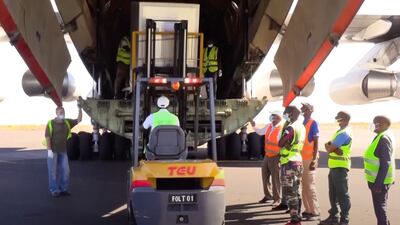
The UAE has sent 300,000 Covid-19 vaccine doses and nine tonnes of vital medical supplies to Comoros. All photos Wam -
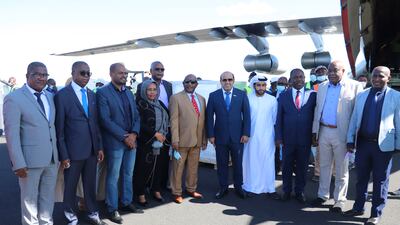
The plane was met by Azali Assoumani, President of Comoros, and Saeed Al Maqbali, UAE Ambassador to the Comoros, along with other senior officials. -

The plane being unloaded after landing in Comoros. -

Mr Assoumani commended the UAE's global humanitarian efforts. -
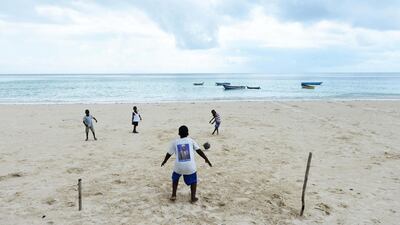
Boys play football on Mitsamiouli beach in Comoros. The UAE and Comoros share warm ties



