


Two students at Murdoch University Dubai have developed an artificial intelligence-based tool that scans pupils’ faces during classes to gauge their level of understanding.
The application aims to help improve the quality of online education by acting as a teaching tool and providing live feedback on whether the lessons are engaging.
It analyses facial expressions such as eyebrow raising, eyelid tightening and mouth dimpling to measure whether students are interested in the class.
Eiman Ansari, 20, is in the third year of a degree in information technology and cyber forensics.
She said she was frustrated by online classes because teachers sometimes struggled to gauge students’ reactions.
“We were tired of how classes were being held and no one was paying attention,” said Ms Ansari, who is Indian.
“When classes were held, our cameras were off and the interactive classroom experience had disappeared.
“The teachers were not able to see the students’ reactions so they did not know if we were understanding things correctly.”
Ms Ansari developed the application with Abubakr Sajith, 21, a third-year undergraduate in business information systems and finance.
The friends were supported in their research by Joseph Stevens, the university’s head of information technology.
Measuring fear, disgust and surprise
Their application, the Emotion-Affective Domain Mapping System, films the classroom and analyses facial expressions for emotions such as contempt, anger, fear, happiness, disgust and surprise.
A graph is produced to illustrate students’ level of engagement in the class.
“We are using artificial intelligence to analyse facial expressions and the data given from that is mapped to levels of understanding,” Ms Ansari said.
“The aim is for students to have education tailored towards them, while for teachers this is a helper tool.”
The duo developed the idea in November 2020. Their research has since been published in The International Journal of Inspired Education, Science and Technology.
Their current paper proposes the system. Ms Ansari and Mr Sajith are working on a second paper to measure its effectiveness.
Mr Sajith said that while online classes would not last forever, the technology could have a place in face-to-face classes as well.
“We would ideally see this in a class where teachers have a dashboard on the side along their table and they can see a live graph showing how their pupils are reacting,” said Mr Sajith.
“With each student, you see the method they react to, and which one suits them best.”
At present, teachers will be able to gain feedback after the class. Having reviewed their students’ reactions, they can modify their class content and delivery.
In the future, teachers would be able to receive live feedback during the class.
Mr Sajith said that although the technology was in its nascent stage, the team hoped to one day license it to universities and schools.
Dr James Trotter, Murdoch University Dubai’s dean and academic president, acknowledged that measuring students’ comprehension during online lessons was hard.
“It is also estimated that the problem of poor integration of technology within the education systems is set to cost us roughly 0.3 to 0.9 years’ worth of education per year,” he said.
“The proposed EADMS solution, by two Murdoch University Dubai students and their faculty mentor, is a novel way to improve comprehension assessment and subsequently improve course content and delivery.”
-
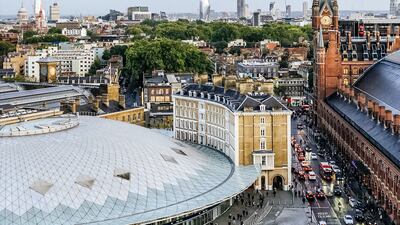
1. London, UK, ranked highly for the student mix indicator (2 out of 115) and employer activity (4) but was poorly rated for affordability (95). -
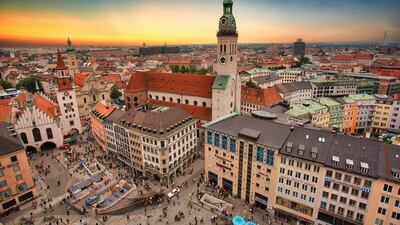
2. Munich, Germany, ranked well in the desirability indicator (7 out of 115) and 'student view' (8). -

3. Seoul, South Korea, was ranked third in a tie with Tokyo, Japan. Seoul scored highly in employer activity (3 out of 115) but 57th on affordability. -

3. Tokyo, Japan, ranked third in a tie with Seoul, South Korea. Tokyo was poorly scored for student mix (74 out of 115) but was the most desirable city for students and employer activity. -

5. Berlin, Germany, was ranked ninth in the desirability index and 16th on affordability. Its lowest indicator rank is for student mix (33rd). -

6. Melbourne, Australia, was the highest ranked city for student mix and seventh for employer activity. -
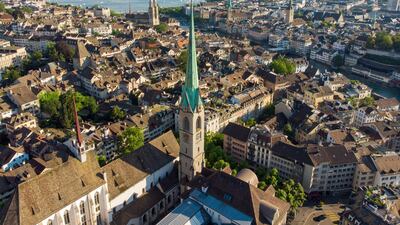
7. Zurich, Switzerland, was ranked third in the desirability indicator and sixth in employer activity. However, the city ranked 70th out of 115 for affordability. -

8. Sydney, Australia, ranked third in the student mix indicator and fourth in desirability. It was listed as 101 out of 115 on affordability. -

9. Montreal, Canada, is triple tied in ninth rank with Paris, France, and Boston, US. Montreal ranked ninth in student mix but 52 on affordability. -

9. Paris was ranked highly for employer activity (7) and desirability (16) but not as well for student mix (36) and affordability (51). -

9. With a good student mix, Boston was a popular choice. It also ranked second in employer activity but 109th for affordability. -
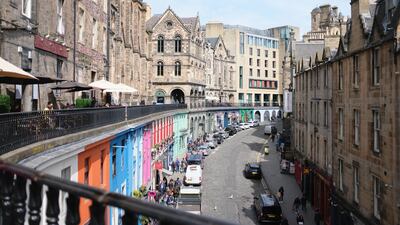
12. Edinburgh, Scotland, was rated fourth in student mix but deemed somewhat expensive (55) by students. -

13. Toronto, Canada, was the second most desirable student city and ranked 11th in the student mix indicator. Its weak spot was affordability, for which it ranked 88th. -
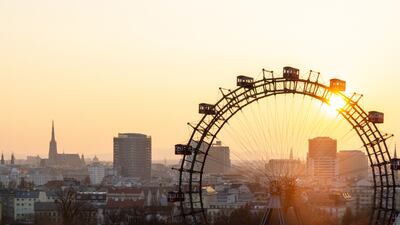
14. Vienna, Austria, was the tenth most desirable city to study and ranked 26 out of 115 for employer activity and 25th for affordability. -

15. Hong Kong was seen as a desirable city to study in (ranked 24) but not particularly diverse, ranking 57 out of 115 for that indicator. -

16. New York, US, ranked ninth for employer activity as well as 29th and 30th in the desirability and student mix indicators, respectively. However, the city was ranked 114 out of 115 for affordability. -

17. Singapore was the fifth most desirable student city to study in but ranked 85 out of 115 for affordability, bringing its overall ranking down. -

18. Vancouver, Canada, ranked 8th in the student mix and desirability indicators but 87th on affordability. -

19. Lausanne, Switzerland, was in joint 19th place with Kyoto-Osaka-Kobe, Japan. The Swiss city ranked 19th in the student mix indicator but 58th on affordability. -

19. Kyoto, Osaka and Kobe, Japan, shared the 19th spot with Lausanne. The three Japanese cities were ranked 88th out of 115 for student mix but were still very desirable (21). They also ranked well for employer activity (16).



