The President, Sheikh Khalifa, exchanged Eid greetings with leaders of Arab and Islamic nations. Wam

Sheikh Khalifa extends Eid Al Adha greetings to Arab leaders


  • English
  • Arabic

The President, Sheikh Khalifa bin Zayed, has congratulated kings, presidents and emirs of Arab and Islamic countries on the advent of Eid Al Adha.

Sheikh Khalifa expressed his wishes for good health and happiness to the leaders, and wished further progress and prosperity to all Arab and Muslim people.

Sheikh Mohamed bin Zayed, Crown Prince of Abu Dhabi and Deputy Supreme Commander of the Armed Forces, has exchanged similar greetings with Arab leaders.

Sheikh Mohamed exchanged greetings with Sheikh Nawaf Al Sabah, Emir of Kuwait; King Abdullah II of Jordan; Abdel Fattah El Sisi, President of Egypt; and Barham Salih, President of Iraq, among others, state news agency Wam reported on Monday.

He also exchanged Eid greetings on Sunday with Oman’s ruler, Sultan Haitham; Mohamed Ghazouani, President of Mauritania; Meshal Al Sabah, the Crown Prince of Kuwait; Mustafa Al Kadhimi, Prime Minister of Iraq; and Nechirvan Barzani, President of Iraqi Kurdistan.

Sheikh Mohamed conveyed the greetings of the President, Sheikh Khalifa, and his wishes of further well-being, prosperity and development to their countries.

The leaders reciprocated the greetings and wished more progress, safety and security to the UAE.

Sheikh Dr Sultan bin Muhammad Al Qasimi, Ruler of Sharjah, congratulated President Sheikh Khalifa, UAE residents and the Arab and Islamic nations on the auspicious occasion.

Sheikh Saud bin Rashid Al Mualla, Ruler of Umm al Qaiwain, expressed his congratulations to President Sheikh Khalifa, UAE residents, and all Arab and Islamic nations.

Sheikh Humaid bin Rashid, Ruler of Ajman, also congratulated Sheikh Khalifa bin Zayed on the occasion of Eid Al Adha.

Sheikh Saud bin Saqr Al Qasimi, Ruler of Ras Al Khaimah, also sent Eid Al Adha greetings to Sheikh Mohammed bin Rashid, Vice President and Ruler of Dubai, Sheikh Mohamed bin Zayed, Crown Prince of Abu Dhabi and Deputy Supreme Commander of the UAE Armed Forces.

His Highness, the Ruler of Ras Al Khaimah, also sent messages of congratulations to heads of state across Arab and Islamic nations, wishing them and their people good health, progress, and prosperity.

Abu Dhabi lights up for Eid Al Adha — in pictures

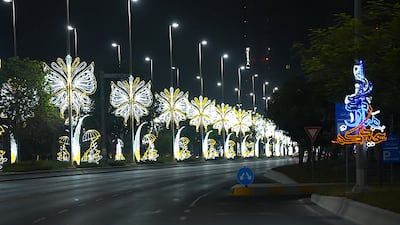
  • The streets of Abu Dhabi have lit up in celebration of Eid Al Adha.
    The streets of Abu Dhabi have lit up in celebration of Eid Al Adha.
  • About 2,800 decorative signs have been set up across the emirate to mark the occasion.
    About 2,800 decorative signs have been set up across the emirate to mark the occasion.
  • The signs reflect the UAE's history and heritage.
    The signs reflect the UAE's history and heritage.
  • Some of the street decorations for Eid holidays in Abu Dhabi.
    Some of the street decorations for Eid holidays in Abu Dhabi.
  • They can be sign on roads and roundabouts.
    They can be sign on roads and roundabouts.
Sarfira

Director: Sudha Kongara Prasad

Starring: Akshay Kumar, Radhika Madan, Paresh Rawal 

Rating: 2/5

The Byblos iftar in numbers

29 or 30 days – the number of iftar services held during the holy month

50 staff members required to prepare an iftar

200 to 350 the number of people served iftar nightly

160 litres of the traditional Ramadan drink, jalab, is served in total

500 litres of soup is served during the holy month

200 kilograms of meat is used for various dishes

350 kilograms of onion is used in dishes

5 minutes – the average time that staff have to eat
 

Ten tax points to be aware of in 2026

1. Domestic VAT refund amendments: request your refund within five years

If a business does not apply for the refund on time, they lose their credit.

2. E-invoicing in the UAE

Businesses should continue preparing for the implementation of e-invoicing in the UAE, with 2026 a preparation and transition period ahead of phased mandatory adoption. 

3. More tax audits

Tax authorities are increasingly using data already available across multiple filings to identify audit risks. 

4. More beneficial VAT and excise tax penalty regime

Tax disputes are expected to become more frequent and more structured, with clearer administrative objection and appeal processes. The UAE has adopted a new penalty regime for VAT and excise disputes, which now mirrors the penalty regime for corporate tax.

5. Greater emphasis on statutory audit

There is a greater need for the accuracy of financial statements. The International Financial Reporting Standards standards need to be strictly adhered to and, as a result, the quality of the audits will need to increase.

6. Further transfer pricing enforcement

Transfer pricing enforcement, which refers to the practice of establishing prices for internal transactions between related entities, is expected to broaden in scope. The UAE will shortly open the possibility to negotiate advance pricing agreements, or essentially rulings for transfer pricing purposes. 

7. Limited time periods for audits

Recent amendments also introduce a default five-year limitation period for tax audits and assessments, subject to specific statutory exceptions. While the standard audit and assessment period is five years, this may be extended to up to 15 years in cases involving fraud or tax evasion. 

8. Pillar 2 implementation 

Many multinational groups will begin to feel the practical effect of the Domestic Minimum Top-Up Tax (DMTT), the UAE's implementation of the OECD’s global minimum tax under Pillar 2. While the rules apply for financial years starting on or after January 1, 2025, it is 2026 that marks the transition to an operational phase.

9. Reduced compliance obligations for imported goods and services

Businesses that apply the reverse-charge mechanism for VAT purposes in the UAE may benefit from reduced compliance obligations. 

10. Substance and CbC reporting focus

Tax authorities are expected to continue strengthening the enforcement of economic substance and Country-by-Country (CbC) reporting frameworks. In the UAE, these regimes are increasingly being used as risk-assessment tools, providing tax authorities with a comprehensive view of multinational groups’ global footprints and enabling them to assess whether profits are aligned with real economic activity. 

Contributed by Thomas Vanhee and Hend Rashwan, Aurifer

PROFILE OF INVYGO

Started: 2018

Founders: Eslam Hussein and Pulkit Ganjoo

Based: Dubai

Sector: Transport

Size: 9 employees

Investment: $1,275,000

Investors: Class 5 Global, Equitrust, Gulf Islamic Investments, Kairos K50 and William Zeqiri

Specs

Engine: Dual-motor all-wheel-drive electric

Range: Up to 610km

Power: 905hp

Torque: 985Nm

Price: From Dh439,000

Available: Now

Water waste

In the UAE’s arid climate, small shrubs, bushes and flower beds usually require about six litres of water per square metre, daily. That increases to 12 litres per square metre a day for small trees, and 300 litres for palm trees.

Horticulturists suggest the best time for watering is before 8am or after 6pm, when water won't be dried up by the sun.

A global report published by the Water Resources Institute in August, ranked the UAE 10th out of 164 nations where water supplies are most stretched.

The Emirates is the world’s third largest per capita water consumer after the US and Canada.

Living in...

This article is part of a guide on where to live in the UAE. Our reporters will profile some of the country’s most desirable districts, provide an estimate of rental prices and introduce you to some of the residents who call each area home.

Mercer, the investment consulting arm of US services company Marsh & McLennan, expects its wealth division to at least double its assets under management (AUM) in the Middle East as wealth in the region continues to grow despite economic headwinds, a company official said.

Mercer Wealth, which globally has $160 billion in AUM, plans to boost its AUM in the region to $2-$3bn in the next 2-3 years from the present $1bn, said Yasir AbuShaban, a Dubai-based principal with Mercer Wealth.

Within the next two to three years, we are looking at reaching $2 to $3 billion as a conservative estimate and we do see an opportunity to do so,” said Mr AbuShaban.

Mercer does not directly make investments, but allocates clients’ money they have discretion to, to professional asset managers. They also provide advice to clients.

“We have buying power. We can negotiate on their (client’s) behalf with asset managers to provide them lower fees than they otherwise would have to get on their own,” he added.

Mercer Wealth’s clients include sovereign wealth funds, family offices, and insurance companies among others.

From its office in Dubai, Mercer also looks after Africa, India and Turkey, where they also see opportunity for growth.

Wealth creation in Middle East and Africa (MEA) grew 8.5 per cent to $8.1 trillion last year from $7.5tn in 2015, higher than last year’s global average of 6 per cent and the second-highest growth in a region after Asia-Pacific which grew 9.9 per cent, according to consultancy Boston Consulting Group (BCG). In the region, where wealth grew just 1.9 per cent in 2015 compared with 2014, a pickup in oil prices has helped in wealth generation.

BCG is forecasting MEA wealth will rise to $12tn by 2021, growing at an annual average of 8 per cent.

Drivers of wealth generation in the region will be split evenly between new wealth creation and growth of performance of existing assets, according to BCG.

Another general trend in the region is clients’ looking for a comprehensive approach to investing, according to Mr AbuShaban.

“Institutional investors or some of the families are seeing a slowdown in the available capital they have to invest and in that sense they are looking at optimizing the way they manage their portfolios and making sure they are not investing haphazardly and different parts of their investment are working together,” said Mr AbuShaban.

Some clients also have a higher appetite for risk, given the low interest-rate environment that does not provide enough yield for some institutional investors. These clients are keen to invest in illiquid assets, such as private equity and infrastructure.

“What we have seen is a desire for higher returns in what has been a low-return environment specifically in various fixed income or bonds,” he said.

“In this environment, we have seen a de facto increase in the risk that clients are taking in things like illiquid investments, private equity investments, infrastructure and private debt, those kind of investments were higher illiquidity results in incrementally higher returns.”

The Abu Dhabi Investment Authority, one of the largest sovereign wealth funds, said in its 2016 report that has gradually increased its exposure in direct private equity and private credit transactions, mainly in Asian markets and especially in China and India. The authority’s private equity department focused on structured equities owing to “their defensive characteristics.”

Fund-raising tips for start-ups

Develop an innovative business concept

Have the ability to differentiate yourself from competitors

Put in place a business continuity plan after Covid-19

Prepare for the worst-case scenario (further lockdowns, long wait for a vaccine, etc.) 

Have enough cash to stay afloat for the next 12 to 18 months

Be creative and innovative to reduce expenses

Be prepared to use Covid-19 as an opportunity for your business

* Tips from Jassim Al Marzooqi and Walid Hanna

Ways to control drones

Countries have been coming up with ways to restrict and monitor the use of non-commercial drones to keep them from trespassing on controlled areas such as airports.

"Drones vary in size and some can be as big as a small city car - so imagine the impact of one hitting an airplane. It's a huge risk, especially when commercial airliners are not designed to make or take sudden evasive manoeuvres like drones can" says Saj Ahmed, chief analyst at London-based StrategicAero Research.

New measures have now been taken to monitor drone activity, Geo-fencing technology is one.

It's a method designed to prevent drones from drifting into banned areas. The technology uses GPS location signals to stop its machines flying close to airports and other restricted zones.

The European commission has recently announced a blueprint to make drone use in low-level airspace safe, secure and environmentally friendly. This process is called “U-Space” – it covers altitudes of up to 150 metres. It is also noteworthy that that UK Civil Aviation Authority recommends drones to be flown at no higher than 400ft. “U-Space” technology will be governed by a system similar to air traffic control management, which will be automated using tools like geo-fencing.

The UAE has drawn serious measures to ensure users register their devices under strict new laws. Authorities have urged that users must obtain approval in advance before flying the drones, non registered drone use in Dubai will result in a fine of up to twenty thousand dirhams under a new resolution approved by Sheikh Hamdan bin Mohammed, Crown Prince of Dubai.

Mr Ahmad suggest that "Hefty fines running into hundreds of thousands of dollars need to compensate for the cost of airport disruption and flight diversions to lengthy jail spells, confiscation of travel rights and use of drones for a lengthy period" must be enforced in order to reduce airport intrusion.

The%20US%20Congress%20explained
%3Cp%3E-%20Congress%20is%20one%20of%20three%20branches%20of%20the%20US%20government%2C%20and%20the%20one%20that%20creates%20the%20nation's%20federal%20laws%3C%2Fp%3E%0A%3Cp%3E-%20Congress%20is%20divided%20into%20two%20chambers%3A%20The%20House%20of%20Representatives%20and%20the%20Senate%3C%2Fp%3E%0A%3Cp%3E-%C2%A0The%20House%20is%20made%20up%20of%20435%20members%20based%20on%20a%20state's%20population.%20House%20members%20are%20up%20for%20election%20every%20two%20years%3C%2Fp%3E%0A%3Cp%3E-%20A%20bill%20must%20be%20approved%20by%20both%20the%20House%20and%20Senate%20before%20it%20goes%20to%20the%20president's%20desk%20for%20signature%3C%2Fp%3E%0A%3Cp%3E-%20A%20political%20party%20needs%20218%20seats%20to%20be%20in%20control%20of%20the%20House%20of%20Representatives%3C%2Fp%3E%0A%3Cp%3E-%20The%20Senate%20is%20comprised%20of%20100%20members%2C%20with%20each%20state%20receiving%20two%20senators.%20Senate%20members%20serve%20six-year%20terms%3C%2Fp%3E%0A%3Cp%3E-%20A%20political%20party%20needs%2051%20seats%20to%20control%20the%20Senate.%20In%20the%20case%20of%20a%2050-50%20tie%2C%20the%20party%20of%20the%20president%20controls%20the%20Senate%3C%2Fp%3E%0A
The specs

Engine: 3.9-litre twin-turbo V8
Power: 620hp from 5,750-7,500rpm
Torque: 760Nm from 3,000-5,750rpm
Transmission: Eight-speed dual-clutch auto
On sale: Now
Price: From Dh1.05 million ($286,000)

ICC T20 Team of 2021

Jos Buttler, Mohammad Rizwan, Babar Azam, Aiden Markram, Mitchell Marsh, David Miller, Tabraiz Shamsi, Josh Hazlewood, Wanindu Hasaranga, Mustafizur Rahman, Shaheen Afridi

Tamkeen's offering
  • Option 1: 70% in year 1, 50% in year 2, 30% in year 3
  • Option 2: 50% across three years
  • Option 3: 30% across five years 
The specs: 2018 Audi R8 V10 RWS

Price: base / as tested: From Dh632,225

Engine: 5.2-litre V10

Gearbox: Seven-speed automatic

Power: 540hp @ 8,250rpm

Torque: 540Nm @ 6,500rpm

Fuel economy, combined: 12.4L / 100km

%3Cp%3EMATA%0D%3Cbr%3EArtist%3A%20M.I.A%0D%3Cbr%3ELabel%3A%20Island%0D%3Cbr%3ERating%3A%203.5%2F5%3C%2Fp%3E%0A
Scoreline

UAE 2-1 Saudi Arabia

UAE Mabkhout 21’, Khalil 59’

Saudi Al Abed (pen) 20’

Man of the match Ahmed Khalil (UAE)

MATCH INFO

Manchester City 2 (Mahrez 04', Ake 84')

Leicester City 5 (Vardy 37' pen, 54', 58' pen, Maddison 77', Tielemans 88' pen)

Man of the match: Jamie Vardy (Leicester City)

Updated: July 20, 2021, 3:48 AM