



Japan’s highly anticipated Ghibli Park is now open.
The theme park, dedicated to the Japanese animation company production studio known for its films such as Spirited Away, My Neighbor Totoro and Howl’s Moving Castle, opened on Tuesday. It is in Aichi Earth Expo Memorial Park, the former grounds of Expo 2005.
The park covers 17.5 acres and has five main themed areas based on different Studio Ghibli films: Ghibli’s Grand Warehouse, The Hill of Youth, Dondoko Forest, Mononoke Village and Valley of Witches, although the last two are not open yet. All five areas of the park are expected to be open by spring 2024.
There is also a free playground based on The Cat Returns next to Mononoke Village.

“In the past three years, we have been in a very difficult situation due to Covid-19, but there was a great joy even in the midst of it … I feel that the opening of this exhibition at this time, when we are firmly facing and overcoming Covid-19, has a heavy meaning,” Koji Hoshino, chairman and president of Studio Ghibli, said during an event a few days before the park's official opening.
Its website tells visitors that “there are no big attractions or rides in Ghibli Park”. Instead, guests are encouraged to “take a stroll, feel the wind, and discover the wonders”.
Visitors can expect to see recreated sets from the animated films with Instagrammable backdrops such as sitting on the train with No Face from Spirited Away, running across waves with Ponyo or simply enjoying the children’s playroom with Cat Bus, one of the creatures from My Neighbor Totoro. There’s also a 170-person cinema that will show 10 short animations.
Tickets to visit the park can be bought only domestically and must be booked in advance for each area. From February, visitors will be allowed to buy a multi-pass ticket. Tickets for November have already sold out.
Japan reopens to tourists
It was announced last month that Japan would open to international tourism again. This means that travellers need to be vaccinated or have a Covid-19 negative test certificate, but authorities no longer require visitors to be part of an organised tour group and have lifted a cap on passenger numbers.
-

Foreign travellers arrive in Tokyo after Japan opened its doors to tourists after two-and-a-half years, owing to travel restrictions sparked by the Covid-19 outbreak. Reuters -
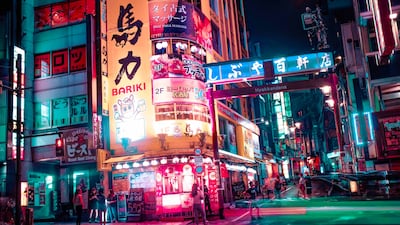
Japan has fully reopened to vaccinated tourists after 30 months of restrictions. Photo: Unsplash / Alex Knight -
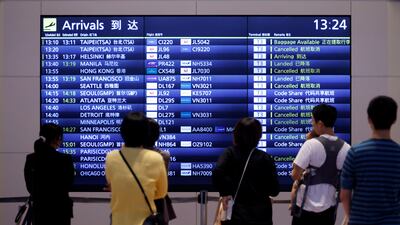
People wait for arriving travellers at Haneda International Airport. Reuters -
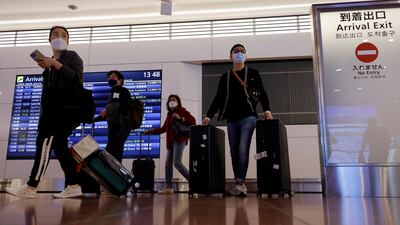
Passengers arrive at Haneda International Airport as Japan welcomes tourists again. Reuters -

International passengers arrive at Tokyo's Haneda Airport after two-and-a-half years of Covid-19 restrictions in Japan. AFP -

A traveller gets assistance at an information counter at the international terminal of Tokyo's Haneda Airport. AFP -

Unmasked people have food and drinks outdoors in Omoide Yokocho in the Shinjuku area of Tokyo. AFP -
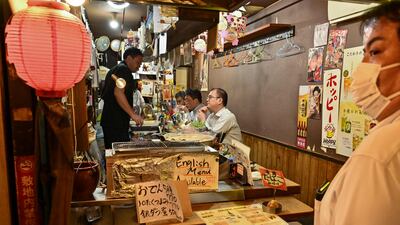
Face masks are likely to remain in most indoor places in Japan. AFP -
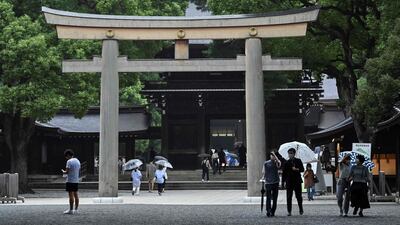
People visit the Meiji Shrine, a popular tourist spot, in Tokyo. AFP -

Tourists walk at the Meiji Shrine in Tokyo. AFP -

Dancers perform in Asakusa, one of Tokyo's most famous tourist spots. Getty Images -

An employee waits for customers outside a restaurant in Tokyo. Getty Images -
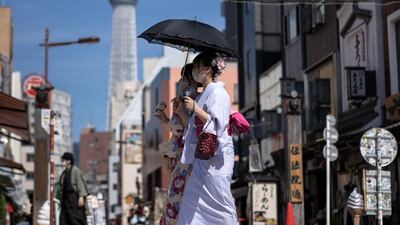
Women in rental kimonos walk through the Asakusa area in Tokyo, Japan. Getty Images -
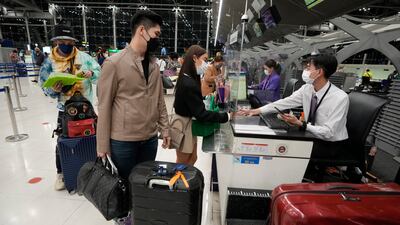
Thai travellers check in for their trip to Osaka and Tokyo, at Suvarnabhumi International Airport in Samut Prakan province, Thailand. AP Photo



