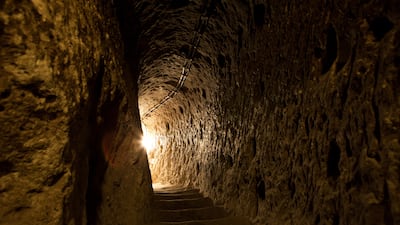
• Lascaux Caves in France features art dating back 17,000 years, but the public have been banned since 1963. Reuters
    Lascaux Caves in France features art dating back 17,000 years, but the public have been banned since 1963. Reuters
  • Ilha da Queimada Grande (Snake Island) in Brazil is thought to be home to 430,000 snakes, which have overrun the island since it was abandoned in the 1920s.
    Ilha da Queimada Grande (Snake Island) in Brazil is thought to be home to 430,000 snakes, which have overrun the island since it was abandoned in the 1920s.
  • A king penguin colony on Heard Island and McDonald Islands, Australia, which takes a two-week boat journey from the mainland to reach. Getty Images
    A king penguin colony on Heard Island and McDonald Islands, Australia, which takes a two-week boat journey from the mainland to reach. Getty Images
  • Access to Bhangarh Fort in India is strictly forbidden after sunset, amid local folklore that those who go in never come out again. Photo: Deepak Kosta / Unsplash
    Access to Bhangarh Fort in India is strictly forbidden after sunset, amid local folklore that those who go in never come out again. Photo: Deepak Kosta / Unsplash
  • Surtsey Island off the south coast of Iceland was only formed in the 1960s, with visitors banned to preserve the ecosystem. Getty Images
    Surtsey Island off the south coast of Iceland was only formed in the 1960s, with visitors banned to preserve the ecosystem. Getty Images
  • The derelict remains of Riverside Hospital on North Brother Island in the middle of the East River in New York. Photo: Creative Commons
    The derelict remains of Riverside Hospital on North Brother Island in the middle of the East River in New York. Photo: Creative Commons
  • Pravcicka Brana, Czech Republic, is the largest natural sandstone arch in Europe and was closed to the public in 1982. Getty Images
    Pravcicka Brana, Czech Republic, is the largest natural sandstone arch in Europe and was closed to the public in 1982. Getty Images
  • Niihau Island, Hawaii has been dubbed the “Forbidden Island”. It was bought in 1864 by a Scottish farmer and plantation owner called Elizabeth Sinclair for $10,000. Photo: Studio Kealaula / Unsplash
    Niihau Island, Hawaii has been dubbed the “Forbidden Island”. It was bought in 1864 by a Scottish farmer and plantation owner called Elizabeth Sinclair for $10,000. Photo: Studio Kealaula / Unsplash
  • Ise Grand Shrine in Ise, Japan. Only the Japanese royal family are permitted into the holy building. EPA
    Ise Grand Shrine in Ise, Japan. Only the Japanese royal family are permitted into the holy building. EPA
  • North Sentinel Island in India has been home to the Sentinelese tribe for at least 30,000 years, contact with whom is forbidden by law. Photo: Unsplash
    North Sentinel Island in India has been home to the Sentinelese tribe for at least 30,000 years, contact with whom is forbidden by law. Photo: Unsplash

10 forbidden places on Earth, from an Indian fort to a Japanese shrine


  • English
  • Arabic

While Instagram might be filled with people sharing photos of all the exotic destinations they’re visiting for summer, there are still certain places on the planet where people are not allowed to visit.

Whether for dangerous reasons, such as the presence of poisonous creatures or lingering diseases, or because they are holy sites only open to royal families, or natural wonders that could collapse at any moment, many sites are closed off permanently to the public.

From caves dating back 17,000 years to an island whose tribal inhabitants are known to kill those who venture too close, here are 10 places on the planet you can never set foot.

Ilha da Queimada Grande, Brazil

Known globally as Snake Island, Ilha da Queimada Grande was once inhabited by people who left in the 1920s when the island’s lighthouse was automated.

Since then, it is strictly off limits to the public as it is now estimated to be home to one snake for every square metre of the island — of which there are 430,000 square metres.

Home to the venomous golden lancehead viper among other species, only the Brazilian Navy and biomedical research teams are permitted to land there.

Lascaux Caves, France

Since 1963, visitors have been banned from the Lascaux Cave complex in the Dordogne, south-west France.

A Unesco World Heritage site, the caves were discovered by four teenagers in 1940 and opened to the public eight years later for visitors to marvel at the prehistoric art on the walls, which dates back more than 17,000 years to the Palaeolithic era.

Featuring almost 6,000 images drawn using mineral and manganese pigments, as well as charcoal, the art was adversely affected by the carbon dioxide and heat generated by the visitors causing mould to grow.

Replica caves built nearby attract thousands of visitors a year.

Heard Island and McDonald Islands, Australia

Among the most remote places on the planet, Heard Island and McDonald Islands can only be reached by boat, a journey which takes two weeks sailing south-west from Perth, Australia.

Located between Madagascar and Antarctica, the islands were only discovered in the mid-19th century and are home to penguins and marine birds, as well as an array of flora and fauna.

They are closed to the public owing to lava flow from the island's volcano, Mawson's Peak, and because of adverse weather conditions.

North Brother Island, New York, the US

Slap bang in the middle of one of the most-visited cities on Earth is a 13-acre island that no one is allowed to set foot on.

North Brother Island sits between the Bronx and the Rikers Island prison complex on the East River. It was once home to a hospital for contagious diseases, the most famous patient of which was Mary Mallon, also known as Typhoid Mary, who was confined there for two decades and was believed to have infected at least 51 people with the fever.

Left to nature, the island has since become a bird sanctuary with access only granted for academic or research purposes.

Ise Grand Shrine, Japan

Located in Ise on Honshu island, the Ise Grand Shrine is a Shinto shrine complex dedicated to the sun goddess Amaterasu, thought to date back to 4 BC.

Said to be the site of a sacred mirror, stories of which go back centuries, no members of the public are allowed to set foot inside.

Only priests, priestesses and members of the imperial family of Japan are permitted to enter the shrine, which is rebuilt every 20 years in accordance with the Shinto belief of the death and renewal of nature.

North Sentinel Island, India

The island in the Bay of Bengal is home to the Sentinelese tribe, who have called North Sentinel home for at least 30,000 years.

The tribe live in voluntary isolation from the rest of the world and a government act forbids any travel to the island or approaches closer than five nautical miles (9.26 km), with the area patrolled by the Indian Navy.

The indigenous tribe are known to shoot arrows at boats approaching their island and have killed three men over the past two decades who broke the law to venture closer.

Niihau Island, Hawaii, the US

The 2020 US census put the population of this island, which sits 28.2km south-west of Kauai, at just 84.

Dubbed the “Forbidden Island”, it was bought from the Kingdom of Hawaii in 1864 by a Scottish farmer and plantation owner called Elizabeth Sinclair for $10,000. Access is only granted to the US Navy, which maintains a small unmanned station there, government officials and descendants of Sinclair, which includes current owners, the Robinson family.

The Robinson family’s conservation efforts have seen the island, which was noted as “treeless” by Captain James Cook in 1778, now designated as a critical habitat for many Hawaiian species.

Pravcicka Brana, Czech Republic

Part of the Elbe Sandstone Mountains, which lie between Germany and the Czech Republic, Pravcicka Brana is a natural sandstone arch 16 metres above the ground.

Once a popular tourist spot, with an inn and the Hotel Sokoli hnizdo built there in the 1800s, the arch has been closed permanently to visitors since 1982.

Officials say the sheer number of visitors accelerated erosion at the site, creating concerns it would collapse, which it will one day, but will be due to the effects of the elements and natural decay rather than humans.

Surtsey, Iceland

As far as islands go, Surtsey off the south coast of Iceland is still a planetary newcomer, having only been formed between 1963 and 1967 thanks to an underwater volcanic eruption.

The island is off limits to the public, with only researchers able to gain access to study how ecosystems might develop without human influence, and is estimated to disappear beneath the waves by the next century.

Bhangarh Fort, Rajasthan, India

An outlier on this list, the Bhangarh Fort is open during the day for tourist and visitors. However, come sunset, access to the 16th century fort is strictly prohibited. The restrictions stem from local folklore, which says those who have ever ventured inside in the dark are never seen again.

Legend has it that the fort, which was built by Kachwaha ruler of Amber, Raja Bhagwant Singh in 1573, was cursed by a hermit and sage named Guru Balu Nath after a promise was broken not to allow the fort’s shadow to encroach on Nath’s meditation space.

It has been dubbed “the most haunted fort in India”.

Abandoned underground cities, subways and tunnel networks to visit — in pictures

  • Going underground: City Hall subway station, New York. The tiled, vaulted ceilings look down on the platform which was last used on December 31, 1945. Getty Images
    Going underground: City Hall subway station, New York. The tiled, vaulted ceilings look down on the platform which was last used on December 31, 1945. Getty Images
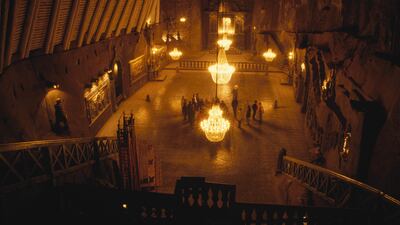
  • The chandelier-filled cathedral carved out of the rock salt in Wieliczka salt mine, Poland, which has been on the Unesco World Heritage List since 1978. Supplied
    The chandelier-filled cathedral carved out of the rock salt in Wieliczka salt mine, Poland, which has been on the Unesco World Heritage List since 1978. Supplied
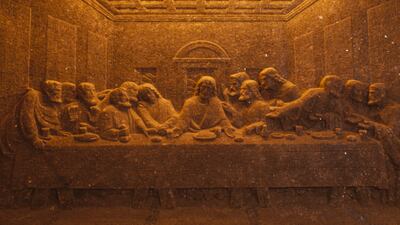
  • Religious artwork carved into the walls of the Wieliczka salt mine, including Leonardo da Vinci's 'The Last Supper'. Getty Images
    Religious artwork carved into the walls of the Wieliczka salt mine, including Leonardo da Vinci's 'The Last Supper'. Getty Images
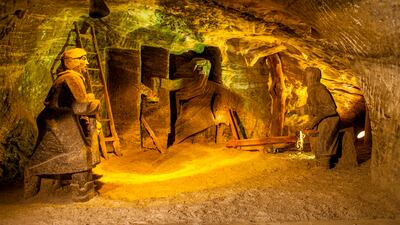
  • Among the tunnels and chambers of the mine are many statues and sculptures carved out of salt. Getty Images
    Among the tunnels and chambers of the mine are many statues and sculptures carved out of salt. Getty Images
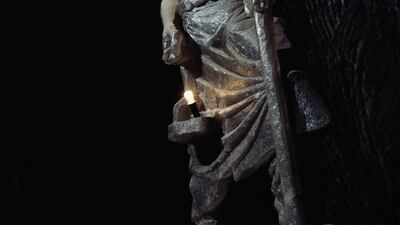
  • Statue of a miner sculpted from a single piece of rock salt. Getty Images
    Statue of a miner sculpted from a single piece of rock salt. Getty Images
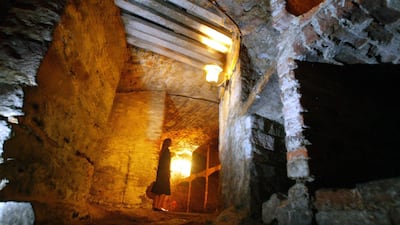
  • Work on the underground Edinburgh Vaults was completed in 1788 and visitors can tour the many abandoned taverns and workshops. Getty Images
    Work on the underground Edinburgh Vaults was completed in 1788 and visitors can tour the many abandoned taverns and workshops. Getty Images
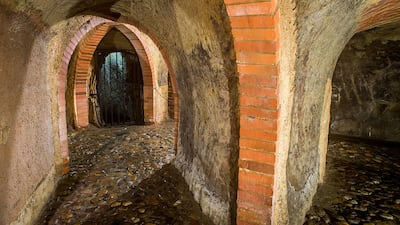
  • Part of the Pilsen Historical Underground tunnels in the Czech Republic, which started construction in the 13th century. Alamy
    Part of the Pilsen Historical Underground tunnels in the Czech Republic, which started construction in the 13th century. Alamy
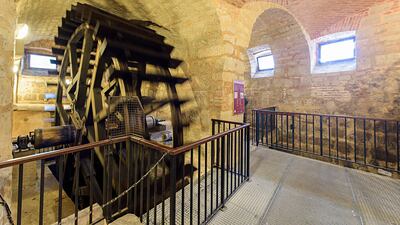
  • The Pilsen medieval network of vaulted subterranean tunnels stretches for more than 12 miles and contains replicas of former features, such as this water wheel. Alamy
    The Pilsen medieval network of vaulted subterranean tunnels stretches for more than 12 miles and contains replicas of former features, such as this water wheel. Alamy
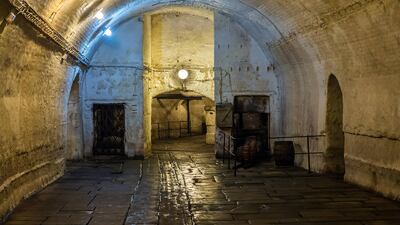
  • Archaeologists have found items dating back to the Middle Ages in the walls of the Pilsen Historical Underground. Alamy
    Archaeologists have found items dating back to the Middle Ages in the walls of the Pilsen Historical Underground. Alamy
  • Derinkuyu Underground City in Cappadocia, Turkey, dates back to the 7th and 8th centuries BC. Getty Images
    Derinkuyu Underground City in Cappadocia, Turkey, dates back to the 7th and 8th centuries BC. Getty Images
  • Turkey's Derinkuyu Underground City was built over 1,800 years and can accommodate over 20,000 people, including livestock and stores. Getty Images
    Turkey's Derinkuyu Underground City was built over 1,800 years and can accommodate over 20,000 people, including livestock and stores. Getty Images
How%20to%20avoid%20getting%20scammed
%3Cul%3E%0A%3Cli%3ENever%20click%20on%20links%20provided%20via%20app%20or%20SMS%2C%20even%20if%20they%20seem%20to%20come%20from%20authorised%20senders%20at%20first%20glance%3C%2Fli%3E%0A%3Cli%3EAlways%20double-check%20the%20authenticity%20of%20websites%3C%2Fli%3E%0A%3Cli%3EEnable%20Two-Factor%20Authentication%20(2FA)%20for%20all%20your%20working%20and%20personal%20services%3C%2Fli%3E%0A%3Cli%3EOnly%20use%20official%20links%20published%20by%20the%20respective%20entity%3C%2Fli%3E%0A%3Cli%3EDouble-check%20the%20web%20addresses%20to%20reduce%20exposure%20to%20fake%20sites%20created%20with%20domain%20names%20containing%20spelling%20errors%3C%2Fli%3E%0A%3C%2Ful%3E%0A

Mercer, the investment consulting arm of US services company Marsh & McLennan, expects its wealth division to at least double its assets under management (AUM) in the Middle East as wealth in the region continues to grow despite economic headwinds, a company official said.

Mercer Wealth, which globally has $160 billion in AUM, plans to boost its AUM in the region to $2-$3bn in the next 2-3 years from the present $1bn, said Yasir AbuShaban, a Dubai-based principal with Mercer Wealth.

Within the next two to three years, we are looking at reaching $2 to $3 billion as a conservative estimate and we do see an opportunity to do so,” said Mr AbuShaban.

Mercer does not directly make investments, but allocates clients’ money they have discretion to, to professional asset managers. They also provide advice to clients.

“We have buying power. We can negotiate on their (client’s) behalf with asset managers to provide them lower fees than they otherwise would have to get on their own,” he added.

Mercer Wealth’s clients include sovereign wealth funds, family offices, and insurance companies among others.

From its office in Dubai, Mercer also looks after Africa, India and Turkey, where they also see opportunity for growth.

Wealth creation in Middle East and Africa (MEA) grew 8.5 per cent to $8.1 trillion last year from $7.5tn in 2015, higher than last year’s global average of 6 per cent and the second-highest growth in a region after Asia-Pacific which grew 9.9 per cent, according to consultancy Boston Consulting Group (BCG). In the region, where wealth grew just 1.9 per cent in 2015 compared with 2014, a pickup in oil prices has helped in wealth generation.

BCG is forecasting MEA wealth will rise to $12tn by 2021, growing at an annual average of 8 per cent.

Drivers of wealth generation in the region will be split evenly between new wealth creation and growth of performance of existing assets, according to BCG.

Another general trend in the region is clients’ looking for a comprehensive approach to investing, according to Mr AbuShaban.

“Institutional investors or some of the families are seeing a slowdown in the available capital they have to invest and in that sense they are looking at optimizing the way they manage their portfolios and making sure they are not investing haphazardly and different parts of their investment are working together,” said Mr AbuShaban.

Some clients also have a higher appetite for risk, given the low interest-rate environment that does not provide enough yield for some institutional investors. These clients are keen to invest in illiquid assets, such as private equity and infrastructure.

“What we have seen is a desire for higher returns in what has been a low-return environment specifically in various fixed income or bonds,” he said.

“In this environment, we have seen a de facto increase in the risk that clients are taking in things like illiquid investments, private equity investments, infrastructure and private debt, those kind of investments were higher illiquidity results in incrementally higher returns.”

The Abu Dhabi Investment Authority, one of the largest sovereign wealth funds, said in its 2016 report that has gradually increased its exposure in direct private equity and private credit transactions, mainly in Asian markets and especially in China and India. The authority’s private equity department focused on structured equities owing to “their defensive characteristics.”

Key recommendations
  • Fewer criminals put behind bars and more to serve sentences in the community, with short sentences scrapped and many inmates released earlier.
  • Greater use of curfews and exclusion zones to deliver tougher supervision than ever on criminals.
  • Explore wider powers for judges to punish offenders by blocking them from attending football matches, banning them from driving or travelling abroad through an expansion of ‘ancillary orders’.
  • More Intensive Supervision Courts to tackle the root causes of crime such as alcohol and drug abuse – forcing repeat offenders to take part in tough treatment programmes or face prison.
RESULTS

6.30pm: Handicap (rated 95-108) US$125,000 2000m (Dirt).
Winner: Don’t Give Up, Gerald Mosse (jockey), Saeed bin Suroor (trainer).

7.05pm: Handicap (95 ) $160,000 2810m (Turf).
Winner: Los Barbados, Adrie de Vries, Fawzi Nass.

7.40pm: Handicap (80-89) $60,000 1600m (D).
Winner: Claim The Roses, Mickael Barzalona, Salem bin Ghadayer.

8.15pm: UAE 2000 Guineas Trial (Div-1) Conditions $100,000 1,400m (D)
Winner: Gold Town, William Buick, Charlie Appleby.

8.50pm: Cape Verdi Group 2 $200,000 1600m (T).
Winner: Promising Run, Patrick Cosgrave, Saeed bin Suroor.

9.25pm: UAE 2000 Guineas Conditions $100,000 1,400m (D).
Winner: El Chapo, Luke Morris, Fawzi Nass.

Dengue%20fever%20symptoms
%3Cp%3EHigh%20fever%20(40%C2%B0C%2F104%C2%B0F)%3Cbr%3ESevere%20headache%3Cbr%3EPain%20behind%20the%20eyes%3Cbr%3EMuscle%20and%20joint%20pains%3Cbr%3ENausea%3Cbr%3EVomiting%3Cbr%3ESwollen%20glands%3Cbr%3ERash%26nbsp%3B%3C%2Fp%3E%0A
Jetour T1 specs

Engine: 2-litre turbocharged

Power: 254hp

Torque: 390Nm

Price: From Dh126,000

Available: Now

Real estate tokenisation project

Dubai launched the pilot phase of its real estate tokenisation project last month.

The initiative focuses on converting real estate assets into digital tokens recorded on blockchain technology and helps in streamlining the process of buying, selling and investing, the Dubai Land Department said.

Dubai’s real estate tokenisation market is projected to reach Dh60 billion ($16.33 billion) by 2033, representing 7 per cent of the emirate’s total property transactions, according to the DLD.

Ten tax points to be aware of in 2026

1. Domestic VAT refund amendments: request your refund within five years

If a business does not apply for the refund on time, they lose their credit.

2. E-invoicing in the UAE

Businesses should continue preparing for the implementation of e-invoicing in the UAE, with 2026 a preparation and transition period ahead of phased mandatory adoption. 

3. More tax audits

Tax authorities are increasingly using data already available across multiple filings to identify audit risks. 

4. More beneficial VAT and excise tax penalty regime

Tax disputes are expected to become more frequent and more structured, with clearer administrative objection and appeal processes. The UAE has adopted a new penalty regime for VAT and excise disputes, which now mirrors the penalty regime for corporate tax.

5. Greater emphasis on statutory audit

There is a greater need for the accuracy of financial statements. The International Financial Reporting Standards standards need to be strictly adhered to and, as a result, the quality of the audits will need to increase.

6. Further transfer pricing enforcement

Transfer pricing enforcement, which refers to the practice of establishing prices for internal transactions between related entities, is expected to broaden in scope. The UAE will shortly open the possibility to negotiate advance pricing agreements, or essentially rulings for transfer pricing purposes. 

7. Limited time periods for audits

Recent amendments also introduce a default five-year limitation period for tax audits and assessments, subject to specific statutory exceptions. While the standard audit and assessment period is five years, this may be extended to up to 15 years in cases involving fraud or tax evasion. 

8. Pillar 2 implementation 

Many multinational groups will begin to feel the practical effect of the Domestic Minimum Top-Up Tax (DMTT), the UAE's implementation of the OECD’s global minimum tax under Pillar 2. While the rules apply for financial years starting on or after January 1, 2025, it is 2026 that marks the transition to an operational phase.

9. Reduced compliance obligations for imported goods and services

Businesses that apply the reverse-charge mechanism for VAT purposes in the UAE may benefit from reduced compliance obligations. 

10. Substance and CbC reporting focus

Tax authorities are expected to continue strengthening the enforcement of economic substance and Country-by-Country (CbC) reporting frameworks. In the UAE, these regimes are increasingly being used as risk-assessment tools, providing tax authorities with a comprehensive view of multinational groups’ global footprints and enabling them to assess whether profits are aligned with real economic activity. 

Contributed by Thomas Vanhee and Hend Rashwan, Aurifer

SPECS
%3Cp%3E%3Cstrong%3EEngine%3A%3C%2Fstrong%3E%206-cylinder%203-litre%2C%20with%20petrol%20and%20diesel%20variants%3Cbr%3E%3Cstrong%3ETransmission%3A%20%3C%2Fstrong%3E8-speed%20automatic%3Cbr%3E%3Cstrong%3EPower%3A%3C%2Fstrong%3E%20286hp%20(petrol)%2C%20249hp%20(diesel)%3Cbr%3E%3Cstrong%3ETorque%3A%20%3C%2Fstrong%3E450Nm%20(petrol)%2C%20550Nm%20(diesel)%3Cbr%3E%3Cstrong%3EPrice%3A%20%3C%2Fstrong%3EStarting%20at%20%2469%2C800%3Cbr%3E%3Cstrong%3EOn%20sale%3A%20%3C%2Fstrong%3ENow%3C%2Fp%3E%0A
Updated: August 29, 2022, 5:27 AM