

Emirates is scheduling additional flights to Jeddah and Madinah during the Hajj season, to cater to pilgrims travelling to Makkah in Saudi Arabia.
The airline will operate 31 extra flights to Jeddah, as well as double daily flights to Madinah from June 23 to July 20. These services will run in parallel with Emirates’ regular scheduled services.
Saudi Arabia has significantly expanded Hajj participation this year to nearly one million pilgrims. Emirates is reporting strong demand for Hajj travel from Indonesia, Pakistan, India, Bangladesh, Nigeria, Turkey, Egypt, Ethiopia, Malaysia, the UK, the US, the UAE and Algeria.
In order to take advantage of these new special services, passengers must be under the age of 65, hold a valid Hajj visa and hold a valid Covid-19 vaccination certificate, as well a negative PCR test taken within 72 hours of departure.

The airline has implemented a number of measures to ensure pilgrims have a seamless journey that is aligned with the tenets of their faith. On the ground in Dubai, Emirates has a special Hajj airport team to help manage check-in and transfers, and has set up dedicated check-in and transfer counters for Hajj passengers transiting in Dubai.
On board, extra provisions have been introduced, such as ablution cleansing rituals, unperfumed towels and announcements advising passengers when they have entered Al Miqat zones (state of sanctity). On flights from Jeddah, passengers can check-in up to five litres of holy water (Zamzam), which will be placed in special areas in the cargo hold.
Meanwhile, the UAE’s Ministry of Health and Prevention has urged all pilgrims and the wider community to follow health instructions and precautions before and during travel. It has advised that all those travelling for Hajj make sure that they are up to date with both basic and optional vaccinations, including those safeguarding against meningitis, seasonal influenza, pneumococcal infections and Covid-19.
The ministry has encouraged pilgrims, especially those suffering from chronic diseases, to visit health centres before travelling to Saudi Arabia, where they are able to undertake free health tests, including those for diabetes and blood pressure.
Hajj 2022: Saudi Arabia aims to keep pilgrimage clean and eco-friendly — in pictures
-
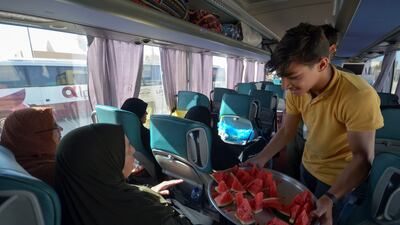
Volunteer Abdulrahman al Maani distributes watermelon slices to Hajj pilgrims leaving for Makkah, in Maan, Jordan. Reuters -
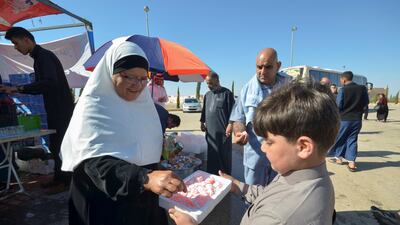
A boy offers sweets to Hajj pilgrims leaving for Makkah, in Maan, Jordan. Reuters -
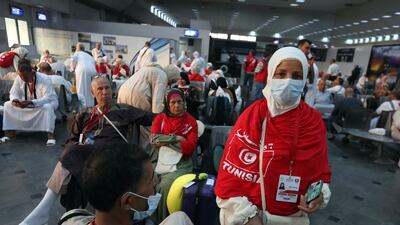
Tunisian Muslims travel to participate in Hajj in Makkah. EPA -
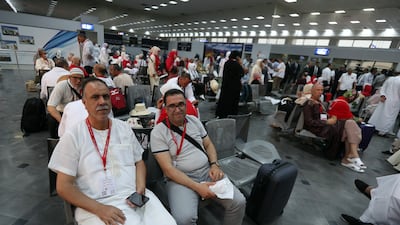
This year’s quota for Tunisians for the pilgrimage is 4,792, the country’s Minister of Religious Affairs Ibrahim Chaibi said. EPA -

Tunisian President Kais Saied greets some of those heading for Makkah. EPA -
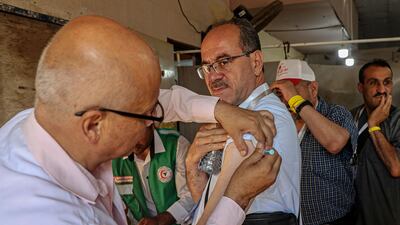
A Palestinian Muslim pilgrim receives a Covid-19 vaccine dose at the Rafah border crossing with Egypt as they head to Saudi Arabia for the annual Hajj pilgrimage. AFP -
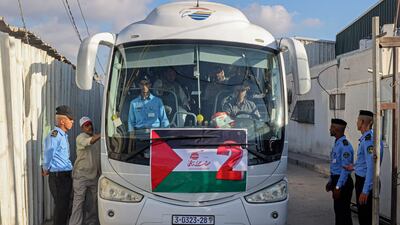
A bus carrying Palestinian Muslim pilgrims arrives at the Rafah border crossing. The Hajj is the largest annual pilgrimage in the world. AFP -

The Hajj pilgrimage is an Islamic religious duty that must be carried out at least once in the lifetime by every able-bodied Muslim who can afford to do so. AFP -

Millions of Muslims travel every year to Saudi Arabia to participate in the Hajj, although this was not the case over the past two years due to the coronavirus pandemic. AFP -
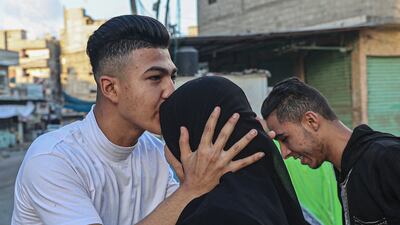
This pilgrim receives best wishes from her loved one before embarking on the journey to Makkah. AFP -
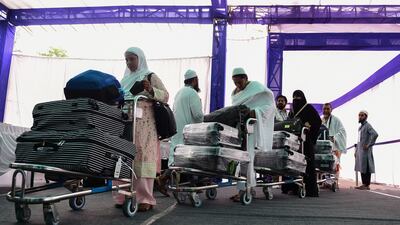
Muslims devotees bound to Makkah for the Hajj pilgrimage arrive at the airport in Ahmedabad, India. AFP -
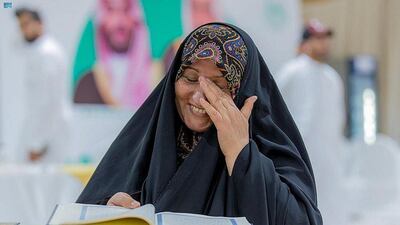
An Iraqi pilgrim at Jdeidet Arar port in northern Saudi Arabia. The port provides services to those performing Hajj. SPA -
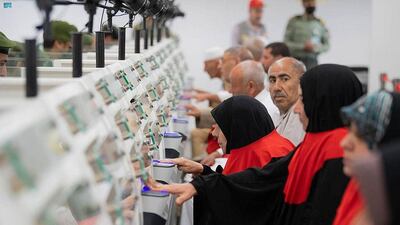
Members of the third group of Iraqi pilgrims arrive at the port. SPA -
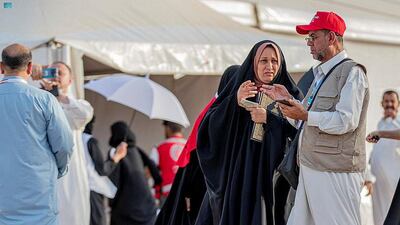
More than 4,000 pilgrims from Iraq have passed through the port. SPA -
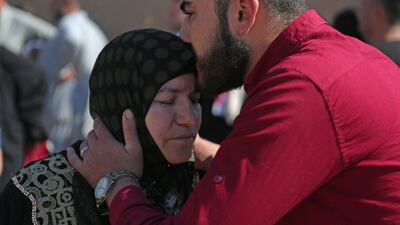
A Syrian pilgrim prepares to board a bus at the Bab Al Hawa border crossing with Turkey. AFP -
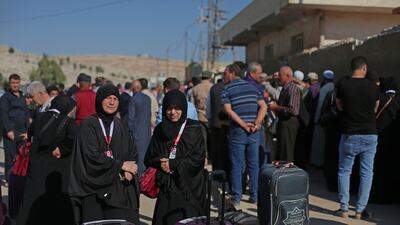
Syrians gather at the border crossing as they prepare to travel to Makkah. AFP -

All Muslims who are able to must perform Hajj during their lives. AFP -
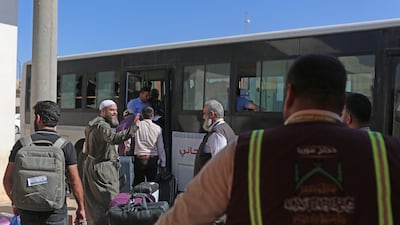
Hajj pilgrims begin their journey from the Bab Al Hawa crossing to Saudi Arabia. AFP -

More than 10,000 Syrians will perform the pilgrimage this year. AFP



