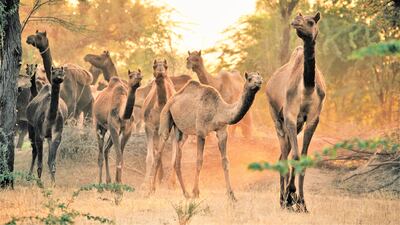
As the first rays of dawn light up the horizon in Sadri, a municipality in India's Rajasthan, the Raika — a pastoral nomadic community — head out to their camels. Resting between the low lying acacia trees and scrub vegetation, the animals stir at the approaching footsteps.
Guests staying at the nearby Ranakpur Camel Lodge have the option to join the Raika on a morning chaifari — a unique type of safari — with the chance to see the handlers milk the camels. This routine is followed by a cup of tea brewed with fresh frothy camel milk over an open fire fuelled by dung cakes. It's common to see the Raika untie a part of their elaborately coiled crimson turbans and use the loose end to stoke the fire. Tea is served in steel katoris (cups) or in bowls constructed from freshly plucked aak leaves, a plant found abundantly in Rajasthan.
The Raika and their camels share an exceptionally strong bond that has been built over generations. The hardy people consider the camels to be part of their family and believe that every camel has a unique personality. As Dayli Devi Raika says: “Nowadays all kinds of people keep animals, but nobody can serve them like the Raika can.”
One of the largest states in India, Rajasthan is home to the Thar Desert, also known as The Great Indian Desert. In this dry and inhospitable terrain, camels have long been an intrinsic part of life. But while the desert sands remain, life in this part of the world has transformed and with it, so has the role of these humped creatures.
Over the years, the "ships of the desert" have slowly lost their relevance, substituted by improved means of transportation and a growing network of roads across the state. Furthermore, a lack of adequate grazing grounds and unfavourable legislation have adversely impacted the camel population.
The story of Ranakpur Camel Lodge began in the 1990s, when German veterinarian Ilse Kohler-Rollefson moved to India to study the hoofed mammals. Back then, the country had the third-largest camel population in the world, a number that Kohler-Rollefson says has declined by about 90 per cent.
In 1996, alongside Indian Rajput Hanwant Singh Rathore, whose grandfather was a camel trader, she set up Lokhit Pashu Palak Sansthan, a welfare organisation for lifestock herders. The organisation focuses on establishing grazing rights and veterinary care for camels and attempts to influence state level policies in favour of the creatures and their herders.
LPPS works closely with the Raika in championing their issues. One of the primary challenges facing the community is a lack of steady income. In an effort to build alternative income streams, Kohler-Rollefson set up a camel dairy process, as well as places and procedures to assist the Raika in making camel soap and wool, plus a workshop where paper can be created out of camel dung.
However, these streams alone don't generate sufficient income for the herders. “Milk can bring in income, but the demand for camel milk is still limited,” explains Kohler-Rollefson.
Seeing the fascination that visitors to the region had for the camels and the Raika, Kohler-Rollefson realised that tourism could be a positive pivot to secure much-needed additional income.
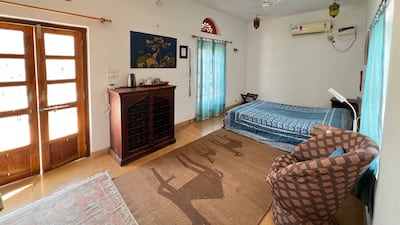
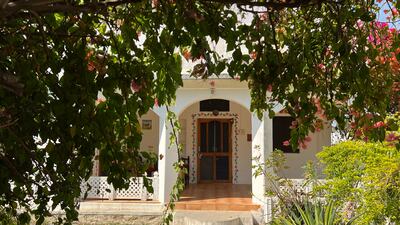
In 2018, two round huts that were originally built for camel herders travelling to the region to attend training sessions were opened to guests and Ranakpur Camel Lodge was born. Simple brick structures, each room has a reed roof that helps to keep it cool in the summer and warm in the winter. In the years that followed, more rooms were added and the lodge now offers seven rooms, including two luxury options — with additional comforts such as air conditioning and bathtubs.
A stay at Ranakpur Camel Lodge offers guests an immersive experience into local village life.
After the morning chaifari experience, guests can join the herders as they take their camels out to graze. The camels are kept in a nomadic system, grazing on trees and wild vegetation, many of which are also used in traditional medicine.
There's also the option to visit a Raika family and join them for a meal or lend a helping hand in some local workshops, including paper or soap-making. The soaps are made by blending camel milk, coconut oil and multani miti, a mineral-packed clay, with rose and sandalwood essence. Guests who want a true camel herder experience can also opt to spend a night under the stars with the Raika and their camels.
A highlight of any stay at the lodge is the wonderful rustic food that's cooked by women in the village. Using minimal oil and spices, meals typically feature a thali of dal, subzi (vegetable), dahi (curd) and roti (flatbread). Every thali is also served with a panchkuta — a traditional Rajasthani specialty curry made with the pods of the khejri tree.
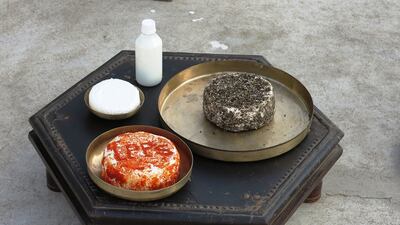
While out with the herders, guests are also able to enjoy a camel herders' lunch consisting of bajra (millet) bread cooked over an open fire and served with dal, subzi, dahi and jaggery. There's also cheese tasting events where travellers can sample various types of camel cheese, and the option to enjoy a five-course meal featuring a host of camel dairy produce, including cream cheese dips, a salad made with camel feta, a pasta dish called camelina and cheese cake.
For guests staying at Ranakpur Camel Lodge, many of whom are repeat visitors, it's the peace that the place offers that's often cited as the highlight. But for Kohler-Rollefson, nothing beats the opportunity of being able to nuzzle with the statuesque camels that call the region home.
MATCH INFO
What: 2006 World Cup quarter-final
When: July 1
Where: Gelsenkirchen Stadium, Gelsenkirchen, Germany
Result:
England 0 Portugal 0
(Portugal win 3-1 on penalties)
Company%20Profile
%3Cp%3E%3Cstrong%3ECompany%20name%3A%3C%2Fstrong%3E%20myZoi%3Cbr%3E%3Cstrong%3EStarted%3A%3C%2Fstrong%3E%202021%3Cbr%3E%3Cstrong%3EFounders%3A%3C%2Fstrong%3E%20Syed%20Ali%2C%20Christian%20Buchholz%2C%20Shanawaz%20Rouf%2C%20Arsalan%20Siddiqui%2C%20Nabid%20Hassan%3Cbr%3E%3Cstrong%3EBased%3A%3C%2Fstrong%3E%20UAE%3Cbr%3E%3Cstrong%3ENumber%20of%20staff%3A%3C%2Fstrong%3E%2037%3Cbr%3E%3Cstrong%3EInvestment%3A%3C%2Fstrong%3E%20Initial%20undisclosed%20funding%20from%20SC%20Ventures%3B%20second%20round%20of%20funding%20totalling%20%2414%20million%20from%20a%20consortium%20of%20SBI%2C%20a%20Japanese%20VC%20firm%2C%20and%20SC%20Venture%3C%2Fp%3E%0A
First Person
Richard Flanagan
Chatto & Windus
The biog
DOB: 25/12/92
Marital status: Single
Education: Post-graduate diploma in UAE Diplomacy and External Affairs at the Emirates Diplomatic Academy in Abu Dhabi
Hobbies: I love fencing, I used to fence at the MK Fencing Academy but I want to start again. I also love reading and writing
Lifelong goal: My dream is to be a state minister
Safety 'top priority' for rival hyperloop company
The chief operating officer of Hyperloop Transportation Technologies, Andres de Leon, said his company's hyperloop technology is “ready” and safe.
He said the company prioritised safety throughout its development and, last year, Munich Re, one of the world's largest reinsurance companies, announced it was ready to insure their technology.
“Our levitation, propulsion, and vacuum technology have all been developed [...] over several decades and have been deployed and tested at full scale,” he said in a statement to The National.
“Only once the system has been certified and approved will it move people,” he said.
HyperloopTT has begun designing and engineering processes for its Abu Dhabi projects and hopes to break ground soon.
With no delivery date yet announced, Mr de Leon said timelines had to be considered carefully, as government approval, permits, and regulations could create necessary delays.
About RuPay
A homegrown card payment scheme launched by the National Payments Corporation of India and backed by the Reserve Bank of India, the country’s central bank
RuPay process payments between banks and merchants for purchases made with credit or debit cards
It has grown rapidly in India and competes with global payment network firms like MasterCard and Visa.
In India, it can be used at ATMs, for online payments and variations of the card can be used to pay for bus, metro charges, road toll payments
The name blends two words rupee and payment
Some advantages of the network include lower processing fees and transaction costs
Company profile
Name: Steppi
Founders: Joe Franklin and Milos Savic
Launched: February 2020
Size: 10,000 users by the end of July and a goal of 200,000 users by the end of the year
Employees: Five
Based: Jumeirah Lakes Towers, Dubai
Financing stage: Two seed rounds – the first sourced from angel investors and the founders' personal savings
Second round raised Dh720,000 from silent investors in June this year
Our legal columnist
Name: Yousef Al Bahar
Advocate at Al Bahar & Associate Advocates and Legal Consultants, established in 1994
Education: Mr Al Bahar was born in 1979 and graduated in 2008 from the Judicial Institute. He took after his father, who was one of the first Emirati lawyers
25%20Days%20to%20Aden
%3Cp%3EAuthor%3A%20Michael%20Knights%3C%2Fp%3E%0A%3Cp%3EPages%3A%20256%3C%2Fp%3E%0A%3Cp%3EAvailable%3A%20January%2026%3C%2Fp%3E%0A
Ferrari 12Cilindri specs
Engine: naturally aspirated 6.5-liter V12
Power: 819hp
Torque: 678Nm at 7,250rpm
Price: From Dh1,700,000
Available: Now
Who has lived at The Bishops Avenue?
- George Sainsbury of the supermarket dynasty, sugar magnate William Park Lyle and actress Dame Gracie Fields were residents in the 1930s when the street was only known as ‘Millionaires’ Row’.
- Then came the international super rich, including the last king of Greece, Constantine II, the Sultan of Brunei and Indian steel magnate Lakshmi Mittal who was at one point ranked the third richest person in the world.
- Turkish tycoon Halis Torprak sold his mansion for £50m in 2008 after spending just two days there. The House of Saud sold 10 properties on the road in 2013 for almost £80m.
- Other residents have included Iraqi businessman Nemir Kirdar, singer Ariana Grande, holiday camp impresario Sir Billy Butlin, businessman Asil Nadir, Paul McCartney’s former wife Heather Mills.
Hunting park to luxury living
- Land was originally the Bishop of London's hunting park, hence the name
- The road was laid out in the mid 19th Century, meandering through woodland and farmland
- Its earliest houses at the turn of the 20th Century were substantial detached properties with extensive grounds
HER%20FIRST%20PALESTINIAN
%3Cp%3EAuthor%3A%20Saeed%20Teebi%3C%2Fp%3E%0A%3Cp%3EPages%3A%20256%3C%2Fp%3E%0A%3Cp%3EPublisher%3A%C2%A0House%20of%20Anansi%20Press%3C%2Fp%3E%0A
Tax authority targets shisha levy evasion
The Federal Tax Authority will track shisha imports with electronic markers to protect customers and ensure levies have been paid.
Khalid Ali Al Bustani, director of the tax authority, on Sunday said the move is to "prevent tax evasion and support the authority’s tax collection efforts".
The scheme’s first phase, which came into effect on 1st January, 2019, covers all types of imported and domestically produced and distributed cigarettes. As of May 1, importing any type of cigarettes without the digital marks will be prohibited.
He said the latest phase will see imported and locally produced shisha tobacco tracked by the final quarter of this year.
"The FTA also maintains ongoing communication with concerned companies, to help them adapt their systems to meet our requirements and coordinate between all parties involved," he said.
As with cigarettes, shisha was hit with a 100 per cent tax in October 2017, though manufacturers and cafes absorbed some of the costs to prevent prices doubling.
World%20Cup%202023%20ticket%20sales
%3Cp%3EAugust%2025%20%E2%80%93%20Non-India%20warm-up%20matches%20and%20all%20non-India%20event%20matches%0D%3Cbr%3EAugust%2030%20%E2%80%93%20India%20matches%20at%20Guwahati%20and%20Trivandrum%0D%3Cbr%3EAugust%2031%20%E2%80%93%20India%20matches%20at%20Chennai%2C%20Delhi%20and%20Pune%0D%3Cbr%3ESeptember%201%20%E2%80%93%20India%20matches%20at%20Dharamsala%2C%20Lucknow%20and%20Mumbai%0D%3Cbr%3ESeptember%202%20%E2%80%93%20India%20matches%20at%20Bengaluru%20and%20Kolkata%0D%3Cbr%3ESeptember%203%20%E2%80%93%20India%20matches%20at%20Ahmedabad%0D%3Cbr%3ESeptember%2015%20%E2%80%93%20Semi-finals%20and%20Final%3C%2Fp%3E%0A
The five pillars of Islam
Previous men's records
- 2:01:39: Eliud Kipchoge (KEN) on 16/9/19 in Berlin
- 2:02:57: Dennis Kimetto (KEN) on 28/09/2014 in Berlin
- 2:03:23: Wilson Kipsang (KEN) on 29/09/2013 in Berlin
- 2:03:38: Patrick Makau (KEN) on 25/09/2011 in Berlin
- 2:03:59: Haile Gebreselassie (ETH) on 28/09/2008 in Berlin
- 2:04:26: Haile Gebreselassie (ETH) on 30/09/2007 in Berlin
- 2:04:55: Paul Tergat (KEN) on 28/09/2003 in Berlin
- 2:05:38: Khalid Khannouchi (USA) 14/04/2002 in London
- 2:05:42: Khalid Khannouchi (USA) 24/10/1999 in Chicago
- 2:06:05: Ronaldo da Costa (BRA) 20/09/1998 in Berlin