



Novak Djokovic is to be deported from Australia after losing appeal against cancellation of visa over Covid-19 coronavirus entry requirements.
The verdict means the world No 1 will not be allowed to defend his Australian Open title when the action gets underway on Monday, denying his bid, for a few months at least, of winning a men's record 21st Grand Slam.
Djokovic, 34, has won the Australian Open the past three years and was a strong favourite to claim a record-extending 10th Melbourne Park crown.
The top seed was set to face Miomir Kecmanovic in his opening match at Rod Laver Arena on Monday.
Ruling on a case that has gripped Australia and the sporting world for more than a week, a three-judge bench of the Federal Court heard government lawyers' arguments that Djokovic's continued presence risked whipping up anti-vaccination sentiment during Australia's worst outbreak of Covid-19 since the pandemic began.
Alex Hawke, the immigration minister, cancelled the visa on the grounds that Djokovic’s presence in Australia may be a risk to the health and “good order” of the Australian public and “may be counterproductive to efforts at vaccination by others in Australia.”
For Djokovic, his lawyers said Hawke took an “unreasonable approach” to assessing whether his deportation was in the public interest and cited no evidence that his presence may foster anti-vaccination sentiment, according to a court filing. The only evidence of protests referring to Djokovic’s were caused by the state canceling his visa the first time, barrister Nick Wood said in the hearing Sunday.
“Rightly or wrongly he is perceived to endorse an anti-vaccination view and his presence here is perceived to contribute to that,” Stephen Lloyd, acting for the government, told the court.
-
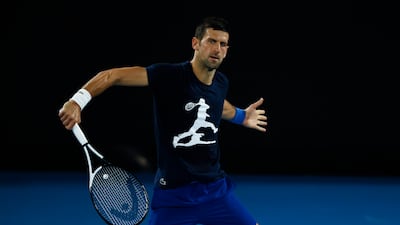
Novak Djokovic plays a backhand during a practice session ahead of the 2022 Australian Open at Melbourne Park on January 14, 2022. Getty Images -
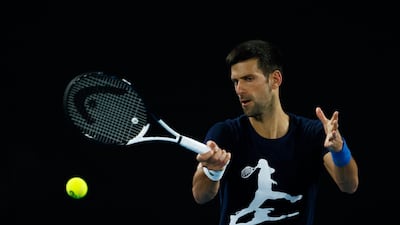
Novak Djokovic plays a forehand during a practice session ahead of the 2022 Australian Open at Melbourne Park. Getty Images -
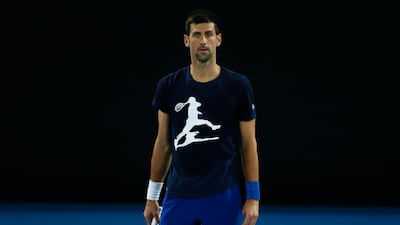
Novak Djokovic looks on during a practice session ahead of the 2022 Australian Open at Melbourne Park. Getty Images -
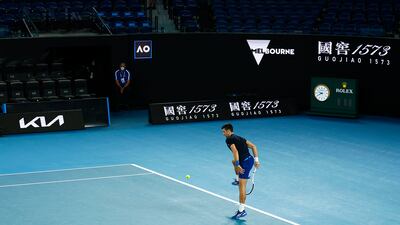
Novak Djokovic during a practice session ahead of the 2022 Australian Open at Melbourne Park. Getty Images -
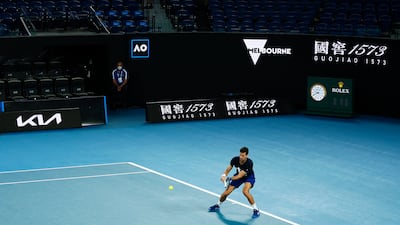
Novak Djokovic plays a backhand during a practice session ahead of the 2022 Australian Open at Melbourne Park. Getty Images -
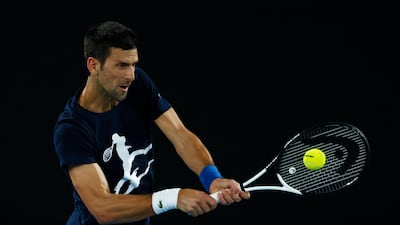
Novak Djokovic plays a backhand during a practice session ahead of the 2022 Australian Open at Melbourne Park. Getty Images -

Novak Djokovic plays a backhand during a practice session ahead of the 2022 Australian Open at Melbourne Park. Getty Images -
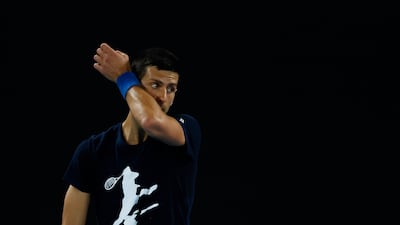
Novak Djokovic during a practice session ahead of the 2022 Australian Open at Melbourne Park. Getty Images -
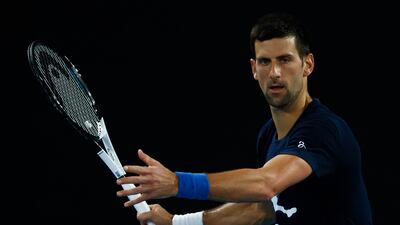
Novak Djokovic plays a forehand during a practice session ahead of the 2022 Australian Open at Melbourne Park. Getty Images -
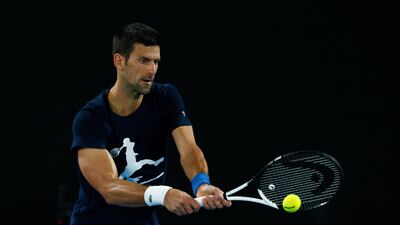
Novak Djokovic plays a backhand during a practice session ahead of the 2022 Australian Open at Melbourne Park. Getty Images -
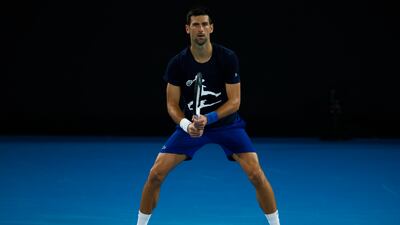
Novak Djokovic in action during a practice session ahead of the 2022 Australian Open at Melbourne Park. Getty Images -
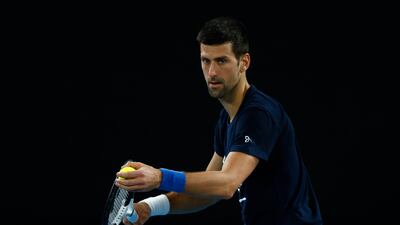
Novak Djokovic serves during a practice session ahead of the 2022 Australian Open at Melbourne Park. Getty Images -
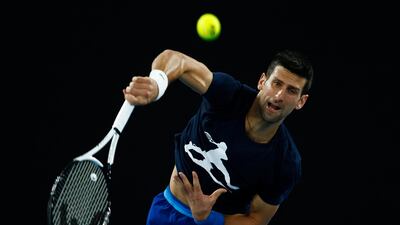
Novak Djokov hits a serve during a practice session ahead of the 2022 Australian Open at Melbourne Park. Getty Images -
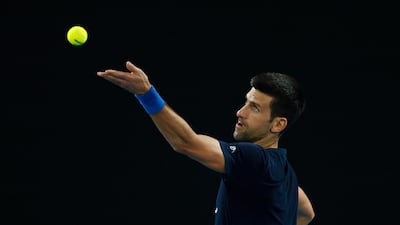
Novak Djokov hits a serve during a practice session ahead of the 2022 Australian Open at Melbourne Park. Getty Images


The decision likely means that Djokovic, who is not vaccinated against Covid-19, will remain in detention in Melbourne until he is deported.
A deportation order usually also includes a three-year ban on returning to Australia.
A medical exemption that allowed the Serb to enter the country without being vaccinated had sparked fury in Australia, and became a political issue for Prime Minister Scott Morrison, who has to call a federal election before May.
An opinion poll published by The Age newspaper on Sunday showed almost three quarters of Australians believe Djokovic should be sent home without playing in the Australian Open. Just 14% said he should be allowed to stay, the poll of 1607 people showed.
Djokovic’s visa was initially cancelled on January 6 at Melbourne’s airport hours after he arrived to compete in the first Grand Slam of 2022.
A border official cancelled his visa after deciding Djokovic didn’t qualify for a medical exemption from Australia’s rules for unvaccinated visitors.
After spending four days in an immigration detention centre, Djokovic, 34, won his appeal after the court quashed the revocation before it was cancelled a second time on Friday.
-

Members of the Serbian community march in Melbourne, Australia. Serbian tennis player Novak Djokovic was to be released from an immigration detention center in Melbourne after an order by the Federal Circuit Court. The tennis world number one had been staying in a hotel-turned-detention center after his visa was revoked upon landing in Australia. EPA -
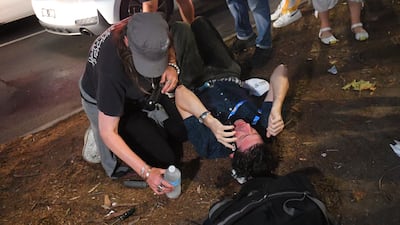
A member of the press lies on the ground after sustaining an injury during clashes between the Serbian Community and Victorian Police officers in Melbourne, Australia. Djokovic was to be released from an immigration detention center in Melbourne after an order by the Federal Circuit Court. The tennis world number one had been staying in a hotel-turned-detention center after his visa was revoked upon landing in Australia. EPA -

Members of the local Serbian community play music and dance outside the legal offices where Serbia's tennis champion Novak Djokovic is in with his legal team in Melbourne. AFP -
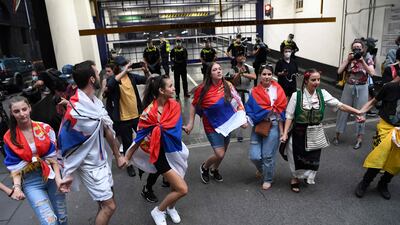
Members of the local Serbian community play music and dance outside the legal offices where Serbia's tennis champion Novak Djokovic is in with his legal team in Melbourne. AFP -
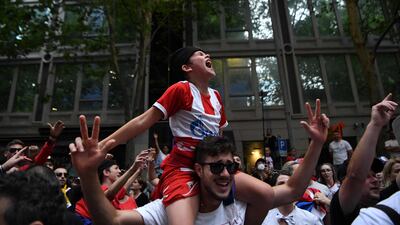
Members of the local Serbian community play music and dance outside the legal offices where Serbia's tennis champion Novak Djokovic is in with his legal team in Melbourne on January 9, 2022. (Photo by William WEST / AFP) -
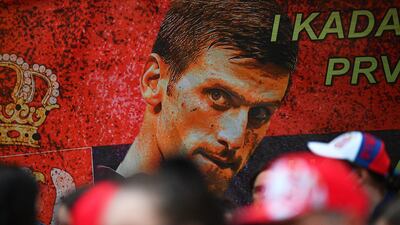
Members of the Serbian community march in Melbourne, Australia. Serbian tennis player Novak Djokovic was to be released from an immigration detention center in Melbourne after an order by the Federal Circuit Court. The tennis world number one had been staying in a hotel-turned-detention center after his visa was revoked upon landing in Australia. EPA -
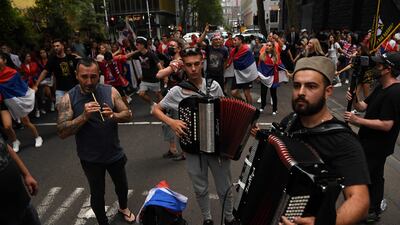
Members of the local Serbian community play music and dance outside the legal offices where Serbia's tennis champion Novak Djokovic is in with his legal team in Melbourne. AFP -
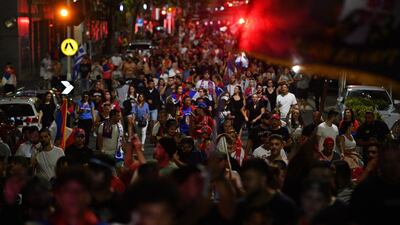
epa09677057 Members of the Serbian community march in Melbourne, Australia. Serbian tennis player Novak Djokovic was to be released from an immigration detention center in Melbourne after an order by the Federal Circuit Court. The tennis world number one had been staying in a hotel-turned-detention center after his visa was revoked upon landing in Australia. EPA -
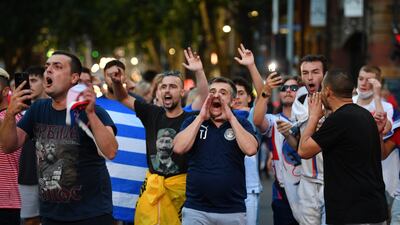
epa09677043 Members of the Serbian community taunt Victorian Police officers after Novak Djokovic was allegedly taken away in a vechile from his lawyer's office in Melbourne. Djokovic was to be released from an immigration detention center in Melbourne after an order by the Federal Circuit Court. The tennis world number one had been staying in a hotel-turned-detention center after his visa was revoked upon landing in Australia. EPA



