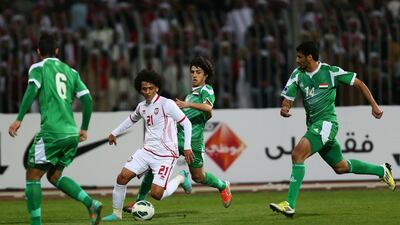
UAE's Omar Abdulrahman dribbles past Humam Tariq Faraj, Salam Shaker and Ali Adnan of Iraq. AFP

Arabian Gulf Cup: When Omar Abdulrahman inspired the UAE to glory in 2013


Paul Radley
  • English
  • Arabic

When, six years earlier, the UAE had won their first Gulf Cup – and first major trophy of any sort – it had been on home soil in Abu Dhabi. Zayed Sports City was packed to the rafters, and support for the host team universal.

The 2013 final might have been played elsewhere, a short skip across the Arabian Gulf in Bahrain, but the atmosphere was scarcely any different.

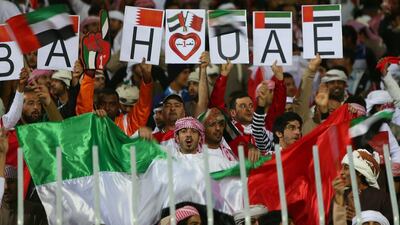
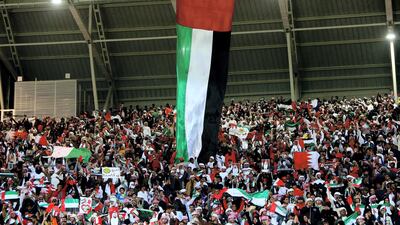
Four hours before the kick off for the deciding game between UAE and Iraq, Bahrain’s National Stadium in east Riffa was full beyond its 35,000 capacity. Almost everyone inside was Emirati.

To say the country was in the grip of cup fever is understating the point.

President Sheikh Khalifa had chartered six flights from Abu Dhabi so fans could travel for free to the semi-final against Kuwait.

Once that was duly won, everyone else was on board, too, with free flights commissioned again from the capital and Dubai to the final, as well as four from Fujairah, three from Ras Al Khaimah and three from Sharjah.

Even du joined in with the feeling of goodwill, laying on a flight for 350 supporters to Manama.

Many more made the journey – in excess of 800kms – by road, in cars decked with UAE bunting.

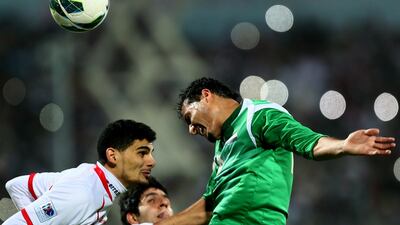
  • Omar Abdulrahman dribbles past Humam Tariq Faraj, Salam Shaker and Ali Adnan of Iraq. AFP
    Omar Abdulrahman dribbles past Humam Tariq Faraj, Salam Shaker and Ali Adnan of Iraq. AFP
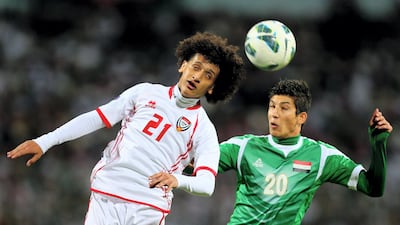
  • Dhurgham Ismael, right, of Iraq vies with Omar Abdulrahman of UAE. AFP
    Dhurgham Ismael, right, of Iraq vies with Omar Abdulrahman of UAE. AFP
  • Bahraini and Emirati supporters make themselves heard in the National Stadium ahead of kick off. AFP
    Bahraini and Emirati supporters make themselves heard in the National Stadium ahead of kick off. AFP
  • UAE coach Mahdi Ali holds aloft the Gulf Cup of Nations trophy after the Emirates beat Iraq 2-1 in the final. AP Photo
    UAE coach Mahdi Ali holds aloft the Gulf Cup of Nations trophy after the Emirates beat Iraq 2-1 in the final. AP Photo
  • UAE's Hamdan Ismail Al Obaidly poses with fans after the final. Reuters
    UAE's Hamdan Ismail Al Obaidly poses with fans after the final. Reuters
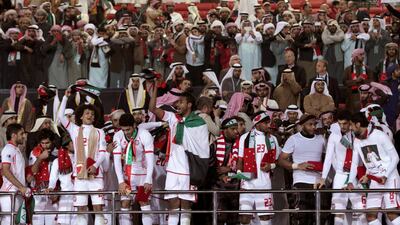
  • UAE players celebrate. AFP
    UAE players celebrate. AFP
  • UAE players celebrate after the final. AP Photo
    UAE players celebrate after the final. AP Photo
  • Hussam al-Sarry of Iraq vies with Mohannad Salem of UAE. AFP
    Hussam al-Sarry of Iraq vies with Mohannad Salem of UAE. AFP
  • Ali Salem of UAE heads the ball. AFP
    Ali Salem of UAE heads the ball. AFP
  • A huge UAE flag hangs over Emirati fans prior the start of the final. AFP
    A huge UAE flag hangs over Emirati fans prior the start of the final. AFP
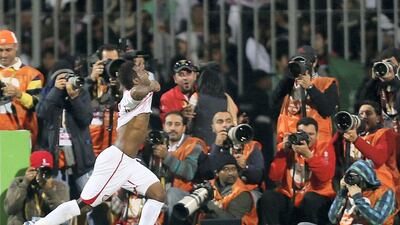
  • UAE's Ismail Salem celebrates after his team won the final 2-1. AFP
    UAE's Ismail Salem celebrates after his team won the final 2-1. AFP
  • An Iraqi player reacts after his team lost the final. AFP
    An Iraqi player reacts after his team lost the final. AFP
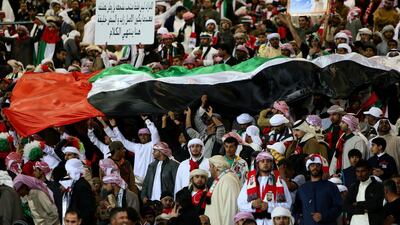
  • UAE supporters. AFP
    UAE supporters. AFP
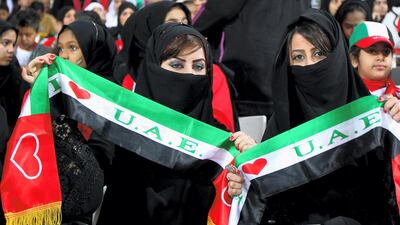
  • Supporters of the UAE wave scarves prior to the start of the Gulf Cup final in Manama. AFP
    Supporters of the UAE wave scarves prior to the start of the Gulf Cup final in Manama. AFP
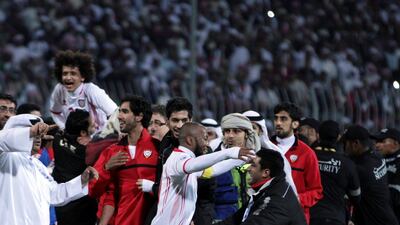
  • UAE players celebrate their extra-time win over Iraq. AFP
    UAE players celebrate their extra-time win over Iraq. AFP
  • Humam Tariq Faraj of Iraq vies with Khamis Ismail of UAE. AFP
    Humam Tariq Faraj of Iraq vies with Khamis Ismail of UAE. AFP
  • UAE coach Mahdi Ali celebrates. Reuters
    UAE coach Mahdi Ali celebrates. Reuters
  • UAE's Ismail Salem celebrates. Reuters
    UAE's Ismail Salem celebrates. Reuters
  • Emarati player Ahmad Khalil receives the top scorer award. AFP
    Emarati player Ahmad Khalil receives the top scorer award. AFP

On the afternoon of the game, one 4x4 made the trip from the team hotel in the city centre to the stadium with a supporter stood up and waving a flag through the sunroof.

The back windscreen carried the message: “Qatar done, Bahrain done, Oman done, Kuwait done, Iraq download 99 per cent.”

It was confidence boldly worn. And, with Omar Abdulrahman pulling the strings, why not be confident?

The shaggy haired Al Ain playmaker was just 21 at the time, but his star had long been on the rise.

Just six months earlier, he had played at Old Trafford and Wembley Stadium in the Olympics, and caught the eye.

Even though he was still so young, the Gulf Cup final felt like a coronation of sorts.

Certainly, the tournament has thrown up few more memorable goals in its 50-year history than the one he managed against Iraq.

In the 28th minute, Abdulrahman slalomed through the Iraq defence from his starting position on the right hand side and planted a deflected shot beyond the Iraq keeper. He had earned his luck.

Thanks to Amoory’s magnificence, the UAE dominated the early phases of the final, but Iraq were by no means easy beats.

Their equaliser, scored by Younis Mahmoud with nine minutes of normal time remaining, was little more than they deserved.

And, judging by the body language of the players on either side in the time between the end of the 90 minutes and extra-time kicking off, it seemed unlikely the winners would be UAE.

Iraq’s players ended their pep talk with a frenzy, almost dancing their way back on to the field, while Mahdi Ali’s men looked spent.

How deceiving that was. In the second half of extra time, Ismail Al Hammadi latched on to a pass by Amer Abdulrahman and fired the UAE to the title.

A version of this article was first published on July 5, 2020.

COMPANY%20PROFILE
%3Cp%3E%3Cstrong%3EName%3A%20%3C%2Fstrong%3ESmartCrowd%0D%3Cbr%3E%3Cstrong%3EStarted%3A%20%3C%2Fstrong%3E2018%0D%3Cbr%3E%3Cstrong%3EFounder%3A%20%3C%2Fstrong%3ESiddiq%20Farid%20and%20Musfique%20Ahmed%0D%3Cbr%3E%3Cstrong%3EBased%3A%20%3C%2Fstrong%3EDubai%0D%3Cbr%3E%3Cstrong%3ESector%3A%20%3C%2Fstrong%3EFinTech%20%2F%20PropTech%0D%3Cbr%3E%3Cstrong%3EInitial%20investment%3A%20%3C%2Fstrong%3E%24650%2C000%0D%3Cbr%3E%3Cstrong%3ECurrent%20number%20of%20staff%3A%3C%2Fstrong%3E%2035%0D%3Cbr%3E%3Cstrong%3EInvestment%20stage%3A%20%3C%2Fstrong%3ESeries%20A%0D%3Cbr%3E%3Cstrong%3EInvestors%3A%20%3C%2Fstrong%3EVarious%20institutional%20investors%20and%20notable%20angel%20investors%20(500%20MENA%2C%20Shurooq%2C%20Mada%2C%20Seedstar%2C%20Tricap)%3C%2Fp%3E%0A
Avatar: Fire and Ash

Director: James Cameron

Starring: Sam Worthington, Sigourney Weaver, Zoe Saldana

Rating: 4.5/5

The rules on fostering in the UAE

A foster couple or family must:

  • be Muslim, Emirati and be residing in the UAE
  • not be younger than 25 years old
  • not have been convicted of offences or crimes involving moral turpitude
  • be free of infectious diseases or psychological and mental disorders
  • have the ability to support its members and the foster child financially
  • undertake to treat and raise the child in a proper manner and take care of his or her health and well-being
  • A single, divorced or widowed Muslim Emirati female, residing in the UAE may apply to foster a child if she is at least 30 years old and able to support the child financially
Company%20profile
%3Cp%3E%3Cstrong%3ECompany%20name%3A%20%3C%2Fstrong%3EHakbah%0D%3Cbr%3E%3Cstrong%3EStarted%3A%20%3C%2Fstrong%3E2018%0D%3Cbr%3E%3Cstrong%3EFounder%3A%20%3C%2Fstrong%3ENaif%20AbuSaida%0D%3Cbr%3E%3Cstrong%3EBased%3A%20%3C%2Fstrong%3ESaudi%20Arabia%0D%3Cbr%3E%3Cstrong%3ESector%3A%20%3C%2Fstrong%3EFinTech%0D%3Cbr%3E%3Cstrong%3ECurrent%20number%20of%20staff%3A%20%3C%2Fstrong%3E22%20%0D%3Cbr%3E%3Cstrong%3EInitial%20investment%3A%20%3C%2Fstrong%3E%24200%2C000%0D%3Cbr%3E%3Cstrong%3EInvestment%20stage%3A%20%3C%2Fstrong%3Epre-Series%20A%0D%3Cbr%3E%3Cstrong%3EInvestors%3A%20%3C%2Fstrong%3EGlobal%20Ventures%20and%20Aditum%20Investment%20Management%0D%3Cbr%3E%3Cbr%3E%3C%2Fp%3E%0A
Ten tax points to be aware of in 2026

1. Domestic VAT refund amendments: request your refund within five years

If a business does not apply for the refund on time, they lose their credit.

2. E-invoicing in the UAE

Businesses should continue preparing for the implementation of e-invoicing in the UAE, with 2026 a preparation and transition period ahead of phased mandatory adoption. 

3. More tax audits

Tax authorities are increasingly using data already available across multiple filings to identify audit risks. 

4. More beneficial VAT and excise tax penalty regime

Tax disputes are expected to become more frequent and more structured, with clearer administrative objection and appeal processes. The UAE has adopted a new penalty regime for VAT and excise disputes, which now mirrors the penalty regime for corporate tax.

5. Greater emphasis on statutory audit

There is a greater need for the accuracy of financial statements. The International Financial Reporting Standards standards need to be strictly adhered to and, as a result, the quality of the audits will need to increase.

6. Further transfer pricing enforcement

Transfer pricing enforcement, which refers to the practice of establishing prices for internal transactions between related entities, is expected to broaden in scope. The UAE will shortly open the possibility to negotiate advance pricing agreements, or essentially rulings for transfer pricing purposes. 

7. Limited time periods for audits

Recent amendments also introduce a default five-year limitation period for tax audits and assessments, subject to specific statutory exceptions. While the standard audit and assessment period is five years, this may be extended to up to 15 years in cases involving fraud or tax evasion. 

8. Pillar 2 implementation 

Many multinational groups will begin to feel the practical effect of the Domestic Minimum Top-Up Tax (DMTT), the UAE's implementation of the OECD’s global minimum tax under Pillar 2. While the rules apply for financial years starting on or after January 1, 2025, it is 2026 that marks the transition to an operational phase.

9. Reduced compliance obligations for imported goods and services

Businesses that apply the reverse-charge mechanism for VAT purposes in the UAE may benefit from reduced compliance obligations. 

10. Substance and CbC reporting focus

Tax authorities are expected to continue strengthening the enforcement of economic substance and Country-by-Country (CbC) reporting frameworks. In the UAE, these regimes are increasingly being used as risk-assessment tools, providing tax authorities with a comprehensive view of multinational groups’ global footprints and enabling them to assess whether profits are aligned with real economic activity. 

Contributed by Thomas Vanhee and Hend Rashwan, Aurifer

Updated: December 20, 2024, 11:36 AM