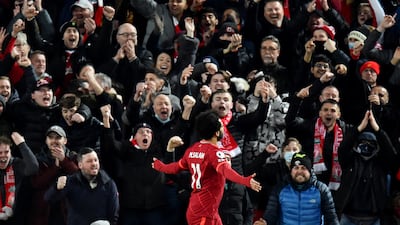
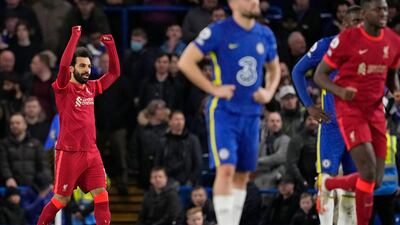
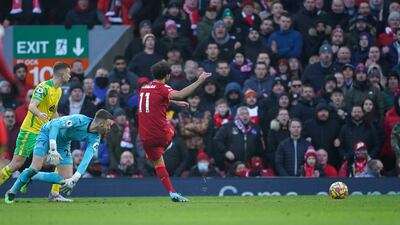
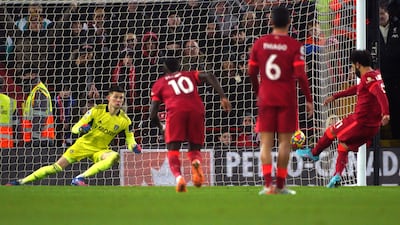
Ten years ago this weekend, Mohamed Salah sat on the substitutes’ bench of a famous London stadium, watching and waiting. Behind him, close up and noisy in Stamford Bridge’s tight East Stand, supporters were becoming frustrated.
Their team, top of the Premier League, had turned impotent. The best African striker of a generation was having a poor day in front of goal; another forward, lured from the grasp of Liverpool, made little impact during his half an hour on the pitch. Only in injury time did the hosts, Chelsea, scramble a 1-0 win over Everton.
Salah never got on to the field, left instead to imagine how his speed might have made a difference, perhaps in place of Samuel Eto’o, the Cameroonian veteran picked as Chelsea’s centre-forward.
Or to wonder if he, Salah, who had angered Liverpool a month earlier by choosing to join Chelsea rather than them, would have been a more dynamic impact substitute than the ex-Red Fernando Torres.
The confidence of Torres, soon to turn 30, had waned visibly since leaving behind his peak years at Anfield for a burdensome combination of high price-tag and low goals-per-game ratio at Chelsea.
But such was the hierarchy at Stamford Bridge in 2014: age over youth, experience over fresh faces. Salah, 21, would spend many afternoons watching and waiting as a Chelsea employee. “He needs time,” the then Chelsea manager, Jose Mourinho, explained.
“Step by step, 10 minutes here, 10 minutes there,” advised Mourinho of the menu of first-team action Salah, signed for around €16m from Basel in that winter’s transfer window, should expect.
“We bought a kid from a different habitat, an Egyptian playing in Switzerland. We knew the kid was going to need time. We know next season he will be really good for us.”
Mourinho proved half right in his forecast. The next season Salah did indeed show what a brilliantly decisive footballer he is. Only he was doing it on loan for Fiorentina. His stay at Chelsea had lasted barely a calendar year.
A decade on, Chelsea’s neglect of Salah’s talent, their discarding of him in his early 20s, ranks as an epic misjudgement. It’s become a flagpole in the timeline not just of a record-breaking footballer, as much a giant for Africa as Eto’o had been in the 2000s, an icon across the Mena region, but in how football is run and played at its richest, most elite level.
Since Salah returned to English football, via Florence and Rome, to join Liverpool in 2017, he has never stopped reminding Chelsea of their error.
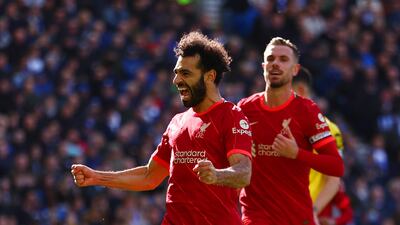
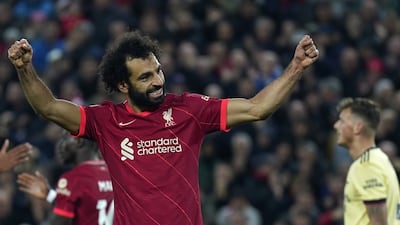
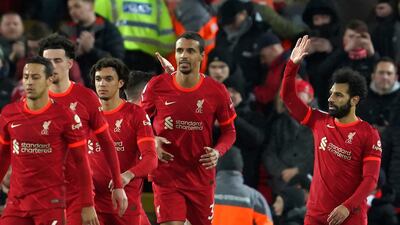
Ahead of Sunday’s League Cup final, Chelsea versus Liverpool, it is Salah’s fitness that has been the consuming pre-match issue. Ten years on from that chilly, frustrating afternoon at Stamford Bridge, he may again only be on the bench at a famous London arena, but, at Wembley, he would sit there only by way of a precaution, to protect a tender hamstring for the multiple trophy-chase Liverpool have ahead.
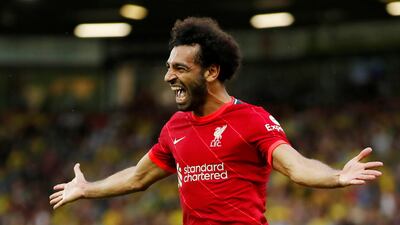
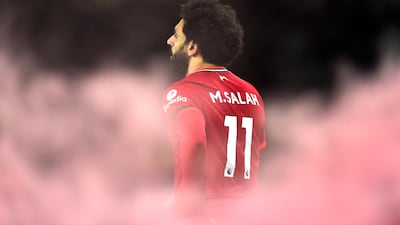
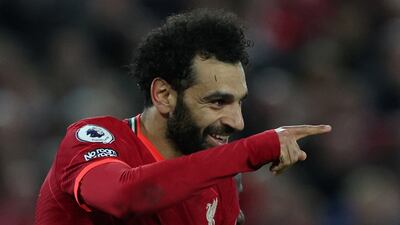
And, starting XI or not, Salah will still be the figure that haunts Chelsea most of all.
It will be his 24th Chelsea-Liverpool collision, a fixture that gauges how much Salah has reshaped the order of English football. His first was the only one where he wore blue: May 2014, when the young, short-haired Salah had made enough Chelsea appearances, to, as Mourinho noted, to “feel the connection between him and the crowd; they like him, they like his style of play”.
But as winter turned to spring, Chelsea were fading from the title race as Liverpool surged in it, towards a possible first English league crown for 24 years. With three games left on the calendar, Salah was in Mourinho’s starting XI at Anfield.
It was a famous, ill-fated day for Liverpool, adding to the club’s reputation as nervous nearly men, lacking title-winning calibre. Their captain Steven Gerrard slipped, miscontrolling a simple pass, Chelsea’s Demba Ba took advantage. Chelsea’s win invited Manchester City to steam clear in what had been a tight three-way jostle for the Premier League.
A week later, Salah was again in Chelsea’s XI against Norwich City, but asked to play a deeper, midfield role than his natural one. After a goalless first-half, Mourinho singled out “the kid who needs time” for severe criticism, substituting him at the interval.
Others in the dressing room that day report Salah as stunned by the manager’s harsh words, fighting back tears. Salah never started a home league game for Chelsea again.
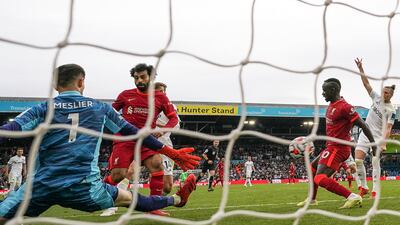
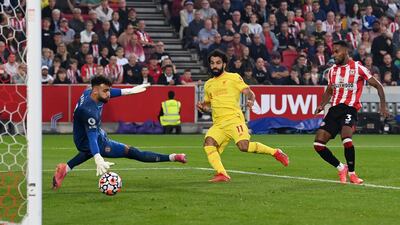
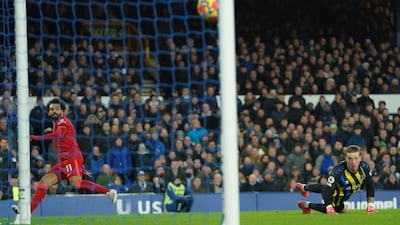
His returns to Stamford Bridge over his six and a half years transforming Liverpool have been consistently punishing for Chelsea. Day one of the current campaign featured a Salah assist – one of the 89 of his Liverpool career – to put the first point on the board in a 2023/2024 title race Liverpool now lead. He set up goals, home and away, in victories over Chelsea in 2019/20, the season that delivered the league crown that had eluded Liverpool for 30 years.
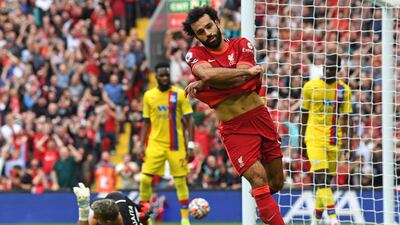
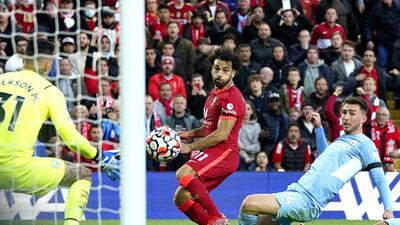
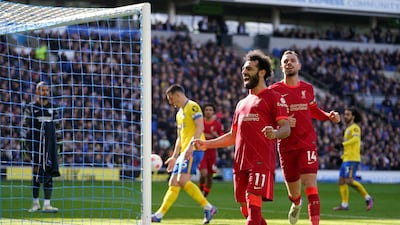
It was against Chelsea that Salah reached double figures for Premier League goals in a Liverpool jersey in the emphatic start to his Anfield career: 10 in his first 13 games. He’s now on 205 in 334 Liverpool matches, across competitions.
And here’s the really painful comparison for Chelsea. Over the last nine years at Serie A’s Fiorentina and Roma and then in England’s Premier League with Liverpool, Salah has scored 187 top-flight goals. That’s an average of almost 21 per season.
In the same period, no Chelsea player has completed a league season with more than 20. With Salah, Liverpool have never finished below Chelsea in the table; in the half-dozen years before Salah moved from Roma to Liverpool, Chelsea finished above Liverpool in every season but one.
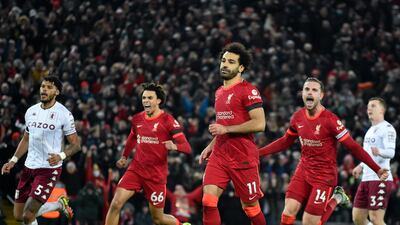
In Cup showpieces, it’s all one-way: the three Liverpool-Chelsea finals since 2017 have gone to penalties, but always gone Red, with Salah among the successful spot-kick takers in Liverpool’s wins in the FA Cup and League Cup finals of 2021-22 and in the Uefa Super Cup of 2019.
If Salah participates in a fourth Liverpool-Chelsea final on Sunday, tender hamstring or not, he’ll slot straight into the groove. The team’s routines have become second nature, because, under Jurgen Klopp’s long management, they are designed around Salah’s strengths, ones that Mourinho recognised all those years ago: “he is the kind who prefers passes [played] into space. He’s fast, he’s direct, he’s aggressive with the ball”.
Liverpool detected the same, envisaging in Basel’s goalscoring tyro someone who could give them the quick-break effectiveness that Torres used to. Salah, when he eventually came to Anfield, would upgrade that model significantly.
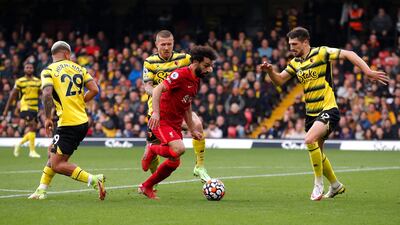
The urgent pressing, swift transition football of Klopp’s Liverpool starts with Salah’s energy, sharp-eyed intelligence and pace. It has become a tactical model others strive to copy; it has accelerated the development of those around him, like Trent Alexander-Arnold, a right-back for whom the privilege of playing in the space behind Salah has been liberating, a platform to radically reinterpret the role of full-back.
Chelsea’s inheritance from the Great Salah Misjudgment? If you heard the club’s co-owner, Todd Boehly, talking about the institution he had recently purchased in 2022, you’d think they had simply gone into denial.
“Our academy is Mo Salah,” Boehly erroneously told a business conference, mistakenly classing the Egyptian, who came up through the youth ranks at Al Mokawloon in Nasr City, Cairo, as a homegrown Chelsea alumnus.
Truth is he was an imported Chelsea talent, cleverly scouted but horribly squandered, and not even sold at significant profit, Chelsea converting his €5m loan to Roma to a permanent transfer there for another €15m in 2016.
The final sale fee was less than Chelsea had paid Basel. Roma made a profit of almost €30m a year later, when Liverpool finally got their man.
But Boehly and his consortium have heeded the painful Salah lesson. The squad Chelsea take to Wembley will probably include seven or eight players signed, within the past 18 months, who are in their early 20s. Among them: Nicolas Jackson, a precocious African striker, as Salah was a decade ago; an exciting winger, in Mikhailo Mudryk, who, as with Salah in 2014, was signed after a transfer tug-of-war with Premier League rival, Arsenal in the case of Mudryk.
Neither Jackson nor Mudryk may ever come anywhere near Salah’s status, but, like Enzo Fernandez, Moises Caicedo, Cole Palmer, Noni Madueke or Malo Gusto, these are footballers Chelsea have recruited young and committed to unusually long contracts, of seven or eight years.
That’s a signal of Chelsea emphasising youth in a way they did not in the past. Now, if a talent is to leave Chelsea young, they will at least be carrying a long-term resale value. The learnings of the Great Salah Misjudgment have directly realigned how Chelsea, the Premier League’s biggest spenders, do business.
Last summer, Liverpool rejected offers for Salah that climbed close to €200m from within Saudi Arabia’s Pro League, where he continues to be regarded as the prime object of desire.
The hope, in Riyadh and Jeddah, is that, with Klopp set to leave Anfield this summer, the totemic Liverpool player from the Klopp era may also think about a fresh challenge.
Before then, there’s a possible quadruple of trophies, starting with the League Cup, for Salah to add to his ample haul of medals with Liverpool. Chelsea, meanwhile, sit mid-table in the Premier League, not in any European competition, still haunted by the superstar they let slip away.

Key findings of Jenkins report
- Founder of the Muslim Brotherhood, Hassan al Banna, "accepted the political utility of violence"
- Views of key Muslim Brotherhood ideologue, Sayyid Qutb, have “consistently been understood” as permitting “the use of extreme violence in the pursuit of the perfect Islamic society” and “never been institutionally disowned” by the movement.
- Muslim Brotherhood at all levels has repeatedly defended Hamas attacks against Israel, including the use of suicide bombers and the killing of civilians.
- Laying out the report in the House of Commons, David Cameron told MPs: "The main findings of the review support the conclusion that membership of, association with, or influence by the Muslim Brotherhood should be considered as a possible indicator of extremism."
Mercer, the investment consulting arm of US services company Marsh & McLennan, expects its wealth division to at least double its assets under management (AUM) in the Middle East as wealth in the region continues to grow despite economic headwinds, a company official said.
Mercer Wealth, which globally has $160 billion in AUM, plans to boost its AUM in the region to $2-$3bn in the next 2-3 years from the present $1bn, said Yasir AbuShaban, a Dubai-based principal with Mercer Wealth.
“Within the next two to three years, we are looking at reaching $2 to $3 billion as a conservative estimate and we do see an opportunity to do so,” said Mr AbuShaban.
Mercer does not directly make investments, but allocates clients’ money they have discretion to, to professional asset managers. They also provide advice to clients.
“We have buying power. We can negotiate on their (client’s) behalf with asset managers to provide them lower fees than they otherwise would have to get on their own,” he added.
Mercer Wealth’s clients include sovereign wealth funds, family offices, and insurance companies among others.
From its office in Dubai, Mercer also looks after Africa, India and Turkey, where they also see opportunity for growth.
Wealth creation in Middle East and Africa (MEA) grew 8.5 per cent to $8.1 trillion last year from $7.5tn in 2015, higher than last year’s global average of 6 per cent and the second-highest growth in a region after Asia-Pacific which grew 9.9 per cent, according to consultancy Boston Consulting Group (BCG). In the region, where wealth grew just 1.9 per cent in 2015 compared with 2014, a pickup in oil prices has helped in wealth generation.
BCG is forecasting MEA wealth will rise to $12tn by 2021, growing at an annual average of 8 per cent.
Drivers of wealth generation in the region will be split evenly between new wealth creation and growth of performance of existing assets, according to BCG.
Another general trend in the region is clients’ looking for a comprehensive approach to investing, according to Mr AbuShaban.
“Institutional investors or some of the families are seeing a slowdown in the available capital they have to invest and in that sense they are looking at optimizing the way they manage their portfolios and making sure they are not investing haphazardly and different parts of their investment are working together,” said Mr AbuShaban.
Some clients also have a higher appetite for risk, given the low interest-rate environment that does not provide enough yield for some institutional investors. These clients are keen to invest in illiquid assets, such as private equity and infrastructure.
“What we have seen is a desire for higher returns in what has been a low-return environment specifically in various fixed income or bonds,” he said.
“In this environment, we have seen a de facto increase in the risk that clients are taking in things like illiquid investments, private equity investments, infrastructure and private debt, those kind of investments were higher illiquidity results in incrementally higher returns.”
The Abu Dhabi Investment Authority, one of the largest sovereign wealth funds, said in its 2016 report that has gradually increased its exposure in direct private equity and private credit transactions, mainly in Asian markets and especially in China and India. The authority’s private equity department focused on structured equities owing to “their defensive characteristics.”
Islamophobia definition
A widely accepted definition was made by the All Party Parliamentary Group on British Muslims in 2019: “Islamophobia is rooted in racism and is a type of racism that targets expressions of Muslimness or perceived Muslimness.” It further defines it as “inciting hatred or violence against Muslims”.
White hydrogen: Naturally occurring hydrogen
Chromite: Hard, metallic mineral containing iron oxide and chromium oxide
Ultramafic rocks: Dark-coloured rocks rich in magnesium or iron with very low silica content
Ophiolite: A section of the earth’s crust, which is oceanic in nature that has since been uplifted and exposed on land
Olivine: A commonly occurring magnesium iron silicate mineral that derives its name for its olive-green yellow-green colour
The%20specs
%3Cp%3E%3Cstrong%3EEngine%3A%20%3C%2Fstrong%3E2.3-litre%20turbo%204-cyl%3Cbr%3E%3Cstrong%3ETransmission%3A%20%3C%2Fstrong%3E10-speed%20auto%3Cbr%3E%3Cstrong%3EPower%3A%20%3C%2Fstrong%3E298hp%3Cbr%3E%3Cstrong%3ETorque%3A%20%3C%2Fstrong%3E452Nm%3Cbr%3E%3Cstrong%3ETowing%20capacity%3A%20%3C%2Fstrong%3E3.4-tonne%3Cbr%3E%3Cstrong%3EPayload%3A%20%3C%2Fstrong%3E4WD%20%E2%80%93%20776kg%3B%20Rear-wheel%20drive%20819kg%3Cbr%3E%3Cstrong%3EPrice%3A%20%3C%2Fstrong%3EPrice%3A%20Dh138%2C945%20(XLT)%20Dh193%2C095%20(Wildtrak)%3Cbr%3E%3Cstrong%3EDelivery%3A%3C%2Fstrong%3E%20from%20August%3C%2Fp%3E%0A
J%20Street%20Polling%20Results
%3Cp%3E97%25%20of%20Jewish-Americans%20are%20concerned%20about%20the%20rise%20in%20anti-Semitism%3Cbr%3E%3Cbr%3E76%25%20of%20US%20Jewish%20voters%20believe%20Donald%20Trump%20and%20his%20allies%20in%20the%20Republican%20Party%20are%20responsible%20for%20a%20rise%20in%20anti-Semitism%3Cbr%3E%3Cbr%3E74%25%20of%20American%20Jews%20agreed%20that%20%E2%80%9CTrump%20and%20the%20Maga%20movement%20are%20a%20threat%20to%20Jews%20in%20America%22%3Cbr%3E%3C%2Fp%3E%0A
The rules on fostering in the UAE
A foster couple or family must:
- be Muslim, Emirati and be residing in the UAE
- not be younger than 25 years old
- not have been convicted of offences or crimes involving moral turpitude
- be free of infectious diseases or psychological and mental disorders
- have the ability to support its members and the foster child financially
- undertake to treat and raise the child in a proper manner and take care of his or her health and well-being
- A single, divorced or widowed Muslim Emirati female, residing in the UAE may apply to foster a child if she is at least 30 years old and able to support the child financially
First Person
Richard Flanagan
Chatto & Windus
Museum of the Future in numbers
- 78 metres is the height of the museum
- 30,000 square metres is its total area
- 17,000 square metres is the length of the stainless steel facade
- 14 kilometres is the length of LED lights used on the facade
- 1,024 individual pieces make up the exterior
- 7 floors in all, with one for administrative offices
- 2,400 diagonally intersecting steel members frame the torus shape
- 100 species of trees and plants dot the gardens
- Dh145 is the price of a ticket
The President's Cake
Director: Hasan Hadi
Starring: Baneen Ahmad Nayyef, Waheed Thabet Khreibat, Sajad Mohamad Qasem
Rating: 4/5
UAE%20Warriors%2033%20Results
%3Cp%3E%3Cstrong%3EFeatherweight%20title%3C%2Fstrong%3E%3Cbr%3EAli%20Al%20Qaisi%20by%20Jesse%20Arnett%20by%20submission%2C%20round%203%3Cbr%3E%3Cstrong%3EWelterweight%20title%3C%2Fstrong%3E%3Cbr%3EJosh%20Togo%20bt%20Tahir%20Abdullaev%20by%20unanimous%20decision%3Cbr%3E%3Cstrong%3EFlyweight%3C%2Fstrong%3E%3Cbr%3EIago%20Ribeiro%20bt%20Juan%20Puerta%20by%20unanimous%20decision%3Cbr%3E%3Cstrong%3EMiddleweight%3C%2Fstrong%3E%3Cbr%3EYerkin%20Darmen%20bt%20Tyler%20Ray%20by%20TKO%2C%20round%203%3Cbr%3E%3Cstrong%3EWelterweight%3C%2Fstrong%3E%3Cbr%3EAbdulla%20Al%20Bousheiri%20bt%20John%20Adajar%20by%20submission%2C%20round%201%3Cbr%3E%3Cstrong%3ECatchweight%20232lb%3C%2Fstrong%3E%3Cbr%3EAsylzhan%20Bakhytzhanuly%20bt%20Hasan%20Yousefi%20by%20submission%2C%20round%202%3Cbr%3E%3Cstrong%3ECatchweight%20176lb%3C%2Fstrong%3E%3Cbr%3EAlin%20Chirila%20bt%20Silas%20Robson%20by%20KO%2C%20round%201%3Cbr%3E%3Cstrong%3ECatchweight%20176lb%3C%2Fstrong%3E%3Cbr%3EArvin%20Chan%20bt%20Abdi%20Farah%20by%20TKO%2C%20round%201%3Cbr%3E%3Cstrong%3ELightweight%3C%2Fstrong%3E%3Cbr%3EOle-Jorgen%20Johnsen%20bt%20Nart%20Abida%20by%20TKO%2C%20round%201%3Cbr%3E%3Cstrong%3EBantamweight%3C%2Fstrong%3E%3Cbr%3EOtar%20Tanzilov%20bt%20Eduardo%20Dinis%20by%20TKO%2C%20round%203%3Cbr%3E%3Cstrong%3EStrawweight%3C%2Fstrong%3E%3Cbr%3EColine%20Biron%20bt%20Aysun%20Erge%20via%20submission%2C%20round%202%3Cbr%3E%3Cstrong%3EWelterweight%3C%2Fstrong%3E%3Cbr%3ESoslan%20Margiev%20bt%20Mathieu%20Rakotondrazanany%20by%20unanimous%20decision%3Cbr%3E%3Cstrong%3EBantamweight%3C%2Fstrong%3E%3Cbr%3EBakhromjon%20Ruziev%20bt%20Younes%20Chemali%20by%20majority%20decision%3C%2Fp%3E%0A
SPECS
Toyota land Cruiser 2020 5.7L VXR
Engine: 5.7-litre V8
Transmission: eight-speed automatic
Power: 362hp
Torque: 530Nm
Price: Dh329,000 (base model 4.0L EXR Dh215,900)
Rafael Nadal's record at the MWTC
2009 Finalist
2010 Champion
Jan 2011 Champion
Dec 2011 Semi-finalist
Dec 2012 Did not play
Dec 2013 Semi-finalist
2015 Semi-finalist
Jan 2016 Champion
Dec 2016 Champion
2017 Did not play
The specs
Engine: four-litre V6 and 3.5-litre V6 twin-turbo
Transmission: six-speed and 10-speed
Power: 271 and 409 horsepower
Torque: 385 and 650Nm
Price: from Dh229,900 to Dh355,000
Sole survivors
- Cecelia Crocker was on board Northwest Airlines Flight 255 in 1987 when it crashed in Detroit, killing 154 people, including her parents and brother. The plane had hit a light pole on take off
- George Lamson Jr, from Minnesota, was on a Galaxy Airlines flight that crashed in Reno in 1985, killing 68 people. His entire seat was launched out of the plane
- Bahia Bakari, then 12, survived when a Yemenia Airways flight crashed near the Comoros in 2009, killing 152. She was found clinging to wreckage after floating in the ocean for 13 hours.
- Jim Polehinke was the co-pilot and sole survivor of a 2006 Comair flight that crashed in Lexington, Kentucky, killing 49.
Avengers: Endgame
Directors: Anthony Russo, Joe Russo
Starring: Robert Downey Jr, Chris Evans, Scarlett Johansson, Chris Hemsworth, Josh Brolin
4/5 stars
Sarfira
Director: Sudha Kongara Prasad
Starring: Akshay Kumar, Radhika Madan, Paresh Rawal
Rating: 2/5
UPI facts
More than 2.2 million Indian tourists arrived in UAE in 2023
More than 3.5 million Indians reside in UAE
Indian tourists can make purchases in UAE using rupee accounts in India through QR-code-based UPI real-time payment systems
Indian residents in UAE can use their non-resident NRO and NRE accounts held in Indian banks linked to a UAE mobile number for UPI transactions
SPECS
%3Cp%3E%3Cstrong%3EEngine%3A%20%3C%2Fstrong%3E4-litre%20flat-six%0D%3Cbr%3E%3Cstrong%3EPower%3A%20%3C%2Fstrong%3E525hp%20(GT3)%2C%20500hp%20(GT4)%0D%3Cbr%3E%3Cstrong%3ETorque%3A%20%3C%2Fstrong%3E465Nm%20(GT3)%2C%20450Nm%20(GT4)%0D%3Cbr%3E%3Cstrong%3ETransmission%3A%20%3C%2Fstrong%3ESeven-speed%20automatic%0D%3Cbr%3E%3Cstrong%3EPrice%3A%20%3C%2Fstrong%3EFrom%20Dh944%2C000%20(GT3)%2C%20Dh581%2C700%20(GT4)%0D%3Cbr%3E%3Cstrong%3EOn%20sale%3A%20%3C%2Fstrong%3ENow%0D%3Cbr%3E%3C%2Fp%3E%0A
SPEC%20SHEET%3A%20APPLE%20M3%20MACBOOK%20AIR%20(13%22)
%3Cp%3E%3Cstrong%3EProcessor%3A%3C%2Fstrong%3E%20Apple%20M3%2C%208-core%20CPU%2C%20up%20to%2010-core%20CPU%2C%2016-core%20Neural%20Engine%3C%2Fp%3E%0A%3Cp%3E%3Cstrong%3EDisplay%3A%3C%2Fstrong%3E%2013.6-inch%20Liquid%20Retina%2C%202560%20x%201664%2C%20224ppi%2C%20500%20nits%2C%20True%20Tone%2C%20wide%20colour%3C%2Fp%3E%0A%3Cp%3E%3Cstrong%3EMemory%3A%3C%2Fstrong%3E%208%2F16%2F24GB%3C%2Fp%3E%0A%3Cp%3E%3Cstrong%3EStorage%3A%3C%2Fstrong%3E%20256%2F512GB%20%2F%201%2F2TB%3C%2Fp%3E%0A%3Cp%3E%3Cstrong%3EI%2FO%3A%3C%2Fstrong%3E%20Thunderbolt%203%2FUSB-4%20(2)%2C%203.5mm%20audio%2C%20Touch%20ID%3C%2Fp%3E%0A%3Cp%3E%3Cstrong%3EConnectivity%3A%3C%2Fstrong%3E%20Wi-Fi%206E%2C%20Bluetooth%205.3%3C%2Fp%3E%0A%3Cp%3E%3Cstrong%3EBattery%3A%3C%2Fstrong%3E%2052.6Wh%20lithium-polymer%2C%20up%20to%2018%20hours%2C%20MagSafe%20charging%3C%2Fp%3E%0A%3Cp%3E%3Cstrong%3ECamera%3A%3C%2Fstrong%3E%201080p%20FaceTime%20HD%3C%2Fp%3E%0A%3Cp%3E%3Cstrong%3EVideo%3A%3C%2Fstrong%3E%20Support%20for%20Apple%20ProRes%2C%20HDR%20with%20Dolby%20Vision%2C%20HDR10%3C%2Fp%3E%0A%3Cp%3E%3Cstrong%3EAudio%3A%3C%2Fstrong%3E%204-speaker%20system%2C%20wide%20stereo%2C%20support%20for%20Dolby%20Atmos%2C%20Spatial%20Audio%20and%20dynamic%20head%20tracking%20(with%20AirPods)%3C%2Fp%3E%0A%3Cp%3E%3Cstrong%3EColours%3A%3C%2Fstrong%3E%20Midnight%2C%20silver%2C%20space%20grey%2C%20starlight%3C%2Fp%3E%0A%3Cp%3E%3Cstrong%3EIn%20the%20box%3A%3C%2Fstrong%3E%20MacBook%20Air%2C%2030W%2F35W%20dual-port%2F70w%20power%20adapter%2C%20USB-C-to-MagSafe%20cable%2C%202%20Apple%20stickers%3C%2Fp%3E%0A%3Cp%3E%3Cstrong%3EPrice%3A%3C%2Fstrong%3E%20From%20Dh4%2C599%3C%2Fp%3E%0A
Ten tax points to be aware of in 2026
1. Domestic VAT refund amendments: request your refund within five years
If a business does not apply for the refund on time, they lose their credit.
2. E-invoicing in the UAE
Businesses should continue preparing for the implementation of e-invoicing in the UAE, with 2026 a preparation and transition period ahead of phased mandatory adoption.
3. More tax audits
Tax authorities are increasingly using data already available across multiple filings to identify audit risks.
4. More beneficial VAT and excise tax penalty regime
Tax disputes are expected to become more frequent and more structured, with clearer administrative objection and appeal processes. The UAE has adopted a new penalty regime for VAT and excise disputes, which now mirrors the penalty regime for corporate tax.
5. Greater emphasis on statutory audit
There is a greater need for the accuracy of financial statements. The International Financial Reporting Standards standards need to be strictly adhered to and, as a result, the quality of the audits will need to increase.
6. Further transfer pricing enforcement
Transfer pricing enforcement, which refers to the practice of establishing prices for internal transactions between related entities, is expected to broaden in scope. The UAE will shortly open the possibility to negotiate advance pricing agreements, or essentially rulings for transfer pricing purposes.
7. Limited time periods for audits
Recent amendments also introduce a default five-year limitation period for tax audits and assessments, subject to specific statutory exceptions. While the standard audit and assessment period is five years, this may be extended to up to 15 years in cases involving fraud or tax evasion.
8. Pillar 2 implementation
Many multinational groups will begin to feel the practical effect of the Domestic Minimum Top-Up Tax (DMTT), the UAE's implementation of the OECD’s global minimum tax under Pillar 2. While the rules apply for financial years starting on or after January 1, 2025, it is 2026 that marks the transition to an operational phase.
9. Reduced compliance obligations for imported goods and services
Businesses that apply the reverse-charge mechanism for VAT purposes in the UAE may benefit from reduced compliance obligations.
10. Substance and CbC reporting focus
Tax authorities are expected to continue strengthening the enforcement of economic substance and Country-by-Country (CbC) reporting frameworks. In the UAE, these regimes are increasingly being used as risk-assessment tools, providing tax authorities with a comprehensive view of multinational groups’ global footprints and enabling them to assess whether profits are aligned with real economic activity.
Contributed by Thomas Vanhee and Hend Rashwan, Aurifer
Kathryn Hawkes of House of Hawkes on being a good guest (because we’ve all had bad ones)
- Arrive with a thank you gift, or make sure you have one for your host by the time you leave.
- Offer to buy groceries, cook them a meal or take your hosts out for dinner.
- Help out around the house.
- Entertain yourself so that your hosts don’t feel that they constantly need to.
- Leave no trace of your stay – if you’ve borrowed a book, return it to where you found it.
- Offer to strip the bed before you go.