


Manchester City’s first foray in the European Cup started and ended in Turkey, 55 years ago, with a humbling opening round defeat to Fenerbahce. It took another 43 years for City to return to Europe’s elite competition, a further decade to reach a final. And then another two for the side to win one.
For some fans, me included, there’s something typically City about the journey to European glory starting and ending in Istanbul. Perhaps the destination point – to get back to where it all began all those years ago – was hidden in plain sight all along.
And it had to be done the hard way, didn’t it?
After a season in which City have routinely played scintillating football, destroying European giants Real Madrid and Bayern Munich along the way to get within touching distance of a historic treble, this was an evening for finding a way – any way would do – to get over the line.
The first half was cagey. Erling Haaland went close when played in by Kevin de Bruyne, who would succumb to a hamstring injury minutes later. The Belgian midfielder was forced to withdraw from European football’s greatest game once again, two years after leaving a final in tears.
Inter Milan pressed and harried City to a standstill, forcing error after uncharacteristic error from the Manchester club.
The second half started in a similar vein. And then it happened.
Bernardo Silva’s deflected cross ended up in an acre of space near the Inter penalty spot with Rodri running on to it.
It had to be him, the normally faultless Spaniard had been enduring, by his very high standards, a slightly below-par evening in Istanbul, before he struck the shot that sent City fans wild.
Two, three, four Inter chances to equalise came and went in the remaining 20 minutes.
Champions League final player ratings
-
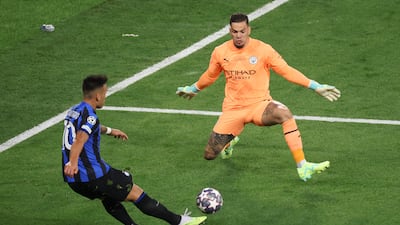
MANCHESTER CITY RATINGS: Ederson - 8. Had a couple of shaky moments in the first half, but made the biggest save of the game with his legs to deny Lukaku late on, and again to deny a header at the death. Getty -
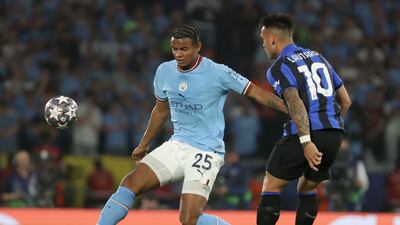
Manuel Akanji - 6. Took matters into his own hands by taking aim from long range on the stroke of half time, but he failed to keep his effort on target. Breathed a huge sigh of relief after Martinez failed to beat Ederson from close range due to his error. EPA -
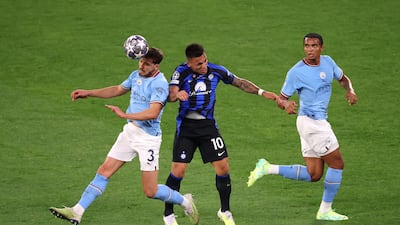
Ruben Dias - 7. Made an inch-perfect tackle to stop Dzeko from running through on goal in the 14th minute. Made a last-ditch clearance after Dimarco’s effort came off the crossbar in the second half. Getty -
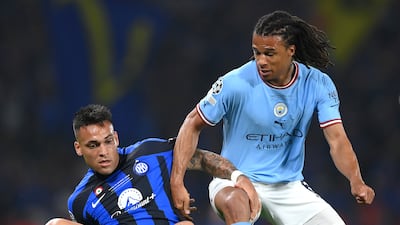
Nathan Ake - 7. Coming off the back of an injury, Ake provided an assured display at left-back and dealt well with the threat of Dumfries. Did well to intercept Barella’s first-time cross into the danger area with his head in the 14th minute. Getty -
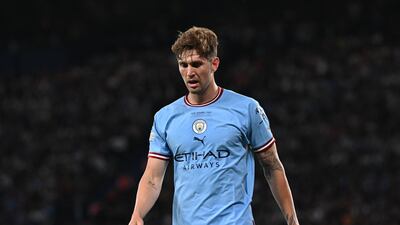
John Stones - 8. An impeccable performance from Stones in his new hybrid role. The Englishman defended well and stepped into midfield to help mop up counterattacks. AFP -
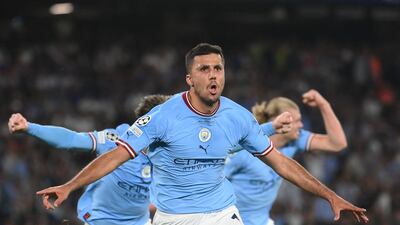
Rodri - 8. Was having a tough game due to his inability to help City dictate play from the middle of the field. He turned things around by grabbing the final’s solitary goal with a low effort from the edge of the penalty area. AFP -
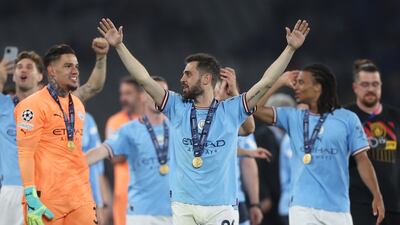
Bernardo Silva - 7. Not as influential in attack as he was against Real Madrid in the semi-final. Had the first attempt at goal in the final, but he failed to find the top corner with his effort. Had a hand in the goal as his cross was deflected into the path of Rodri to sweep home. EPA -
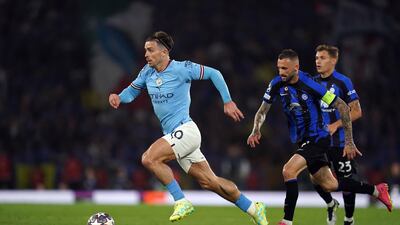
Jack Grealish - 6. Not one of his best outings for Pep Guardiola’s side, but he did well to limit Dumfries’ forays forward. Took the wrong decision to have an effort at goal when he had the chance to whip in a dangerous cross into the penalty area halfway through the first half. PA -
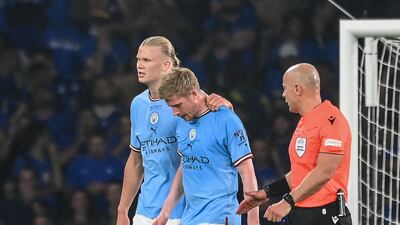
Kevin De Bruyne - 6. Slipped when he had the first real chance to link up with Haaland around the Inter Milan penalty area in the 24th minute. Unlucky to be forced off with an injury on the biggest night of his career in the 35th minute. AFP -
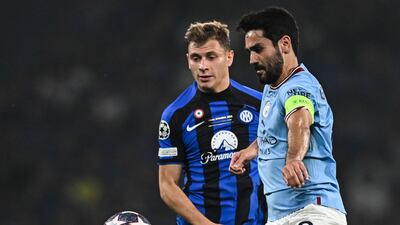
Ilkay Gundogan - 6, A quiet but solid game from Gundogan in the middle of the field. The German was forced to sit deep and help the Premier League champions control proceedings from deep. AFP -
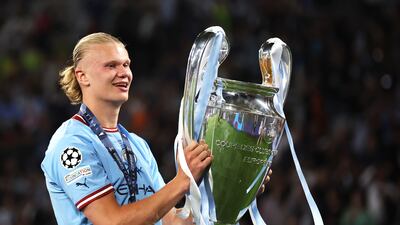
Erling Haaland - 6, A rare night without a goal for Haaland, but he kept the Italians backline on their toes for 90 minutes. Had his first attempt on goal in the 26th minute, but Onana was equal to his effort. Getty -

SUBS: Phil Foden (De Bruyne, 38') - 6. Had a good chance to put the game to bed, but failed to beat Onana when he was played through on goal in the 78th minute. Reuters -
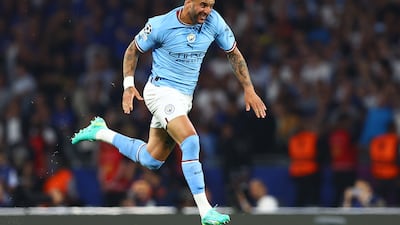
Kyle Walker (Stones, 82) - N/A. The right-back helped City hold on to the lead as the Italians searched for an equaliser. EPA -
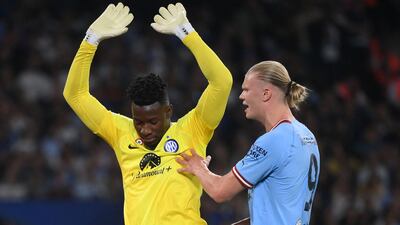
INTER MILAN RATINGS: Andre Onana - 7. Called into action for the first time by Haaland in the 26th minute, and he provided a good save to keep the tie level. Stopped Foden from making it two with a fantastic save in the second half. AFP -
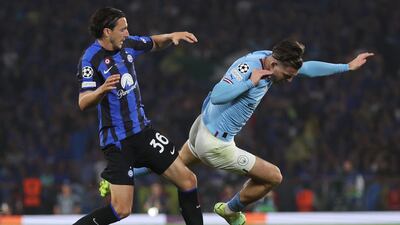
Matteo Darmian - 6. Had a good game except for one costly error. Could have done better to close up the space Rodri had in the build-up to the English side’s decisive goal. EPA -
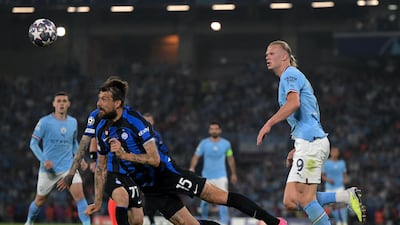
Francesco Acerbi - 8. Brilliant on the night as he stayed close to Haaland and ensured the Norwegian didn’t get enough clear-cut chances to do the damage. AFP -
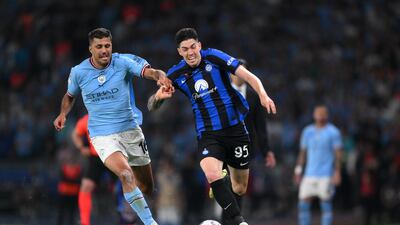
Alessandro Bastoni - 7. Did well to block Stones’s cross in the 63rd minute. Showed tremendous composure to stop Haaland from running through on goal in the 67th minute. Getty -
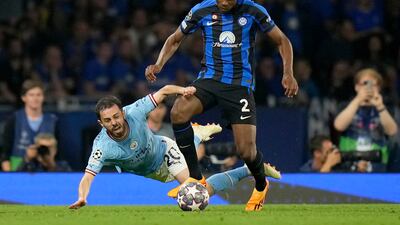
Denzel Dumfries - 5. Not at his attacking best on the night and was beaten on a number of occasions by Grealish in defence. Brought a good attacking move to an end with his indecisiveness in the first half. AP -
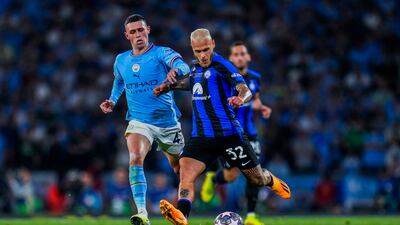
Federico Dimarco - 7. Crucial to Inter Milan’s attacking play in the first half as he repeatedly played in dangerous crosses. Thought he had grabbed an equaliser in the 70th minute, but his header came off the bar. AP -
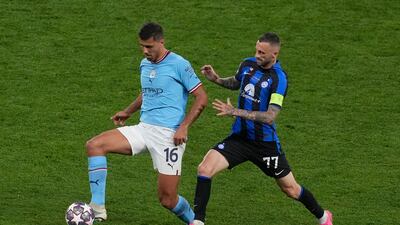
Marcelo Brozovic - 7. A good performance from the experienced Croatian in the middle of the field. He helped the Italians stop City from playing their free-flowing football. Blazed an effort high and wide from the edge of the penalty area in the 19th minute. AP -
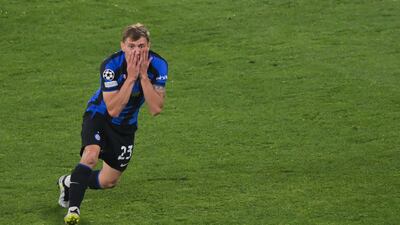
Nicolo Barella - 6. Lacked the quality to provide the final touch or pass in attack. Would feel he could have done better when he failed to hit the target with a first-time effort after pouncing on an Ederson error. AFP -
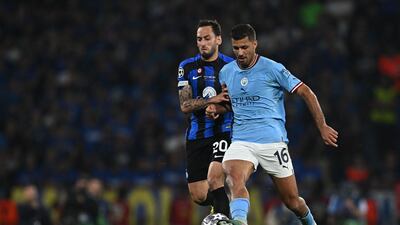
Hakan Calhanoglu - 4. A near-invisible performance from the Turkish midfielder on a night the Italians needed him to help unlock Guardiola’s backline. He struggled to create openings for his teammates. AFP -
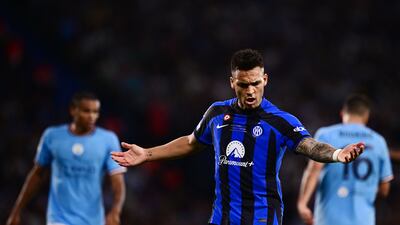
Lautaro Martinez - 4. Another player that could have done better with his decision-making on a big night. Aimed for goal and failed to beat Ederson when he could have passed the ball to Lukaku or Brozovic. AFP -
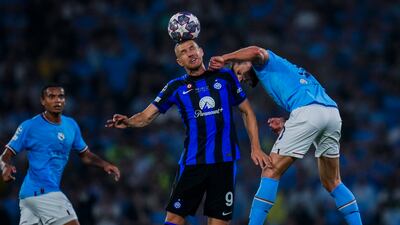
Edin Dzeko - 5. Worked hard and brought his teammates into play with excellent hold-up play in the first half, but Manchester City defenders took advantage of his lack of pace to stop him. AP -
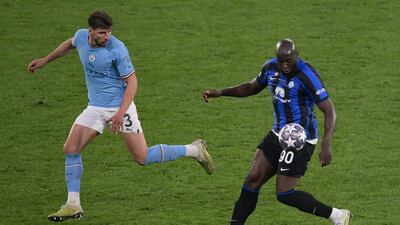
SUBS: Romelu Lukaku (Dzeko,57') - 3. Unlucky to unknowingly block Dimarco’s goal-bound effort in the 70th minute. Forced Ederson into a routine save two minutes later. Should have brought the Italians level, but he could only head straight at Ederson when he had the whole goal to aim at. AFP -
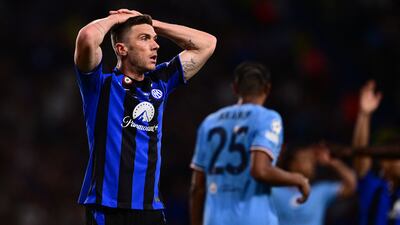
Robin Gosens (Bastoni, 76) - N/A. Overcooked his cross when he had the chance to find a blue and black jersey in the penalty area. Did well to find Lukaku with a header into the danger area in the 89th minute. AFP -
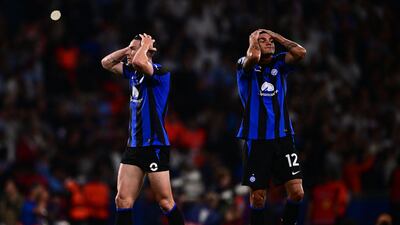
Raoul Bellanova (Dumfries, 76) - N/A. Put in a number of crosses after coming on, one of which led to Lukaku’s headed chance that he failed to convert. Henrikh Mkhitaryan (Calhanoglu, 84) - N/A. Danilo D’ Ambrosio (Damian, 84) - N/A. AFP


The highlights package will be tough to watch for fans of the Italian club and to see again how close their team came to clawing their way back into the tie. Ederson made save after save, somehow the rest of the City defence stood firm. Shots and clearances ricocheted to safety, and City’s goal lived a charmed life.
And then the final whistle went.
The Ataturk Olympic Stadium, once the venue for the greatest comeback in Champions League final history – by Liverpool in 2005 against Inter’s neighbours, AC Milan – was now the finishing post for the final leg of Manchester City’s long and winding journey from European vision to champions.
For years, European glory had seemed an impossible dream. Season after season, City foundered on heartbreak ridge in the Champions League, finding new ways to lose, or rather, not to win the trophy that had begun to become an obsession.
There were several years in the middle where it looked like winning the Champions League was something other teams did, but not us. Particularly so after stinging defeats in consecutive years in Lisbon, Porto and Madrid. These only served to salt the wounds of the previous years when City had been knocked out by domestic rivals.
But now the race has been won and a different question needs answering: what does it feel like to finally land the biggest club trophy of them all?
Messages from friends in Istanbul and elsewhere have been short but unmistakably proud. Trophy emojis have crisscrossed the world in the past few hours in streams of WhatsApp messages.
One note, sent by a friend in those feverish minutes between the final whistle and the trophy lift, said just this: “I feel very emotional right now”. And that is how I suspect, most City fans will feel on Sunday morning.
Almost as soon as Rodri’s exquisite shot struck the back of the net, all the long-held fear and frustration began to disappear.
Now, there is the satisfaction at mission accomplished and the pulsing emotion of the memory of a glorious night of football.

