



Al Nassr manager Rudi Garcia said Cristiano Ronaldo was happy to finally make his debut for the club, but said they must ensure the forward is in his best shape to maximise his talent.
The former Manchester United, Real Madrid and Juventus star captained Nassr on his first appearance for the Saudi Pro League side, helping his new team to a 1-0 victory against Al Ettifaq at Mrsool Park on Sunday night. Brazilian Anderson Taslica got the game’s only goal, on 30 minutes.
However, the majority of attention was on Ronaldo following last month’s hugely lucrative move to Saudi football. The Portugal captain, a free agent having in November left United by mutual consent, signed a two-and-a-half-year deal with Nassr understood to be worth more than $200 million per year.
Speaking after the win that took Nassr, nine-time Saudi champions, back to the top of the table, Garcia said: “Everyone knows Cristiano – he’s a five-time Ballon d’Or winner. He’s one of the best players in the history of football.
“It’s up to us to make sure we get him in the best condition. I want him to enjoy playing here and tonight he was happy to play for the first time.”
Ronaldo, 37, showed plenty of endeavour on Sunday night as he led the Nassr attack with Talisca and Argentine Pity Martinez playing either side. Yet he only once troubled Ettifaq goalkeeper Paulo Victor, forcing the Brazilian into a low save with 12 minutes remaining.
Still, the victory lifted Nassr back to the standings' summit, one point ahead of city rivals and reigning champions Al Hilal – although Hilal have played a match more (15). Last champions in 2019, Nassr's next game is against third-placed Al Ittihad on Thursday, albeit in the Saudi Super Cup.
On Ronaldo settling into the team, Garcia said: “It’s very important for the players to play normally and not always try to give the ball to Cristiano. I told them they need to make the right choices on the pitch.
"Obviously when Cristiano or Talisca are alone and asking for the ball we need to give them the ball. These two players are able to make the difference.
“Tonight, I think that sometimes we had good positions to cross but not enough people in the box – and sometimes no Ronaldo and no Talisca.
“We need to work on that, to have one of them in the box and maybe the other playing outside the box.”
-
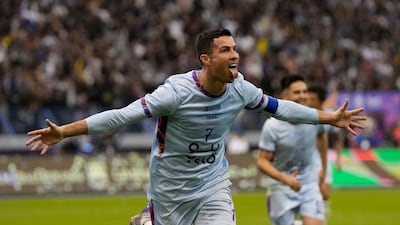
Cristiano Ronaldo celebrates after scoring the second goal for Riyadh All-Stars against PSG at the King Fahd University Stadium in Riyadh, Saudi Arabia, on January 19, 2023. AP -
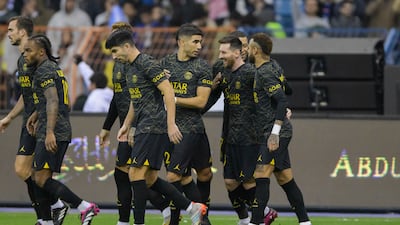
Lionel Messi is congratulated by his PSG teammates after opening the scoring. -
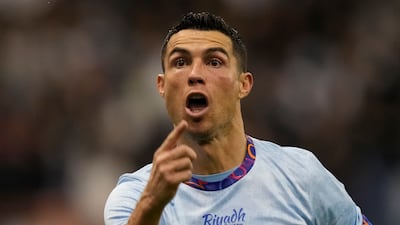
Cristiano Ronaldo celebrates after scoring the first goal for Riyadh All-Stars. AP -
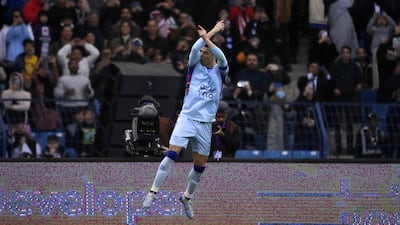
Cristiano Ronaldo celebrates after scoring Riyadh All-Stars' first goal. AFP -
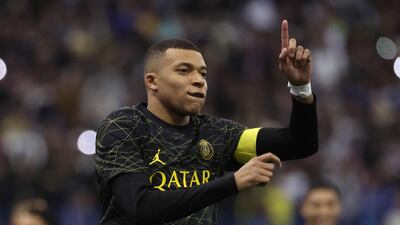
Kylian Mbappe scores the fourth goal for PSG. AFP -
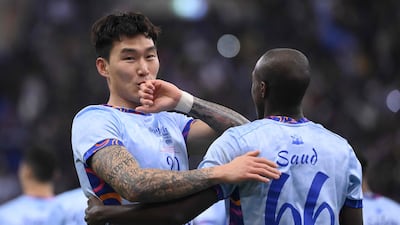
Riyadh All-Star's South Korean defender Jang Hyun-soo levels at 3-3. AFP -
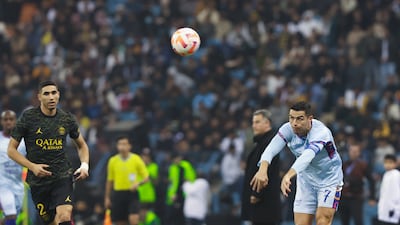
Cristiano Ronaldo takes a throw-in. Photo: General Entertainment Authority -
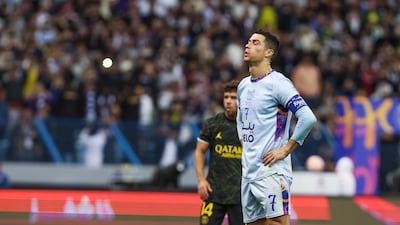
Cristiano Ronaldo prepares to take a penalty. Photo: General Entertainment Authority -
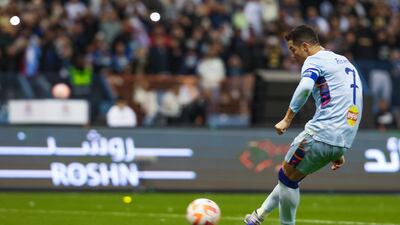
Cristiano Ronaldo scores from the penalty spot for the Riyadh All-Stars. Photo: General Entertainment Authority -
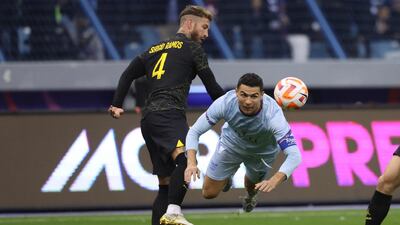
Cristiano Ronaldo in action against Paris Saint-Germain. AFP -
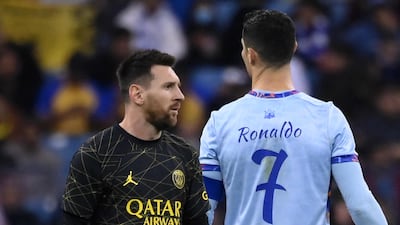
PSG forward Lionel Messi next to long-time rival, Riyadh All-Star's Portuguese forward Cristiano Ronaldo. AFP -
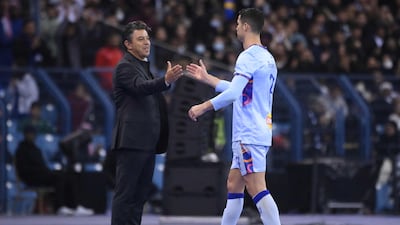
Cristiano Ronaldo greets Riyadh All-Stars' Argentinian coach Marcelo Gallardo after being substituted. AFP -
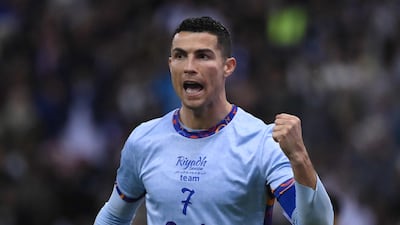
Cristiano Ronaldo celebrates his team's third goal. AFP -
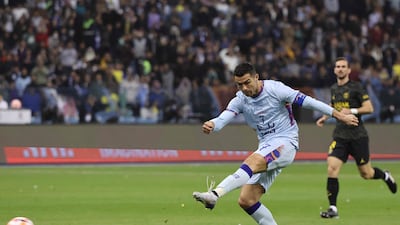
Riyadh All-Star's Portuguese forward Cristiano Ronaldo takes a shot. AFP -
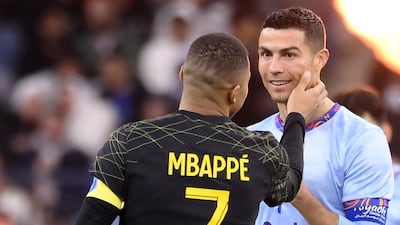
PSG's Kylian Mbappe greets Cristiano Ronaldo. AFP -
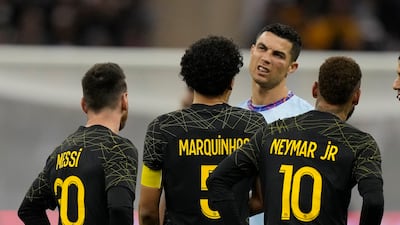
Cristiano Ronaldo grimaces. AP -
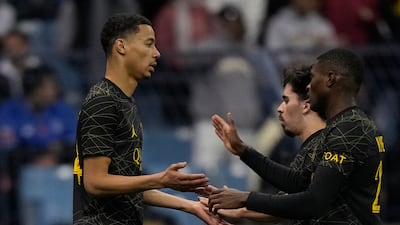
PSG's Hugo Ekitike (l) celebrates after scoring their fifth. AP -
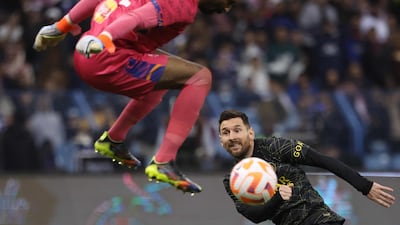
Lionel Messi takes a shot. AFP -
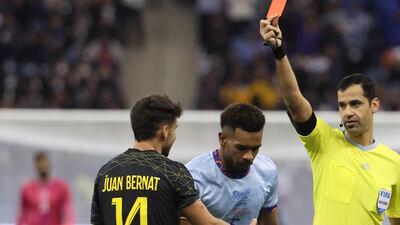
PSG defender Juan Bernat is shown the red card by Qatari referee Abdulrahman al-Jassim. AFP -
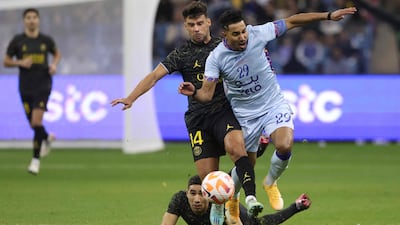
Juan Bernat fouls Riyadh All-Star's Saudi midfielder Salem al-Dawsari, leading to a red card. AFP -
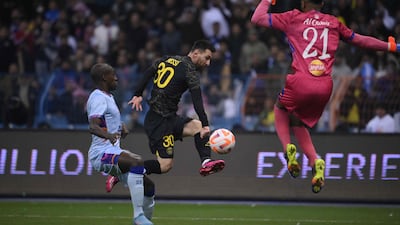
PSG's Lionel Messi scores the opening goal in Riyadh. AFP -
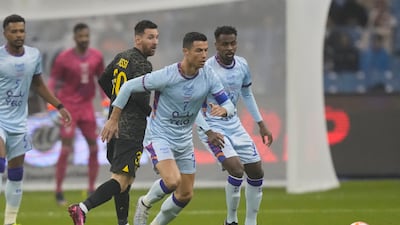
Cristiano Ronaldo is challenged by PSG's Lionel Messi. AP -
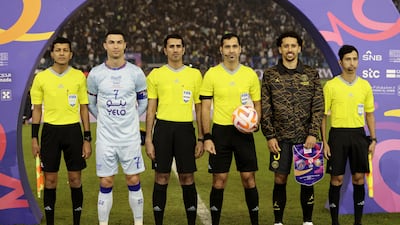
Cristiano Ronaldo and PSG's Marquinhos with officials before the match. Reuters -
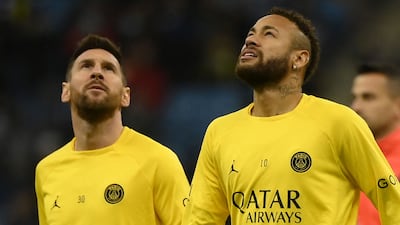
Paris Saint-Germain forwards Lionel Messi and Neymar ahead of the match. AFP -
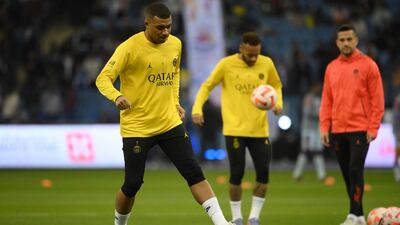
PSG''s Kylian Mbappe and Neymar warm up. AFP -
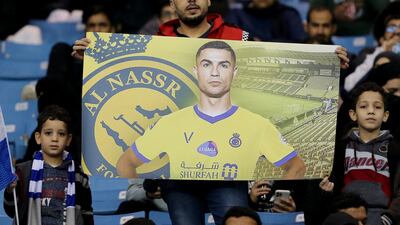
A fan holds up a banner of Al Nassr's Cristiano Ronaldo inside the stadium before the match. Reuters -
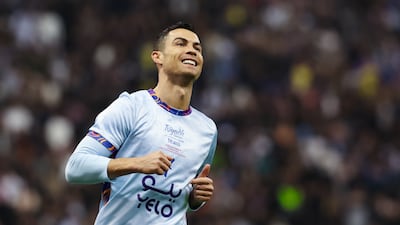
Cristiano Ronaldo during the Riyadh All-Stars against PSG at the King Fahd University Stadium in Riyadh, Saudi Arabia. -
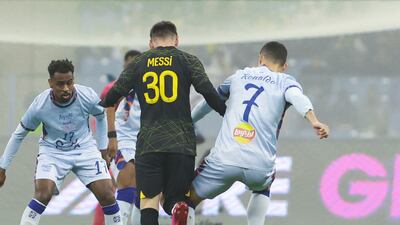
Messi and Ronaldo vie for the ball during the Riyadh All-Stars against PSG at the King Fahd University Stadium in Riyadh, Saudi Arabia. Photo: General Entertainment Authority -
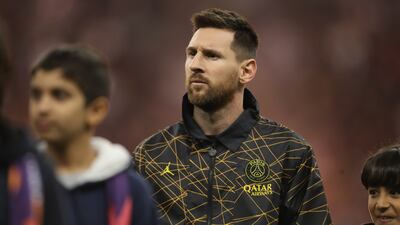
Lionel Messi lines up before kick off. Photo: General Entertainment Authority -
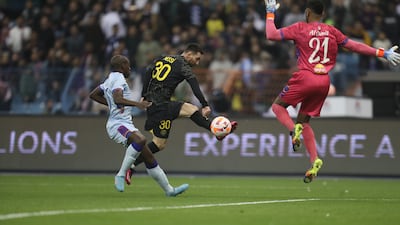
Lionel Messi shoots at goal. Photo: General Entertainment Authority -
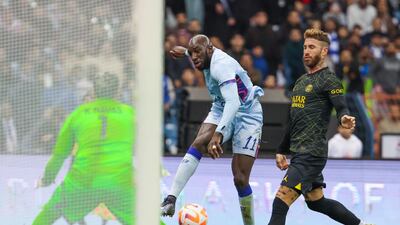
Saudi All-Stars in action against French champions PSG at the King Fahd University Stadium in Riyadh, Saudi Arabia. Photo: General Entertainment Authority


Meanwhile, Ettifaq manager Patrice Carteron welcomed Ronaldo’s arrival to the league, describing setting up his side to face the all-time record goalscorer in men’s international football as “a privilege”.
“I am very happy that he came to Saudi Arabia for the excitement of every game, and at a big club like Al Nassr,” Carteron said. “It’s fantastic news for football here, and everyone will enjoy it and every ground should be full.
“He’s a fantastic player and we were all happy to face such a player. He played a good game today. He did not score, but he’s so dangerous.
“You can see he’s still not 100 per cent, but it’s a privilege to face him - and we wish him all the best.”

