• The UAE's Harib Abdallah celebrates scoring the only goal of the game against South Korea in the World Cup qualifier at Al Maktoum Stadium in Dubai, on Tuesday, March 29, 2022. AFP
    The UAE's Harib Abdallah celebrates scoring the only goal of the game against South Korea in the World Cup qualifier at Al Maktoum Stadium in Dubai, on Tuesday, March 29, 2022. AFP
  • UAE goalkeeper Khalid Eisa celebrates after the match. Reuters
    UAE goalkeeper Khalid Eisa celebrates after the match. Reuters
  • UAE players celebrate after the match. Reuters
    UAE players celebrate after the match. Reuters
  • South Korea attacker Son Heung-min goes down under a challenge from Caio Canedo. Reuters
    South Korea attacker Son Heung-min goes down under a challenge from Caio Canedo. Reuters
  • UAE match-winner Harib Abdallah and South Korea's Nam Tae-Hee challenge for a header. Getty
    UAE match-winner Harib Abdallah and South Korea's Nam Tae-Hee challenge for a header. Getty
  • UAE manager Rodolfo Arruabarrena. EPA
    UAE manager Rodolfo Arruabarrena. EPA
  • UAE's Caio Canedo on the attack. Getty
    UAE's Caio Canedo on the attack. Getty
  • Action during the game at Al Maktoum Stadium in Dubai. Getty
    Action during the game at Al Maktoum Stadium in Dubai. Getty
  • UAE goalkeeper Khalid Eisa makes a save. EPA
    UAE goalkeeper Khalid Eisa makes a save. EPA
  • UAE's Mohammed Al Baloushi battles for the ball with South Korea forward Son Heung-min. AFP
    UAE's Mohammed Al Baloushi battles for the ball with South Korea forward Son Heung-min. AFP
  • UAE defend a free-kick. Reuters
    UAE defend a free-kick. Reuters
  • UAE's Harib Abdallah celebrates scoring the winning goal. AFP
    UAE's Harib Abdallah celebrates scoring the winning goal. AFP
  • UAE's Abdulaziz Hussain. Getty
    UAE's Abdulaziz Hussain. Getty
  • UAE manager Rodolfo Arruabarrena. EPA
    UAE manager Rodolfo Arruabarrena. EPA
  • South Korea's Son Heung-min holds off the challenge of Majed Hassan of the UAE. Reuters
    South Korea's Son Heung-min holds off the challenge of Majed Hassan of the UAE. Reuters
  • UAE attacker Caio Canedo fouls South Korea goalkeeper Jo Hyeon-woo. AP
    UAE attacker Caio Canedo fouls South Korea goalkeeper Jo Hyeon-woo. AP
  • UAE's Harib Abdallah celebrates with teammates after scoring. Reuters
    UAE's Harib Abdallah celebrates with teammates after scoring. Reuters
  • South Korea attacker Son Heung-min. EPA
    South Korea attacker Son Heung-min. EPA
  • Kim Min-jae of South Korea and UAE's Caio Canedo battle for the ball. EPA
    Kim Min-jae of South Korea and UAE's Caio Canedo battle for the ball. EPA
  • South Korea's Hee-Chan Hwang battles for possession with Mohammed Al Baloushi of the UAE. Reuters
    South Korea's Hee-Chan Hwang battles for possession with Mohammed Al Baloushi of the UAE. Reuters
  • South Korea's Kim Jin-su kicks the ball under pressure from Abdulaziz Hussain of the UAE. Reuters
    South Korea's Kim Jin-su kicks the ball under pressure from Abdulaziz Hussain of the UAE. Reuters
  • South Korea's Hwang Hee-chan on the ball against the UAE. Reuters
    South Korea's Hwang Hee-chan on the ball against the UAE. Reuters
  • UAE fans at Al Maktoum Stadium in Dubai. Reuters
    UAE fans at Al Maktoum Stadium in Dubai. Reuters
  • The UAE team before the match in Dubai. AFP
    The UAE team before the match in Dubai. AFP

Arabian Gulf Cup 2023: Where is it, who's playing and how to watch in the UAE?


John McAuley
  • English
  • Arabic

The 25th Arabian Gulf Cup kicked off on Friday, in Basra, Iraq. Here’s the lowdown on an historic event in the country.

What is it?

The tournament is organised by the Arab Gulf Cup Football Federation and includes its eight member nations: Saudi Arabia, UAE, Qatar, Iraq, Kuwait, Bahrain, Oman and Yemen.

Principally to take place every two years, the competition has been often affected by a number of issues — both political and organisational — meaning it was last played in 2019. This month’s tournament will take place in Iraq, marking the country’s hosting of a major football tournament for the first time in almost 44 years.

Where is it?

Basra. The two venues used will be the Basra International Stadium and the recently opened Al Minaa Olympic Stadium.

When is it?

January 6-19.

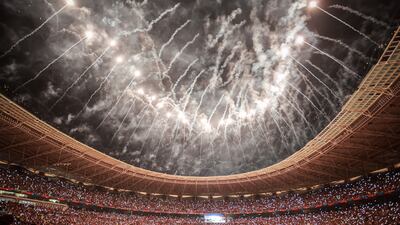
  • Fireworks light up the sky over the Basra International Stadium during the opening ceremony of the 25th Arabian Gulf Cup in Basra, southern Iraq, on Friday, January 6. Getty
    Fireworks light up the sky over the Basra International Stadium during the opening ceremony of the 25th Arabian Gulf Cup in Basra, southern Iraq, on Friday, January 6. Getty
  • This is the first time Iraq has hosted the Gulf Cup since 1979. Getty
    This is the first time Iraq has hosted the Gulf Cup since 1979. Getty
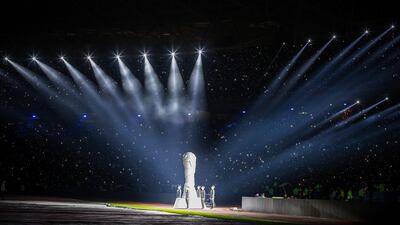
  • A performance at the opening ceremony. Iraqis hope hosting the tournament will help kick off a national recovery, after 40 years of turmoil. Getty
    A performance at the opening ceremony. Iraqis hope hosting the tournament will help kick off a national recovery, after 40 years of turmoil. Getty
  • Artists entertain the Basra crowd. Iraq has won the tournament three times - including when it was held in Baghdad 43 years ago. Getty
    Artists entertain the Basra crowd. Iraq has won the tournament three times - including when it was held in Baghdad 43 years ago. Getty
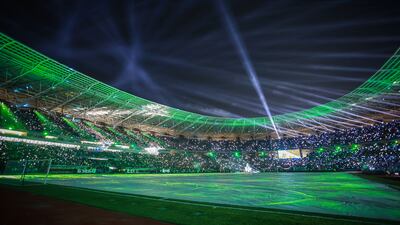
  • The 65,000-capacity Basra International Stadium bathed in light before the cup got under way with Iraq playing Oman. The game ended 0-0. Getty Images
    The 65,000-capacity Basra International Stadium bathed in light before the cup got under way with Iraq playing Oman. The game ended 0-0. Getty Images
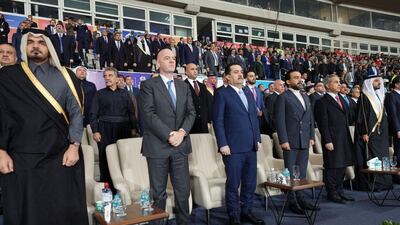
  • Iraqi Prime Minister Mohammed Shia Al Sudani, centre, at Basra International Stadium, with Fifa president Gianni Infantino to his right. Mr Al Sudani opened the tournament and welcomed the eight teams and their fans. Photo: Iraqi Prime Minister Media Office
    Iraqi Prime Minister Mohammed Shia Al Sudani, centre, at Basra International Stadium, with Fifa president Gianni Infantino to his right. Mr Al Sudani opened the tournament and welcomed the eight teams and their fans. Photo: Iraqi Prime Minister Media Office
  • Performers at the opening ceremony. Competing for the Gulf Cup are: Iraq, the UAE, Saudi Arabia, Oman, Kuwait, Bahrain, Qatar and Yemen. Getty
    Performers at the opening ceremony. Competing for the Gulf Cup are: Iraq, the UAE, Saudi Arabia, Oman, Kuwait, Bahrain, Qatar and Yemen. Getty
  • The spectacular Arabian Gulf Cup opening ceremony at Basra International Stadium. The tournament takes place from January 6 to January 19.
    The spectacular Arabian Gulf Cup opening ceremony at Basra International Stadium. The tournament takes place from January 6 to January 19.

Who’s competing?

The eight members of the Arab Gulf Cup Football Federation. They have been drawn in two groups of four, with Group A featuring Iraq, Yemen, Saudi Arabia and Oman. Group B comprises Bahrain, Kuwait, Qatar and the UAE. The top two from each group advance to the semi-finals on January 16, with the final held three days later at Basra International Stadium.

Group A

  • January 6: Iraq v Oman
  • January 6: Saudi Arabia v Yemen
  • January 9: Oman v Yemen
  • January 9: Iraq v Saudi Arabia
  • January 12: Iraq v Yemen
  • January 12: Saudi Arabia v Oman

Group B

  • January 7: UAE v Bahrain
  • January 7: Kuwait v Qatar
  • January 10: UAE v Kuwait
  • January 10: Qatar v Bahrain
  • January 13: UAE v Qatar
  • January 13: Bahrain v Kuwait

Who are the past winners?

Kuwait are way out in front in terms of success, with 10 titles in all. However, they have won only once in the past 25 years (2010). Iraq, Saudi Arabia and Qatar have each lifted the trophy three times, with the UAE (2007, 2013) and Oman each winning it twice. Bahrain are the defending champions, having triumphed three years ago when they defeated Saudi Arabia 1-0 in the final. The portents are good for Iraq, though: they won the first of their three crowns the last time they hosted, in 1979.

How to watch in UAE?

Football fans eager to watch the tournament can catch it primarily on AD Sports and Dubai Sports.


UAE squad

Esha Oza (captain), Al Maseera Jahangir, Emily Thomas, Heena Hotchandani, Indhuja Nandakumar, Katie Thompson, Lavanya Keny, Mehak Thakur, Michelle Botha, Rinitha Rajith, Samaira Dharnidharka, Siya Gokhale, Sashikala Silva, Suraksha Kotte, Theertha Satish (wicketkeeper) Udeni Kuruppuarachchige, Vaishnave Mahesh.

UAE tour of Zimbabwe

All matches in Bulawayo
Friday, Sept 26 – First ODI
Sunday, Sept 28 – Second ODI
Tuesday, Sept 30 – Third ODI
Thursday, Oct 2 – Fourth ODI
Sunday, Oct 5 – First T20I
Monday, Oct 6 – Second T20I

What is Genes in Space?

Genes in Space is an annual competition first launched by the UAE Space Agency, The National and Boeing in 2015.

It challenges school pupils to design experiments to be conducted in space and it aims to encourage future talent for the UAE’s fledgling space industry. It is the first of its kind in the UAE and, as well as encouraging talent, it also aims to raise interest and awareness among the general population about space exploration. 

Mercer, the investment consulting arm of US services company Marsh & McLennan, expects its wealth division to at least double its assets under management (AUM) in the Middle East as wealth in the region continues to grow despite economic headwinds, a company official said.

Mercer Wealth, which globally has $160 billion in AUM, plans to boost its AUM in the region to $2-$3bn in the next 2-3 years from the present $1bn, said Yasir AbuShaban, a Dubai-based principal with Mercer Wealth.

Within the next two to three years, we are looking at reaching $2 to $3 billion as a conservative estimate and we do see an opportunity to do so,” said Mr AbuShaban.

Mercer does not directly make investments, but allocates clients’ money they have discretion to, to professional asset managers. They also provide advice to clients.

“We have buying power. We can negotiate on their (client’s) behalf with asset managers to provide them lower fees than they otherwise would have to get on their own,” he added.

Mercer Wealth’s clients include sovereign wealth funds, family offices, and insurance companies among others.

From its office in Dubai, Mercer also looks after Africa, India and Turkey, where they also see opportunity for growth.

Wealth creation in Middle East and Africa (MEA) grew 8.5 per cent to $8.1 trillion last year from $7.5tn in 2015, higher than last year’s global average of 6 per cent and the second-highest growth in a region after Asia-Pacific which grew 9.9 per cent, according to consultancy Boston Consulting Group (BCG). In the region, where wealth grew just 1.9 per cent in 2015 compared with 2014, a pickup in oil prices has helped in wealth generation.

BCG is forecasting MEA wealth will rise to $12tn by 2021, growing at an annual average of 8 per cent.

Drivers of wealth generation in the region will be split evenly between new wealth creation and growth of performance of existing assets, according to BCG.

Another general trend in the region is clients’ looking for a comprehensive approach to investing, according to Mr AbuShaban.

“Institutional investors or some of the families are seeing a slowdown in the available capital they have to invest and in that sense they are looking at optimizing the way they manage their portfolios and making sure they are not investing haphazardly and different parts of their investment are working together,” said Mr AbuShaban.

Some clients also have a higher appetite for risk, given the low interest-rate environment that does not provide enough yield for some institutional investors. These clients are keen to invest in illiquid assets, such as private equity and infrastructure.

“What we have seen is a desire for higher returns in what has been a low-return environment specifically in various fixed income or bonds,” he said.

“In this environment, we have seen a de facto increase in the risk that clients are taking in things like illiquid investments, private equity investments, infrastructure and private debt, those kind of investments were higher illiquidity results in incrementally higher returns.”

The Abu Dhabi Investment Authority, one of the largest sovereign wealth funds, said in its 2016 report that has gradually increased its exposure in direct private equity and private credit transactions, mainly in Asian markets and especially in China and India. The authority’s private equity department focused on structured equities owing to “their defensive characteristics.”

Living in...

This article is part of a guide on where to live in the UAE. Our reporters will profile some of the country’s most desirable districts, provide an estimate of rental prices and introduce you to some of the residents who call each area home.

How much do leading UAE’s UK curriculum schools charge for Year 6?
  1. Nord Anglia International School (Dubai) – Dh85,032
  2. Kings School Al Barsha (Dubai) – Dh71,905
  3. Brighton College Abu Dhabi - Dh68,560
  4. Jumeirah English Speaking School (Dubai) – Dh59,728
  5. Gems Wellington International School – Dubai Branch – Dh58,488
  6. The British School Al Khubairat (Abu Dhabi) - Dh54,170
  7. Dubai English Speaking School – Dh51,269

*Annual tuition fees covering the 2024/2025 academic year

Who's who in Yemen conflict

Houthis: Iran-backed rebels who occupy Sanaa and run unrecognised government

Yemeni government: Exiled government in Aden led by eight-member Presidential Leadership Council

Southern Transitional Council: Faction in Yemeni government that seeks autonomy for the south

Habrish 'rebels': Tribal-backed forces feuding with STC over control of oil in government territory

'The Woman in the House Across the Street from the Girl in the Window'

Director:Michael Lehmann

Stars:Kristen Bell

Rating: 1/5

Milestones on the road to union

1970

October 26: Bahrain withdraws from a proposal to create a federation of nine with the seven Trucial States and Qatar. 

December: Ahmed Al Suwaidi visits New York to discuss potential UN membership.

1971

March 1:  Alex Douglas Hume, Conservative foreign secretary confirms that Britain will leave the Gulf and “strongly supports” the creation of a Union of Arab Emirates.

July 12: Historic meeting at which Sheikh Zayed and Sheikh Rashid make a binding agreement to create what will become the UAE.

July 18: It is announced that the UAE will be formed from six emirates, with a proposed constitution signed. RAK is not yet part of the agreement.

August 6:  The fifth anniversary of Sheikh Zayed becoming Ruler of Abu Dhabi, with official celebrations deferred until later in the year.

August 15: Bahrain becomes independent.

September 3: Qatar becomes independent.

November 23-25: Meeting with Sheikh Zayed and Sheikh Rashid and senior British officials to fix December 2 as date of creation of the UAE.

November 29:  At 5.30pm Iranian forces seize the Greater and Lesser Tunbs by force.

November 30: Despite  a power sharing agreement, Tehran takes full control of Abu Musa. 

November 31: UK officials visit all six participating Emirates to formally end the Trucial States treaties

December 2: 11am, Dubai. New Supreme Council formally elects Sheikh Zayed as President. Treaty of Friendship signed with the UK. 11.30am. Flag raising ceremony at Union House and Al Manhal Palace in Abu Dhabi witnessed by Sheikh Khalifa, then Crown Prince of Abu Dhabi.

December 6: Arab League formally admits the UAE. The first British Ambassador presents his credentials to Sheikh Zayed.

December 9: UAE joins the United Nations.

The specs
Engine: 77.4kW all-wheel-drive dual motor
Power: 320bhp
Torque: 605Nm
Transmission: Single-speed automatic
Price: From Dh219,000
On sale: Now
What the law says

Micro-retirement is not a recognised concept or employment status under Federal Decree Law No. 33 of 2021 on the Regulation of Labour Relations (as amended) (UAE Labour Law). As such, it reflects a voluntary work-life balance practice, rather than a recognised legal employment category, according to Dilini Loku, senior associate for law firm Gateley Middle East.

“Some companies may offer formal sabbatical policies or career break programmes; however, beyond such arrangements, there is no automatic right or statutory entitlement to extended breaks,” she explains.

“Any leave taken beyond statutory entitlements, such as annual leave, is typically regarded as unpaid leave in accordance with Article 33 of the UAE Labour Law. While employees may legally take unpaid leave, such requests are subject to the employer’s discretion and require approval.”

If an employee resigns to pursue micro-retirement, the employment contract is terminated, and the employer is under no legal obligation to rehire the employee in the future unless specific contractual agreements are in place (such as return-to-work arrangements), which are generally uncommon, Ms Loku adds.

Updated: January 07, 2023, 10:40 AM