



Pep Guardiola has admitted his Manchester City team are facing a struggle to catch high-flying Arsenal at the top of the Premier League.
The Gunners are eight points clear of second-placed City, after Mikel Arteta's side drew 0-0 at home to Newcastle United on Tuesday.
Reigning champions City can close the gap back down to five if they defeat Chelsea at Stamford Bridge on Thursday night.
The Sky Blues were held to a frustrating draw of their own at the weekend when struggling Everton came away from the Etihad Stadium with a point – a result made all the more surprising considering the Merseysiders went on to lose 4-1 at home to Brighton on Tuesday.
“We have to reduce the gap by playing good and winning games, but they [Arsenal] get more than 100 points if they keep this average and we will not catch them,” Guardiola told a pre-match press conference on Wednesday.
“We have to be almost perfect and hope they drop their performance – yesterday they were excellent against Newcastle – and see what happens.”
Many would have expected Chelsea to be challenging for the title themselves, but Graham Potter's side are languishing 10th in the table have won just one of their last seven league games.
Guardiola, however, is expecting the usual battle against the Blues. “It's the Premier League, everyone is tough,” said the Spaniard. “That's why the predictions at the start of the season always my answer is I don't know. Nobody knows.
“We will see what happens, after the World Cup many things are going to happen. It doesn't matter the position you are when you travel [to Chelsea], it's always difficult.”
Aymeric Laporte will be given a fitness test ahead of the journey to London after missing the New Year's Eve game with Everton with a back problem but fellow centre-back Ruben Dias is still sidelined with a thigh injury.
Nottingham Forest 1 Chelsea 1: Player ratings
-
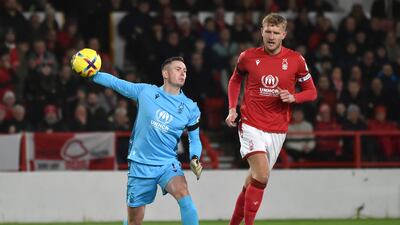
NOTTINGHAM FOREST RATINGS: Dean Henderson - 6, Was completely rooted for the opener. Wasn’t given too much else to do. AP -
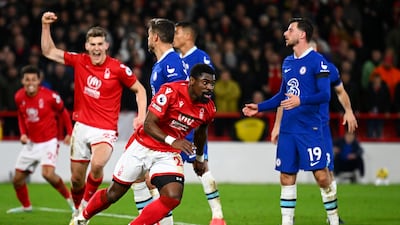
Serge Aurier - 8, While he struggled in one-on-ones against Christian Pulisic at times, Aurier refused to back down. Clinically scored Forest’s equaliser, then put Pierre-Emerick Aubameyang under pressure as the striker missed his header. Getty -

Joe Worrall - 7, Having been beaten by Pulisic in the build-up to the opener, he made a host of defensive interventions including heading a cross away ahead of Kalidou Koulibaly and stopping another cross from reaching Kai Havertz. PA -
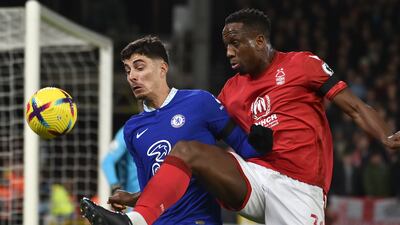
Willy Boly - 7, Unconvincingly flicked Pulisic’s cross onto his own crossbar, but then showed a willingness to defend on the front foot as he dispossessed Raheem Sterling high up the pitch. Headed the ball to Aurier for the equaliser. AP -
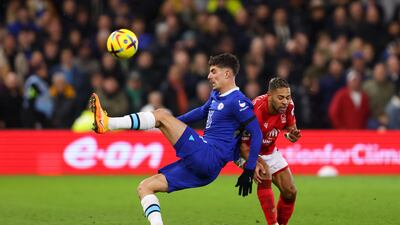
Renan Lodi - 6, Stood and watched the ball for the opener, which meant he lost Sterling, although he went on to improve defensively and also made some dangerous forays forward. Booked for an overzealous challenge on Hakim Ziyech. Getty Images -

Remo Freuler - 7, Was another combative member of Forest’s midfield, also showing intelligence to halt Sterling on the edge of the box. Also played a nice pass for Awoniyi. Reuters -

Orel Mangala - 6, Did well to clean up a loose ball after Boly had cut out an attempted Chelsea pass, and he continued to break up the Blues’ play well. PA -

Ryan Yates - 7, Needed to play the ball to Johnson earlier as Forest broke, but he hassled Chelsea’s midfielders throughout, even after getting booked for taking things too far as he grabbed hold of Denis Zakaria. Played a great pass to find Morgan Gibbs-White for his chance. PA -
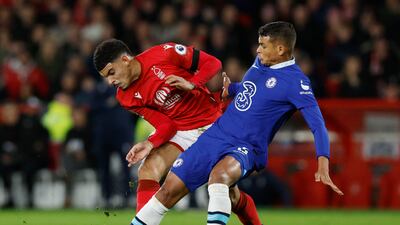
Morgan Gibbs-White - 7, Overhit his early pass after doing well to get away from Koulibaly. Was desperately unlucky to see his shot stay out after hitting the crossbar. Reuters -
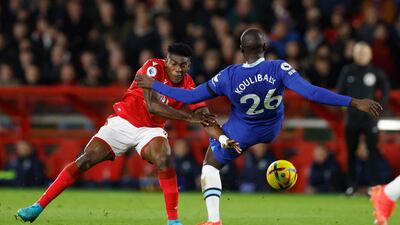
Taiwo Awoniyi - 7, Was almost unstoppable at times, with Koulibaly finding it especially difficult to deal with the forward once he got going. Did have a fairly tame shot saved in the second half. Reuters -

Brennan Johnson - 6, Raced away brilliantly but couldn’t beat Kepa Arrizabalaga with two attempts, then in the second half he had a shot saved from a tight angle and another blocked. Had periods where he looked really bright. Getty -
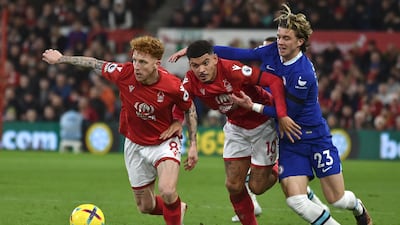
SUBS: Jack Colback (Mangala, 77’) – N/R, Showed plenty of energy in the middle to ensure Forest at least earned a point. AP -

Sam Surridge (Johnson, 82’) – N/R, Battled to win the ball from Hakim Ziyech and forced Conor Gallagher into the foul that got the midfielder booked. AFP -
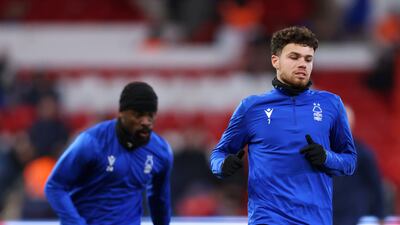
Neco Williams (Awoniyi, 88’) – N/R, Cleaned up the danger after Aubameyang’s wayward pass went behind Havertz. Getty -
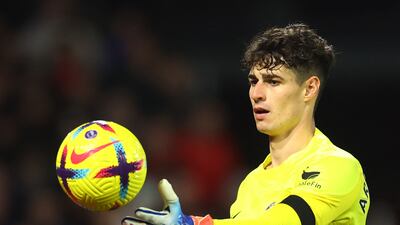
CHELSEA RATINGS: Kepa Arrizabalaga - 7, Made various good saves, especially the ones that denied Johnson, although he was given no chance by Aurier’s strike. Reuters -
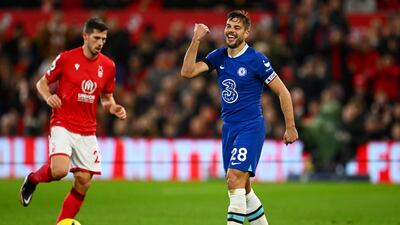
Cesar Azpilicueta - 5, Put in a good block to deny Gibbs-White in the first half, but often struggled in the second as he couldn’t keep up with Johnson as he ran behind then got booked for a foul on Lodi. Couldn’t get close enough to Aurier for the equaliser. Getty -

Thiago Silva - 7, Showed his experience to deal with awkward situations, as he won a foul from Johnson, cut out Awoniyi’s cross and halted Gibbs-White’s burst forward. Some of his passes also made things awkward for Forest’s defence. Getty -
Kalidou Koulibaly - 4, While he passed the ball nicely in the first half, Koulibaly really struggled whenever Awoniyi ran at him, especially whenever he was pulled out into wider positions. Getty -
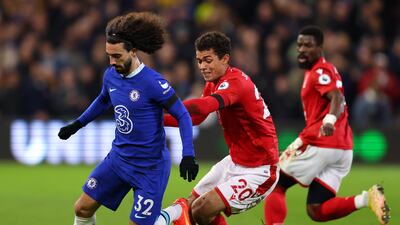
Marc Cucurella - 6, Did well to keep Johnson going wide to make his opportunity in the first half more difficult in a fairly solid defensive display. Getty -

Jorginho - 6, Played some nice passes, including one to Sterling in the build-up to a chance for Mount. However, there were times where he was too easily taken out of the game. PA -

Mason Mount - 7, Engaged in the combative side of the game and also showed quality at times, notably playing the ball through for Pulisic in the build-up to the opener. Made a great block to deny Morgan Gibbs-White. Getty -

Denis Zakaria - 6, Put in a fairly dominant performance in midfield during the first half despite Yates making things difficult for him, although the Switzerland international faded in the second period. AP -
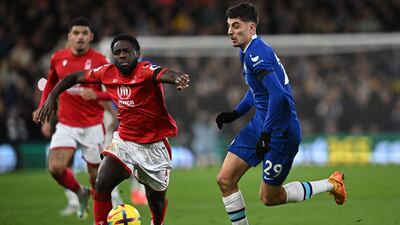
Kai Havertz - 5, Linked play nicely at times but his touch was wasteful on two occasions where he could have had an opening. His unconvincing header was the first action in a poor defensive showing from Chelsea in Forest’s equaliser. AFP -
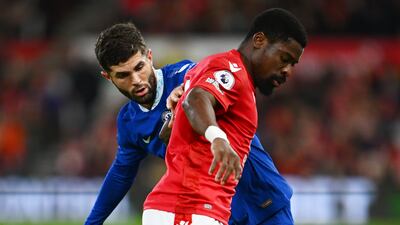
Christian Pulisic - 6, Looked threatening in one-on-one situations and delivered the cross that resulted in Sterling’s goal. However, he hit a weak shot from a promising position and was outjumped by Boly for the equaliser. Getty -

Raheem Sterling - 7, Having already played a nice pass to pick out Mount for an opportunity, he clinically finished to open the scoring. He never really built on that and faded out of the match before being taken off. Reuters -
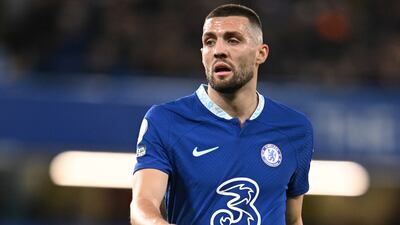
SUBS: Mateo Kovacic (Zakaria, 61’) – 5, Came on two minutes before Forest scored the equaliser and didn’t do much for the Blues' response. EPA -
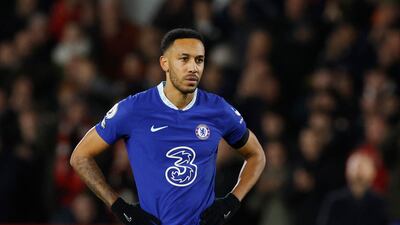
Pierre-Emerick Aubameyang (Mount, 73’) – N/R, Tried to make things happen but missed the target with his header, then played a pass behind Havertz in the box. Reuters -
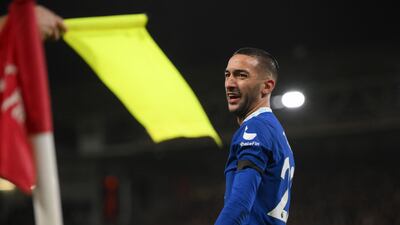
Hakim Ziyech (Jorginho, 73’) – N/R, Always looked to make things happen and delivered a superb cross that Aubameyang headed wide. AFP -

Conor Gallagher (Sterling, 73’) – N/R, Was always looking to get on the ball and played some nice passes forward, although he got booked for cynically bringing down Surridge. Getty -

Carney Chukwuemeka (Pulisic, 87’) – N/R, Getting his first minutes since October, he wasn’t able to do enough to carve out a Chelsea winner. Getty


Potter, meanwhile, has refused to comment on Chelsea's reported targets this transfer window.
Chelsea – who drew 1-1 with Nottingham Forest on New Year's Day – have seen the likes of World Cup winner Enzo Fernandez, Andrey Santos, Benoit Badiashile, Joao Felix and Mykhailo Mudryk all linked as possible January signings.
Ivory Coast international David Datro Fofana is already through the door following his move from Molde.
Potter, though, would not be drawn into any speculation ahead of the City game. “It’s a good question but the problem is if I answer it and I’m specific in that answer, every single player in that area will be linked with Chelsea,” he said.
“So I have to dodge it – and I hope you can understand why I’m dodging it. I always answer that part of the question by saying that I’m the head coach and my responsibility is to the players that are here.
“We will try in every window to improve, but January is a complicated one because it’s the middle of the season.
“And in the meantime, we have to deal with all the noise of Chelsea getting linked with everybody and I don’t comment on any player that isn’t a Chelsea player.
“As always, and it’s a boring answer, but my job is to help the players that are here and support the club in terms of decisions they make in terms of how to improve.”
Chelsea will still be without right-back Reece James and goalkeeper Eduoard Mendy for Thursday's match.

