


At the beginning of this season, the most admired manager in the club game set some hares out of the traps by talking about his next job.
Pep Guardiola will be at Manchester City for a while yet, though not forever and he revealed that among his ambitions for the future might be to take charge of a national team.
He shared the idea in a forum promoting a Brazilian investment group. Naturally, that invited the question: Guardiola in charge of Brazil’s Selecao, the most successful of all World Cup nations? It has been mooted before, and Guardiola specifically mentioned he would enjoy managing at a Copa America and a World Cup.
But he added he thought there would always be a barrier. “I think the coach of Brazil will always be a Brazilian,” said Guardiola, a Catalan and a citizen of Spain. “I can’t see a foreign manager in charge of a national team like Brazil.”
Not necessarily, reckons Tite, current manager of the Selecao and relatively safe in his job at least until after his second World Cup campaign with them at the end of this year. Last month, Tite was asked about Brazil’s openness to managers from abroad and he replied: “The market for coaches is about quality, knowledge and achievement, not nationality.”
The issue has become a very live one in a country that is historically proud and famously protective of its status in the sport. Yet the appetite for foreign expertise on its touchlines is growing suddenly and rapidly.
Four of the so-called G-12 clubs in Brazil - the dozen with the biggest support bases - are currently managed by non-Brazilians, an unusually high proportion. Another G-12 giant, Corinthians, are seeking a new coach and spent much of the last week in talks with the Portuguese Vitor Pereira, who was recently on Everton’s shortlist to replace Rafa Benitez.
Right now, there is no one so fashionable in elite Brazilian football as a Portuguese manager. Paulo Sousa, the much-travelled former Juventus and Borussia Dortmund player, left the position of Poland manager to take over at Flamengo in December. He’s part of a lineage there.
Two seasons ago, Jorge Jesus, another Portuguese, led Flamengo to the Copa Libertadores title and to narrow defeat, in extra-time, in the final of the Club World Cup.
Their compatriot, Abel Ferreira will on Saturday be attempting to go one better than Jesus did, and to add the Fifa trophy to the successive South American titles he guided Palmeiras to in his first two seasons with the Sao Paulo club.
-

Raphael Veiga celebrates after scoring Palmeiras' first goal in their 2-0 win against Al Ahly in the Fifa Club World Cup semi-final at Al Nahyan Stadium in Abu Dhabi. All images by Chris Whiteoak / The National -

Raphael Veiga scores for Palmeiras against Al Ahly. -

Al Ahly's Mohamed Hany is chased by Rony of Palmeiras. -

Raphael Veiga celebrates after scoring for Palmeiras. -

Palmeiras fans during the game in Abu Dhabi. -

Raphael Veiga scores for Palmeiras. -

Rony of Palmeiras under pressure from Al Ahly's Yasser Ibrahim. -

Raphael Veiga celebrates scoring for Palmeiras. -

Dudu celebrates scoring Palmeiras' second goal. -

Dudu celebrates scoring Palmeiras' second goal. -

Al Ahly manager Pitso Mosimane. -

Dudu celebrates scoring Palmeiras' second goal. -

Palmeiras manager Abel Ferreira. -

Gustavo Scarpa takes a corner for Palmeiras. -

Al Ahly manager Pitso Mosimane with his Palmeiras counterpart Abel Ferreira before the game. -

Al Ahly fans before the game. -

Palmeiras fans before the game. -

Palmeiras fans before the game. -

Al Ahly fans before the game.


Victory in Tuesday’s semi-final against Al Ahly bettered his own showing from 12 months ago, on two fronts. Palmeiras had lost their semi at the 2020 Club World Cup, and were defeated by Al Ahly in the bronze-medal match.
The incremental progress, said Ferreira as he looked forward to a final which will be festooned in the green of Palmeiras, their supporters having come to UAE in numbers, owed everything to “hard work, persistence and dedication.”
He spoke of his “gratitude” to Palmeiras for the opportunity they had given to him, an outsider from across the Atlantic, only 41 years old when he was appointed. After a solid playing career, peaking with Sporting Lisbon and taking him briefly to the verge of the Portugal national team, he impressed in his first senior management job with Braga, and at the Greek club PAOK.
But he did not present Palmeiras with a stack of silverware in his candidacy. “I started in the lower ranks, not at a Barcelona or a Real Madrid,” he said, “and I went through three interviews with Palmeiras before they hired me.”
He was then confronted with the shock of seeing the fixture-list. “When I hear coaches of European clubs complaining ‘the calendar is killing us,’ I now say to them, ‘Come and try coaching in Brazil!’ Until November, there is no full week to work on the training ground with the players.”
For elite clubs the schedule is breathless: two parallel leagues, the regional - the prestigious paulista championship for Palmeiras - and the national. Plus the domestic cup and the pan-South American competition.
Finishing first in 2021 Copa Libertadores earned Ferreira the award for South America’s manager of the year, the first European to be given the prize since El Pais newspaper, based in Uruguay, launched it 35 years ago.
Ferreira, the pioneering expat, might care to note who were the last two men before him to win the award for what they had achieved with teams from Brazil. Luiz Felipe Scolari, a former Palmeiras coach, was one. Tite was the other. Both were entrusted, long-term, with coaching the Brazilian national team.
-
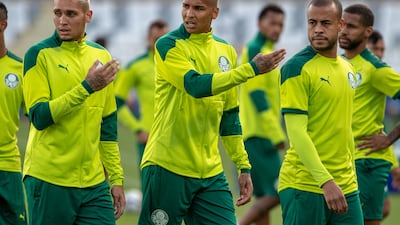
Brazilian football team Palmeiras training at Al Nahyan Stadium in Abu Dhabi on Monday, February 7, ahead of their Fifa Club World Club match against Al Ahly. All images by Victor Besa / The National -
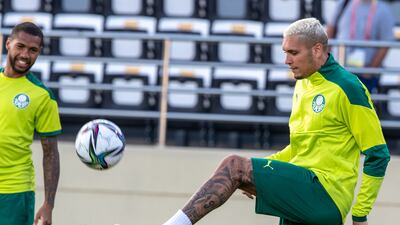
Brazilian football team Palmeiras training at Al Nahyan Stadium in Abu Dhabi. -
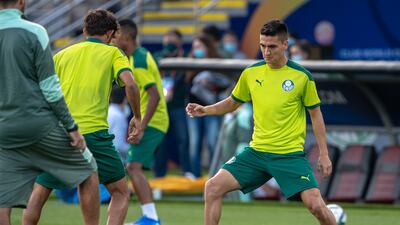
Brazilian football team Palmeiras training at Al Nahyan Stadium in Abu Dhabi. -
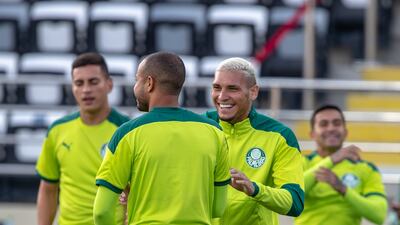
Brazilian football team Palmeiras training at Al Nahyan Stadium in Abu Dhabi. -
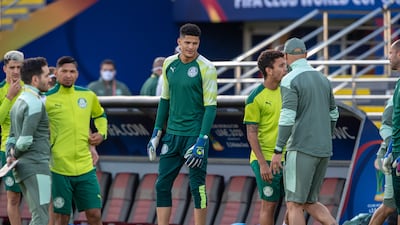
Brazilian football team Palmeiras training at Al Nahyan Stadium in Abu Dhabi. -
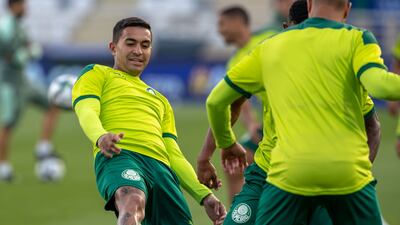
Brazilian football team Palmeiras training at Al Nahyan Stadium in Abu Dhabi. -
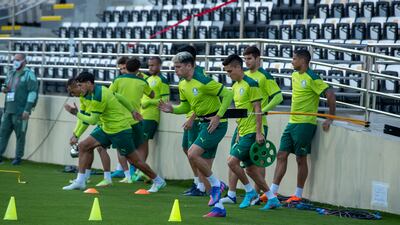
Brazilian football team Palmeiras training at Al Nahyan Stadium in Abu Dhabi. -
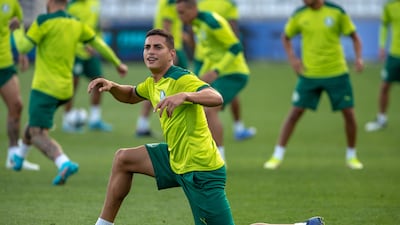
Brazilian football team Palmeiras training at Al Nahyan Stadium in Abu Dhabi. -
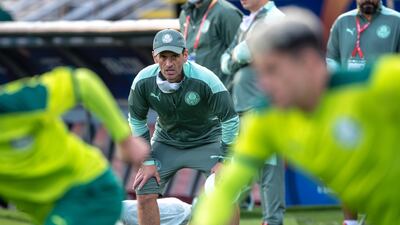
Brazilian football team Palmeiras training at Al Nahyan Stadium in Abu Dhabi. -
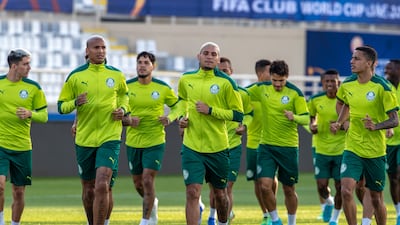
Brazilian football team Palmeiras training at Al Nahyan Stadium in Abu Dhabi. -
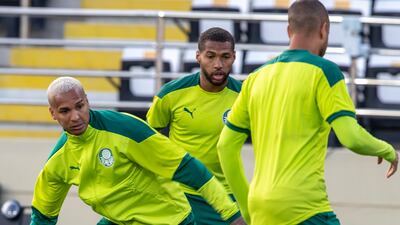
Brazilian football team Palmeiras training at Al Nahyan Stadium in Abu Dhabi. -
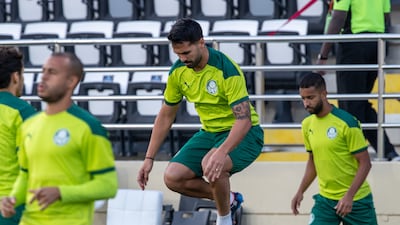
Brazilian football team Palmeiras training at Al Nahyan Stadium in Abu Dhabi. -
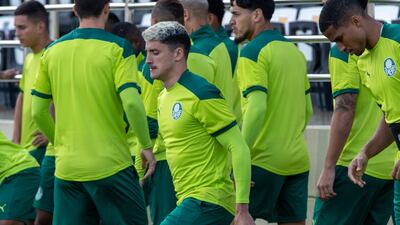
Brazilian football team Palmeiras training at Al Nahyan Stadium in Abu Dhabi. -

Brazilian football team Palmeiras training at Al Nahyan Stadium in Abu Dhabi. -
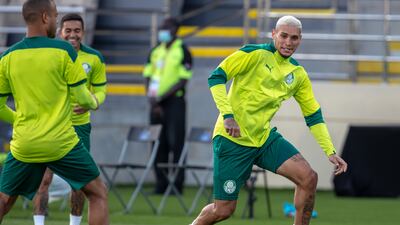
Brazilian football team Palmeiras training at Al Nahyan Stadium in Abu Dhabi. -

Brazilian football team Palmeiras training at Al Nahyan Stadium in Abu Dhabi. -
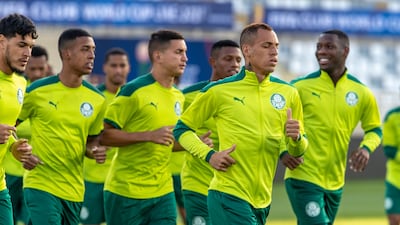
Brazilian football team Palmeiras training at Al Nahyan Stadium in Abu Dhabi. -
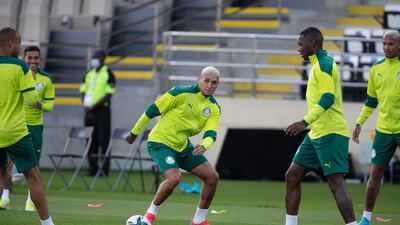
Brazilian football team Palmeiras training at Al Nahyan Stadium in Abu Dhabi.



