Bernd Maylander stands beside the safety car at Yas circuit. Courtesy Yas Marina Circuit

Abu Dhabi Grand Prix: Behind the wheel with the safety car driver


Simon Wilgress-Pipe
  • English
  • Arabic

Not all the drivers participating in this year’s Etihad Airways Abu Dhabi Grand Prix are here for the silverware.

While the teams concentrate on the race, Bernd Maylander has wider concerns. The German is the safety car driver at the event, and the role he and his team play is crucial. If an incident takes place that blocks the track, or leaves debris that is likely to be a danger to racers, the safety car will be deployed to slow the drivers down until the marshals have performed a clean-up operation.

This is Maylander’s 21st year in Formula 1 but, despite his longevity in the job, he always experiences an adrenaline rush as the race approaches, particularly as he and his colleagues have a vital job to perform even before the action begins.

They must always carry out a series of checks to ensure both their own car – a Mercedes-AMG GT R – and the track are in optimum condition for what lies ahead. They inform race control of any adverse conditions around the circuit, such as unusually slippery surfaces, that could prove problematic to drivers.

There are two safety cars and two medical cars in the set up, and the team has its own mechanics.

Maylander is fond of the Abu Dhabi F1 event, saying: “It’s a nice place to finish the season and that’s why we always love to go to Yas Marina Circuit.”

The driver enjoyed a motorsport career prior to his safety car duties, driving for the likes of Formula Ford and Porsche.

Like many involved in the sport, he has found the season challenging, largely due to the ongoing pandemic.

“It’s been a tough second half of the year and the most important thing after Abu Dhabi is to get back to the family and prepare for Christmas,” he said.

________________

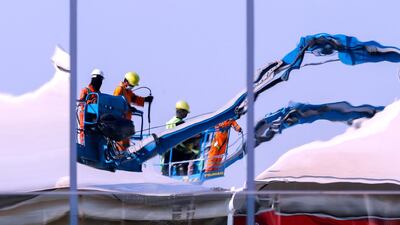
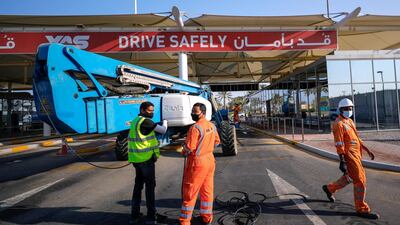
Vigilant pandemic prep under way at Yas Marina Circuit

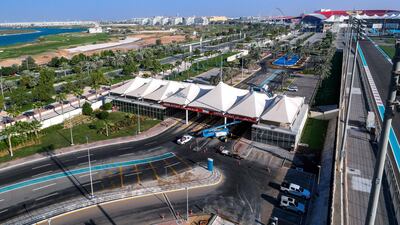
  • Yas Marina Circuit ahead of the 2020 Abu Dhabi Grand Prix. Victor Besa / The National
    Yas Marina Circuit ahead of the 2020 Abu Dhabi Grand Prix. Victor Besa / The National
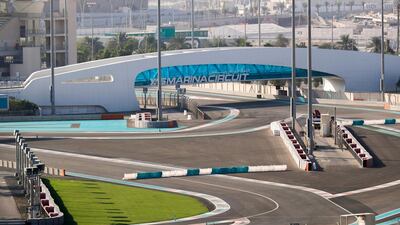
  • The circuit is quieter than usual ahead of the racing. Victor Besa / The National
    The circuit is quieter than usual ahead of the racing. Victor Besa / The National
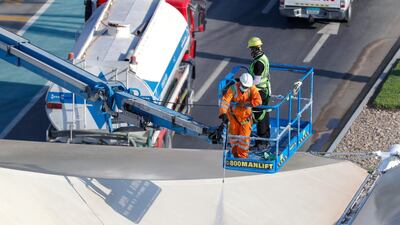
  • Cleaning operations begin in preparation for the racing. Victor Besa / The National
    Cleaning operations begin in preparation for the racing. Victor Besa / The National
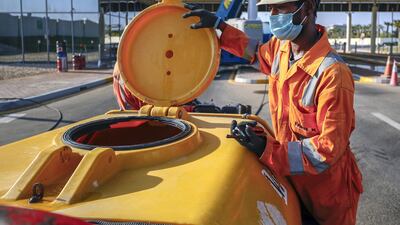
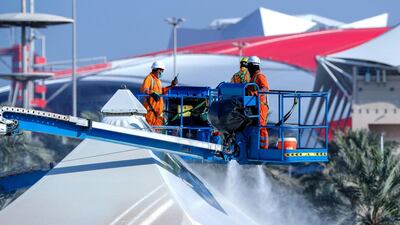
  • Sanitising crews work at the track's West Entrance. Victor Besa / The National
    Sanitising crews work at the track's West Entrance. Victor Besa / The National
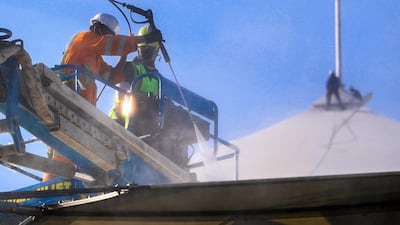
  • Workers are lifted up on raised platforms. Victor Besa / The National
    Workers are lifted up on raised platforms. Victor Besa / The National
  • Cleaning begins at the circuit's main entrance. Victor Besa / The National
    Cleaning begins at the circuit's main entrance. Victor Besa / The National
  • A cleaning crew begins work from a platform. Victor Besa / The National
    A cleaning crew begins work from a platform. Victor Besa / The National
  • Ferrari World is seen in the background behind the circuit. Victor Besa / The National
    Ferrari World is seen in the background behind the circuit. Victor Besa / The National
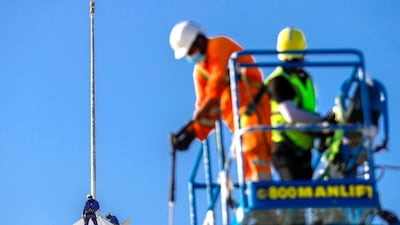
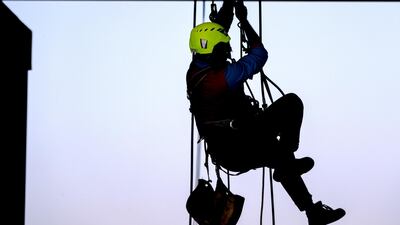
  • A cleaner is lifted up. Victor Besa / The National
    A cleaner is lifted up. Victor Besa / The National
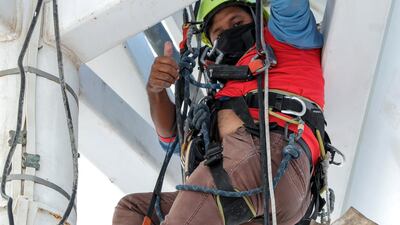
  • A cleaning crew prepares to sanitise a canopy at the track. Victor Besa / The National
    A cleaning crew prepares to sanitise a canopy at the track. Victor Besa / The National
  • A cleaning crew prepares to sanitise a canopy at the track. Victor Besa / The National
    A cleaning crew prepares to sanitise a canopy at the track. Victor Besa / The National
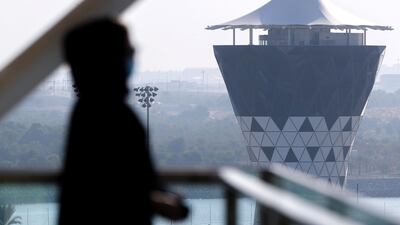
  • Yas circuit's control tower. Victor Besa / The National
    Yas circuit's control tower. Victor Besa / The National
  • A cleaner is lifted up. Victor Besa / The National
    A cleaner is lifted up. Victor Besa / The National
  • A cleaning crew prepares to sanitise a canopy at the track. Victor Besa / The National
    A cleaning crew prepares to sanitise a canopy at the track. Victor Besa / The National
Global state-owned investor ranking by size

1.

United States

2.

China

3.

UAE

4.

Japan

5

Norway

6.

Canada

7.

Singapore

8.

Australia

9.

Saudi Arabia

10.

South Korea

EA Sports FC 24
Voy!%20Voy!%20Voy!
%3Cp%3E%3Cstrong%3EDirector%3A%3C%2Fstrong%3E%20Omar%20Hilal%3Cbr%3E%3Cstrong%3EStars%3A%3C%2Fstrong%3E%20Muhammad%20Farrag%2C%20Bayoumi%20Fouad%2C%20Nelly%20Karim%3Cbr%3E%3Cstrong%3ERating%3A%3C%2Fstrong%3E%204%2F5%3C%2Fp%3E%0A
PAKISTAN v SRI LANKA

Twenty20 International series
Thu Oct 26, 1st T20I, Abu Dhabi
Fri Oct 27, 2nd T20I, Abu Dhabi
Sun Oct 29, 3rd T20I, Lahore

Tickets are available at www.q-tickets.com

SAUDI RESULTS

Team Team Pederson (-40), Team Kyriacou (-39), Team De Roey (-39), Team Mehmet (-37), Team Pace (-36), Team Dimmock (-33)

Individual E. Pederson (-14), S. Kyriacou (-12), A van Dam (-12), L. Galmes (-12), C. Hull (-9), E. Givens (-8),

G. Hall (-8), Ursula Wikstrom (-7), Johanna Gustavsson (-7)

EMILY%20IN%20PARIS%3A%20SEASON%203
%3Cp%3ECreated%20by%3A%20Darren%20Star%3C%2Fp%3E%0A%3Cp%3EStarring%3A%20Lily%20Collins%2C%20Philippine%20Leroy-Beaulieu%2C%20Ashley%20Park%3C%2Fp%3E%0A%3Cp%3ERating%3A%202.75%2F5%3C%2Fp%3E%0A
Ten tax points to be aware of in 2026

1. Domestic VAT refund amendments: request your refund within five years

If a business does not apply for the refund on time, they lose their credit.

2. E-invoicing in the UAE

Businesses should continue preparing for the implementation of e-invoicing in the UAE, with 2026 a preparation and transition period ahead of phased mandatory adoption. 

3. More tax audits

Tax authorities are increasingly using data already available across multiple filings to identify audit risks. 

4. More beneficial VAT and excise tax penalty regime

Tax disputes are expected to become more frequent and more structured, with clearer administrative objection and appeal processes. The UAE has adopted a new penalty regime for VAT and excise disputes, which now mirrors the penalty regime for corporate tax.

5. Greater emphasis on statutory audit

There is a greater need for the accuracy of financial statements. The International Financial Reporting Standards standards need to be strictly adhered to and, as a result, the quality of the audits will need to increase.

6. Further transfer pricing enforcement

Transfer pricing enforcement, which refers to the practice of establishing prices for internal transactions between related entities, is expected to broaden in scope. The UAE will shortly open the possibility to negotiate advance pricing agreements, or essentially rulings for transfer pricing purposes. 

7. Limited time periods for audits

Recent amendments also introduce a default five-year limitation period for tax audits and assessments, subject to specific statutory exceptions. While the standard audit and assessment period is five years, this may be extended to up to 15 years in cases involving fraud or tax evasion. 

8. Pillar 2 implementation 

Many multinational groups will begin to feel the practical effect of the Domestic Minimum Top-Up Tax (DMTT), the UAE's implementation of the OECD’s global minimum tax under Pillar 2. While the rules apply for financial years starting on or after January 1, 2025, it is 2026 that marks the transition to an operational phase.

9. Reduced compliance obligations for imported goods and services

Businesses that apply the reverse-charge mechanism for VAT purposes in the UAE may benefit from reduced compliance obligations. 

10. Substance and CbC reporting focus

Tax authorities are expected to continue strengthening the enforcement of economic substance and Country-by-Country (CbC) reporting frameworks. In the UAE, these regimes are increasingly being used as risk-assessment tools, providing tax authorities with a comprehensive view of multinational groups’ global footprints and enabling them to assess whether profits are aligned with real economic activity. 

Contributed by Thomas Vanhee and Hend Rashwan, Aurifer