



A new Formula One season kicks off in Bahrain this weekend hoping sweeping rule changes will trigger an explosive new chapter in the sport’s history to blow away the controversy of last year's title decider in Abu Dhabi.
Make no mistake bitterness still lingers over the events last December, certainly deep within Lewis Hamilton and, perhaps even more passionately among his legion of followers.
But F1 is trying to move on. And almost everywhere you look there is change: from dramatic new regulations offering closer racing to a new champion in Max Verstappen and an old one in Hamilton himself surely hell bent on righting a wrong.
Then there’s promise of a Ferrari revival, the legendary Fernando Alonso trying to lead Renault Alpine out of the wilderness and Australian Daniel Ricciardo returning from a bout of Covid. That’s without mentioning ditched Russians and the sport’s new race management with football style video refereeing in use for the first time.
Of course the final hurdles are yet to be leapt so the mourning of Hamilton can finally be laid to rest. That should come with the full FIA report into events on that dramatic day at Yas Marina Circuit in December due to be released on Friday.
But nothing has been so indicative of the dramatic winds of change howling through the sport as the sight of the champion’s No 1 on Verstappen’s Red Bull.
Team boss Christian Horner says just the sight of the single digit on the car’s engine cover has “energised” his British operation.
-

Race winner and 2021 F1 world champion Max Verstappen and his Red Bull Racing team celebrate on the podium after the Abu Dhabi Grand Prix at Yas Marina Circuit on December 12, 2021. Victor Besa / The National -
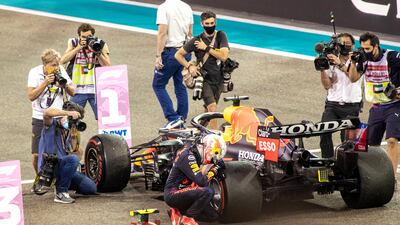
Verstappen fought off Lewis Hamilton in a nail-biting finish. Victor Besa / The National -
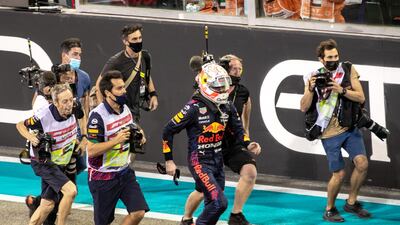
Verstappen runs to celebrate with his team. Victor Besa / The National -
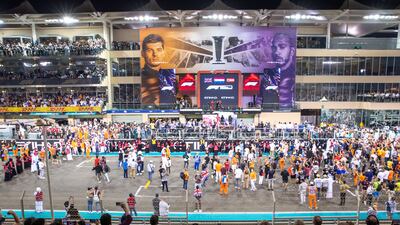
The Dutch driver clinched the race and the championship on the final lap. Victor Besa / The National -
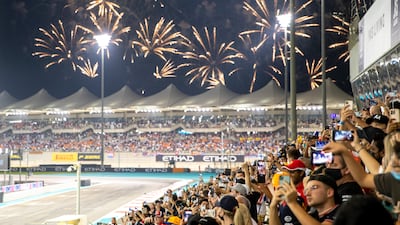
Race fans cheer as Verstappen wins. Victor Besa / The National -
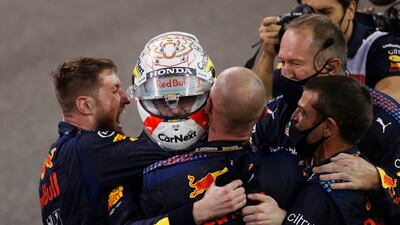
Verstappen enjoys that winning feeling. Reuters -

Verstappen drinks in the moment as Mercedes driver Lewis Hamilton looks dejected after finishing second. Reuters -
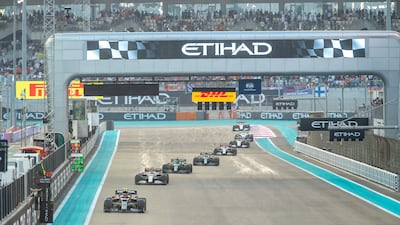
Verstappen and Hamilton go head to head on the track. Victor Besa / The National -
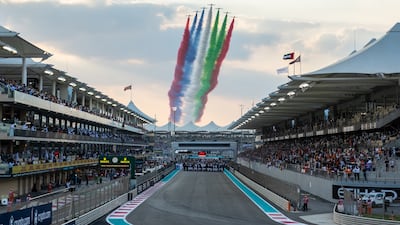
An Etihad Airways flyover before the race. The airline sponsored the Abu Dhabi Grand Prix. Victor Besa / The National -
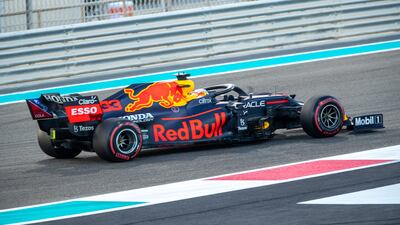
Verstappen in action. Victor Besa / The National -

Hamilton took an early lead. Victor Besa / The National -
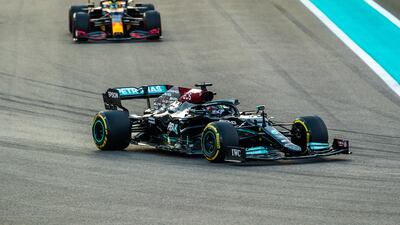
Verstappen and Hamilton led the championship going into the final race. Victor Besa / The National -
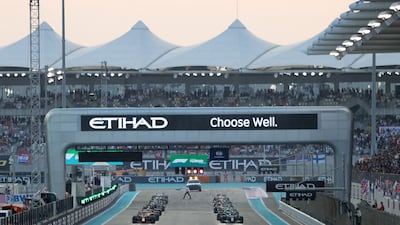
The start of the race. Reuters -

Drivers pose for their end-of-season picture before the Abu Dhabi Grand Prix. AP -
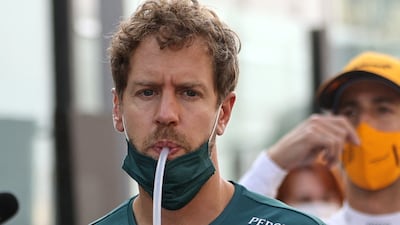
Aston Martin's Sebastian Vettel before the race. Reuters -
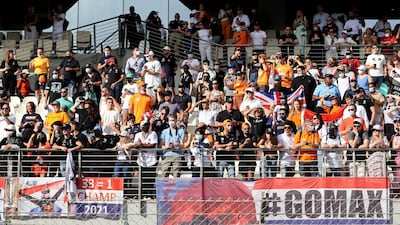
Fans of Verstappen and Hamilton before the race. Reuters -
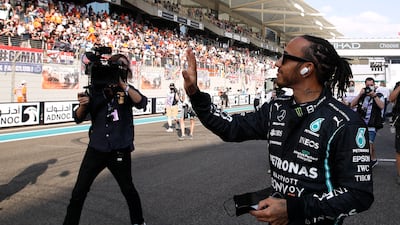
Hamilton looks relaxed before the race. Reuters -
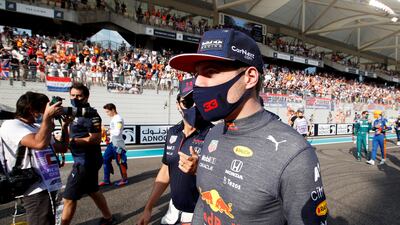
Verstappen looks like he means business. Reuters -
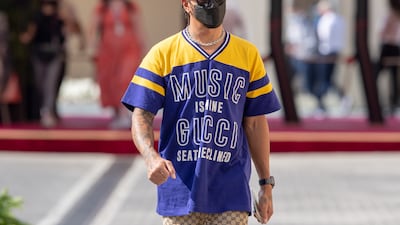
Hamilton soaks up the early atmosphere. Victor Besa / The National -

Mercedes driver Valtteri Bottas with his girlfriend Tiffany Cromwell. Victor Besa / The National -
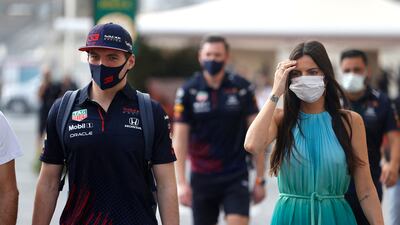
Verstappen arrives at the circuit with his girlfriend Kelly Piquet. Reuters -
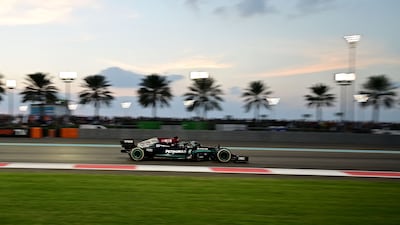
Hamilton on the Yas Marina Circuit. AFP


Verstappen, 24, returns to action having stolen another significant piece of Hamilton real estate over the winter – the honour of being the best paid driver in F1. He penned a gargantuan £220 million deal this month to keep him at Red Bull until 2028.
And it feels like a watershed moment just to be starting a season without a Mercedes champion. One which may start on a dull note for Toto Wolff’s team as Hamilton admitted his race machine lags behind both Red Bull and Ferrari, describing the young Dutchman’s car as “ridiculously fast”. Of course, this is the driver who regularly radios “My tyres are worn out” just before setting the fastest race lap.
Hamilton has a well-earned black belt in kidology but his Mercedes car has been visibly skittish and hard to control in pre-season testing.
-

Mercedes driver Lewis Hamilton during the launch of their new F1 car for 2022. PA -

Mercedes drivers Lewis Hamilton and George Russell. PA -
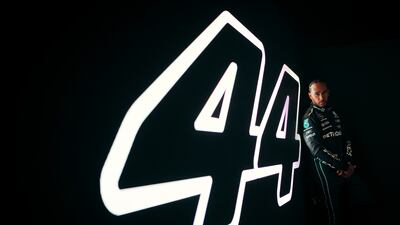
Mercedes driver Lewis Hamilton. PA -
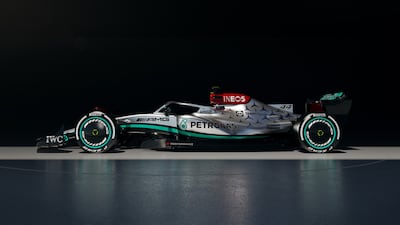
Handout photo provided by Mercedes-AMG of the W13 E Performance 2022 Formula One car at Silverstone. PA -

Mercedes unveiled the 2022 F1 car at Silverstone. PA -
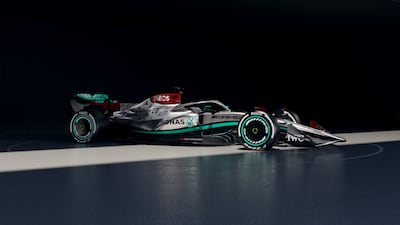
Mercedes' W13 E Performance 2022 Formula One car at Silverstone. PA -

Mercedes's 2022 F1 car unveiled at Silverstone. PA -
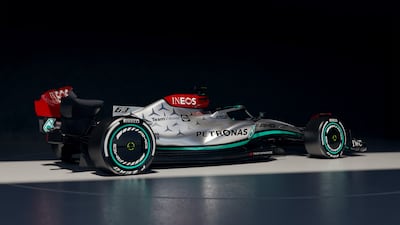
Mercedes-AMG's W13 E Performance 2022 Formula One car. PA


Mercedes are one of the highest profile victims of F1’s new malaise (and buzz word), ‘porpoising’, which causes violent juddering at speeds over 250kph.
Almost every team on the grid is suffering to some degree and engineers are sure to be battling right up to Sunday’s first race for a solution that will not affect lap times too dramatically.
Among the wide-reaching new changes are bigger, low profile, tyres from Pirelli promising more grip and more durability in an attempt to end the curse of drivers cruising to make it to the finish. Cars are 42kgs heavier and have bigger brakes, as well as much altered aerodynamics with ground effect.
Testing suggests Red Bull are the ones to beat, chased by Ferrari and then Mercedes, with McLaren coming up on the rails.
-
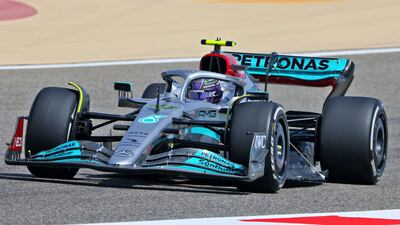
Lewis Hamilton during the first day of Formula One pre-season testing at the Bahrain International Circuit on Thursday, March 10, 2022. AFP -
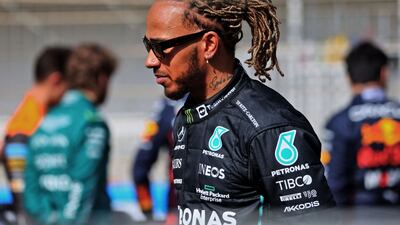
Mercedes driver Lewis Hamilton during the first day of Formula One pre-season testing at the Bahrain International Circuit. AFP -
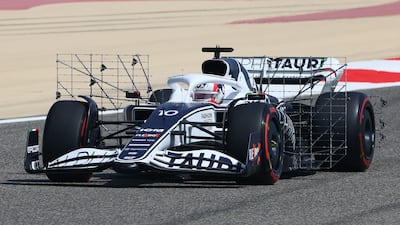
AlphaTauri driver Pierre Gasly drives during the first day of Formula One pre-season testing at the Bahrain International Circuit. AFP -

Red Bull driver Sergio Perez during the first day of Formula One pre-season testing. AFP -
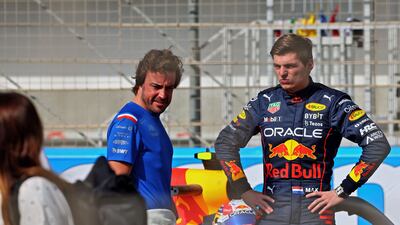
Alpine driver Fernando Alonso speaks with Red Bull's Max Verstappen. AFP -
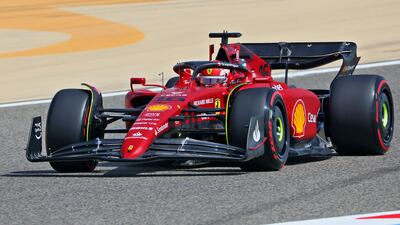
Ferrari driver Charles Leclerc drives during the first day of Formula One pre-season testing. AFP -
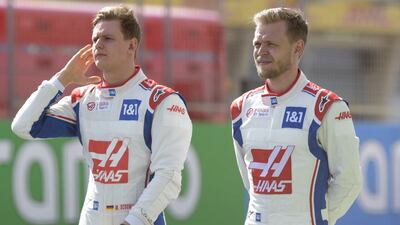
Haas drivers Mick Schumacher and Kevin Magnussen. AFP -
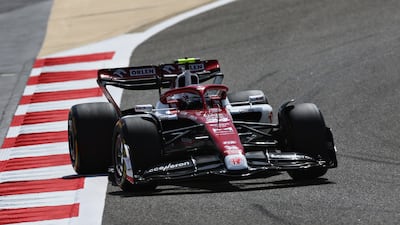
Alfa Romeo driver Zhou Guanyu on track during F1 testing. Getty Images -
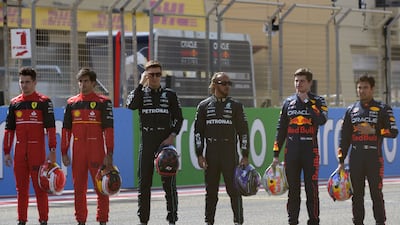
Left to right: Charles Leclerc, Carlos Sainz Jr, George Russell, Lewis Hamilton, Max Verstappen and Sergio Perez. AFP -
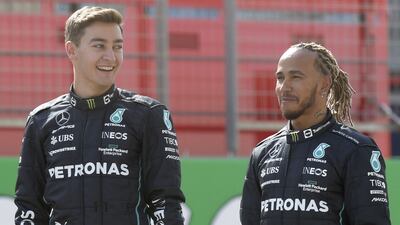
Mercedes drivers George Russell and Lewis Hamilton. AFP -
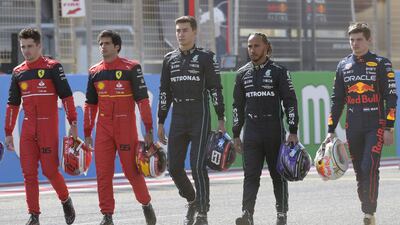
Charles Leclerc, Carlos Sainz Jr, George Russell, Lewis Hamilton and Max Verstappen. AFP -
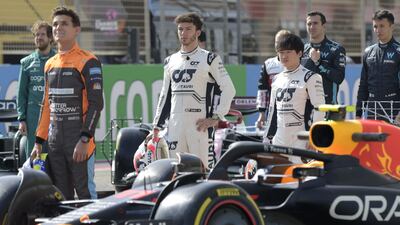
AlphaTauri drivers Pierre Gasly and Yuki Tsunoda. AFP -
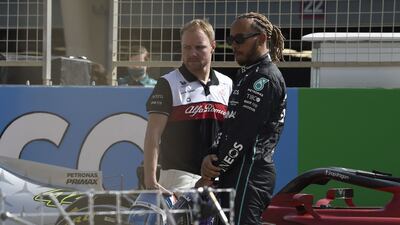
Lewis Hamilton speaks with Alfa Romeo driver Valtteri Bottas. AFP -
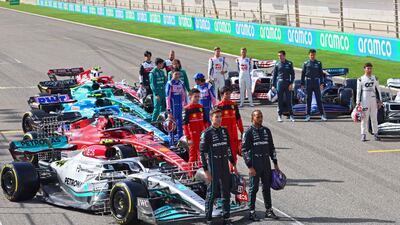
Drivers pose for photos during the first day of F1 pre-season testing at the Bahrain International Circuit. AFP -
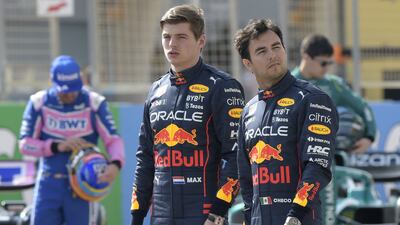
Red Bull drivers Max Verstappen and Sergio Perez. AFP -
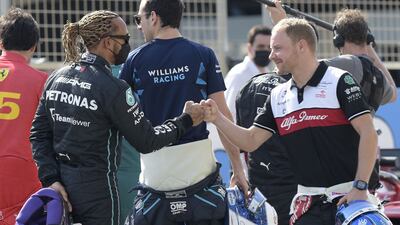
Lewis Hamilton greets Valtteri Bottas at the Bahrain International Circuit. AFP -
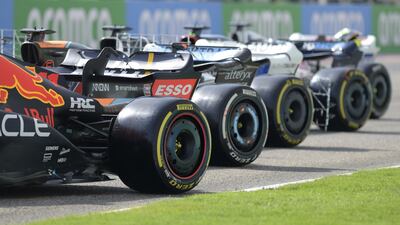
The cars are parked on the starting grid during the first day of testing at the Bahrain International Circuit. AFP -

Drivers pose on the starting grid during the first day of Formula One pre-season testing at the Bahrain International Circuit. AFP -
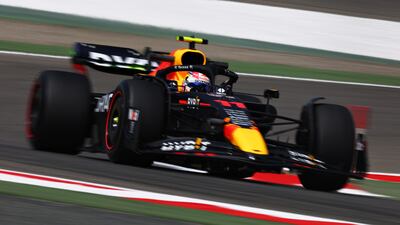
Red Bull driver Sergio Perez. Getty Images -
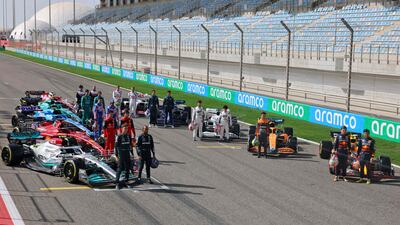
Drivers pose on the starting grid. AFP


Ferrari are confident they have bridged last year’s power deficit – vital in an engine freeze formula in which development is banned.
The sport’s owners, Liberty, will welcome the return of the sport’s marquee brand who have not won a race since September 2019.
In Charles Leclerc and Carlos Sainz they have a rapier quick duo sure to deliver if they have the machinery.
A surprise candidate for best of the rest are American minnows Haas - although they have mostly hit the headlines for ditching their Russian title sponsors and $80m in backing over the Ukrainian invasion.
They would have been less worried about dumping fractious Russian racer Nikita Mazepin, son of their billionaire sponsor.
His vacant seat has been taken by popular Dane Kevin Magnussen, who will be far better benchmark for Mick Schumacher, son of the race legend.
George Russell replaces Valtteri Bottas in a move that sets up one of the most intriguing F1 sub-plots of 2022.
The promising Brit slots in alongside Hamilton after stunning performances over the past two years that suggest he will be far more than an obedient No 2 and capable wingman.
Many see him as a looming threat to Hamilton and perhaps even, longer term, his replacement.
If his Mercedes is not a pacesetter and the eighth title dream gone for another year, will veteran Hamilton have the determination and focus to risk everything for fifth place on the grid while fending off a new young tyro?
And in one of the more intriguing developments - will we ever see the Hamilton name on the podium again after the Mercedes ace announced at Expo 2020 Dubai he would be changing his name to include Larbalestier in honour of mother Carmen he publicly hailed “the best part of me”?
With the dismissal of race director Michael Masi over last year’s disastrous finale in Abu Dhabi come two new race directors charged with providing more consistency by yet another new element in the paddock: recently elected FIA president Mohammed ben Sulayem, an Emirati.

