• Virat Kohli (Royal Challengers Bangalore). IPL salary: 170 million rupees ($2.4m). Sportzpics for BCCI
    Virat Kohli (Royal Challengers Bangalore). IPL salary: 170 million rupees ($2.4m). Sportzpics for BCCI
  • Chris Morris (Rajasthan Royals). IPL salary: 162.5m rupees ($2.2m). Sportzpics for BCCI
    Chris Morris (Rajasthan Royals). IPL salary: 162.5m rupees ($2.2m). Sportzpics for BCCI
  • Pat Cummins (Kolkata Knight Riders). IPL salary: 155m rupees ($2.1m). Sportzpics for BCCI
    Pat Cummins (Kolkata Knight Riders). IPL salary: 155m rupees ($2.1m). Sportzpics for BCCI
  • MS Dhoni (Chennai Super Kings). IPL salary: 150m rupees ($2.06m). AFP
    MS Dhoni (Chennai Super Kings). IPL salary: 150m rupees ($2.06m). AFP
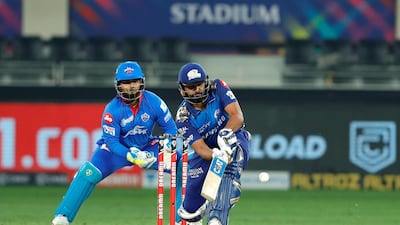
  • Rohit Sharma (Mumbai Indians). IPL salary: 150m rupees ($2.06m). Sportzpics for BCCI
    Rohit Sharma (Mumbai Indians). IPL salary: 150m rupees ($2.06m). Sportzpics for BCCI
  • Rishabh Pant (Delhi Capitals). IPL salary: 150m rupees ($2.06m). AFP
    Rishabh Pant (Delhi Capitals). IPL salary: 150m rupees ($2.06m). AFP
  • Kyle Jamieson (Royal Challengers Bangalore). IPL salary: 150m rupees ($2.06m). Getty
    Kyle Jamieson (Royal Challengers Bangalore). IPL salary: 150m rupees ($2.06m). Getty
  • Glenn Maxwell (Royal Challengers Bangalore). IPL salary: 142.5m rupees ($1.96m). AFP
    Glenn Maxwell (Royal Challengers Bangalore). IPL salary: 142.5m rupees ($1.96m). AFP
  • Jhye Richardson (Punjab Kings). IPL salary: 140m rupees ($1.92m). Getty
    Jhye Richardson (Punjab Kings). IPL salary: 140m rupees ($1.92m). Getty
  • David Warner (Sunrisers Hyderabad). IPL salary: 125m rupees ($1.72m). AFP
    David Warner (Sunrisers Hyderabad). IPL salary: 125m rupees ($1.72m). AFP

Top 10 highest paid cricketers in IPL 2021


  • English
  • Arabic

The Indian Premier League is back after a five-month gap, which is great for cricket fans but also highlights the impact the pandemic has had on sports calendars.

Serial winners Mumbai Indians will defend the title they won in the UAE in Dubai in November, but this time in India after the tournament was shifted back home.

But wherever the tournament is held, one aspect remains constant – the best T20 players in the world at the best league in the world earning the highest salaries in the sport.

The tournament has become the final destination for many cricketers, who get paid fantastic sums of money for about two months of cricket. But who will get paid the most in the 2021 edition that begins on April 9? You can find them in the list below and the picture gallery above.

Top 10 highest paid cricketers in IPL 2021

1. Virat Kohli (Royal Challengers Bangalore). 170 million rupees ($2.4m)

2. Chris Morris (Rajasthan Royals). 162.5m rupees ($2.2m)

3. Pat Cummins (Kolkata Knight Riders). 155m rupees ($2.1m)

4. MS Dhoni (Chennai Super Kings). 150m rupees ($2.06m)

5. Rohit Sharma (Mumbai Indians). 150m rupees ($2.06m)

6. Rishabh Pant (Delhi Capitals). 150m rupees ($2.06m)

7. Kyle Jamieson (Royal Challengers Bangalore). 150m rupees ($2.06m)

8. Glenn Maxwell (Royal Challengers Bangalore). 142.5m rupees ($1.96m)

9. Jhye Richardson (Punjab Kings).140m rupees ($1.92m)

10. David Warner (Sunrisers Hyderabad). IPL salary: 125m rupees ($1.72m)

How much does Virat Kohli earn in the IPL?

Virat Kohli ($2.4m)

The Royal Challengers Bangalore captain has undertaken yet another squad revamp in the pursuit of that elusive IPL title. He is the highest paid cricketer in IPL, which is understandable given the star value that he brings to the tournament and the eyeballs he attracts.

Chris Morris ($2.2m)

The South African all-rounder was snapped up by Rajasthan Royals for the highest-ever bid received by any player during the auction earlier this year. He bowls at 145kph and hits big sixes, which added all those zeroes to his pay package.

Pat Cummins ($2.1m)

The Australian star bowler is yet another proof of the infatuation the league has with world-class seam-bowling all-rounders. Picked up 12 wickets in 14 games for Kolkata Knight Riders in the UAE in 2020.

MS Dhoni ($2.06m)

Dhoni and Chennai Super Kings are joined at the hip. The very identity of the franchise is built around the wicketkeeper batsman. Dhoni still earns the big bucks but at nearly 40 years of age, you wonder how long this will last.

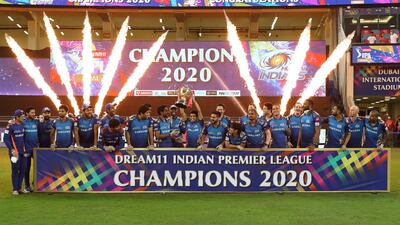
  • Mumbai Indians won the IPL title for the fifth time after defeating Delhi Capitals by five wickets in Dubai in 2020.
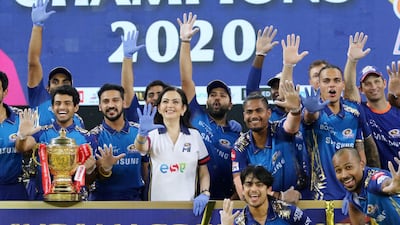
    Mumbai Indians won the IPL title for the fifth time after defeating Delhi Capitals by five wickets in Dubai in 2020.
  • Mumbai Indians with the 2020 IPL trophy in Dubai on Tuesday.
    Mumbai Indians with the 2020 IPL trophy in Dubai on Tuesday.
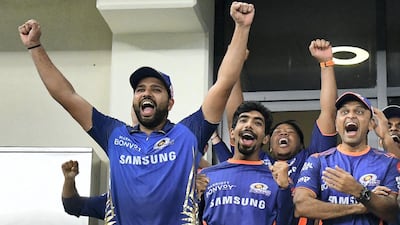
  • Mumbai Indians captain Rohit Sharma celebrates the win in the final against Delhi Capitals.
    Mumbai Indians captain Rohit Sharma celebrates the win in the final against Delhi Capitals.
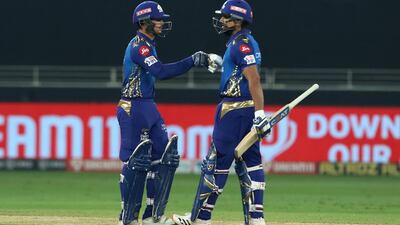
  • Quinton de Kock and Rohit Sharma powered Mumbai Indians to a comfortable win over Delhi Capitals in the IPL final in Dubai on Tuesday.
    Quinton de Kock and Rohit Sharma powered Mumbai Indians to a comfortable win over Delhi Capitals in the IPL final in Dubai on Tuesday.
  • Rohit Sharma hit a match-winning fifty for Mumbai Indians in the final against Delhi Capitals.
    Rohit Sharma hit a match-winning fifty for Mumbai Indians in the final against Delhi Capitals.
  • Ishan Kishan has been a revelation for Mumbai Indians.
    Ishan Kishan has been a revelation for Mumbai Indians.
  • Jayant Yadav of Mumbai Indians celebrates the wicket of Shikhar Dhawan of Delhi Capitals.
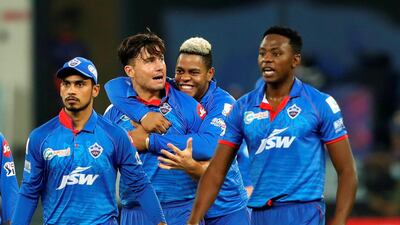
    Jayant Yadav of Mumbai Indians celebrates the wicket of Shikhar Dhawan of Delhi Capitals.
  • Trent Boult gave Mumbai Indians an electric start with the ball against Delhi Capitals in the final in Dubai on Tuesday.
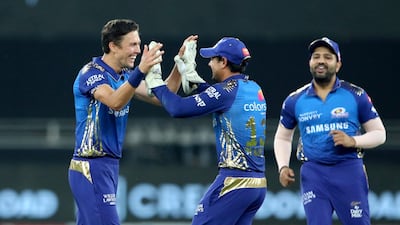
    Trent Boult gave Mumbai Indians an electric start with the ball against Delhi Capitals in the final in Dubai on Tuesday.
  • Nita Ambani, co- owner of Mumbai Indians, cheers her team in Dubai.
    Nita Ambani, co- owner of Mumbai Indians, cheers her team in Dubai.
  • Rishabh Pant of Delhi Capitals scored a fifty on Tuesday.
    Rishabh Pant of Delhi Capitals scored a fifty on Tuesday.
  • Marcus Stoinis of Delhi Capitals celebrates the wicket of Quinton de Kock.
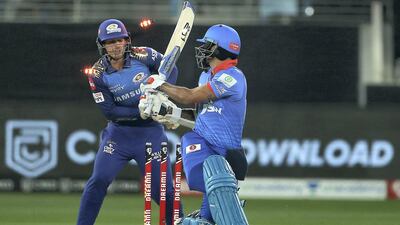
    Marcus Stoinis of Delhi Capitals celebrates the wicket of Quinton de Kock.
  • Shikhar Dhawan of Delhi Capitals is bowled by Jayant Yadav.
    Shikhar Dhawan of Delhi Capitals is bowled by Jayant Yadav.
  • Shreyas Iyer, captain of Delhi Capitals, celebrates his fifty.
    Shreyas Iyer, captain of Delhi Capitals, celebrates his fifty.

Rohit Sharma ($2.06m)

The Mumbai Indians leader is not only the most successful IPL captain, he has built what is without doubt the best T20 outfit at any level in the world. With five IPL titles as captain under his belt, Rohit deserves every rupee he gets.

Rishabh Pant ($2.06m)

The Delhi Capitals wicketkeeper batsman proved his worth in the final last year by scoring an attacking fifty. He is in vintage form at the international level, so expect a lot of fireworks from him. Could take over as captain with Shreyas Iyer injured.

Kyle Jamieson ($2.06m)

The Kiwi all-rounder decimated India's batting line-up in red and white-ball matches during their tour Down Under in 2020. Was handed a bumper contract for his efforts but has struggled to come to grips with his price tag, failing big time in T20s against Australia.

Glenn Maxwell ($1.96m)

The Australian all-rounder is an enigma. He has been around since the start of IPL but has yet to establish himself. Has been in and out of the Australian team, but somehow still lands fat contracts.

Jhye Richardson ($1.92m)

The Australian quick had a superb start to his white-ball career in 2017 but shoulder injury kept him out of the 2019 World Cup. The moment he recovered, and topped the wicket-taking charts in the Big Bash League, he hit the IPL jackpot.

David Warner ($1.72m)

The Australian opener has proven his worth as a batsman and captain at Sunrisers Hyderabad, winning the 2016 title. The longest surviving 'foreign' captain the league.


Ten tax points to be aware of in 2026

1. Domestic VAT refund amendments: request your refund within five years

If a business does not apply for the refund on time, they lose their credit.

2. E-invoicing in the UAE

Businesses should continue preparing for the implementation of e-invoicing in the UAE, with 2026 a preparation and transition period ahead of phased mandatory adoption. 

3. More tax audits

Tax authorities are increasingly using data already available across multiple filings to identify audit risks. 

4. More beneficial VAT and excise tax penalty regime

Tax disputes are expected to become more frequent and more structured, with clearer administrative objection and appeal processes. The UAE has adopted a new penalty regime for VAT and excise disputes, which now mirrors the penalty regime for corporate tax.

5. Greater emphasis on statutory audit

There is a greater need for the accuracy of financial statements. The International Financial Reporting Standards standards need to be strictly adhered to and, as a result, the quality of the audits will need to increase.

6. Further transfer pricing enforcement

Transfer pricing enforcement, which refers to the practice of establishing prices for internal transactions between related entities, is expected to broaden in scope. The UAE will shortly open the possibility to negotiate advance pricing agreements, or essentially rulings for transfer pricing purposes. 

7. Limited time periods for audits

Recent amendments also introduce a default five-year limitation period for tax audits and assessments, subject to specific statutory exceptions. While the standard audit and assessment period is five years, this may be extended to up to 15 years in cases involving fraud or tax evasion. 

8. Pillar 2 implementation 

Many multinational groups will begin to feel the practical effect of the Domestic Minimum Top-Up Tax (DMTT), the UAE's implementation of the OECD’s global minimum tax under Pillar 2. While the rules apply for financial years starting on or after January 1, 2025, it is 2026 that marks the transition to an operational phase.

9. Reduced compliance obligations for imported goods and services

Businesses that apply the reverse-charge mechanism for VAT purposes in the UAE may benefit from reduced compliance obligations. 

10. Substance and CbC reporting focus

Tax authorities are expected to continue strengthening the enforcement of economic substance and Country-by-Country (CbC) reporting frameworks. In the UAE, these regimes are increasingly being used as risk-assessment tools, providing tax authorities with a comprehensive view of multinational groups’ global footprints and enabling them to assess whether profits are aligned with real economic activity. 

Contributed by Thomas Vanhee and Hend Rashwan, Aurifer

Who's who in Yemen conflict

Houthis: Iran-backed rebels who occupy Sanaa and run unrecognised government

Yemeni government: Exiled government in Aden led by eight-member Presidential Leadership Council

Southern Transitional Council: Faction in Yemeni government that seeks autonomy for the south

Habrish 'rebels': Tribal-backed forces feuding with STC over control of oil in government territory

UAE currency: the story behind the money in your pockets
ALRAWABI%20SCHOOL%20FOR%20GIRLS
%3Cp%3ECreator%3A%20Tima%20Shomali%3C%2Fp%3E%0A%3Cp%3EStarring%3A%C2%A0Tara%20Abboud%2C%C2%A0Kira%20Yaghnam%2C%20Tara%20Atalla%3C%2Fp%3E%0A%3Cp%3ERating%3A%204%2F5%3C%2Fp%3E%0A