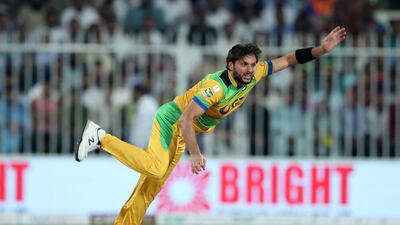

Former Pakistan cricket captain Shahid Afridi says he has tested positive for the coronavirus.
The 40-year-old confirmed the diagnosis on social media, and said he had been feeling unwell since Thursday.
He added that his "body had been aching badly" and said he needed "prayers for a speedy recovery".
Afridi became well-known during the past two decades for his big hitting and leg-break bowling. He played 27 Test matches, as well as 398 one day internationals.
He was in the news last month when he stepped in to buy a bat owned by Bangladesh's Mushfiqur Rahim for $20,000 (Dh73,450) after a charity auction for coronavirus victims was derailed by fake bids.
Afridi, who has his own foundation, said his purchase was a good one. "We are faced with tough times and the need to help the poor is more in these times," he told AFP.
Afridi is the third Pakistan cricketer to test positive for the virus following Taufeeq Umar and Zafar Sarfaraz.
He has most recently been playing for Multan Sultans in the Pakistan Super League, which was suspended in March due to the outbreak.
Pakistan eased its coronavirus lockdown too early, according to the World Health Organisation last week.
The WHO said the country should impose intermittent fortnight-on-fortnight-off restrictions to manage the runaway spread.
Deaths had began to spike as hospitals wards approached their limits, while Prime Minister Imran Khan said remaining in lockdown would result in many daily labourers starving without work.
The most recent figures from Johns Hopkins University show more than 132,000 confirmed cases in Pakistan, with 2,551 deaths.
________________
25 of the most beautiful cricket stadiums in the world
-
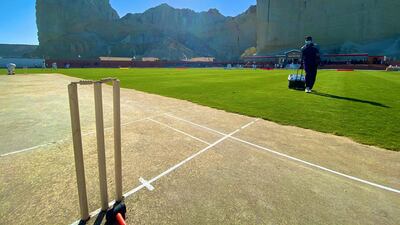
1). Cricket has been blessed with some truly beautiful venues, as this picture gallery will show. Picturesque stadiums are dotted across the globe, and we can add another name to the list. The Gwadar Cricket Stadium in Balochistan, Pakistan, has one of the most stunning backdrops in the world. Courtesy @falamb3 -
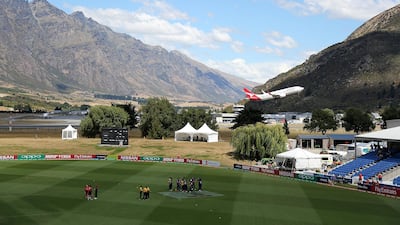
2) Queenstown, New Zealand. New Zealand could fill the top 10 of a list like this all on its own. The Queenstown Events Centre is a prosaic name for an extraordinary venue in the country’s south, which has the Remarkables mountain range as its backdrop. -
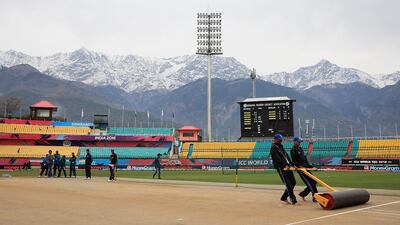
3) Dharamshala, India. India will see New Zealand’s Remarkables, and raise them the Dhauladhar mountains, which are part of the Himalayas. Has there ever been a more spectacular setting for a major ICC tournament? The Himachal Pradesh Cricket Association Stadium hosted matches at the 2016 World T20. -
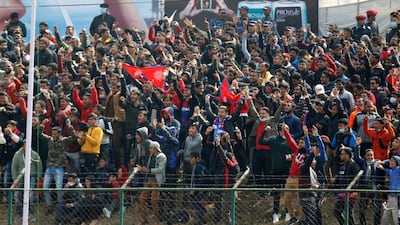
4) Tribhuvan University, Kathmandu. From one side of the Himalayas to another. Nepal’s international cricket ground is built halfway up a hill that leads from the road from Kirtipur to Kathmandu at the bottom, to the campus of the country’s largest university at the top. When Sandeep Lamichhane and Co are in action, thousands throng the banks inside the grounds walls, while many others find canny vantage points outside. -
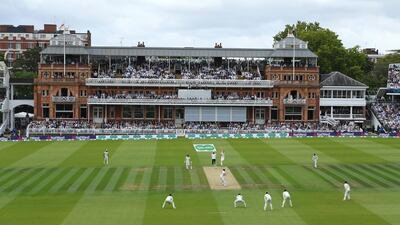
5) Lord’s, London. OK, so it doesn’t back on to the Himalayas or the Remarkables. But, still, cricket grounds don’t come any more handsome. The Grade II* listed Pavilion must surely be the best-known structure in the sport. It is undergoing refurbishment at the Nursery End, so will have a slightly different look next time we see it. -
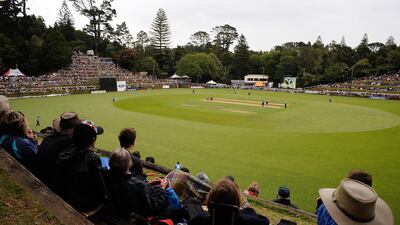
6) Pukekura Park, New Plymouth, New Zealand. Unquestionably beautiful, and more than a little quirky, given the way the viewing areas are cut away from the hills to the sides of the ground. And just sneaks into this list on account of the one ODI it staged, between Sri Lanka and Zimbabwe at the 1992 World Cup. -
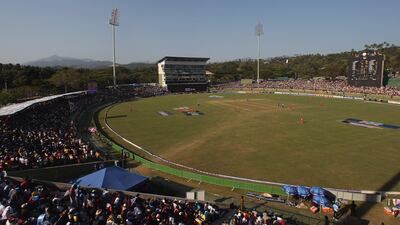
7) Pallekele, Sri Lanka. Sri Lanka might be the closest rival to New Zealand in a list of the loveliest international venues. Pallekele International Stadium, 7kms from Muttiah Muralitharan’s home town of Kundesale, was built – by an Emirati businessman, incidentally – among the hills of the Kandy plateau. -
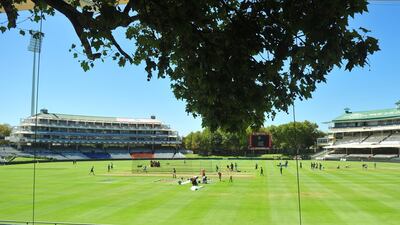
8) Newlands, South Africa. It is not clear which is the most photographed ground in word cricket, but this one must be up there. There are few more striking sights at any venue than when the Tablecloth rolls in over the mountain behind. -
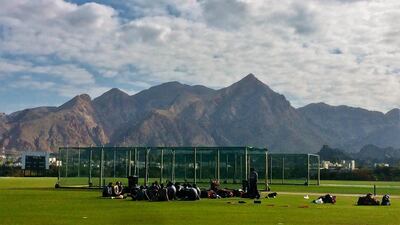
9) Al Amerat, Oman. Oman’s first turf grounds staged ODI cricket for the first time in January, when UAE played there in Cricket World Cup League Two. The Oman Cricket Academy grounds are surrounded by the Western Al Hajar mountains. And they’re gorgeous. -
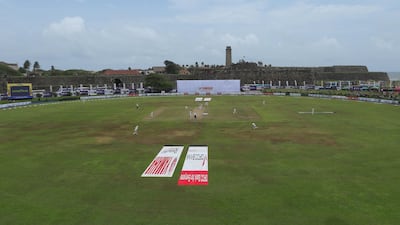
10) Galle, Sri Lanka. A six-hit from the Indian Ocean, Galle International Stadium is a perennial favourite for almost everyone – apart from bowlers, perhaps. The view back towards the old fort is among the most celebrated on the international circuit. -
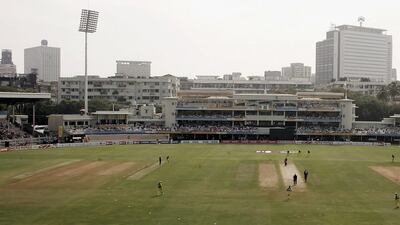
11) Brabourne Stadium, Mumbai. International cricket does not make it here quite so often since what was then the Bombay Cricket Association decided to build the Wankhede Stadium half a mile up the road instead. But maybe only Lord’s reeks more of historic splendour than the Cricket Club of India’s ground. -
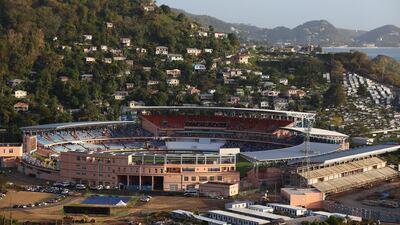
12) National Cricket Stadium, Grenada. Refitted in time for the 2007 World Cup, the Spice Isle’s National Cricket Stadium is situated just along the coast from Grand Anse Beach. It is walled on three sides by lush green hills, and on the other is the Caribbean Sea. -
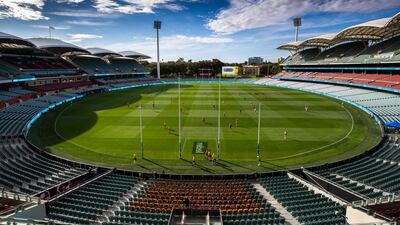
13) Adelaide Oval, Australia. Many Australian grounds have supplanted former charm with unsympathetic new-build stands. The benches may have gone, but the Adelaide Oval still retains most of its allure. -
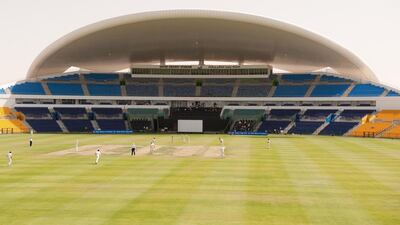
14) Zayed Cricket Stadium, Abu Dhabi. Arguably the most eye-catching of international cricket’s modern structures. On the approach to the ground, it looks as though the Starship Enterprise has landed in the desert. The state-of-the-art grandstand contrasts with the pleasantly old-fashioned grass banks square of the wicket. -
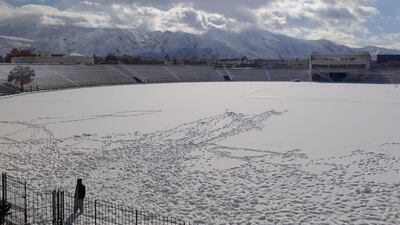
15) Quetta, Pakistan. Pakistan suffers in a list like this for the fact most of its international grounds are city centred, and generally have unspectacular views. Extend the criteria to domestic grounds, and Abbottabad would be a shoo-in. Quetta’s Bugti Stadium, which staged ODI cricket in 1996, is scenic – even when not dressed in snow. -
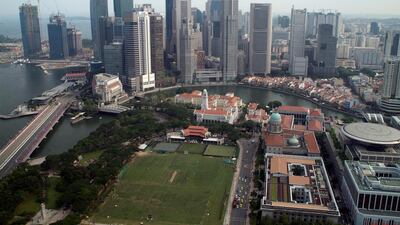
16) Singapore Cricket Club. This just goes to show that city-centre grounds can be spectacular, provided the city centre is spectacular. The historic Padang hosted an ODI series between Pakistan and Sri Lanka in 1996. -
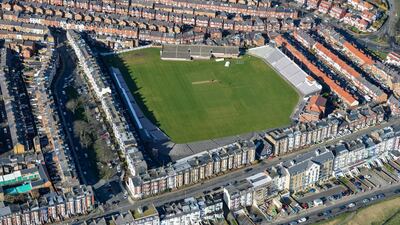
17) Scarborough, England. Out of commission as an international venue since the late 1970s, and unlikely to return to the roster any time soon. No harm in remaining a charming little secret, though. North Marine Drive hosts county matches for Yorkshire. -
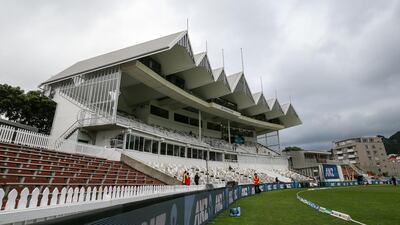
18) Basin Reserve, Wellington. It is stationed on a roundabout, and has a public footpath running through it, which does not exactly sound too special. But the older and smaller of the two international venues in New Zealand’s capital is a classic. -
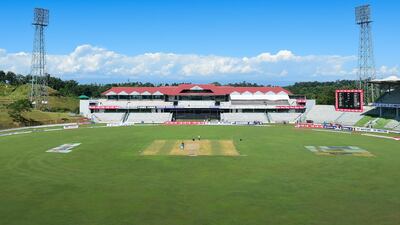
19) Sylhet, Bangladesh. On one side of the ground, Sylhet International Stadium is accessible only via a tramp through jungle. Built just outside of town, in the tea-producing area of Bangladesh’s north-east, it has a different feel to many of the country’s other utilitarian stadiums. UAE played there in the 2014 World T20. -
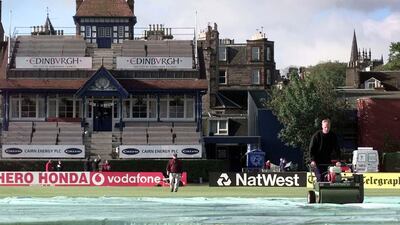
20) The Grange, Edinburgh. Lined by sandstone houses that are characteristic of Edinburgh, and with a distinctive pavilion, the Grange hosted matches at the 1999 World Cup – and more recently, Scotland’s win over England in 2018. -
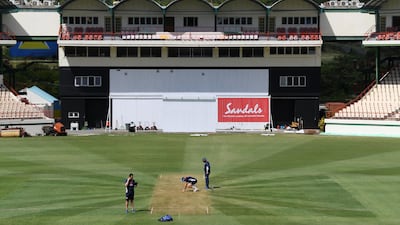
21) Daren Sammy National Stadium, St Lucia. Built to host matches at the 2007 World Cup, it was later renamed to honour the country’s greatest cricketer. Inland from the coast, but surrounded by verdant hills pockmarked with houses. -
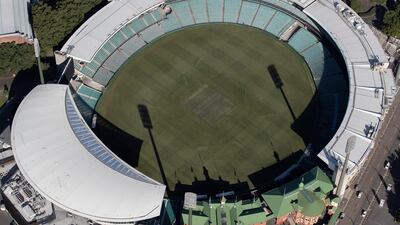
22) Sydney Cricket Ground. Much of its previous character has been chipped away with the new, practical stands, but its two most notable landmarks – the Ladies Pavilion and the adjacent Members Pavilion - remain. -
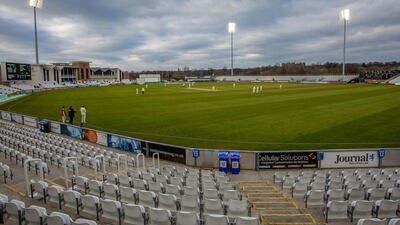
23) Chester-le-Street, England. The Riverside Ground is in view of Lumley Castle. Which wins it extra points for style, given that was where Shane Watson and a number of other Australia players were spooked by the ghost of Lily of Lumley in 2005. -

24) Nelson, New Zealand. The Saxton Oval, where the UAE played their first World Cup match in 19 years in 2005, was half the world away – literally and figuratively – from what the national team players were used to. From Sharjah, they had been transported to the green and pleasant land of the northern tip of New Zealand’s South Island. -
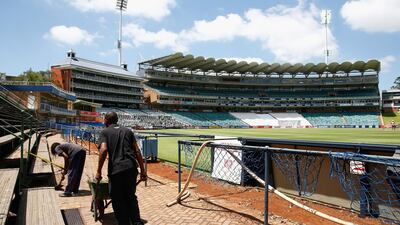
25) The Wanderers, Johannesburg. South Africa’s biggest cricket ground by capacity. It might lack the natural splendour of Newlands, but it still has plenty of architectural character. -

26) Kensington Oval, Barbados. The atmosphere may be entirely different to what it once was, but it retains a unique feel. The Garfield Sobers Pavilion remains its most endearing feature.



