
Almost every top-level cricketer is opposed to it. Purists can't even stand the idea of it. It was to be expected when ESPNcricinfo reported that the International Cricket Council is considering reducing Test matches to four days from the next cycle that begins in 2023.
From a cricketing point of view, it is a bad idea. Losing the fifth day would mean many games that could have a thrilling finish would end up in a draw. There would be almost no need to bat out time anymore and on many pitches, spinners would not get a chance to come into the picture in the fourth innings.
‘Five-day cricket is the ultimate test of a player and tinkering with it would mean playing with the very essence of cricket and its history.’ ‘If we reduce Tests to four days, who is going to stop it from getting cut down to three?’ ‘We already have innovation in the form of day-night Tests, and that should be enough’ … so say some of the many opponents of the proposal. All completely valid points.
But you have to wonder why the world body would even think of such a drastic measure. Surely they knew that players would not support a move that threatens to take anything more away from a revered format that has already lost so much ground to T20 cricket and franchise tournaments.
It’s all down to economics. Not just about Test cricket but cricket in general. Only a handful of cricket boards – India, England and Australia – can afford to host full Test series of three or more matches regularly. For everyone else, or even for these boards against lesser teams, Test matches offer little financial incentives. When cricket boards look to sell broadcast rights, Test match days are seen as a loss-making endeavour that need to be offset by T20 and ODI cricket.
Star India pays the Indian board the same amount for a Test as it does for ODIs and T20s. In 2018, according to the Hindustan Times which quoted a study by the local broadcast research organisation, India's 19 T20 matches got twice as many views in the country (446 million impressions) as 14 Tests (211m).
________________
England win thriller at Newlands
-

Ben Stokes celebrates taking the wicket of Vernon Philander and win the second Test for England against South Africa. Getty -

South Africa batsman Rassie van der Dussen watches as England's Jimmy Anderson takes a catch off the bowling of Stuart Broad. AP -
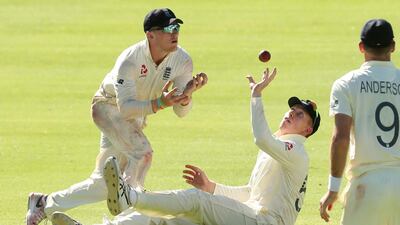
England's Zak Crawley catches out South Africa's Anrich Nortje. Reuters -
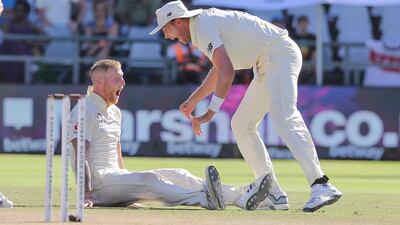
Ben Stokes, left, and Stuart Broad celebrate the wicket of Anrich Nortje. AP -

South Africa batsman Kagiso Rabada. Reuters -
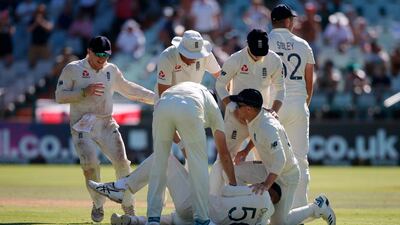
England's Zak Crawleyis mobbed by teammates after catching out Anrich Nortje. AFP -
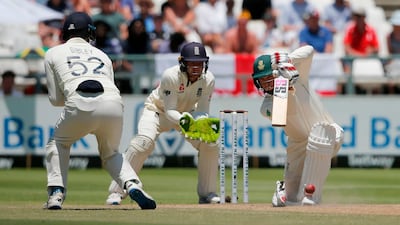
South Africa's Rassie van der Dussen plays a shot. AFP -
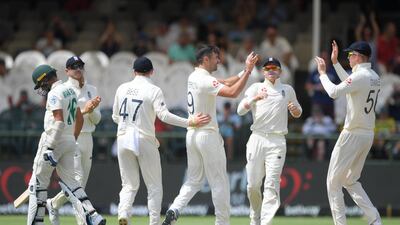
England bowler James Anderson, cente, is congratulated by teammates after taking the wicket of Kashev Maharaj. Getty -
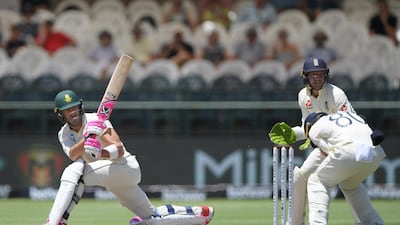
South Africa batsman Faf du Plessis hits out only to be caught by Joe Denly (not pictured) off the bowling of Dom Bess. Getty -
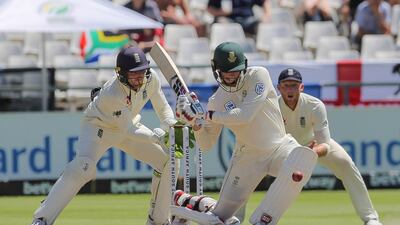
South Africa's batsman Rassie van der Dussen. AP -
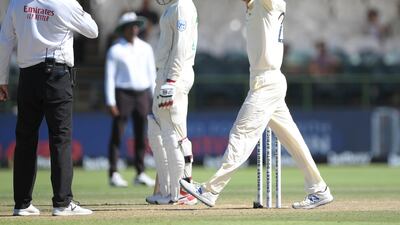
England bowler Dom Bess celebrates after taking the wicket of Quinton de Kock. Getty -

England fielder Ben Stokes, left, celebrates the wicket of South Africa's Quinton de Kock. Reuters -

A view of the second Test in Cape Town. Reuters -

England bowler James Anderson successfully appeals for the wicket of Keshev Maharaj. Getty -
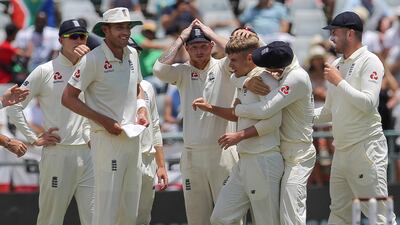
England celebrate the wicket of Pieter Malan. AP -
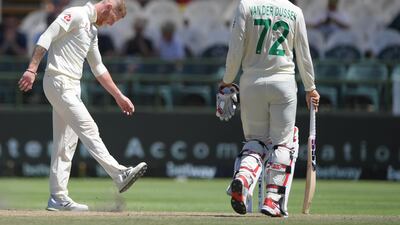
Frustrated England bowler Ben Stokes. Getty -
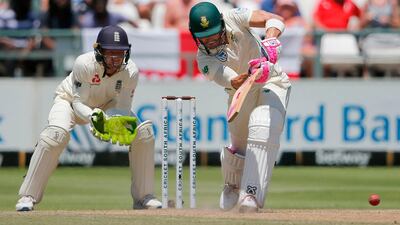
South Africa captain Faf du Plessis plays a shot. AFP -
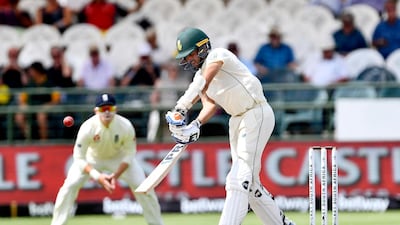
Keshav Maharaj of South Africa breaks his bat. Getty -
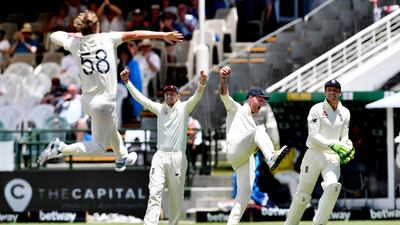
Ben Stokes, second right, after taking the catch to dismiss Pieter Malan. Getty -

South African batsman Pieter Malan. AP -

Fans-eye view of Newlands stadium. Reuters


________________
Now think of boards with far fewer broadcast dollars to play around with and you can imagine what a drain playing Test cricket can be; there is a reason why you don’t see a four-Test series between Pakistan and Sri Lanka.
The idea behind the proposal is to free up space in the calendar from 2023 onwards. According to calculations, four-day Tests in the current 2015-2023 cycle would have freed up 335 days. That extra time can be utilised to give breathing space to players, franchise cricket and/or allow for additional ICC tournaments.
From an economic point of view, it is worth considering. A four-day Test would be more lucrative for broadcasters as they struggle to sell advertisements for the fourth and fifth days as matches now routinely finish early. Plus, it would cheaper for cricket boards to host four-day matches.
The extra space in the calendar could be used by the world body to host one global tournament every year, which in turn would mean extra funds from the central revenue pool for cricket boards who are not as financially stable as the ‘big three’; a smartly-run board like New Zealand has suffered losses for three straight years as they are due to receive a bulk of their share of the ICC revenues only after 2021.
While the view of players like Virat Kohli, Joe Root and Faf du Plessis are to be respected, the reality is that cricket is governed by commercial considerations and if we want to ensure the game survives and grows at all its current bases, something has to be done.
The four-day Test proposal is that ‘something’. It might do more harm than good and not solve all or any of the issues. But we should at least acknowledge the realities of the game and consider the proposal with an open and considerate mind before passing a final judgement.

