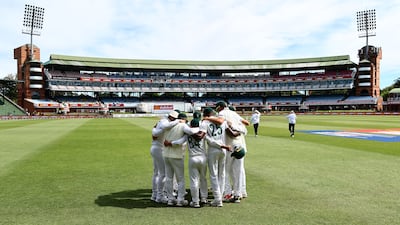
The warning signs were there by the time the first ball was bowled in the first Test between South Africa and Australia in Durban earlier this month.
The reigning and previous world Test champions were facing off once again, with wounds from the ball-tampering saga from the previous visit still not full healed.
And yet, barely anyone turned up for the opening Test. Or for the second match in Gqeberha.

Former Australia opener, and a central figure in the ball-tampering scandal of 2018, David Warner put it rather bluntly.
"We keep hearing how important Test cricket is, but where are the fans in South Africa? Empty stands, no atmosphere, and we’re supposed to believe the format is thriving? You can’t keep calling Test cricket the pinnacle of the game if no one turns up to watch it. Harsh reality, but someone has to say it. Pathetic," Warner posted on social media.
Warner was a batter who started his career almost exclusively as a T20 batter, and then forced his way into Test cricket. He ended up playing over 100 Tests. A lot of it got taken away from him after the sandpaper saga, with Warner losing any hopes of a future leadership position.
He knows how high the stakes are for players. And what it means if there is no one to witness their battles.
After the opening Test, a Cricket South Africa official said they will look into the reasons for low attendance for a marquee home series.
"A Test match of this quality, featuring the Proteas and Australia, deserved greater support in the stands," Heinrich Strydom, chief executive of KwaZulu-Natal Cricket Union, said in a statement.
"While we recognise that supporters face competing demands on their time and finances, we must also understand better what influences their decisions to attend and what more we can do to make live cricket an attractive and worthwhile experience.
"This is something we will reflect on through a thorough internal review."
Former South Africa batter Daryll Cullinan had already warned that the series had many factors going against it.
In his piece for Cricinfo, Cullinan said that hosting a series in South Africa in October, when heavy rains are commonplace, and on underprepared surfaces was inviting trouble.
Fewer patrons
The situation is grim in most parts of the cricket world, barring England, Australia and a handful of centres in India.
Most cricket boards simply can't afford to host Test matches as broadcasters are not queueing up to show them in the first place. A majority of Test series now are two-game affairs, just to meet minimum requirements.
T20 cricket now bankrolls the entire system, first via franchise leagues and then internationals. Everything else feeds off it.
Test matches in England are still viewed by a full crowd while Australia too boasts healthy attendances for five-day matches. In India, places such as Mumbai, Delhi, Kolkata, Chennai and Bengaluru get good crowds but they are not always allowed to host Tests due to rotation of venues.
And how long will even the traditional Test centres continue to attract good crowds? Test patrons are not getting any younger. The next generation simply does not consume cricket the way Test cricket serves its fares.
When a 112-Test veteran like Warner spells it out as clearly as that, there is no hiding from it - Test cricket is being propped up and will continue to require support.
The moment you are at the mercy of the elements, one can't complain if the wind changes direction. For now, franchise leagues and T20s are pumping in money, allowing most cricket boards to pay the bills and keep the ball rolling at the domestic level. If some cricket boards decide Test cricket does not make financial sense, don't hold it against them.
If you feel passionately about Test cricket, make sure to attend next time a match is held at a venue near you.

