


A series triumph over a Test-playing nation was always going to be a tough task but the manner in which the UAE took on Afghanistan in the three-match T20 series must fill the national team with hope.
The UAE lost the first game by 72 runs but bounced back to level the series with a 11-run victory in the next game and then pushed the Afghans all the way before losing the decider in Sharjah on Tuesday by a close margin of four wickets, with nine deliveries to spare.
How the UAE performed
After a forgettable first match in which the visitors posted 203 thanks to a century from Rahmanullah Gurbaz, they regrouped with better plans for the second game.
With the series on the line, captain Muhammad Waseem went on the offensive and hit a sparkling half-century, setting up a solid foundation with opening partner Aryan Lakra, who made a composed unbeaten 63. A total of 166-7 was something the bowlers could work with. Seamers Ali Naseer and Muhammad Jawadullah picked up four wickets each to level the series.
Then in the decider, the UAE had the Afghans cornered for most of the game while defending 127 until Najibullah Zadran (28 off 13) took the game away from the hosts.
-

Afghanistan's Najibullah Zadran hits the winning runs to finish with 28 off 13 balls in his side's four-wicket victory in the third T20 against the UAE at Sharjah Cricket Stadium on January 2, 2024. Afghanistan won the series 2-1. All photos: Chris Whiteoak / The National -

The UAE's Junaid Siddique takes the wicket of Afghanistan's Rahmanullah Gurbaz. -

Afghanistan's Hazratullah Zazai made 36 runs off 32 balls. -

Afghanistan's Darwish Rasooli is bowled by the UAE's Junaid Siddique. -

The UAE's Dhruv Parashar takes the wicket of Afghanistan's Hazratullah Zazai caught by Aryan Lakra. -

Afghanistan's Ibrahim Zadran scored 23 off 30 deliveries. -

Afghanistan's Hazratullah Zazai after being dismissed by UAE bowler Dhruv Parashar, caught by Aryan Lakra for 36. -

Aryan Lakra takes the catch to dismiss Afghanistan's Hazratullah Zazai off the bowling of Dhruv Parashar. -

Afghanistan's Ibrahim Zadran hits out. -

Afghanistan's Qais Ahmad dismisses UAE captain Muhammad Waseem, stumped by Rahmanullah Gurbaz for 27 runs. -

The UAE's Ali Naseer on his way to scoring 21 off 22 balls against Afghanistan. -

Afghanistan's Qais Ahmad celebrates after taking the wicket of the UAE's Basil Hameed for 12 runs. -

The UAE's Aryan Lakra is clean bowled by Afghanistan's Naveen-ul-Haq. -

Afghanistan's Naveen-ul-Haq celebrates after dismissing the UAE's Tanish Suri, who was caught by Azmatullah for seven runs. -

The UAE's Tanish Suri is out caught off the bowling of Afghanistan's Naveen-ul-Haq. -

The UAE's Muhammad Waseem on his way to a total of 27 off 25 balls against Afghanistan. -

UAE skipper Muhammad Waseem is stumped by Rahmanullah Gurbaz off the bowling of Qais Ahmad. -

Afghanistan's Qais Ahmad and Rahmanullah Gurbaz celebrate the stumping of the UAE's Muhammad Waseem.


Where the UAE need to improve
Fielding has been their biggest concern. It’s an area that the team has worked on tremendously over the past few years but there is still work to be done.
Empowering the youngsters
In a bold move, the UAE fielded a young team in a bid to build a squad for the future.
They rewarded three teenagers, Dhruv Parashar, Nilansh Keswani and Tanish Suri, from the team that reached the U19 Asia Cup final and recorded historic victories over Sri Lanka and Pakistan.
Aayan Afzal Khan, 18, Ali Naseer, 19, Vriitya Aravind, 21, and Aryan Lakra, 22, are already established players and played key roles in the series.
All of these players emerged from the Emirates Cricket Board’s National Academies League, the brainchild of Andy Russell, the ECB’s development manager.
The Academies League was founded in 2016 and currently has 62 academies in the country competing across 275 matches in both the U19 and U16 competitions from October to February. This is followed by the Inter-Emirate age group competition in March.
The inaugural ILT20 School Cup was conducted in November with the winners of each group representing the franchise teams in the finals in January.
From this pathway programme, they now have a bigger pool of youngsters to choose from.
In addition, the ILT20 Development Tournament was held in September ahead of season two of the DP World ILT20 from January 19.
According to Russell, plans are under way to conduct an U13 National Academies League around February and April, and it certainly would give more depth to UAE cricket.
Previously, players arrived in the UAE having played top-class cricket and they had to serve over three years to qualify for the country.
-
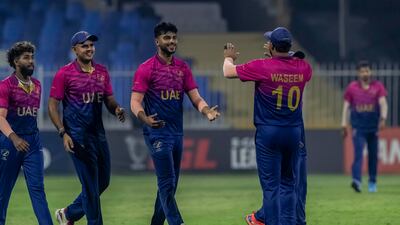
UAE defeated Afghanistan in the second T20 in Sharjah on Sunday, December 31, 2023. All photos: Antonie Robertson / The National -
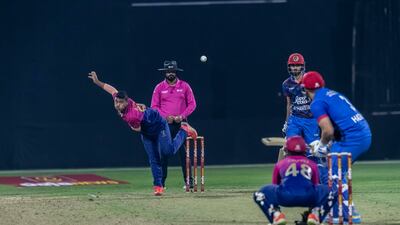
UAE restricted Afghanistan to 155 to secure victory by 11 runs in Sharjah -
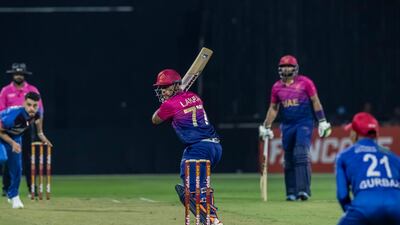
Aryan Lakra and captain Muhammad Waseem hit fifties against Afghanistan in the second T20 on Sunday -
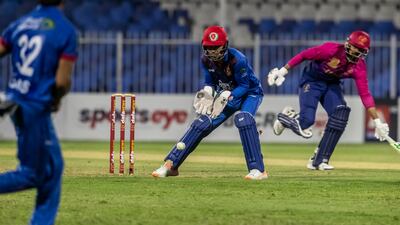
UAE posted 166-7 batting first against Afghanistan -
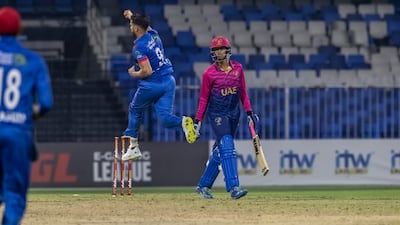
UAE levelled the T20 series against Afghanistan -
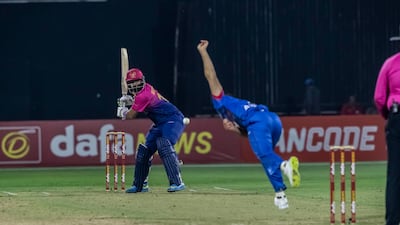
UAE defeated Afghanistan by 11 runs on Sunday -
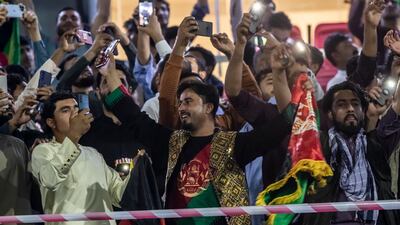
Afghanistan fans at the Sharjah Cricket Stadium


By then, most would be over 30 and past their prime. But with a steady flow of UAE-born youngsters coming through, the talent pool is growing wider and deeper.
What they said
Waseem, the UAE captain, said: “It was a good series and the boys put up a great fight against a Test-playing nation. To win the second game to level the series and going very close in the deciding third game was a creditable effort from the team.
“We have some very good young talent and can obviously improve with more opportunities. I think we gave away a few runs in our fielding but, overall, it was a performance we can take a lot of positives [from going] forward.”
Naveen-ul-Haq, the Afghan quick who was player of the match in the third T20 with a career-best four for 20, added: “It was a good game overall just before our series against India (starting from January 11). It was a good preparation for us.
“We needed to give respect to each and every team that we play, whether you are playing against England, India or the UAE. Cricket is a game in which we must show respect to each and every team. I think the UAE boys deserve that respect, they have gained that respect and they have played quite well throughout this series.”

