

August 4, 2020, was a muggy day in Lebanon, the kind that sends you inside to hide in the AC or behind a fan. The National’s Beirut correspondent Finbar Anderson was sat scrolling Twitter when he saw videos of a fire at Beirut port. As a video journalist, it looked like a quick news story, so he grabbed his kit and was getting ready to head down.
That’s when the blast blew a wall of glass across his living room. In a moment, his apartment was devastated and he was badly injured.
As Finbar managed to get outside, he realised it wasn’t just him – the entire street, the streets beyond and much of Beirut lay in ruins.
On August 4, 2020, the heart of Beirut was ripped apart by a huge explosion caused by 2,750 tonnes of ammonium nitrate detonating at the city’s port. Finbar, like many others, spent the rest of that day being seen by doctors at blown-apart hospitals. The next days too were focused on recovery.
Now, a year on, he sought to get answers to questions that so many in Lebanon have – who was responsible for the Beirut blast, how did the ammonium nitrate end up there, who knew about it and what caused the explosion.
The Blast from Beyond the Headlines traces the events of that tragic day.
-
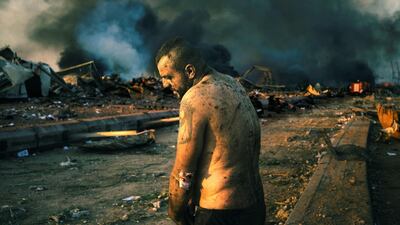
The winner of the World Press Photo contest 'Spot News - Stories' category is 'Port Explosion in Beirut' by Lorenzo Tugnoli. An injured man stands inside the wrecked site of the port of Beirut while firefighters work to put out the fires that engulfed the warehouses after the explosion. Lorenzo Tugnoli/Contrasto for The Washington Post -
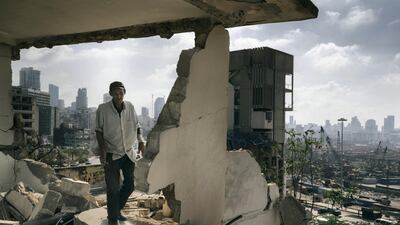
Abdullah walks in the ruins of his former house. Since the day of the explosion he is squatting in the damaged building were he once lived with his family, with no water or electricity. An estimated 300,000 people lost their homes in after the blast. Lorenzo Tugnoli/Contrasto for The Washington Post -

Firefighters work to put out the fires that engulfed the warehouses in the port of Beirut after the explosion. Lorenzo Tugnoli/Contrasto for The Washington Post -
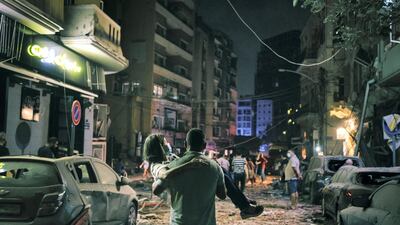
An old woman is carried to safety in the destroyed neighbourhood of Jemmayzeh. The blast wrecked several densely populated neighbourhoods. Lorenzo Tugnoli/Contrasto for The Washington Post


In Episode 1, Finbar enlists Erin Clare Brown, The National’s Tunis correspondent and resident Russian speaker. They track down Boris Prokoshev, the captain of the Rhosus – the ship that first brought the cargo of ammonium nitrate to Beirut Port. Boris tells us about the ill-fated voyage from the start, how a detour brought them to Beirut and how it – and he – got stuck there.
Over the next three episodes, we’ll hear from officials at the port about how it sat there for six years, who knew and why nothing was done. In Episode 3, we’ll trace the events of August 4 and hear how the blast ripped apart lives and livelihoods. And we’ll conclude with Episode 4 and look at what’s happened in the year since the explosion, who has been accused, how life has changed and what justice the victims of that explosion are seeking.



