


In senior Tory election circles, they’ve been murmuring for some time now about “May”.
It seems fanciful that faced with terrible poll ratings, Rishi Sunak would contemplate going to the country so early. Surely, the logic goes, he would wait until as late as he could, in the hope his ratings improve.
Yes, but what if there was little prospect of good news between now and the autumn, that final cut-off point for the national ballot?
After this week’s budget, the chatter at Westminster was about the Prime Minister springing a surprise and calling a snap election.
Chancellor Jeremy Hunt’s address was built around implementing tax cuts with the promise of more to come – and paying for them by levying charges that Labour had also earmarked to boost its spending plans.
So, the North Sea windfall tax on the profits of energy firms is extended, raising £1.5 billion. Likewise, non-domicile tax status is to be scrapped, raking in £2.7 billion.
Both measures were central to Labour’s desire to be seen to be balancing the books, increasing expenditure by raising taxes. What appealed about both of these ploys is that they targeted non-voters: the oil and gas firms and wealthy foreigners.
Now Labour must rethink, and the Tories, for once, can congratulate themselves on stealing part of their thunder.
By moving quickly, so the argument goes, the Tories can catch Labour unprepared, with unfunded policies.
Hunt himself reiterated as much and also did not rule out a May ballot, saying the decision is “above my pay grade but … what we are showing today is what the key division in British politics is: do you believe the way to grow the economy is more spending, higher taxes, what the Labour Party believe, or do you think actually the way to create more jobs and fire up the economy is by reducing the tax burden in a way that is responsible and protects public services?”
In January, Sunak cited “the second half of this year” as the likely date for the general election. But what if that was deliberate, calculated to misguide?
The UK budget – in pictures
-
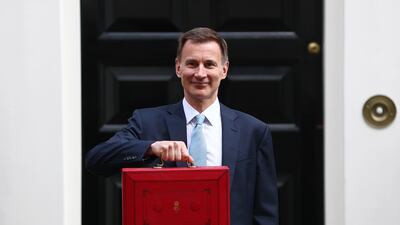
Jeremy Hunt, Chancellor of the Exchequer, leaves No 11 Downing Street to deliver his budget to Parliament in London. Getty Images -
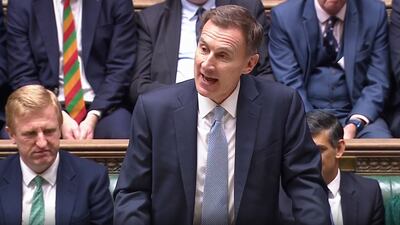
Mr Hunt delivering his budget speech to the House of Commons. PA -
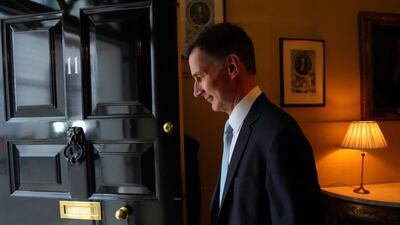
Mr Hunt makes his way out of No 11 Downing Street. AFP -

Mr Hunt presents his ministerial box to the media. PA -
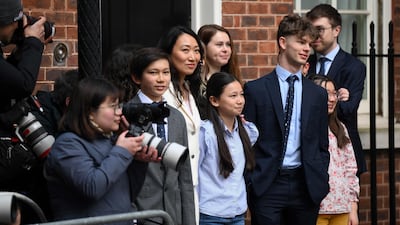
Lucia Hunt, wife of Mr Hunt, with their children as he leaves 11 Downing Street. AFP -

Mr Hunt with his team outside No 11 Downing Street. AFP -
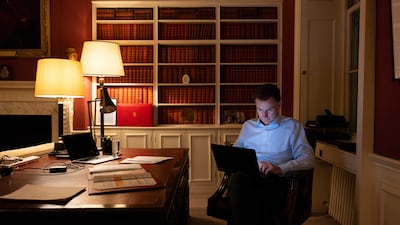
A 2p cut in national insurance was among expected new measures. Photo: HM Treasury -
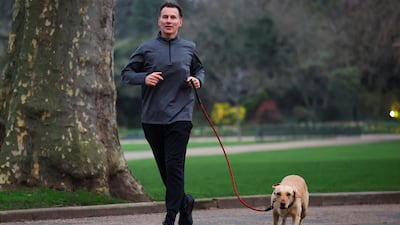
Mr Hunt gets some exercise with his dog Poppy before his budget statement. Reuters -
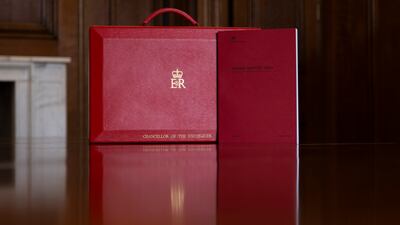
Mr Hunt aims to have debt falling as a share of GDP by 2029. Photo: HM Treasury -

Mr Hunt holds a meeting in preparation for the budget in his office. Photo: HM Treasury


It was felt that Sunak would like to buy time, to try to improve his standing in the opinion polls. A key, symbolic moment would come when that first planeload of illegal refugees takes off for Rwanda, something he has promised.
We seem little nearer, however, to that controversial departure occurring. Meanwhile, the clock is ticking on more small boats crossing the Channel, as they surely will when the warmer, settled weather arrives.
Faced with the prospect of no flights to Rwanda versus pictures of yet further packed inflatables, what will Sunak do? Blame the lack of the former on others – the judiciary and the left – and not wait for those damaging images of people staggering ashore and take his chance with the public vote.
It was felt, too, that he would prefer to delay in the hope the economy will pick up. But the picture painted by Hunt left little room for optimism. This was confirmed, post-budget when analysts at Citi said the Office for Budget Responsibility (OBR) had overestimated Britain’s potential productivity over its forecast period.
They warned that while the OBR predicts British output will rise by about 0.9 per cent year on year, this is about double the level seen since the pandemic. Citi thinks a more realistic measure of productivity would be 0.5 per cent, as the economy is likely to face “supply shocks” in the years ahead.
It fears fiscal forecasts are £30 billion to £35 billion worse than the OBR’s latest predictions and that the cuts to public spending pencilled in are also “undeliverable”, meaning the government will realistically need to spend another £20 billion to £25 billion over what is already planned. Citi said that in total it means forecasts are “offside” by £50 billion to £60 billion.
In its note to clients, the bank warned: “We think post-Covid fiscal headwinds are only just beginning.”
One impact will be felt on interest rates. Sunak would like them down before he appeals to the country.
But inflation is proving stubborn, rates are not dropping significantly any time soon.
Between now and the autumn, 1.5 million homeowners will be coming off fixed-rate mortgages and switching to floating. They face seeing their annual bills rise by more than £2,500 on average – an increase they may well lay at Sunak’s door.
Rather than wait for them to register their discontent, Sunak could head them off by holding the national poll sooner.
He also has another issue weighing on his mind. A disappointing set of local election results will inevitably see another round of Tory infighting. There will be renewed demands for Sunak to go and the installation of a new leader who may, just may, be able to stop the rot and deliver a better than expected election outcome.
The calls from the party right for Suella Braverman to quickly replace Sunak are bound to reach a crescendo.
That will heap more humiliation on Sunak. Better for him to avoid that, control the narrative, as communications advisers like to say, sideline the local elections, silence the party doubters and go head to head with Sir Keir Starmer.
Sunak likes to be seen in charge, he also considers himself to be smart and not led by others. What better way then, than to illustrate his true self by calling an early election and leaving everyone, his own side and his enemies within it, blindsided?
He’s got everything to play for and nothing to lose.
The Budget through the years – in pictures
-
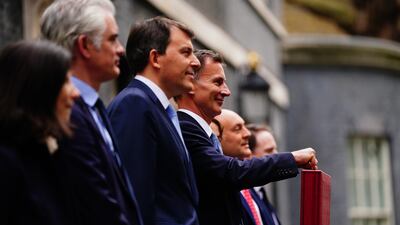
Chancellor Jeremy Hunt holds his ministerial red box outside 11 Downing Street before delivering his 2023 Budget. All photos: Getty Images -

Rishi Sunak departs Downing Street to deliver the Budget in 2020 with the first UK lockdown less than two weeks away -
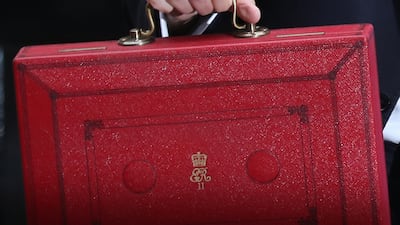
Philip Hammond holds the red case as he departs 11 Downing Street in 2017 -
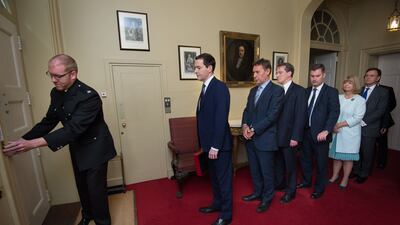
George Osborne leads his Treasury team out of 11 Downing Street to deliver the first Budget of the new Conservative government in 2015 -
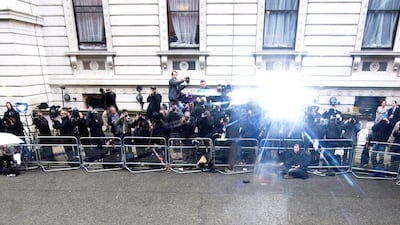
Alistair Darling stands with his wife Margaret as he prepares to deliver his final Budget before the 2010 general election -
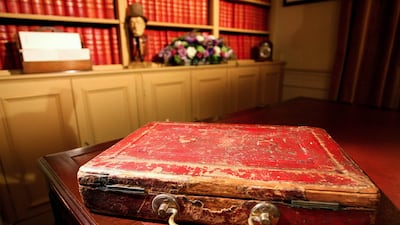
The Budget box – or "Gladstone box" – sits in Alistair Darling's study before the 2008 Budget -
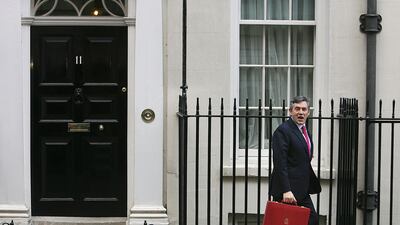
Gordon Brown leaves for Parliament to present his 11th Budget statement in 2007, his last before becoming prime minister -
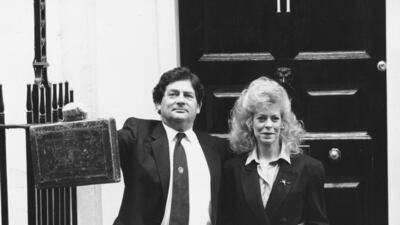
Nigel Lawson and his wife Therese leaving 11 Downing Street prior to the 1988 Budget statement -
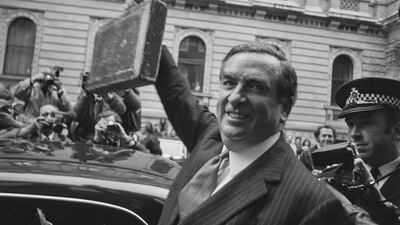
Labour chancellor Denis Healey leaves Downing Street for the House of Commons with his budget box in 1974 -
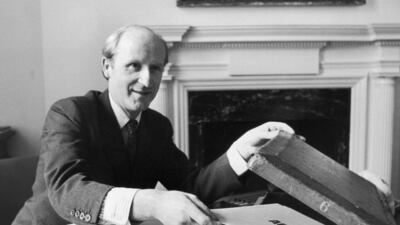
Conservative chancellor Anthony Barber prepares for the 1971 Budget in his office at the Treasury -
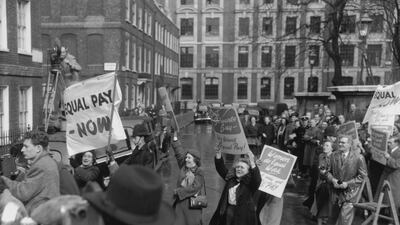
Equal Pay for Women activists demonstrate as chancellor Rab Butler leaves Conservative Party headquarters to present his Budget in 1954 -
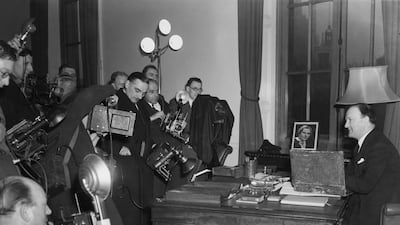
Rab Butler faces the cameras at the Treasury before his presentation of the Budget in 1953 -
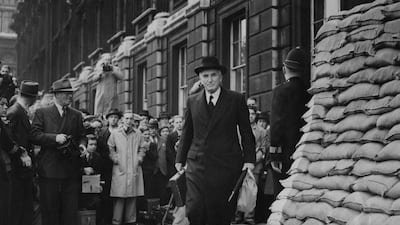
John Simon leaves the Treasury to present his first war Budget in 1939 -

Neville Chamberlain prepares his Budget in 1937 -
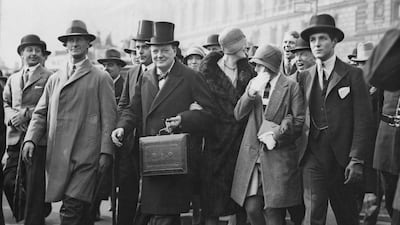
Winston Churchill makes his way to the House of Commons to present his Budget in 1929, accompanied by his daughter, Diana



