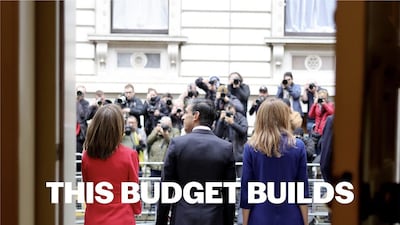
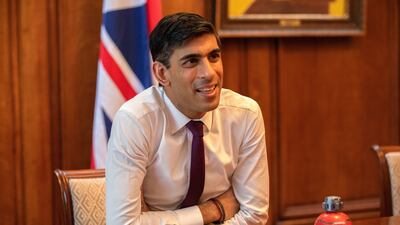
An Englishman, an Indian and an American walk into a bar. “The usual, Mr Sunak?” asks the barman.
Rishi Sunak, until very recently a rising star in British politics, within touching distance of becoming Conservative leader and prime minister, is now a source of amusement.
His popularity has crashed, and there is speculation that such is the level of opprobrium he’s receiving that the Chancellor of the Exchequer may walk away from public life completely.
Certainly, in what may be a precursor, his wife Akshata Murty and their children have moved out of Downing Street. He’s staying to try to fight back, seeking a leak inquiry into how his tax affairs reached the media, but the damage is done.
It’s difficult to see how he can recover from this and if someone as ambitious as Sunak can’t reach the very top there seems little to sustain him. Being fined over ‘Partygate’ adds to the humiliation.
Sunak’s entire life from school (head boy) to university (president of the Oxford University Investment Society) to marriage (to the daughter of one of India’s richest men) to investment banking (Goldman Sachs) to hedge funds (Chris Hohn’s TCI) to MP (William Hague’s old seat in the Yorkshire Dales) to Cabinet (effectively No 2 in government) has been marked by ascendancy.
Along the way, he even earned the approving nod of the tabloid press with the nickname Dishy Rishi.
Not any more. It’s not his policies that have ruined him. They weren’t helping, but there was a sense that he was driven by world events outside his control, that he had no choice.
No, his reputation has been shattered, ironically, by things that were entirely within his grasp.
Strangely as well, he is a calculating and cautious character, someone who cares deeply about his image and how he is perceived. Sunak has his suits made by a London tailor, who I know. They cost about £2,000 ($2,600) each. The tailor cannot mention him in any promotional material (these days, given Sunak’s crash, he would probably choose not to anyway).
This is the same Sunak who, as chancellor, head of the Inland Revenue tax collection service, thought it was perfectly acceptable for his hugely wealthy wife to be a non-dom and to pay no UK tax on her worldwide earnings. He also assumed it was all right for him to possess a green card, conferring permanent residency in the US.
It’s the same Sunak who believed it was fine to donate £100,000 to his exclusive private school alma mater, Winchester College. And the Sunak who is building a gym and swimming pool complex at his constituency manor house, one of four homes he owns, including a £5.5 million penthouse in Santa Monica, California.
But he remains bothered about the source of his suits. Why?
That's because in the Sunaks’ cross-border, high-finance set, the privileged status of a non-domicile and holding a coveted US immigration visa are regarded as entirely usual.
They are also private arrangements, known only to him, his family, perhaps their closest friends and the relevant authorities, and he must have expected them to remain that way.
Likewise, Sunak and his milieu would view it as “giving back”, to hand a six-figure sum to the school by which he’d done so well. Lots of them do it, nothing special there.
As for the extension to his constituency residence, it requires planning permission, which means the plans are public for anyone to scrutinise, so they could not be hidden.
Where possible, however, the Sunaks go to great lengths to play down their riches and to seek common approval. Their young daughters go to a local primary school, their London home is a “mews” house (sounds tiny but it’s five bedrooms, four bathrooms and two receptions), in Yorkshire they hold barbecues and garden parties and throw themselves into charity fund-raising.
He puts petrol in a car and is photographed doing so, but it’s not one of his four luxury vehicles but a Kia borrowed from a member of the public. And there is not a sniff of where he gets his well-cut suits from.
[Sunak] failed to see why he could not do both: lead the global, super-rich lifestyle, albeit discreetly, and at the same time set Britain’s taxes
It's the hedgie in him that has proved his downfall. He failed to see why he could not do both — lead the global, super-rich lifestyle, albeit discreetly, and at the same time set Britain’s taxes. They’re non-compatible and in the present climate, amid the rising cost of living and soaring household energy bills, non-negotiable.
He did not see it like that and he is crushed. There were clues as to what was really in his head. Since becoming chancellor he has not once attacked tax havens or pledged to hunt down tax avoiders, unlike his predecessors. His previous hedge fund employers, TCI and subsequently Theleme Partners, both routed their earnings through the tax-free Cayman Islands — so presumably he approved of going to such lengths to avoid tax.
Likewise, his natural benchmarks are those of the world investment community, looking to fast-growing corporate powerhouses in the US, India and Brazil rather than companies in dear old Blighty.
He’s passionate about the potential for cryptocurrencies and how the UK can and should play a leading role. Again, music to global FinTech ears.
While the country was worrying about the coming economic storm and Sunak was planning to increase National Insurance payments, he found the time to introduce a new low-tax scheme aimed specifically at attracting overseas asset managers. One earns him wide criticism — he’s definitely Dishy no longer — while the other finds favour with his pals in international finance.
He has been quietly attempting to ride two horses. Not even the gilded Sunak could manage that; there was only ever going to be one result.

MATCH INFO
Iceland 0 England 1 (Sterling pen 90 1)
Man of the match Kari Arnason (Iceland)
The%20Genius%20of%20Their%20Age
%3Cp%3EAuthor%3A%20S%20Frederick%20Starr%3Cbr%3EPublisher%3A%20Oxford%20University%20Press%3Cbr%3EPages%3A%20290%3Cbr%3EAvailable%3A%20January%2024%3C%2Fp%3E%0A
Polarised public
31% in UK say BBC is biased to left-wing views
19% in UK say BBC is biased to right-wing views
19% in UK say BBC is not biased at all
Source: YouGov
RESULTS
1.45pm: Handicap (TB) Dh80,000 (Dirt) 1,400m
Winners: Hyde Park, Royston Ffrench (jockey), Salem bin Ghadayer (trainer)
2.15pm: Conditions (TB) Dh100,000 (D) 1,400m
Winner: Shamikh, Ryan Curatolo, Nicholas Bachalard
2.45pm: Conditions (TB) Dh100,000 (D) 1,200m
Winner: Hurry Up, Royston Ffrench, Salem bin Ghadayer.
3.15pm: Shadwell Jebel Ali Mile Group 3 (TB) Dh575,000 (D) 1,600m
Winner: Blown by Wind, Xavier Ziani, Salem bin Ghadayer
3.45pm: Handicap (TB) Dh72,000 (D) 1,600m
Winner: Mazagran, Tadhg O’Shea, Satish Seemar.
4.15pm: Handicap (TB) Dh64,000 (D) 1,950m
Winner: Obeyaan, Adrie de Vries, Mujeeb Rehman
4.45pm: Handicap (TB) Dh84,000 (D) 1,000m
Winner: Shanaghai City, Fabrice Veron, Rashed Bouresly.
Profile
Company: Libra Project
Based: Masdar City, ADGM, London and Delaware
Launch year: 2017
Size: A team of 12 with six employed full-time
Sector: Renewable energy
Funding: $500,000 in Series A funding from family and friends in 2018. A Series B round looking to raise $1.5m is now live.
UK’s AI plan
- AI ambassadors such as MIT economist Simon Johnson, Monzo cofounder Tom Blomfield and Google DeepMind’s Raia Hadsell
- £10bn AI growth zone in South Wales to create 5,000 jobs
- £100m of government support for startups building AI hardware products
- £250m to train new AI models
GIANT REVIEW
Starring: Amir El-Masry, Pierce Brosnan
Director: Athale
Rating: 4/5
The National Archives, Abu Dhabi
Founded over 50 years ago, the National Archives collects valuable historical material relating to the UAE, and is the oldest and richest archive relating to the Arabian Gulf.
Much of the material can be viewed on line at the Arabian Gulf Digital Archive - https://www.agda.ae/en
Profile of Udrive
Date started: March 2016
Founder: Hasib Khan
Based: Dubai
Employees: 40
Amount raised (to date): $3.25m – $750,000 seed funding in 2017 and a Seed round of $2.5m last year. Raised $1.3m from Eureeca investors in January 2021 as part of a Series A round with a $5m target.
Company%20Profile
%3Cp%3E%3Cstrong%3EName%3A%20%3C%2Fstrong%3ENadeera%3Cbr%3E%3Cstrong%3EBased%3A%3C%2Fstrong%3E%20Abu%20Dhabi%2C%20UAE%3Cbr%3E%3Cstrong%3EFounders%3A%20%3C%2Fstrong%3ERabih%20El%20Chaar%20and%20Reem%20Khattar%3Cbr%3E%3Cstrong%3ESector%3A%20%3C%2Fstrong%3ECleanTech%3Cbr%3E%3Cstrong%3ETotal%20funding%3A%3C%2Fstrong%3E%20About%20%241%20million%3Cbr%3E%3Cstrong%3EInvestors%3A%20%3C%2Fstrong%3EHope%20Ventures%2C%20Rasameel%20Investments%20and%20support%20from%20accelerator%20programmes%20%3Cbr%3E%3Cstrong%3ENumber%20of%20employees%3A%3C%2Fstrong%3E%2012%3C%2Fp%3E%0A
How to get there
Emirates (www.emirates.com) flies directly to Hanoi, Vietnam, with fares starting from around Dh2,725 return, while Etihad (www.etihad.com) fares cost about Dh2,213 return with a stop. Chuong is 25 kilometres south of Hanoi.
MATCH INFO
Karnatake Tuskers 114-1 (10 ovs)
Charles 57, Amla 47
Bangla Tigers 117-5 (8.5 ovs)
Fletcher 40, Moores 28 no, Lamichhane 2-9
Bangla Tiger win by five wickets
Pots for the Asian Qualifiers
Pot 1: Iran, Japan, South Korea, Australia, Qatar, United Arab Emirates, Saudi Arabia, China
Pot 2: Iraq, Uzbekistan, Syria, Oman, Lebanon, Kyrgyz Republic, Vietnam, Jordan
Pot 3: Palestine, India, Bahrain, Thailand, Tajikistan, North Korea, Chinese Taipei, Philippines
Pot 4: Turkmenistan, Myanmar, Hong Kong, Yemen, Afghanistan, Maldives, Kuwait, Malaysia
Pot 5: Indonesia, Singapore, Nepal, Cambodia, Bangladesh, Mongolia, Guam, Macau/Sri Lanka
Eyasses squad
Charlie Preston (captain) – goal shooter/ goalkeeper (Dubai College)
Arushi Holt (vice-captain) – wing defence / centre (Jumeriah English Speaking School)
Olivia Petricola (vice-captain) – centre / wing attack (Dubai English Speaking College)
Isabel Affley – goalkeeper / goal defence (Dubai English Speaking College)
Jemma Eley – goal attack / wing attack (Dubai College)
Alana Farrell-Morton – centre / wing / defence / wing attack (Nord Anglia International School)
Molly Fuller – goal attack / wing attack (Dubai College)
Caitlin Gowdy – goal defence / wing defence (Dubai English Speaking College)
Noorulain Hussain – goal defence / wing defence (Dubai College)
Zahra Hussain-Gillani – goal defence / goalkeeper (British School Al Khubairat)
Claire Janssen – goal shooter / goal attack (Jumeriah English Speaking School)
Eliza Petricola – wing attack / centre (Dubai English Speaking College)
HWJN
%3Cp%3EDirector%3A%20Yasir%20Alyasiri%3C%2Fp%3E%0A%3Cp%3EStarring%3A%20Baraa%20Alem%2C%20Nour%20Alkhadra%2C%20Alanoud%20Saud%3C%2Fp%3E%0A%3Cp%3ERating%3A%203%2F5%3C%2Fp%3E%0A%3Cp%3E%3C%2Fp%3E%0A
Avatar: Fire and Ash
Director: James Cameron
Starring: Sam Worthington, Sigourney Weaver, Zoe Saldana
Rating: 4.5/5
Why it pays to compare
A comparison of sending Dh20,000 from the UAE using two different routes at the same time - the first direct from a UAE bank to a bank in Germany, and the second from the same UAE bank via an online platform to Germany - found key differences in cost and speed. The transfers were both initiated on January 30.
Route 1: bank transfer
The UAE bank charged Dh152.25 for the Dh20,000 transfer. On top of that, their exchange rate margin added a difference of around Dh415, compared with the mid-market rate.
Total cost: Dh567.25 - around 2.9 per cent of the total amount
Total received: €4,670.30
Route 2: online platform
The UAE bank’s charge for sending Dh20,000 to a UK dirham-denominated account was Dh2.10. The exchange rate margin cost was Dh60, plus a Dh12 fee.
Total cost: Dh74.10, around 0.4 per cent of the transaction
Total received: €4,756
The UAE bank transfer was far quicker – around two to three working days, while the online platform took around four to five days, but was considerably cheaper. In the online platform transfer, the funds were also exposed to currency risk during the period it took for them to arrive.
LEADERBOARD
%3Cp%3E-19%20T%20Fleetwood%20(Eng)%3B%20-18%20R%20McIlroy%20(NI)%2C%20T%20Lawrence%20(SA)%3B%20-16%20J%20Smith%3B%20-15%20F%20Molinari%20(Ita)%3B%20-14%20Z%20Lombard%20(SA)%2C%20S%20Crocker%20(US)%3C%2Fp%3E%0A%3Cp%3E%3Cstrong%3ESelected%3A%20%3C%2Fstrong%3E-11%20A%20Meronk%20(Pol)%3B%20-10%20E%20Ferguson%20(Sco)%3B%20-8%20R%20Fox%20(NZ)%20-7%20L%20Donald%20(Eng)%3B%20-5%20T%20McKibbin%20(NI)%2C%20N%20Hoejgaard%20(Den)%3C%2Fp%3E%0A
David Haye record
Total fights: 32
Wins: 28
Wins by KO: 26
Losses: 4
How to avoid crypto fraud
- Use unique usernames and passwords while enabling multi-factor authentication.
- Use an offline private key, a physical device that requires manual activation, whenever you access your wallet.
- Avoid suspicious social media ads promoting fraudulent schemes.
- Only invest in crypto projects that you fully understand.
- Critically assess whether a project’s promises or returns seem too good to be true.
- Only use reputable platforms that have a track record of strong regulatory compliance.
- Store funds in hardware wallets as opposed to online exchanges.
The five pillars of Islam
Ten tax points to be aware of in 2026
1. Domestic VAT refund amendments: request your refund within five years
If a business does not apply for the refund on time, they lose their credit.
2. E-invoicing in the UAE
Businesses should continue preparing for the implementation of e-invoicing in the UAE, with 2026 a preparation and transition period ahead of phased mandatory adoption.
3. More tax audits
Tax authorities are increasingly using data already available across multiple filings to identify audit risks.
4. More beneficial VAT and excise tax penalty regime
Tax disputes are expected to become more frequent and more structured, with clearer administrative objection and appeal processes. The UAE has adopted a new penalty regime for VAT and excise disputes, which now mirrors the penalty regime for corporate tax.
5. Greater emphasis on statutory audit
There is a greater need for the accuracy of financial statements. The International Financial Reporting Standards standards need to be strictly adhered to and, as a result, the quality of the audits will need to increase.
6. Further transfer pricing enforcement
Transfer pricing enforcement, which refers to the practice of establishing prices for internal transactions between related entities, is expected to broaden in scope. The UAE will shortly open the possibility to negotiate advance pricing agreements, or essentially rulings for transfer pricing purposes.
7. Limited time periods for audits
Recent amendments also introduce a default five-year limitation period for tax audits and assessments, subject to specific statutory exceptions. While the standard audit and assessment period is five years, this may be extended to up to 15 years in cases involving fraud or tax evasion.
8. Pillar 2 implementation
Many multinational groups will begin to feel the practical effect of the Domestic Minimum Top-Up Tax (DMTT), the UAE's implementation of the OECD’s global minimum tax under Pillar 2. While the rules apply for financial years starting on or after January 1, 2025, it is 2026 that marks the transition to an operational phase.
9. Reduced compliance obligations for imported goods and services
Businesses that apply the reverse-charge mechanism for VAT purposes in the UAE may benefit from reduced compliance obligations.
10. Substance and CbC reporting focus
Tax authorities are expected to continue strengthening the enforcement of economic substance and Country-by-Country (CbC) reporting frameworks. In the UAE, these regimes are increasingly being used as risk-assessment tools, providing tax authorities with a comprehensive view of multinational groups’ global footprints and enabling them to assess whether profits are aligned with real economic activity.
Contributed by Thomas Vanhee and Hend Rashwan, Aurifer
Scoreline
Liverpool 4
Oxlade-Chamberlain 9', Firmino 59', Mane 61', Salah 68'
Manchester City 3
Sane 40', Bernardo Silva 84', Gundogan 90' 1
Tightening the screw on rogue recruiters
The UAE overhauled the procedure to recruit housemaids and domestic workers with a law in 2017 to protect low-income labour from being exploited.
Only recruitment companies authorised by the government are permitted as part of Tadbeer, a network of labour ministry-regulated centres.
A contract must be drawn up for domestic workers, the wages and job offer clearly stating the nature of work.
The contract stating the wages, work entailed and accommodation must be sent to the employee in their home country before they depart for the UAE.
The contract will be signed by the employer and employee when the domestic worker arrives in the UAE.
Only recruitment agencies registered with the ministry can undertake recruitment and employment applications for domestic workers.
Penalties for illegal recruitment in the UAE include fines of up to Dh100,000 and imprisonment
But agents not authorised by the government sidestep the law by illegally getting women into the country on visit visas.
MEDIEVIL%20(1998)
%3Cp%3E%3Cstrong%3EDeveloper%3A%3C%2Fstrong%3E%20SCE%20Studio%20Cambridge%3Cbr%3E%3Cstrong%3EPublisher%3A%3C%2Fstrong%3E%20Sony%20Computer%20Entertainment%3Cbr%3E%3Cstrong%3EConsole%3A%3C%2Fstrong%3E%20PlayStation%2C%20PlayStation%204%20and%205%3Cbr%3E%3Cstrong%3ERating%3A%3C%2Fstrong%3E%203.5%2F5%3C%2Fp%3E%0A
Mercer, the investment consulting arm of US services company Marsh & McLennan, expects its wealth division to at least double its assets under management (AUM) in the Middle East as wealth in the region continues to grow despite economic headwinds, a company official said.
Mercer Wealth, which globally has $160 billion in AUM, plans to boost its AUM in the region to $2-$3bn in the next 2-3 years from the present $1bn, said Yasir AbuShaban, a Dubai-based principal with Mercer Wealth.
“Within the next two to three years, we are looking at reaching $2 to $3 billion as a conservative estimate and we do see an opportunity to do so,” said Mr AbuShaban.
Mercer does not directly make investments, but allocates clients’ money they have discretion to, to professional asset managers. They also provide advice to clients.
“We have buying power. We can negotiate on their (client’s) behalf with asset managers to provide them lower fees than they otherwise would have to get on their own,” he added.
Mercer Wealth’s clients include sovereign wealth funds, family offices, and insurance companies among others.
From its office in Dubai, Mercer also looks after Africa, India and Turkey, where they also see opportunity for growth.
Wealth creation in Middle East and Africa (MEA) grew 8.5 per cent to $8.1 trillion last year from $7.5tn in 2015, higher than last year’s global average of 6 per cent and the second-highest growth in a region after Asia-Pacific which grew 9.9 per cent, according to consultancy Boston Consulting Group (BCG). In the region, where wealth grew just 1.9 per cent in 2015 compared with 2014, a pickup in oil prices has helped in wealth generation.
BCG is forecasting MEA wealth will rise to $12tn by 2021, growing at an annual average of 8 per cent.
Drivers of wealth generation in the region will be split evenly between new wealth creation and growth of performance of existing assets, according to BCG.
Another general trend in the region is clients’ looking for a comprehensive approach to investing, according to Mr AbuShaban.
“Institutional investors or some of the families are seeing a slowdown in the available capital they have to invest and in that sense they are looking at optimizing the way they manage their portfolios and making sure they are not investing haphazardly and different parts of their investment are working together,” said Mr AbuShaban.
Some clients also have a higher appetite for risk, given the low interest-rate environment that does not provide enough yield for some institutional investors. These clients are keen to invest in illiquid assets, such as private equity and infrastructure.
“What we have seen is a desire for higher returns in what has been a low-return environment specifically in various fixed income or bonds,” he said.
“In this environment, we have seen a de facto increase in the risk that clients are taking in things like illiquid investments, private equity investments, infrastructure and private debt, those kind of investments were higher illiquidity results in incrementally higher returns.”
The Abu Dhabi Investment Authority, one of the largest sovereign wealth funds, said in its 2016 report that has gradually increased its exposure in direct private equity and private credit transactions, mainly in Asian markets and especially in China and India. The authority’s private equity department focused on structured equities owing to “their defensive characteristics.”
What is blockchain?
Blockchain is a form of distributed ledger technology, a digital system in which data is recorded across multiple places at the same time. Unlike traditional databases, DLTs have no central administrator or centralised data storage. They are transparent because the data is visible and, because they are automatically replicated and impossible to be tampered with, they are secure.
The main difference between blockchain and other forms of DLT is the way data is stored as ‘blocks’ – new transactions are added to the existing ‘chain’ of past transactions, hence the name ‘blockchain’. It is impossible to delete or modify information on the chain due to the replication of blocks across various locations.
Blockchain is mostly associated with cryptocurrency Bitcoin. Due to the inability to tamper with transactions, advocates say this makes the currency more secure and safer than traditional systems. It is maintained by a network of people referred to as ‘miners’, who receive rewards for solving complex mathematical equations that enable transactions to go through.
However, one of the major problems that has come to light has been the presence of illicit material buried in the Bitcoin blockchain, linking it to the dark web.
Other blockchain platforms can offer things like smart contracts, which are automatically implemented when specific conditions from all interested parties are reached, cutting the time involved and the risk of mistakes. Another use could be storing medical records, as patients can be confident their information cannot be changed. The technology can also be used in supply chains, voting and has the potential to used for storing property records.
Vaccine Progress in the Middle East
This is an info box
- info goes here
- and here
- and here
HIV on the rise in the region
A 2019 United Nations special analysis on Aids reveals 37 per cent of new HIV infections in the Mena region are from people injecting drugs.
New HIV infections have also risen by 29 per cent in western Europe and Asia, and by 7 per cent in Latin America, but declined elsewhere.
Egypt has shown the highest increase in recorded cases of HIV since 2010, up by 196 per cent.
Access to HIV testing, treatment and care in the region is well below the global average.
Few statistics have been published on the number of cases in the UAE, although a UNAIDS report said 1.5 per cent of the prison population has the virus.
The specs
Engine: 2.0-litre 4cyl turbo
Power: 261hp at 5,500rpm
Torque: 405Nm at 1,750-3,500rpm
Transmission: 9-speed auto
Fuel consumption: 6.9L/100km
On sale: Now
Price: From Dh117,059
UAE currency: the story behind the money in your pockets