Write to us: Share your feedback on the news of the week
A clutch moment for America and the world
The National’s coverage of the recent US midterm elections was interesting, informative and thought-provoking. The unexpected victories of Democratic candidates in six states, including major political battlegrounds, have attracted considerable attention. The outcome appears to be a strong political message from voters and a significant setback for President Donald Trump and his administration. Although analysts had anticipated some changes, the scale of the Democratic success has made this election particularly noteworthy. The important question now is whether this political development will bring about a change in the US’s domestic and international policies. Will it influence the ongoing crises in the Middle East and encourage fresh diplomatic efforts towards a peaceful ceasefire? The world is eagerly looking for initiatives that can reduce tensions, prevent further conflicts, and establish lasting peace in the region. Beyond the Middle East, the consequences of these political changes could also have a wider global impact, particularly on international relations, energy security and the continuity of essential energy supplies. – K Ragavan, Bengaluru, India
What we saw last week was the expression of the true diversity of America. We saw that young people got out to vote. We saw that people were looking at the candidate and their principles, and not their colour or gender. We are on the cusp of great changes if we all work together. We can only do this by listening, showing compassion and getting our hands dirty in those places we normally would not go. It is time to be the nation that we were created to be. – Kathie Afflerbach
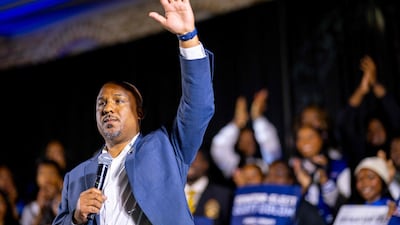
As an independent progressive, Adam Hamawy’s victory is one of my very favourite wins of last week. Americans need somebody in Washington that has first-hand experience on what’s happening in Gaza. – Adalina Bellosi
The results of the midterm elections in the US could have significant implications for global politics and economics. Hopefully, Iran will mend its fences and relations with other Middle East countries. The Middle East is one of the richest regions of the world, with countries focusing on infrastructure development. Hopefully, the skirmishes that we witnessed in recent years will end. The turbulence in energy supplies, prices and tariffs led to crippling inflation and trauma in most countries. The world is an inter-connected economy. It is time to put the past behind and move on. Hopefully, nations will not rush to wars, to resolve differences. – Rajendra Aneja, Mumbai, India
Presidential humour
This is with reference to the video in which President Sheikh Mohamed meets the flyDubai staff, including the pilot-hero Smit Machchhar (October 29): Sheikh Mohamed has a sense of humour. He is man with a good heart whose country believes in peace with all, which includes the Jewish people. We need to see this in the entire Middle East. – Kath Feld
Link climate to water
Jigmi Thinley is spot-on in his op-ed titled Cop31 in Turkey must bring water to the centre of climate action (November 9) that water is how most people first meet climate change. It is also where the world’s climate accounting is weakest. The energy transition has targets, timetables and a stocktake. Water has none of these. It appears in most national climate plans, as the writer notes, yet investment stays insufficient, fragmented and poorly co-ordinated. The World Bank’s estimate of the financing gap is not a rounding error but a measure of how far plans run ahead of plumbing. Antalya gives water a rare opening. The electrification pledge dominating the summit assumes grids and generation, but every part of that buildout, from hydrogen to data-centre cooling to agriculture, runs on water. A Cop that electrifies without securing water is building on sand. The test is practical: a water line in the formal outcome, not only the action agenda, with the financing gap named and a route to close it. The UN Water Conference in Abu Dhabi in December, then, becomes a delivery checkpoint. Climate policy has spent thirty years learning to count carbon. It is time to count water with the same seriousness. – Jackie Omotalade, Pittsburgh, US

