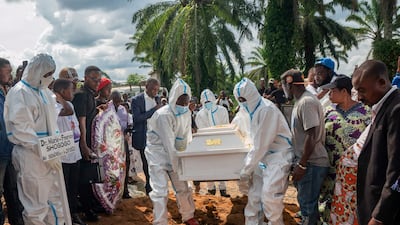

The world learnt painful lessons from the Covid-19 pandemic. It showed what scientific co-operation could achieve by developing vaccines at unprecedented speed, and improving genomic sequencing and diagnostics. Yet the latest Ebola epidemic in the Democratic Republic of the Congo suggests that turning those advances into public-health protection remains unfinished business.
Six months after the outbreak was declared, a Doctors Without Borders official says it is not under control. According to the medical humanitarian organisation, many cases are appearing without known links to earlier infections, suggesting the failure of contact tracing. This is the outcome of several shortcomings, including unpaid health workers, surveillance teams lacking fuel, shortages of protective equipment and inadequate support for those treating suspected cases.
More than 11,000 people have been infected, nearly half of whom have died, making it the country’s deadliest outbreak. These failures point to weaknesses in the response at a local level, primarily fragmented co-ordination and poor oversight. Hundreds of millions of dollars allocated to the response remain unaccounted for, and warrant investigation. Conflict, porous borders and distrust complicate the task, too.
Meanwhile, the coronavirus itself has not disappeared, with a new variant currently spreading around the world. Experts say there is no convincing evidence that it causes more severe disease than previous strains, yet it is not a reason for complacency. As long as the virus continues to mutate, vulnerable people will be at risk with surveillance required to detect changes.
A report by the Independent Panel for Pandemic Preparedness and Response makes a related point about Mpox and other known threats – that outbreaks become emergencies when warning signs are missed, community health care is neglected and investment dips between crises. Far too often, unfortunately, prevention is ignored once an emergency recedes.
The Pandemic Agreement, adopted by the World Health Organisation’s member states in May last year, was intended to address some of these inadequacies through stronger international co-operation and fairer access to vaccines, diagnostics and treatments. However, the agreement cannot open for signature until its pathogen-sharing annex is adopted, no sooner than May next year, because of disagreements over who benefits when developing countries share pathogen samples that may be used to develop commercially valuable medicines. Wealthier nations and pharmaceutical companies seek reliable access to these samples, while poorer countries demand binding guarantees that the resulting vaccines and treatments will reach them too.
International collaboration alone cannot address local challenges, such as the ones mentioned above regarding Congo. But it can provide a framework for countries to act together, if backed by resources and political commitment. This is particularly salient with imported cases of the virus having been confirmed in Kenya and Nigeria, reminding all that infectious diseases do not respect national boundaries, and that weaknesses in one country’s health system can become a threat to others.
The measure of what the world learnt from Covid-19 will not be the speed with which it develops the next vaccine – although that is important. It will be whether it can detect, contain and stop the next outbreak before it becomes a pandemic.

