
Few events can command the world’s attention quite like the World Cup. The 80,000 spectators at the New Jersey stadium who watched Spain beat Argentina in the final were joined by an estimated 1.8 billion viewers across the globe. The month-long concoction of goals, drama, national pride and off-pitch controversy is, for many, irresistible.
This is not to suggest that the tournament escaped criticism. The growing influence of commercial interests and what one contributor to The National recently called the “Fifa-isation” of football are fuelling debate about the sport’s direction. However, the heroic performance of teams such as tournament newcomers Cape Verde – who held eventual champions Spain to a draw – proved once again that organisation and belief can challenge football’s hierarchies.
For Arab football, this was a World Cup of opportunity. Fans’ excitement was visible across the region, including in the UAE, where supporters gathered in fan zones to watch the games and celebrate this global spectacle. Their passion reflected a growing belief that Arab teams belong among the world’s elite.
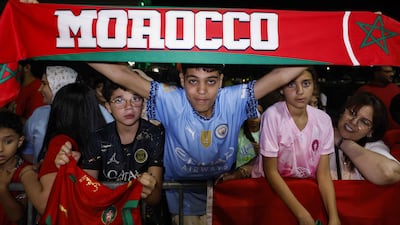
Morocco, Egypt and Jordan in particular showed that Arab sides have become much more competitive at this level. Ability and confidence were boosted by that most valuable of sporting attributes – experience of playing at the highest level. The days when Arab teams arrived at the World Cup merely hoping to avoid heavy defeats are over.
Results such as Morocco’s second consecutive quarter-final placing reinforced this feeling, it but also highlighted the distance still to travel. At this level, football’s margins are unforgiving and the difference between a promising team and a champion is often small but critical. This includes the ability to manage difficult moments, to exploit weaknesses, to make smarter decisions while under pressure and to display the killer instinct. Argentina’s fiery match against England was a reminder that elite football is often decided by mentality as much as talent.
The Arab world doesn’t lack players capable of reaching the highest level. This World Cup showed several Arab sides consolidating their reputations as difficult teams and sides to be reckoned with. The challenge ahead is to become credible candidates for the latter stages of the tournament. Reaching the quarter-finals is an achievement but consistently appearing in the semi-finals and final requires another level of sophistication.
The task now is to build systems that produce complete teams rather than relying on exceptional individuals or talismanic figures. Investing more in youth development, strengthening domestic leagues, improving coaching standards and creating environments where players regularly compete in high-pressure matches are vital if the progress made so far is to be built upon. This World Cup has shown that Arab teams can compete. The ambition must be to prove in four years’ time that they can conquer.