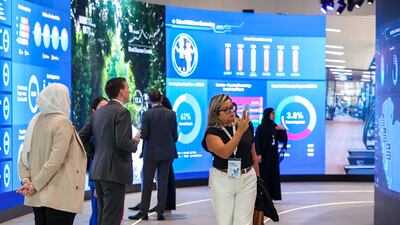
A digital representation of the human genome at the American Museum of Natural History in New York City. The UAE has long recognised the potential for improved health that can come from a deep understanding of human genetics. Getty
A digital representation of the human genome at the American Museum of Natural History in New York City. The UAE has long recognised the potential for improved health that can come from a deep underst


The future of health care is in our genes


  • English
  • Arabic

May 15, 2024

For those not intimately involved in the rush to further develop artificial intelligence and other new technologies, such innovations can sometimes feel a little esoteric. However, this disconnect is often overcome when cutting-edge science moves out of the research lab and into our lives, and few things have as much importance to us as our health.

When bold new technologies present us with fresh ways of thinking about disease, treatment and longevity, they can make the leap from the world of advanced science into popular consciousness. This week in Abu Dhabi, we saw some compelling examples of this process at work as well as some glimpses of the future of advanced health care.

Launched at Abu Dhabi Global Healthcare Week, a groundbreaking biobank that is expected to open next year in the capital’s Masdar City looks set to become a cornerstone of medical research in the UAE. The state-of-the-art centre, spanning 2,000 square metres, will house the largest collection of human biological materials in the region, including blood samples, saliva and cell samples. It will be able to store up to five million biological samples and 100,000 stem cells.

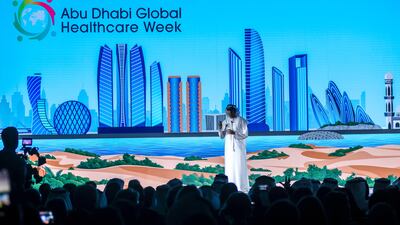
  • Abu Dhabi Global Healthcare Week opens at Adnec. All photos: Victor Besa / The National
    Abu Dhabi Global Healthcare Week opens at Adnec. All photos: Victor Besa / The National
  • Delegates and visitors gather for the event in the UAE capital.
    Delegates and visitors gather for the event in the UAE capital.
  • More than 5,000 people are expected to attend the three-day event.
    More than 5,000 people are expected to attend the three-day event.
  • The event is focused on the future of human health and how to improve care.
    The event is focused on the future of human health and how to improve care.
  • The opening day looked at how artificial intelligence and emerging technology can boost health care.
    The opening day looked at how artificial intelligence and emerging technology can boost health care.
  • About 200 speakers are set to deliver the latest insights into the sector.
    About 200 speakers are set to deliver the latest insights into the sector.
  • The role stem cells play in reversing the effects of degenerative disease have also been discussed.
    The role stem cells play in reversing the effects of degenerative disease have also been discussed.
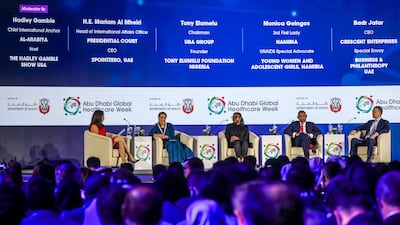
  • Mariam Al Mheiri, Head of the International Affairs Office in the Presidential Court, takes part in a panel at the event.
    Mariam Al Mheiri, Head of the International Affairs Office in the Presidential Court, takes part in a panel at the event.
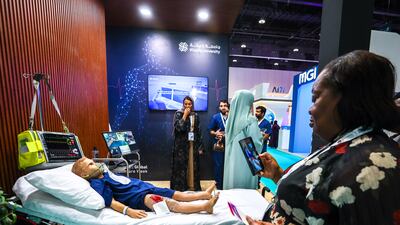
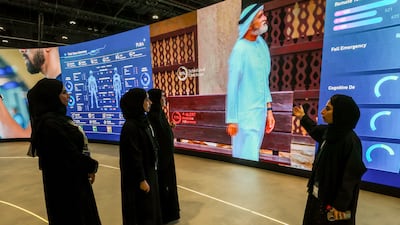
  • Visitors are to discover how technology can be used to improve treatments.
    Visitors are to discover how technology can be used to improve treatments.
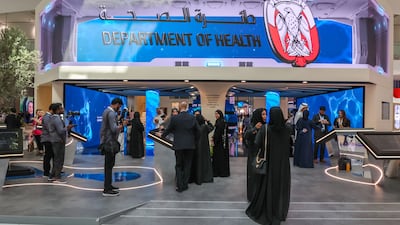
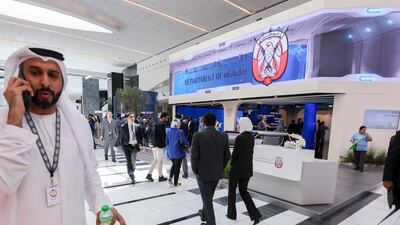
  • A booth set up for Abu Dhabi's Department of Health.
    A booth set up for Abu Dhabi's Department of Health.
  • The events includes sessions on subjects such as the latest advances in cell reprogramming.
    The events includes sessions on subjects such as the latest advances in cell reprogramming.

Its implications are profound. Research published in November last year found that although Arabs represent 5 per cent of the world’s population and have a high prevalence of common disease, they remain greatly underrepresented in global drug trials and genome studies; this means missed opportunities for disease prevention and discovery.

The biobank – a collaboration between tech-based health company M42 and the Abu Dhabi Department of Health – aims to address this dangerous data gap and rectify the imbalances and inequalities that persist when it comes to medical research for the Arab world. But although this innovation is new, it is also just the latest contribution to the genetic research that has been taking place in the UAE for years.

This week in Abu Dhabi, we saw some compelling glimpses of the future of advanced health care

The country has long recognised the potential for improved health that can come from a deep understanding of human genetics. The Dubai-based Centre for Arab Genomic Studies has operated for 20 years (almost from the time the human genome was first mapped) and last year the UAE launched its National Genome Strategy to map the DNA of every Emirati as the country seeks to provide personalised medical care for its citizens.

The biobank project and “genomic passports” that can identify an individual’s genetic health risks will not just benefit Emiratis but other Arab populations, too. It is a significant indicator of the importance the Emirates is placing on AI and high-level tech to re-write the script on health.

Such new thinking could be heard in comments at the Abu Dhabi event this week from Mariam Al Mheiri, Head of International Affairs at the Presidential Court and former Minister of Climate Change and Environment who said that instead of focusing on increasing the number of hospitals, “we should aim to reduce their necessity”. As was noted in The National’s Weekend Essay on Friday: “Imagine if hospitals were paid to keep people healthy.”

Genome passports and biobanks operating among a mappable population like the UAE’s can contribute to this rethinking of what medicine can be – a change from sudden action to deal with acute illnesses to one that is preventive in nature. However, there are ethical and data issues to consider.

Speaking to The National, Albarah Elkhani, senior vice president at M42, emphasised the importance of informed consent from patients for cord-blood banking and hospital collections, with samples to be used ethically for research purposes. He is right to do so because ethics and responsible regulation will be critical to the success of technologically driven healthcare and its acceptance by the public.

Oversight must keep pace with technical developments – and given the speed with which AI and other innovations are expanding, this will be a major challenge. But as tech-driven health care continues to move from the realm of science fiction into reality, the potential benefits are immense.


Real estate tokenisation project

Dubai launched the pilot phase of its real estate tokenisation project last month.

The initiative focuses on converting real estate assets into digital tokens recorded on blockchain technology and helps in streamlining the process of buying, selling and investing, the Dubai Land Department said.

Dubai’s real estate tokenisation market is projected to reach Dh60 billion ($16.33 billion) by 2033, representing 7 per cent of the emirate’s total property transactions, according to the DLD.

Who's who in Yemen conflict

Houthis: Iran-backed rebels who occupy Sanaa and run unrecognised government

Yemeni government: Exiled government in Aden led by eight-member Presidential Leadership Council

Southern Transitional Council: Faction in Yemeni government that seeks autonomy for the south

Habrish 'rebels': Tribal-backed forces feuding with STC over control of oil in government territory

Company%20profile
%3Cp%3E%3Cstrong%3ECompany%20name%3A%3C%2Fstrong%3E%20Fasset%0D%3Cbr%3E%3Cstrong%3EStarted%3A%20%3C%2Fstrong%3E2019%0D%3Cbr%3E%3Cstrong%3EFounders%3A%3C%2Fstrong%3E%20Mohammad%20Raafi%20Hossain%2C%20Daniel%20Ahmed%0D%3Cbr%3E%3Cstrong%3EBased%3A%3C%2Fstrong%3E%20Dubai%0D%3Cbr%3E%3Cstrong%3ESector%3A%20%3C%2Fstrong%3EFinTech%0D%3Cbr%3E%3Cstrong%3EInitial%20investment%3A%3C%2Fstrong%3E%20%242.45%20million%0D%3Cbr%3E%3Cstrong%3ECurrent%20number%20of%20staff%3A%3C%2Fstrong%3E%2086%0D%3Cbr%3E%3Cstrong%3EInvestment%20stage%3A%3C%2Fstrong%3E%20Pre-series%20B%0D%3Cbr%3E%3Cstrong%3EInvestors%3A%3C%2Fstrong%3E%20Investcorp%2C%20Liberty%20City%20Ventures%2C%20Fatima%20Gobi%20Ventures%2C%20Primal%20Capital%2C%20Wealthwell%20Ventures%2C%20FHS%20Capital%2C%20VN2%20Capital%2C%20local%20family%20offices%3C%2Fp%3E%0A
Naga
%3Cp%3E%3Cstrong%3EDirector%3A%C2%A0%3C%2Fstrong%3EMeshal%20Al%20Jaser%3C%2Fp%3E%0A%3Cp%3E%3Cstrong%3EStarring%3A%C2%A0%3C%2Fstrong%3EAdwa%20Bader%2C%20Yazeed%20Almajyul%2C%20Khalid%20Bin%20Shaddad%3C%2Fp%3E%0A%3Cp%3E%3Cstrong%3ERating%3A%20%3C%2Fstrong%3E4%2F5%3C%2Fp%3E%0A
Scores:

Day 4

England 290 & 346
Sri Lanka 336 & 226-7 (target 301)

Sri Lanka require another 75 runs with three wickets remaining

Normcore explained

Something of a fashion anomaly, normcore is essentially a celebration of the unremarkable. The term was first popularised by an article in New York magazine in 2014 and has been dubbed “ugly”, “bland’ and "anti-style" by fashion writers. It’s hallmarks are comfort, a lack of pretentiousness and neutrality – it is a trend for those who would rather not stand out from the crowd. For the most part, the style is unisex, favouring loose silhouettes, thrift-shop threads, baseball caps and boyish trainers. It is important to note that normcore is not synonymous with cheapness or low quality; there are high-fashion brands, including Parisian label Vetements, that specialise in this style. Embraced by fashion-forward street-style stars around the globe, it’s uptake in the UAE has been relatively slow.

T20 World Cup Qualifier

October 18 – November 2

Opening fixtures

Friday, October 18

ICC Academy: 10am, Scotland v Singapore, 2.10pm, Netherlands v Kenya

Zayed Cricket Stadium: 2.10pm, Hong Kong v Ireland, 7.30pm, Oman v UAE

UAE squad

Ahmed Raza (captain), Rohan Mustafa, Ashfaq Ahmed, Rameez Shahzad, Darius D’Silva, Mohammed Usman, Mohammed Boota, Zawar Farid, Ghulam Shabber, Junaid Siddique, Sultan Ahmed, Imran Haider, Waheed Ahmed, Chirag Suri, Zahoor Khan

Players out: Mohammed Naveed, Shaiman Anwar, Qadeer Ahmed

Players in: Junaid Siddique, Darius D’Silva, Waheed Ahmed

Classification of skills

A worker is categorised as skilled by the MOHRE based on nine levels given in the International Standard Classification of Occupations (ISCO) issued by the International Labour Organisation. 

A skilled worker would be someone at a professional level (levels 1 – 5) which includes managers, professionals, technicians and associate professionals, clerical support workers, and service and sales workers.

The worker must also have an attested educational certificate higher than secondary or an equivalent certification, and earn a monthly salary of at least Dh4,000. 

Islamophobia definition

A widely accepted definition was made by the All Party Parliamentary Group on British Muslims in 2019: “Islamophobia is rooted in racism and is a type of racism that targets expressions of Muslimness or perceived Muslimness.” It further defines it as “inciting hatred or violence against Muslims”.

FINAL SCORES

Fujairah 130 for 8 in 20 overs

(Sandy Sandeep 29, Hamdan Tahir 26 no, Umair Ali 2-15)

Sharjah 131 for 8 in 19.3 overs

(Kashif Daud 51, Umair Ali 20, Rohan Mustafa 2-17, Sabir Rao 2-26)

Scoreline:

Everton 4

Richarlison 13'), Sigurdsson 28', ​​​​​​​Digne 56', Walcott 64'

Manchester United 0

Man of the match: Gylfi Sigurdsson (Everton)

Updated: May 15, 2024, 3:00 AM