


For the past 10 years, an annual summit in Dubai has brought together leaders, thinkers, policymakers and experts in diverse fields from the country and around the globe. The World Government Summit, being held this week, is one the world’s major platforms for high-level delegates to exchange ideas on a broad and urgent range of topics.
This time, from the region and beyond, 20 presidents and hundreds of ministers will participate at the summit, including Egyptian President Abdel Fattah El Sisi. There will also be in attendance Nobel Prize winners, policymakers and corporate figures. Elon Musk of Twitter and Tesla, Ray Dalio of Bridgewater, and Christian Bruch of Siemens Energy are just some of the headliners.
High-level summits with illustrious participants who have extensive domain knowledge and experience go a long way to set the global agenda for the coming year. It is fair to say that given the scope of participation and breadth of topics and in-depth nature of dialogues – and even bilateral agreements – conferences such as the World Government Summit and last month's annual World Economic Forum at Davos shape the course of the year's relevant and pressing discussions. For its part, the UAE is an especially conducive and neutral ground in facilitating these discussions and is uniquely equipped to bring together different personalities across sectors and nationalities.
Talking over three days and addressing a large multinational audience will be professor Klaus Schwab of the World Economic Forum; Kristalina Georgieva of the International Monetary Fund; Ngozi Okonjo-Iweala of the World Trade Organisation and Dr Tedros Adhanom Ghebreyesus of the World Health Organisation. The International Atomic Energy Agency and the International Labour Organisation will also participate and share their knowledge and perspectives.
When such important cross-sector dialogues are facilitated, summits such as these become especially important in one respect: they foster co-operation between public and private sectors. This is crucial as it helps draw two necessary strands together – the necessary investment that private players bring to the table and the vision of governments, with their ability and power to implement ideas for the benefit of society at large.
Such critical partnerships are often and rightly hailed as being essential to tackle vast problems facing the world, be it ending global hunger, drought, disease, pandemics or natural disasters such as the Turkey-Syria earthquake, to name just a few of the crises with which the world is, sadly, all too familiar.
As the summit in the UAE once again enables dialogue between representatives of vital sectors, there will be a widening of knowledge thanks to discussions on next generation ideas – be it climate change, food systems, AI, technology, education, health care, or new fields still in the early stages of discovery or conceptualisation.
When leaders from different countries, backgrounds and expertise discuss pressing challenges and talk about long-term crises, there is an eye on feasible solutions. What this means is simple: by thinking about larger problems, talking about them at such forums, answers begin to take shape. This, in many ways, is the whole point of international summits and it is why we need to pay attention to them.
-

Sheikh Saif bin Zayed, Deputy Prime Minister and Minister of the Interior, concludes the World Government Summit with a talk entitled 'The Emirates: A Family of Solid Roots and a Vibrant Future'. WAM -
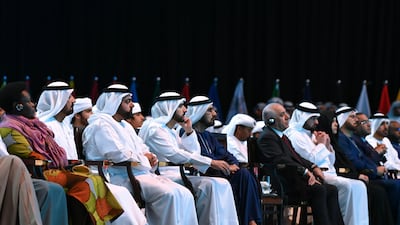
Sheikh Mohammed bin Rashid, Vice President and Ruler of Dubai, listens to Sheikh Saif. WAM -
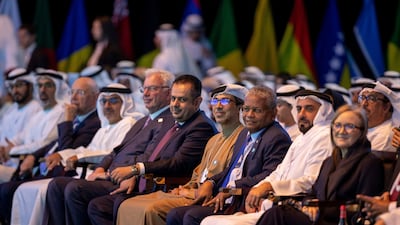
Najla Bouden, Prime Minister of Tunisia, Sheikh Saif bin Zayed, Deputy Prime Minister and Minister of Interior, Wavel Ramkalawan, President of Seychelles, Sheikh Mansour bin Zayed, Deputy Prime Minister and Minister of Presidential Affairs, Dr Maeen Saeed, Prime Minister of Yemen and Panagiotis Pikrammenos, Deputy Prime Minister of Greece, at the summit. Photo: Presidential Court -
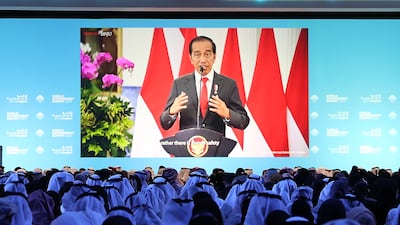
Joko Widodo, President, Government of the Republic of Indonesia speaking at the World Government Summit held at Madinat Jumeirah in Dubai. Pawan Singh / The National -
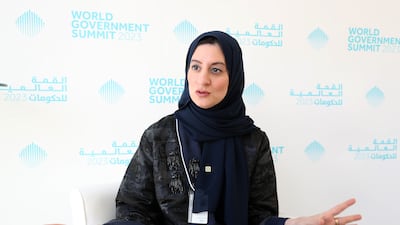
Huda AlHashimi, Deputy Minister of Cabinet Affairs for Strategic Affairs, United Arab Emirates during the interview at the World Government Summit held at Madinat Jumeirah in Dubai. Pawan Singh / The National -
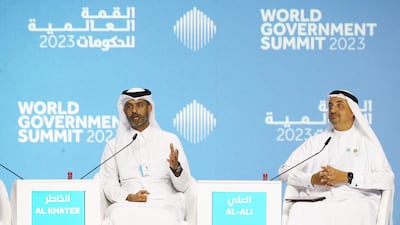
Left to Right - Nasser Al-Khater, Chief Executive Officer, FIFA World Cup Qatar 2022 and Najeeb AlAli, Executive Director, Expo 2020 Bureau speaking during the session on Hosting Major Events: An Arab Success Story at the World Government Summit held at Madinat Jumeirah in Dubai. Pawan Singh / The National -
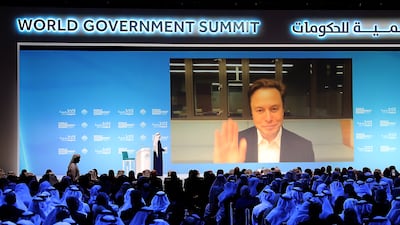
Elon Musk and Mohammad Al Gergawi, Minister of Cabinet Affairs, speak on day three of the World Government Summit in Dubai. Mr Al Gergawi is also chairman of the summit. Pawan Singh / The National -
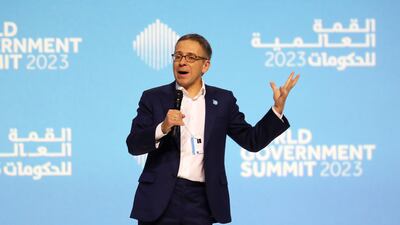
Ian Bremmer, president and founder of Eurasia Group, speaking during a session called 'Beyond 2023: A Global Outlook'. Pawan Singh / The National -
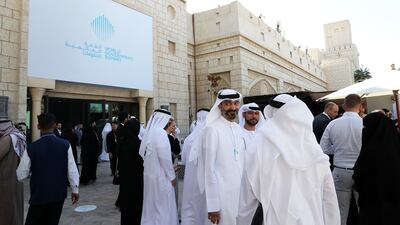
Delegates gather at Madinat Jumeirah for the summit. Pawan Singh / The National -
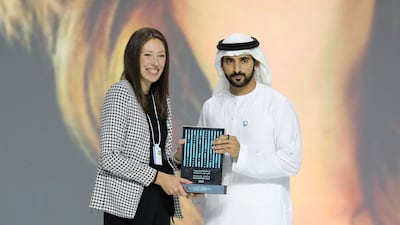
Sheikh Hamdan bin Mohammed, Crown Prince of Dubai, presents the World Data Visualisation Award to Lindsey Poulter. Pawan Singh / The National -
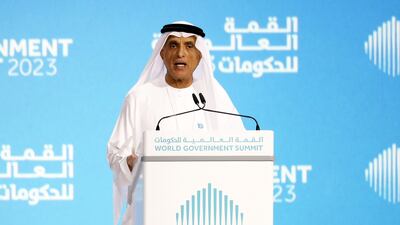
Sheikh Saud bin Saqr Al Qasimi, Ruler of Ras Al Khaimah, addresses delegates at the summit. Pawan Singh / The National -
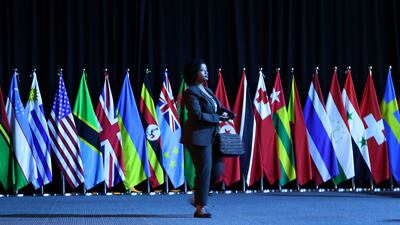
National flags displayed at the global event. Pawan Singh / The National -

Turkish President Recep Tayyip Erdogan speaks at the event using a video link. Antonie Robertson / The National -
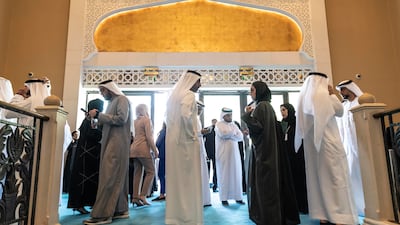
People gather for the second day of the summit. Antonie Robertson / The National -
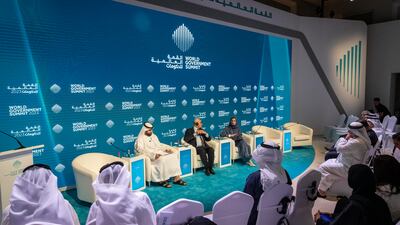
Huda Al Hashimi, right, Deputy Minister of Cabinet Affairs for Strategic Affairs, on stage with Waleed Al Ali, left, Secretary General of the Digital School, and Reda Hegazy, Egypt's Minister of Education. Antonie Robertson / The National -
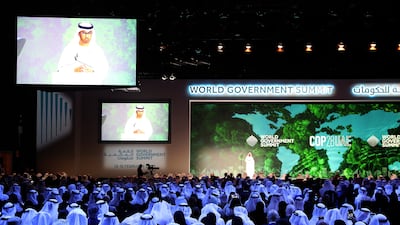
Dr Sultan Al Jaber, Minister of Industry and Advanced Technology, and Cop28 President-designate, speaks during a session titled The Road Map to Cop28: Prioritising Action. Pawan Singh / The National -
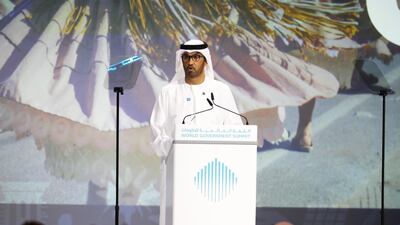
Dr Al Jaber, who is also the UAE's special envoy for climate change, addresses delegates in Dubai. Pawan Singh / The National -
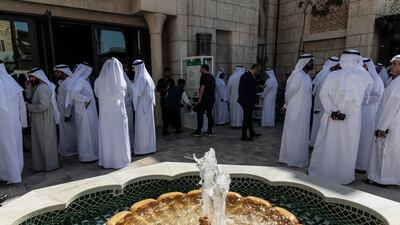
Day two of the World Government Summit. Antonie Robertson/The National -
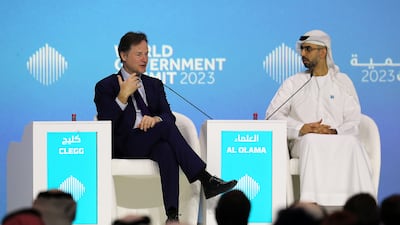
Omar Al Olama, Minister of State for Digital Economy, AI and Remote Work System, and Nick Clegg, president of Global Affairs at Meta, at the summit. Pawan Singh / The National -
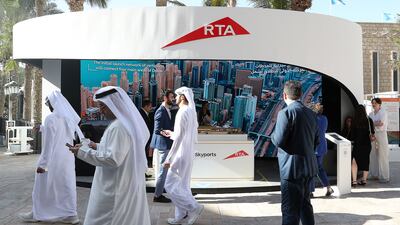
Delegates at the World Government Summit held at Madinat Jumeirah in Dubai. Pawan Singh / The National -
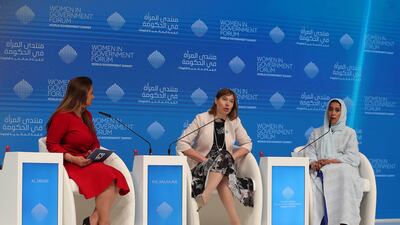
Mina Al-Oraibi, Editor-in-Chief of The National newspaper, Kersti Kaljulaid, fifth President of Estonia, and Mona Al Marri, vice president of the UAE Gender Balance Council. Pawan Singh / The National -
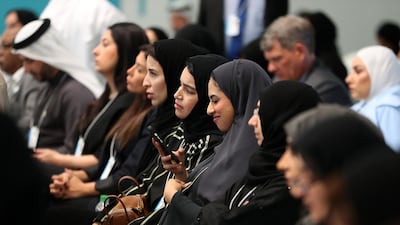
Delegates during the session on Women in Government: Powering the Future. Pawan Singh / The National -
President Sheikh Mohamed, Sheikh Mohammed bin Rashid, Vice President and Ruler of Dubai, and Egyptian President Abdel Fattah El Sisi. Photo: Dubai Media Office -
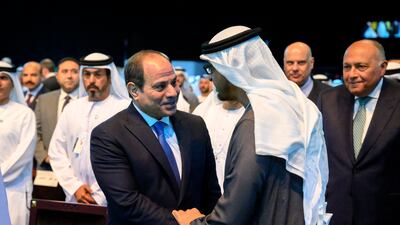
Sheikh Mohamed greets Mr El Sisi. Photo: Presidential Court -
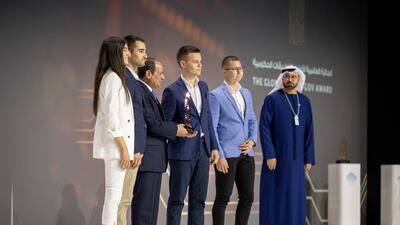
Mr El Sisi presents the Global Best M-Gov Award to the winners as Mohammed Al Gergawi, Minister of Cabinet Affairs, looks on. Photo: Presidential Court -
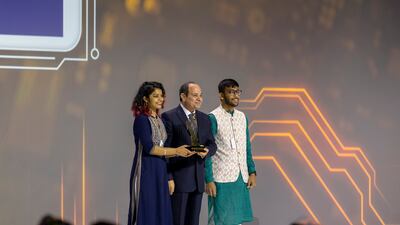
Mr El Sisi presents the Global Best M-Gov Award. Photo: Presidential Court -
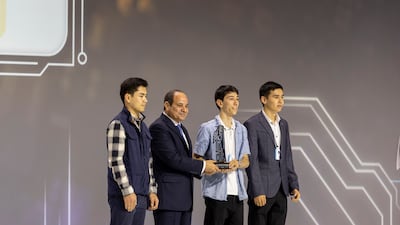
Mr El Sisi presents the Global Best M-Gov Award. Photo: Presidential Court -
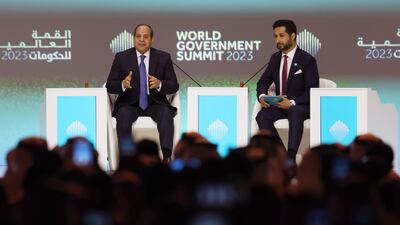
Sky News Arabia's media relations director Faisal bin Huraiz sits alongside Mr El Sisi at the summit. EPA -
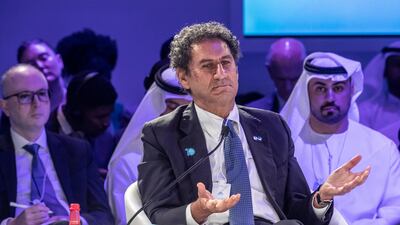
Francesco La Camera, Director General of International Renewabale Energy Agency, speaks at the summit. Antonie Robertson / The National -
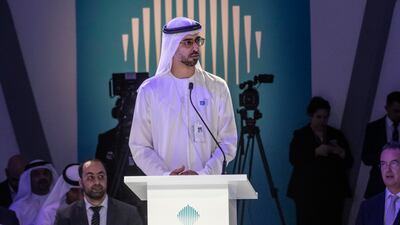
Omar Sultan Al Olama, Minister of State for Artificial Intelligence at the summit. Antonie Robertson / The National -

Mohamed Al Ramahi, Chief Executive Officer, Masdar. Antonie Robertson / The National -
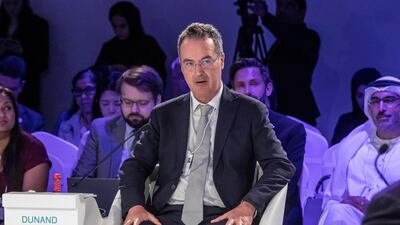
Marco Dunand, CEO and Co-founder, Mercuria Energy Group. Antonie Robertson/The National -
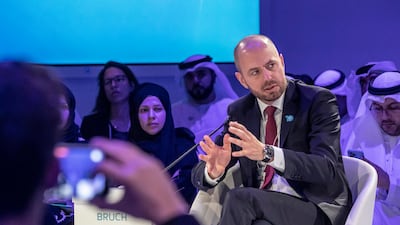
Christian Bruch, President and CEO, Siemens Energy. Antonie Robertson / The National -
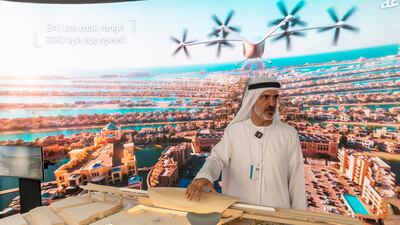
Ahmed Bahrozyan, chief executive of the Public Transport Agency at the RTA. Antonie Robertson / The National -
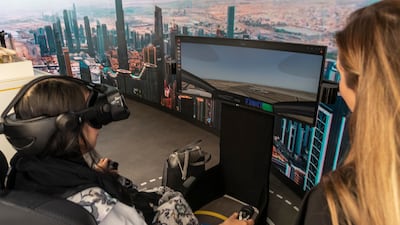
RTA's flyng taxi and sky port project powered by Joby. Virtual simulation of the flying experience. Antonie Robertson / The National -
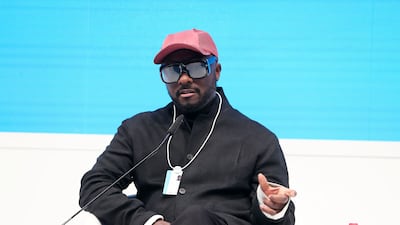
will.i.am speaking during the session on Accelerating Tech: The New Frontier for Policy-making at the World Government Summit in Dubai. Pawan Singh / The National -
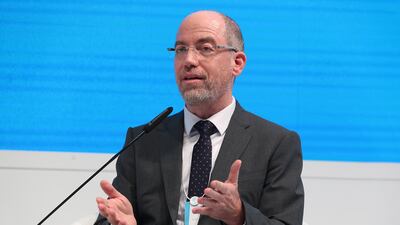
Doron Avni, Google VP of Government Affairs and Public Policy Emerging Markets speaking during the session on Accelerating Tech: The New Frontier for Policy-making at the World Government Summit in Dubai. Pawan Singh / The National -
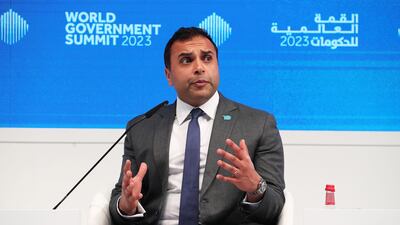
Sujay Jaswa, Founder and Managing Partner, WndrCo speaking during the session on Accelerating Tech: The New Frontier for Policy-making at the World Government Summit in Dubai. Pawan Singh / The National -
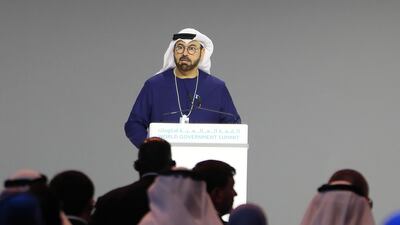
Mohammed Al Gergawi, Minister of Cabinet Affairs and the chairman of the World Government Summit, delivers the opening speech. Pawan Singh / The National -
Al Gergawi highlighted the rapid change the world has seen in the decade since the event was first held. Pawan Singh / The National -
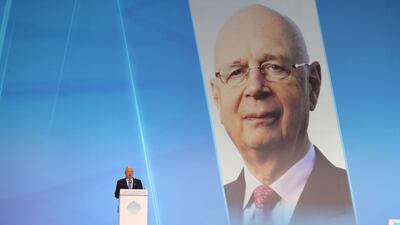
Klaus Schwab, Founder and Executive Chairman of the World Economic Forum, speaks at the summit. Pawan Singh / The National -
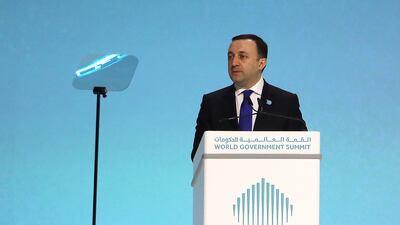
Georgia's Prime Minister Irakli Garibashvili speaks at the World Government Summit in Dubai. Pawan Singh / The National -
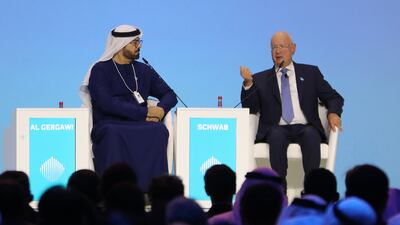
Al Gergawi and Schwab held a joint discussion. Pawan Singh / The National -
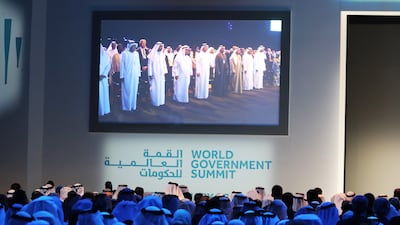
Delegates standing during the moment of silence for the Turkey – Syria earthquake before the start of World Government Summit in Dubai. Pawan Singh / The National -
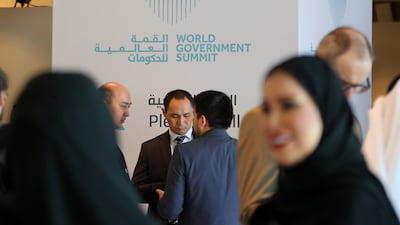
Delegates at the World Government Summit held at Madinat Jumeirah in Dubai. Pawan Singh / The National



