

Water is at the heart of the Middle East’s story, evidenced perhaps most clearly in the region’s historic irrigation and agricultural systems that gave rise to great civilisations.
It is little surprise then that the people of the Middle East have a long tradition of trying to control it, whether that be ancient irrigation methods or modern cloud seeding. One key method is the use of dams. The longest-operating one on the planet is found in Syria, the Lake Homs Dam. It was constructed by the Ancient Egyptians between 1319-1304 BC.
In 2023, they remain crucial to the region's prosperity and security. Earlier this week, The National visited one of the most exciting dam projects underway in the Middle East, a hydroelectric plant being built to turn the water of Hatta Dam, which is outside Dubai in the Hajar Mountains, into electricity.
The station is scheduled to be ready by the end of 2024, and 1,400 people were working at the site when The National visited. It will have a production capacity of 250 megawatts, which could power up to 250,000 homes a year. Crucially, it will have a storage capacity of 1,500 megawatt hours. Its ability to store energy makes it the first of its kind in the GCC.
-
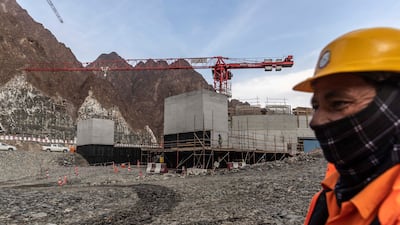
Progress on the new Dubai Electricity and Water Authority hydroelectric power plant in Hatta. All photos: Antonie Robertson / The National -
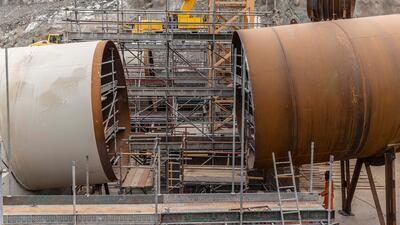
Work takes place on the hydroelectric plant in Hatta -
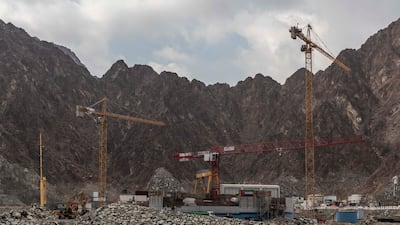
The station is planned for completion in the first quarter of 2025 and will have a production capacity of 250 megawatts -
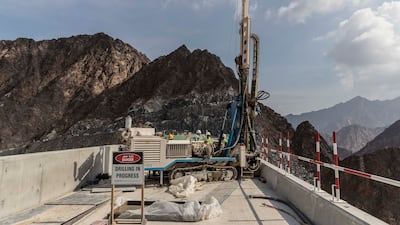
About 1,400 people are working at the site -
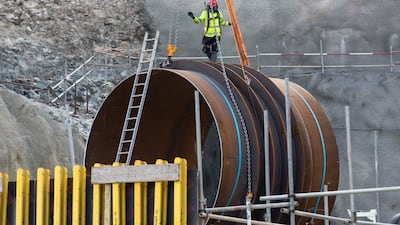
The hydroelectric power plant is the first of its kind in the GCC because it can store energy -
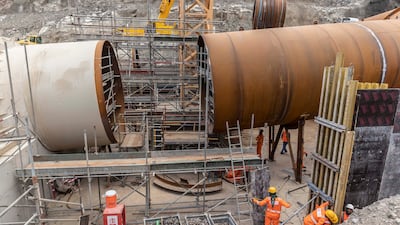
The plant can operate in two modes: turbine and pumping -
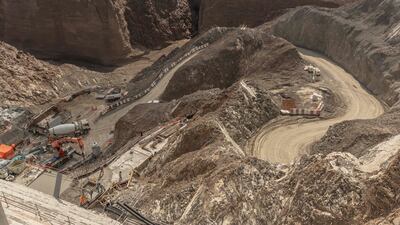
The plant's response time to heightened demand for energy is expected to be less than 90 seconds -
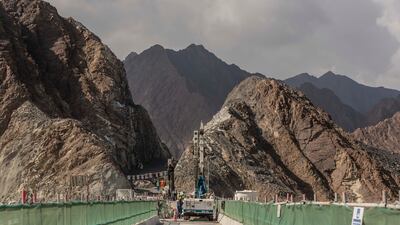
The plant will help achieve the Dubai Clean Energy Strategy 2050 and the Dubai Net Zero Carbon Emissions Strategy 2050 -
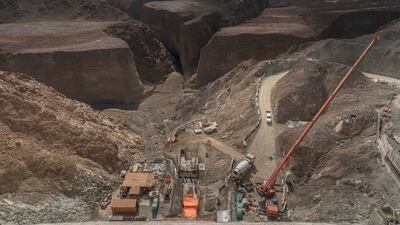
Cranes surround the powerhouse containing the turbines, while heavy machinery and vehicles were being used for backfilling the area -
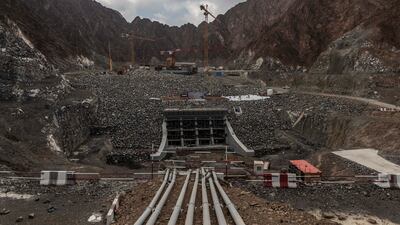
The flow of water will soon help power the UAE as the country endeavours to maximise the use of clean energy -
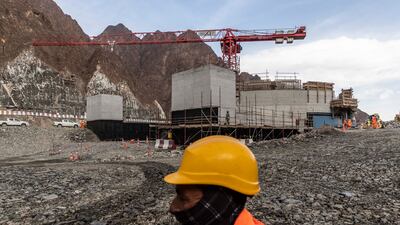
It will have a storage capacity of 1,500 megawatt hours and a life span of up to 80 years


The project is not just remarkable for its capacity and complex engineering. Its environmental benefits will be significant. Hydroelectricity is one of the most sustainable forms of generating power, often more reliable than wind and solar. It will work in two modes, turbine and pumping. When in the latter, the plant will use energy from the Mohammed bin Rashid Al Maktoum Solar Park, creating a loop of clean power production. The dam will help the emirate as it sets out to reach net zero carbon emissions by 2050.
It will also benefit the local area. Khalifa Al Bedwawi, project manager of the plant, told The National that: “The project supports the plan to meet the social, economic development and environment needs in addition to providing job opportunities for UAE citizens in Hatta.”
This comes as the UAE prepares to host Cop28, and just a week after the country's government declared 2023 to be the "Year of Sustainability". While 2023 is particularly environmentally focused, the country has been pushing for more domestic sustainability for some time. Last October, the third unit of the Barakah Nuclear Plant was connected to the grid. The latest addition has the capacity to produce up to 1,400 megawatts of emissions-free energy.
All this is helping to solidify a reputation for the UAE as a leading centre of innovation for the sake of the environment. Earlier this month, President Sheikh Mohamed bin Zayed and South Korea's President Yoon Suk Yeol visited the Barakah Nuclear Plant. Referencing the technological collaboration between the UAE and South Korea, Mr Yoon said: “The Barakah nuclear fleet, which has two units in operation and the other two soon to be operational, holds great, monumental significance as it represents the special strategic partnership between the UAE and the Republic of Korea.”
In a few months, many more international leaders will be sharing their thoughts as urgent efforts are made to protect the planet. While there is a long way to go for everyone, the UAE's ever-broadening sustainable energy base can demonstrate what Arab countries in modern times can achieve to protect the planet, and how water remains key to the region's well-being.

