


From old postcard pictures of Lebanon, one might glean how far the country has fallen in recent years. Today, streets are often messier, grand buildings more run down and poverty a more visible social problem.
One of these many declines getting attention in recent weeks will be best illustrated not by vintage postcards, however, but by the depressing evidence of medical imaging.
Lebanon’s energy crisis has led to frequent, destabilising electricity blackouts for years. The state’s increasingly desperate responses are now aggravating a public health crisis, as suppliers are forced to turn to burning low-quality fuel that is not suitable for the country’s electricity-generating infrastructure.
The practice is releasing thick black smoke that has recently been highlighted a great deal on social media. According to opposition MP Najat Saliba, it contains “heavy carcinogen metals, which constitute a public health hazard in the long term”.
-
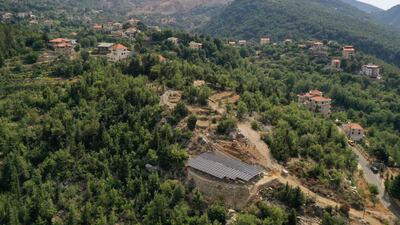
An aerial view of the solar panels installed in the village of Toula in northern Lebanon. All photos by AFP -
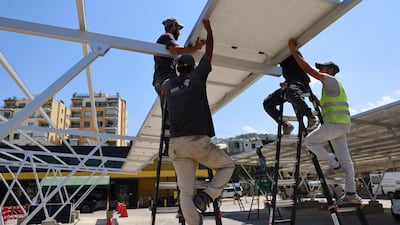
Workers instal solar panels as shades for vehicles in the car park of a shopping mall in the city of Byblos in northern Lebanon. -
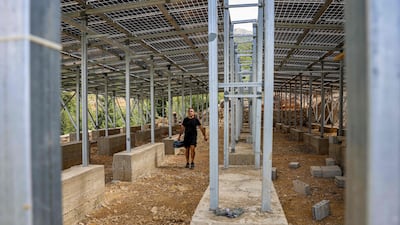
A technician works on the solar panel system installed for the village of Toula in northern Lebanon. -
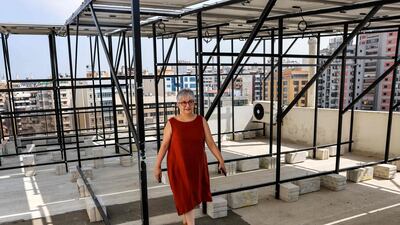
Lebanese homemaker Zeina Sayegh walks beneath the solar panels she installed atop her apartment building in Lebanon's capital Beirut. -
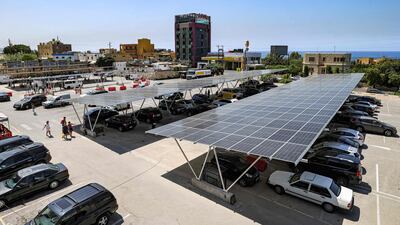
Solar panels cover a shopping mall's car park in the city of Byblos in northern Lebanon. -
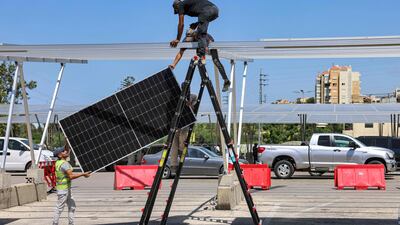
Workers instal solar panels over parking spaces at a shopping mall in Byblos, Lebanon. -
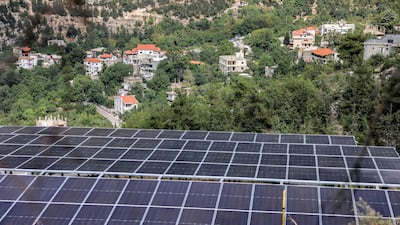
The solar panel system installed on a hillside above the village of Toula in northern Lebanon. -

Solar panels cover the roof of a shopping mall in Byblos, Lebanon.


It would be easy to blame only the energy industry, and it should shoulder part of the responsibility. But it has few other options available. Dirty options such as knock-down fuel are now one of the only ways left to mitigate the terrible cycle of blackouts. State energy firm Electricite du Liban has apologised for the uptick in smog, saying on Wednesday that it was the result of an “exceptional decision” to avoid “total darkness”.
The results are devastating. Much like other parts of the region in which the energy system has been hollowed out by corruption and neglect, households increasingly rely on private generators to guarantee supply. They work in the short term, but have dangerous health and environmental implications in the long term, and are particularly damaging for the very youngest and oldest in society.
Last week, the outlook got worse when Prime Minister Najib Mikati and Energy Minister Walid Fayad approved running two old power plants on 40,000 tonnes of low-quality fuel, which is certain to create more of the dangerous smog. The payoff is a couple of hours of electricity for a month for vital state institutions such as the Beirut port and the airport.
EDL and the government need start thinking beyond the short term and crisis management. Better informed decisions need to be made to solve the issue of blackouts once and for all. Strengthening the country’s energy supply is key. The government is missing an open goal in this regard, as Lebanon and Israel with US mediation seek to settle an ongoing maritime border dispute. Despite some promise for a deal in recent months, loaded political rhetoric from Beirut and the nefarious influence of Iran-backed Hezbollah are stalling the process needlessly. While it flounders, energy security weakens by the day. Just on Monday it was announced that fuel subsidies were to be lifted fully, which will raise prices further.
If a settlement was found, both Israel and Lebanon would be able to exploit the area’s significant natural gas reserves, which were discovered in 2007. Although this operation would still take time to set up, once in action Lebanon would have a great deal more energy security and a hugely profitable export to help ease its economic crisis.
It is a travesty that as Lebanon sits on such a gold mine amid unprecedentedly high global energy prices, almost 80 per cent of its people live in poverty and breathe in some of the world’s worst air. Even if the situation does improve in the lifetime of the country’s youngest generation, their lungs will be scarred permanently as a result of a truly shocking set of crimes and inefficiencies, glaring evidence of the criminal neglect they endure at the hands of a broken political class.

