


Recently, Iraq's parliament has been disappointingly empty of its elected members. The country faces many urgent crises. In the face of them, lawmakers all too often choose to stay away from the house in which they should fulfil their duties. On Wednesday, however, the chamber was packed, but not with politicians. Crowds of protesters stormed Baghdad's green zone, eventually heading to parliament. Such was the anger that concrete barriers, guards and water cannons were not enough to stop them.
The irony of large numbers of people finally in parliament was not lost on observers. One Iraqi analyst, tweeted "first time there are enough individuals in Iraq's parliament to meet the quorum," a reference to the decision of several political blocs to boycott parliament in order to stall the passing of laws and voting in the new government.
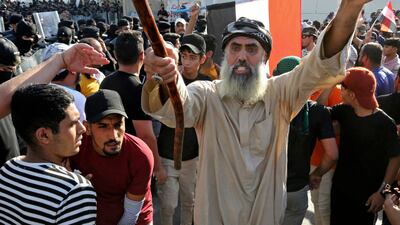
The protesters soon retreated from the building, but the message about Iraq's political malaise was heard loud and clear. This episode does not quite fit the trend of non-partisan mass protests seen in recent years. Its motivations were more complicated than general public anger. The majority of those present were supporters of Shiite cleric Moqtada Al Sadr. They were only convinced to leave after he tweeted: "Your message has been received oh beloved ones, and you have terrified the corrupt ... You must now return safely to your homes."
-
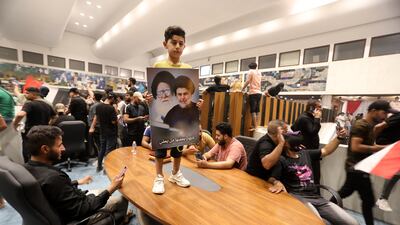
Supporters of Iraqi Shiite cleric Moqtada Al Sadr, head of the Sadrist movement, gather inside Iraq's Parliament buliding. EPA -
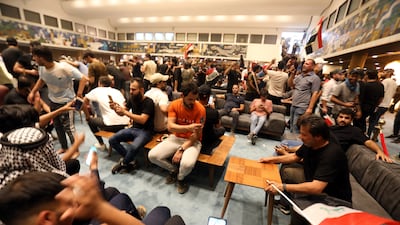
The cleric's followers enter the Parliament building in a show of force. EPA -
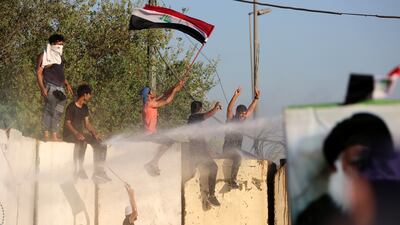
Anti-riot policemen use water cannons in a bid to disperse supporters of Mr Al Sadr. EPA -
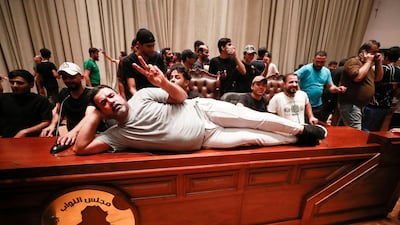
A demonstrator lies on the desk of the Speaker of the Iraqi parliament. AFP -
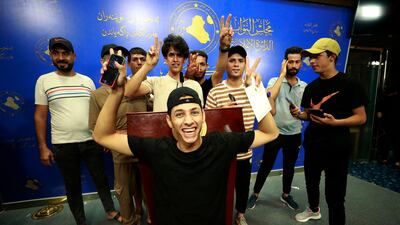
Supporters of Mr Al Sadr flash the victory sign as they gather inside the Iraqi Parliament. AFP -
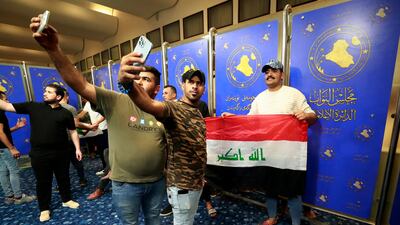
There's always time for a selfie. AFP -
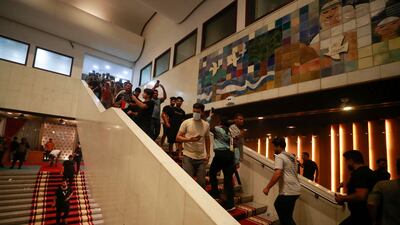
The demonstrators are protesting the recent selection of Mohammed Al Sudani as the official nominee of the Co-ordination Framework bloc. AFP -
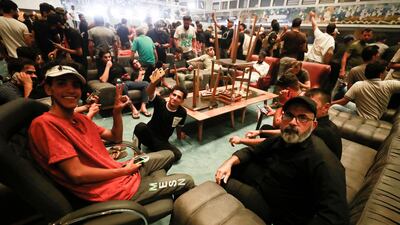
It is the largest protest since federal elections were held in October. AFP -
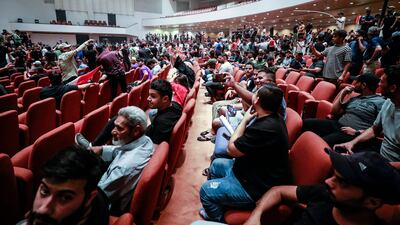
The protesters sit in the building, in Baghdad's high-security Green Zone. AFP -
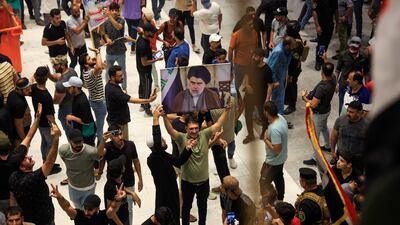
A person holds a portrait of Mr Al Sadr. Reuters -
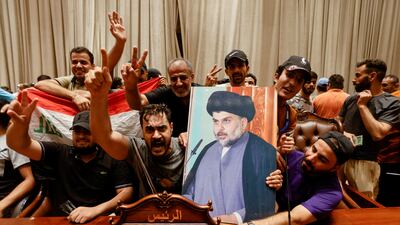
Protesters raise flags and a portrait of Mr Al Sadr. Reuters -
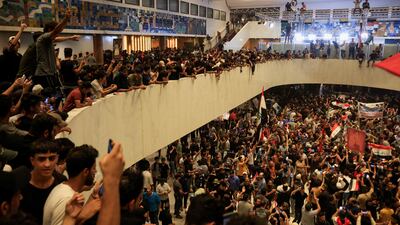
Al Sadr posted a statement on Twitter telling supporters their message had been received. Reuters -
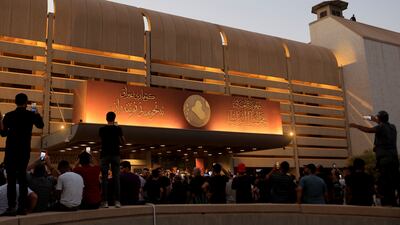
People stand outside of the Parliament building during the protest. Reuters -
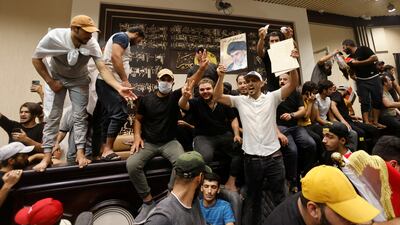
Supporters of Iraqi Shiite cleric Moqtada Al Sadr protest against corruption inside the Parliament building in Baghdad, Iraq. Reuters -
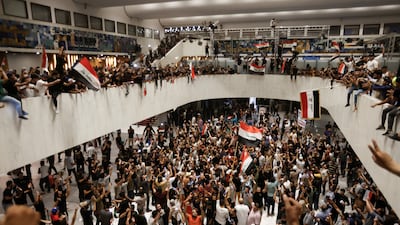
Mr Al Sadr's supporters protest against corruption inside the Parliament building in Baghdad. Reuters -
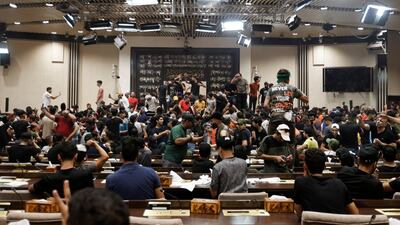
Demonstrators protest inside the Parliament building. Reuters -
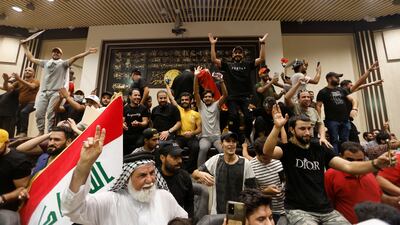
Protesters demonstrate inside the Parliament building. Reuters -
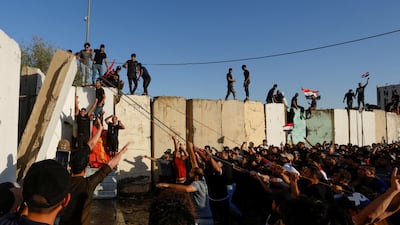
Protesters pull down a wall with chains and ropes during a protest against corruption. Reuters -
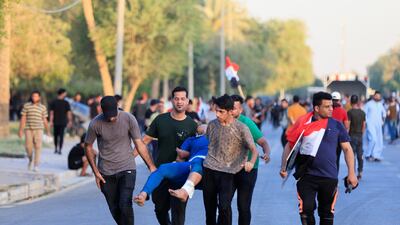
Supporters of Mr Al Sadr carry a person during a protest against corruption in the Green Zone in Baghdad. Reuters -

Iraqi security forces stand outside the main gate of Baghdad's Green Zone as demonstrators protest against the nomination of Mohammed Shia Al Sudani as prime minister. AFP -
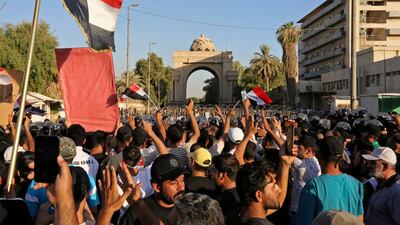
Mr Al Sadr's supporters gather outside the main gate of Baghdad's Green Zone. AFP -
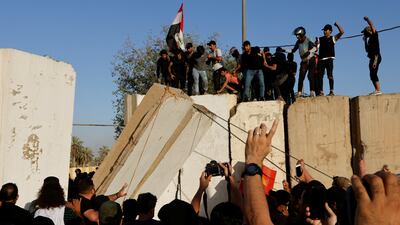
Supporters of Mr Al Sadr protest against corruption in Baghdad. Reuters -
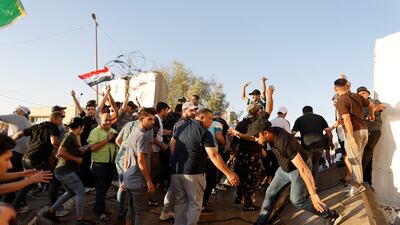
Protesters break down barricades in Baghdad. Reuters -
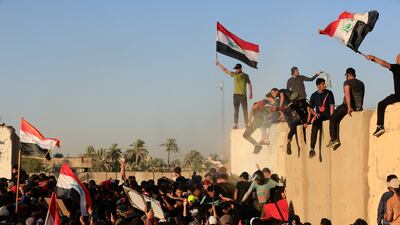
Supporters of Mr Al Sadr demonstrate in Baghdad. Reuters -
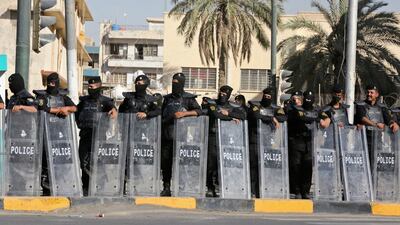
Iraqi security forces prepare to meet the demonstrators in Baghdad's Tahrir Square. AFP -

Supporters of Mr Al Sadr gather in Baghdad's Tahrir Square to protest against the nomination of Mohammed Shia Al Sudani as prime minister. AFP -
Protesters demonstrate in Baghdad. AFP -
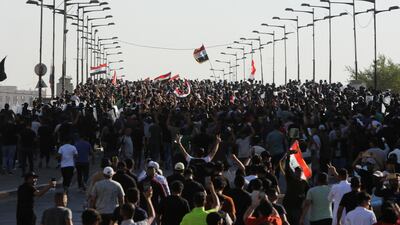
Mr Al Sadr's supporters walk across a bridge to the Green Zone during a protest against corruption in Baghdad. Reuters


The speed at which crowds heavily populated with his supporters both stormed and withdrew from the complex is indicative of the power he holds in Iraq. But, as is ever the case with such a fractious country, also bogged down by powerful foreign interference, it is still not supreme. Sadr proved unable to form a government in June, despite his bloc winning 73 seats in October's election, the largest number of seats for a single bloc in parliament, and forming a coalition with powerful parties such as the Kurdistan Democratic Party and a large Sunni alliance.
This week’s unrest, then, can in part be viewed as Sadr, so far denied a stake in government, reminding opponents that he still wields great popular power. If he cannot have the parliament, he can still have the streets.
Whereas for ordinary Iraqis that turned up, from whichever stripe, anger was probably less about the specifics of political arrangements and more about protesting corruption and preserving Iraq's very status as a sovereign nation, because the inaction of domestic politicians does not just threaten life at home. It provides a window for foreign powers to exploit a vacuum with no accountability.
To solve the deadlock and end the country’s suffering, Iraq first needs to fill its parliament with the lawmakers that should be there all year round working and co-operating for the public good. Second, it needs to form a government that is accountable to the people and able to deliver tangible results to tackle the myriad of problems facing the country.
Only then can Iraq rid itself of cyclical political violence and instability and foreign interference. And only then can it start dealing with its increasingly existential challenges.

