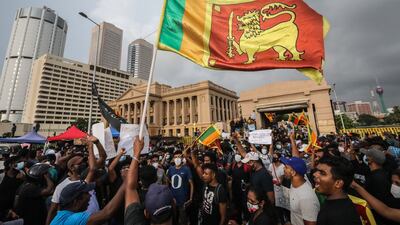
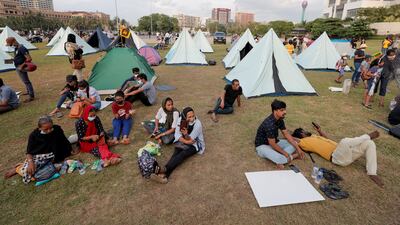
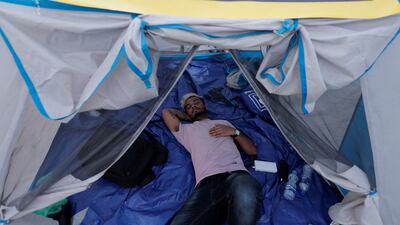
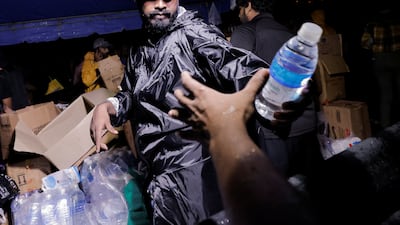
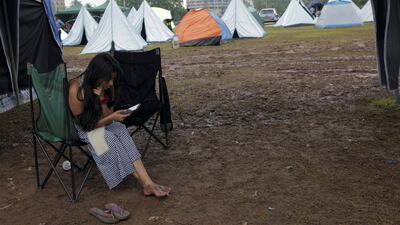
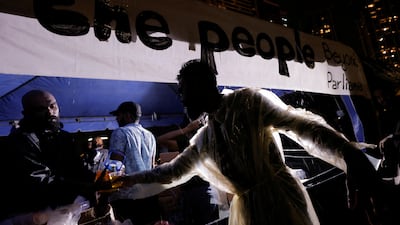
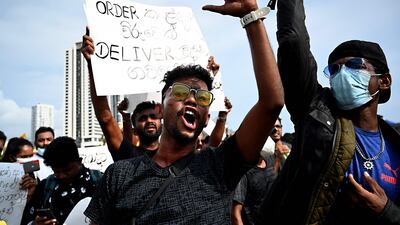
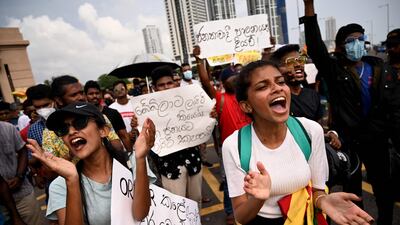
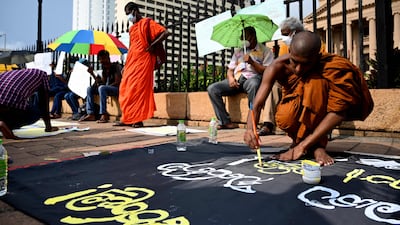
For anyone trying to understand the widespread social anger seen in Sri Lanka in recent days, Gota-Go village is a good place to start. The steadily growing collection of tents pitched outside President Gotabaya Rajapaksa's office in the capital Colombo serves as a rallying point for thousands of people that have taken to the streets. On Monday, Christian nuns marched in protest by the site, as Buddhist monks and Muslim men joined nearby. All are expressing anger at high inflation, a lack of services and utilities, poor health care and a wider economic crisis.
Prime Minister Mahinda Rajapaksa, the President's brother, has offered to talk to protesters, but the situation is unlikely to improve soon. As of yet, no viable opposition can be found and faltering state institutions and wider mismanagement and corruption show no signs of abating.
Looming over all of this is an impending default on foreign debt repayments, which, if it happens, will worsen the crisis. The situation became more critical when the country's central bank governor said on Tuesday that Sri Lanka will temporarily suspend payments, so that its limited foreign reserves could be spent on essential imports.
Next week, the country will start talks with the IMF to ease the situation. More than Sri Lanka will be on IMF officials’ minds, however, as the fund confronts similar situations in emerging economies across the globe. The World Bank has said that as many as 12 developing countries could be unable to service foreign debt over the next year.
It is perhaps unsurprising. The World Bank also reports that Covid-19 caused global indebtedness to rise to a 50-year high. If the pandemic laid the groundwork, the war in Ukraine could become the perfect trigger for an acute crisis in a number of countries, as supply chains are further strained and commodity prices continue escalating. Developing economies account for 40 per cent of global GDP, heightening the risk of contagion to the rest of the world.
Without managing what they owe, at-risk economies will spend increasingly more of their already-low national income on debt repayments, not development. Once the burden becomes too great, escaping a vicious cycle of defaults becomes difficult. Lebanon, which defaulted in March 2020 and whose financial crisis continues to worsen, is a good example. The over-reliance on imports also makes the situation worse for many of these countries.
Solutions are complex and unattractive for corrupt or incompetent governments. At home, coffers need to be filled, often by raising taxes, which then have to be collected more efficiently from citizens and made harder to dodge by large companies profiting from lax regulation.
But outside their control are international financial systems that need to evolve to work better. First, expert-led advice should be offered early on to break unsustainable cycles and boost resilience in the face of unpredictable global crises. The operations of international organisations must also evolve. The IMF's debt service relief programme spent billions throughout the pandemic and helped 90 countries, hugely important in maintaining as much economic stability as possible. It should be extended as part of a longer-term assessment of where the world's economy is today.
It is clear that Covid-19 is still a health crisis, which is why it should still be considered an economic one, too. Gota-Go village might be a very local protest, but many of the problems that pushed people to set it up are replicated in a number of countries around the world. And if its organisers are not listened to, the ensuing economic instability from which they are suffering might go global, too.

Asia Cup Qualifier
Venue:Â Kuala Lumpur
Result: Winners play at Asia Cup in Dubai and Abu Dhabi in September
Fixtures:
Wed Aug 29:Â Malaysia v Hong Kong, Nepal v Oman, UAE v Singapore
Thu Aug 30:Â UAE v Nepal, Hong Kong v Singapore, Malaysia v Oman
Sat Sep 1:Â UAE v Hong Kong, Oman v Singapore, Malaysia v Nepal
Sun Sep 2:Â Hong Kong v Oman, Malaysia v UAE, Nepal v Singapore
Tue Sep 4:Â Malaysia v Singapore, UAE v Oman, Nepal v Hong Kong
Thu Sep 6:Â Final
Â
Asia Cup
Venue: Dubai and Abu Dhabi
Schedule: Sep 15-28
Teams: Afghanistan, Bangladesh, India, Pakistan, Sri Lanka, plus the winner of the Qualifier
Conflict, drought, famine
Estimates of the number of deaths caused by the famine range from 400,000 to 1 million, according to a document prepared for the UK House of Lords in 2024.
It has been claimed that the policies of the Ethiopian government, which took control after deposing Emperor Haile Selassie in a military-led revolution in 1974, contributed to the scale of the famine.
Dr Miriam Bradley, senior lecturer in humanitarian studies at the University of Manchester, has argued that, by the early 1980s, “several government policies combined to cause, rather than prevent, a famine which lasted from 1983 to 1985. Mengistu’s government imposed Stalinist-model agricultural policies involving forced collectivisation and villagisation [relocation of communities into planned villages].
The West became aware of the catastrophe through a series of BBC News reports by journalist Michael Buerk in October 1984 describing a “biblical famine” and containing graphic images of thousands of people, including children, facing starvation.
Band Aid
Bob Geldof, singer with the Irish rock group The Boomtown Rats, formed Band Aid in response to the horrific images shown in the news broadcasts.
With Midge Ure of the band Ultravox, he wrote the hit charity single Do They Know it’s Christmas in December 1984, featuring a string of high-profile musicians.
Following the single’s success, the idea to stage a rock concert evolved.
Live Aid was a series of simultaneous concerts that took place at Wembley Stadium in London, John F Kennedy Stadium in Philadelphia, the US, and at various other venues across the world.
The combined event was broadcast to an estimated worldwide audience of 1.5 billion.
Tips to stay safe during hot weather
- Stay hydrated: Drink plenty of fluids, especially water. Avoid alcohol and caffeine, which can increase dehydration.
- Seek cool environments: Use air conditioning, fans, or visit community spaces with climate control.
- Limit outdoor activities: Avoid strenuous activity during peak heat. If outside, seek shade and wear a wide-brimmed hat.
- Dress appropriately: Wear lightweight, loose and light-coloured clothing to facilitate heat loss.
- Check on vulnerable people: Regularly check in on elderly neighbours, young children and those with health conditions.
- Home adaptations: Use blinds or curtains to block sunlight, avoid using ovens or stoves, and ventilate living spaces during cooler hours.
- Recognise heat illness: Learn the signs of heat exhaustion and heat stroke (dizziness, confusion, rapid pulse, nausea), and seek medical attention if symptoms occur.
Company%20profile
%3Cp%3E%3Cstrong%3ECompany%20name%3A%20%3C%2Fstrong%3ETwig%20Solutions%20(with%20trade%20name%20Twig)%3Cbr%3E%3Cstrong%3EStarted%3A%20%3C%2Fstrong%3E2021%3Cbr%3E%3Cstrong%3EFounders%3A%20%3C%2Fstrong%3EChafic%20Idriss%2C%20Karam%20El%20Dik%20and%20Rayan%20Antonios%3Cbr%3E%3Cstrong%3EBased%3A%20%3C%2Fstrong%3EUAE%3Cbr%3E%3Cstrong%3ESector%3A%20%3C%2Fstrong%3EFinTech%3Cbr%3E%3Cstrong%3EInitial%20investment%3A%20%3C%2Fstrong%3Ebootstrapped%20(undisclosed)%3Cbr%3E%3Cstrong%3ECurrent%20number%20of%20staff%3A%20%3C%2Fstrong%3E13%3Cbr%3E%3Cstrong%3EInvestment%20stage%3A%20%3C%2Fstrong%3Epre-seed%20%E2%80%94%20closing%20the%20round%20as%20we%20speak%3Cbr%3E%3Cstrong%3EInvestors%3A%3C%2Fstrong%3E%20senior%20executives%20from%20the%20GCC%20financial%20services%20industry%20and%20global%20family%20offices%3Cbr%3E%3Cbr%3E%3C%2Fp%3E%0A
yallacompare profile
Date of launch: 2014
Founder: Jon Richards, founder and chief executive; Samer Chebab, co-founder and chief operating officer, and Jonathan Rawlings, co-founder and chief financial officer
Based: Media City, DubaiÂ
Sector: Financial services
Size: 120 employees
Investors: 2014: $500,000 in a seed round led by Mulverhill Associates; 2015: $3m in Series A funding led by STC Ventures (managed by Iris Capital), Wamda and Dubai Silicon Oasis Authority; 2019: $8m in Series B funding with the same investors as Series A along with Precinct Partners, Saned and Argo Ventures (the VC arm of multinational insurer Argo Group)
The%20specs%20
%3Cp%3E%3Cstrong%3EEngine%3A%20%3C%2Fstrong%3E2.0-litre%204cyl%20turbo%0D%3Cbr%3E%3Cstrong%3EPower%3A%20%3C%2Fstrong%3E261hp%20at%205%2C500rpm%0D%3Cbr%3E%3Cstrong%3ETorque%3A%20%3C%2Fstrong%3E400Nm%20at%201%2C750-4%2C000rpm%0D%3Cbr%3E%3Cstrong%3ETransmission%3A%20%3C%2Fstrong%3E7-speed%20dual-clutch%20auto%0D%3Cbr%3E%3Cstrong%3EFuel%20consumption%3A%20%3C%2Fstrong%3E10.5L%2F100km%0D%3Cbr%3E%3Cstrong%3EOn%20sale%3A%20%3C%2Fstrong%3ENow%0D%3Cbr%3E%3Cstrong%3EPrice%3A%20%3C%2Fstrong%3EFrom%20Dh129%2C999%20(VX%20Luxury)%3B%20from%20Dh149%2C999%20(VX%20Black%20Gold)%3C%2Fp%3E%0A
Learn more about Qasr Al Hosn
In 2013, The National's History Project went beyond the walls to see what life was like living in Abu Dhabi's fabled fort:
Â
John%20Wick%3A%20Chapter%204
%3Cp%3E%3Cstrong%3EDirector%3A%3C%2Fstrong%3E%20Chad%20Stahelski%3C%2Fp%3E%0A%3Cp%3E%3Cstrong%3EStars%3A%3C%2Fstrong%3E%20Keanu%20Reeves%2C%20Laurence%20Fishburne%2C%20George%20Georgiou%3C%2Fp%3E%0A%3Cp%3E%3Cstrong%3ERating%3A%20%3C%2Fstrong%3E4%2F5%3C%2Fp%3E%0A
Mrs%20Chatterjee%20Vs%20Norway
%3Cp%3E%3Cstrong%3EDirector%3A%3C%2Fstrong%3E%20Ashima%20Chibber%C2%A0%3C%2Fp%3E%0A%3Cp%3E%3Cstrong%3EStars%3A%3C%2Fstrong%3E%20Rani%20Mukerji%2C%20Anirban%20Bhattacharya%20and%20Jim%20Sarbh%C2%A0%3C%2Fp%3E%0A%3Cp%3E%3Cstrong%3ERating%3A%3C%2Fstrong%3E%202%2F5%3C%2Fp%3E%0A
How has net migration to UK changed?
The figure was broadly flat immediately before the Covid-19 pandemic, standing at 216,000 in the year to June 2018 and 224,000 in the year to June 2019.
It then dropped to an estimated 111,000 in the year to June 2020 when restrictions introduced during the pandemic limited travel and movement.
The total rose to 254,000 in the year to June 2021, followed by steep jumps to 634,000 in the year to June 2022 and 906,000 in the year to June 2023.
The latest available figure of 728,000 for the 12 months to June 2024 suggests levels are starting to decrease.
India squads
Test squad against Afghanistan: Rahane (c), Dhawan, Vijay, Rahul, Pujara, Karun, Saha, Ashwin, Jadeja, Kuldeep, Umesh, Shami, Pandya, Ishant, Thakur.
T20 squad against Ireland and England: Kohli (c), Dhawan, Rohit, Rahul, Raina, Pandey, Dhoni, Karthik, Chahal, Kuldeep, Sundar, Bhuvneshwar, Bumrah, Pandya, Kaul, Umesh.
ODI squad against England: Kohli (c), Dhawan, Rohit, Rahul, Shreyas, Rayudu, Dhoni, Karthik, Chahal, Kuldeep, Sundar, Bhuvneshwar, Bumrah, Pandya, Kaul, Umesh