


The UAE's Federal Authority for Identity, Citizenship, Customs and Port Security has a vital job. Set up in 2004, one of its responsibilities is managing identity, employment and other biographical data for the country’s entire population.
Decades ago, the need for such an agency was less pressing. In 1971, the year the Emirates was founded, fewer than 280,000 people called the country home, including a far smaller share of foreign residents than today. By 2004, it was a very different picture, as population levels rose to more than 4 million. The new agency responded by creating the Emirates ID, a document that is permanently evolving to match an ever-changing society.
Today, the Emirates ID is a fundamental part of UAE life, used not only as proof of residency, but even as a health insurance card. Soon, it will be used as a kind of travel document, too. This year, as the population exceeds 10 million, authorities are implementing a major update to the card, announcing that from April 11 it will serve as a replacement to visa stickers inserted into foreign residents’ passports. The move is another step towards simplifying the way residents interact with government, a mission that has received particular attention in recent years, in large part made possible by the release of a new generation of cards last August. New features include non-visible data and a service life of more than 10 years.
-
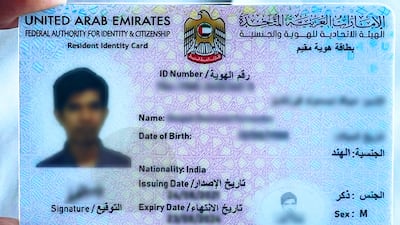
The new Emirates ID looks like this. Stan Cooper / The National -
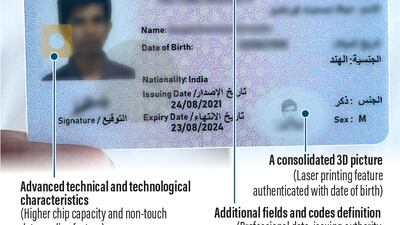
And these are the new features it includes. Stan Cooper / The National -
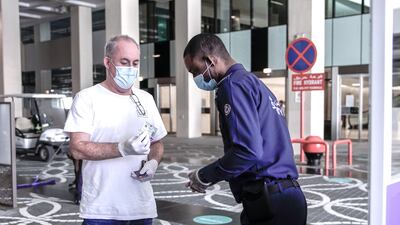
The card includes a 3D picture. The date of birth of the cardholder is visible, and there is enhanced protection of non-visible data. Employment information can also be stored. Victor Besa / The National -
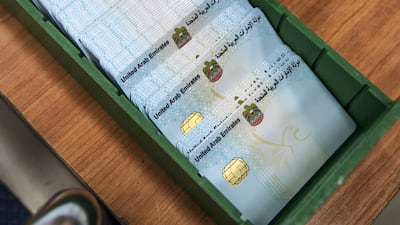
If your Emirates ID has expired you can download a digital version. Services and businesses have been instructed to accept it everywhere. Victor Besa / The National -

A copy of the EID can be downloaded using the UAE Pass app, available on the Apple and Android stores. Victor Besa / The National -
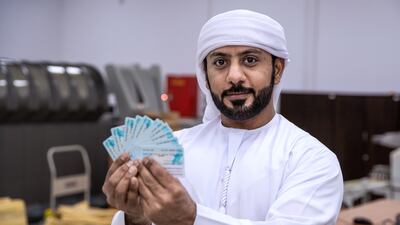
You can also get a digital ID via the ICA UAE Smart app, which can be downloaded free from the Apple and Android stores. Victor Besa / The National -
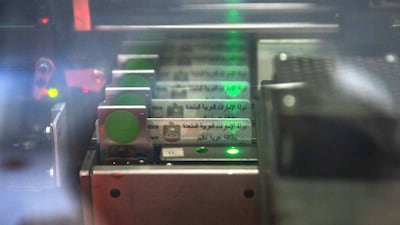
A look inside Emirates ID production facility and control centre. Victor Besa/The National -
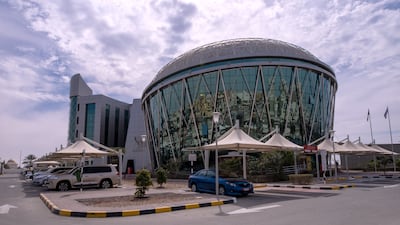
The Federal Authority for Identity and Citizenship Building in Khalifa City, Abu Dhabi. Victor Besa / The National


This efficiency is about more than people spending less time accessing and waiting for services, although that is still an important goal. It is about creating a state that can stay flexible in the face of rapid technological change. The UAE is aiming to make itself a leader in this regard. In 2013, it launched Smart Government, an initiative that seeks to create a "government that never sleeps", is as "hospitable as hotels" and helps people be happy, among other targets. Technology will make this possible, as only it can keep pace with the rapid comings-and-goings of the modern UAE economy.
But new technology in identity checks is about more than efficiency. As people, money and goods become more mobile, keeping track of crime and fraud is harder. Perhaps the biggest security change to identity documents in recent years has been the use of biometric data, including fingerprints, facial recognition and eye scanners, technology endorsed heavily by the International Civil Aviation Organisation. In the UAE, such records are stored in encrypted formats for extra security. Other physical changes to official documents include increasingly complex holograms, intaglio printing (images that can only be seen at particular angles), sophisticated edge design on the ends of pages, watermarks and, crucially, polycarbonate materials, far harder to tamper with and replicate than paper. Finland has led in this regard, using the technique in its driver’s licence in 1989 and in its passport data page in 1995. Printed visa stickers, far easier to copy, will probably be on the way out globally in the decades ahead.
The UAE, a country with such a high share of its growing population on visas, is putting itself at the forefront of this change. If it can execute its wider goal of simplifying the relationship between state and citizen, it will be at the forefront of many other significant changes to come.

