


The 1980-1988 Iran-Iraq War was so horrific that it has come to be known as the Middle East's First World War. The numbers speak for themselves. Some estimates put the number of casualties as high as 2 million people. But parallels with Europe between 1914 and 1918 do not stop at the number of deaths. It was also the modernised, indiscriminate nature of the killing, in which chemical weapons were used and deadly trench warfare dragged fighting and suffering on for eight years.
That war ended 34 years ago, but for the residents of Iraq's border regions it may feel unresolved. Dangers from the fighting still linger. None are more ubiquitous and terrifying than landmines. Today, Iraq is one of the most mined countries in the world. Whole areas of the country, both rural and urban, are cordoned-off because of the devices, which were prohibited under the Ottawa Treaty in 1997.
They are not just the result of conflicts that finished years before the ban. New minefields have also emerged after. The terrorist group ISIS planted them extensively in areas it occupied. One of the main reasons it has taken so long to begin reconstruction work in Mosul's historic Al Nouri mosque is the vast amount of explosive booby traps it planted in the vicinity.
-

A member of Norwegian People's Aid with a landmine found east of Mosul, Iraq. Reuters -
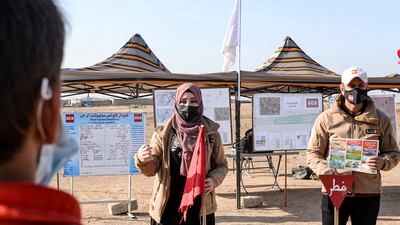
An instructor from Global Clearance Solutions, a private demining company, gives a workshop to children on how to report suspected cases of landmines and unexploded ordnance near the village of Hassan Jalad, north of Iraq's northern city of Mosu. In Hassan Jalad, almost every family has a story to tell of a child, nephew, or brother lost to wartime munitions. The area is littered with unexploded ordnance. AFP -

A member of the Mines Advisory Group demining team searching for landmines in Khazer, Iraq. Reuters -
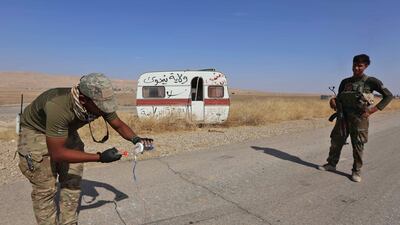
Members of the Iraqi security forces preparing to detonate landmines laid by ISIS near Shaqouli, a village about 35 kilometres east of Mosul, after retaking the area from the militants. AFP -
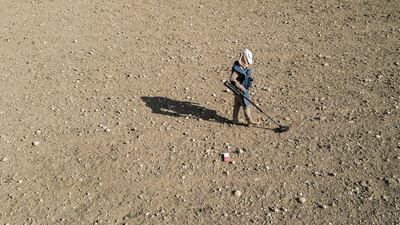
A sweeper uses a metal detector to search for landmines and unexploded ordnance near Hassan Jalad, Iraq. AFP -
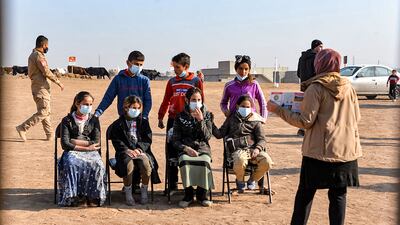
A workshop by Global Clearance Solutions to teach children from Hasan Jalad how to identify and report suspected landmines or unexploded ordnance near their village in northern Iraq. AFP -
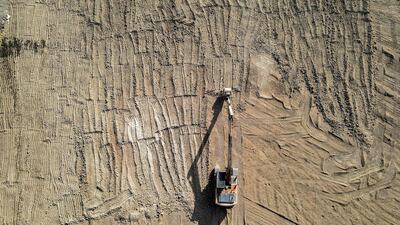
An excavator ploughs a field in the search for landmines and unexploded materiel near Hassan Jalad. AFP -
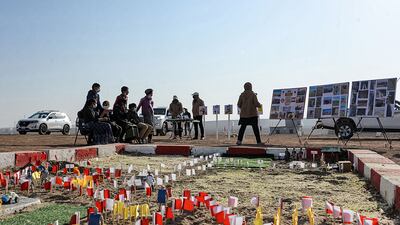
A workshop for Iraqi children to explain the dangers of unexploded ordnance and what to do should they come across a landmine or other suspect object. AFP


In Yemen, the Houthis, another terrorist group, deploy mines indiscriminately, making the country one of the most mined in the world, alongside Iraq and Afghanistan. The Saudi Project for Landmine Clearance estimates that up to 1 million mines will have to be cleared before Yemen is safe. It places another lethal burden on civilians, who are already dealing with a variety of humanitarian crises, from drought to famine.
Eman, a mother of seven living on Yemen’s Red Sea Coast, is unlucky enough to live in the middle of a heavily contaminated area. She told the Danish Refugee Council: “Every day, I have to make the choice: to risk death by a landmine or to die of thirst.” As a mother, her burden is all the worse. “We don’t allow the children to go out anymore. We are scared for them. We live in fear”, she says.
The UN estimates that in 2019, children made up a quarter of all deaths from anti-personnel mines. For the organisations that work in de-mining, a key part of the mission is raising awareness, particularly among young people, on lingering dangers. Civilians often have to stick to marked paths, as highly trained experts conduct the slow, expensive and incredibly dangerous work of detecting and defusing buried bombs. Their efforts should be lauded and supported financially, but that they are needed at all is a sign of the failure of ongoing efforts to enforce international laws that govern appropriate use of force in conflicts. The issue is aggravated by the inability to destroy old stocks and a rise in unaccountable non-state actors.
-
-
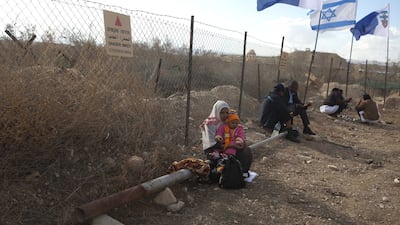
An Ethiopian Orthodox Christian woman sitting with a child by a fence with signs that warn of land mines at the baptismal site known as Qasr Al Yahud, near the West Bank city of Jericho in January 19, 2012. -
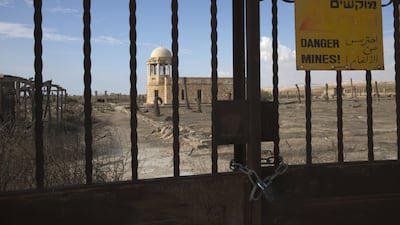
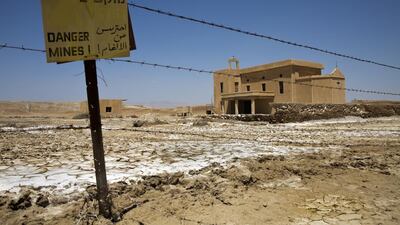
Israel booby-trapped these buildings to prevent Palestinian and Jordanian fighters from using them for refuge during the 1967 Arab-Israeli war, said Ronen Shimoni, programme manager of Halo - a British firm which is planning to extract the mines. -
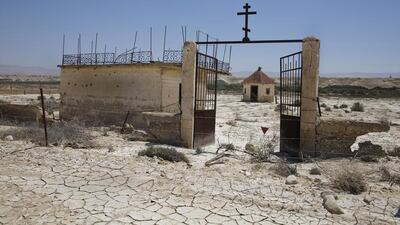
Based on Israeli records, the Qasr Al Yahud area has 2,599 anti-tank mines, and an unknown number of smaller, anti-personnel mines spread across 870,736 square metres. -
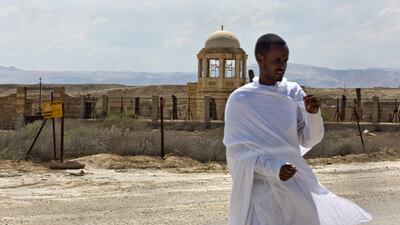
A Eritrean Christian worshipper is seen nearby the restricted Franciscan Church. Halo will be clearing the area of mines over the next 18 months. -
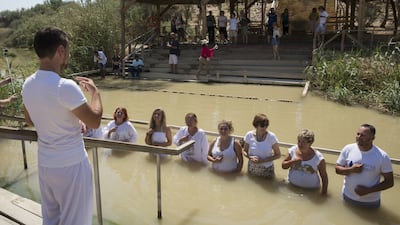
A group of deaf Russian immigrants use sign language as they hold a ceremony and visit the Jordan River at the Qasr Al Yahud baptism site on the West Bank side of the river. Christian worshippers believe the site is where John the Baptist baptised Jesus is located. The Jordanian side of the river is seen in the background.


Until these root causes are addressed, organisations such as the Halo Trust and the Saudi Project for Landmine Clearance will be in a near-endless, dangerous battle to make life safe for civilians, even long after conventional fighting is over. Monday was International Day for Mine Awareness day, which shone a light on their important work. For the sake of so many, they must remain supported permanently.
The First World War ended more than 100 years ago. Today, some experts predict that it could be another hundred years before all the unexploded munitions still left in its former battlefields are eliminated. For the sake of so many in the Middle East, particularly children, corresponding dangers, as well as their underlying causes, must be dealt with sooner. This situation is born out of lawless conflict, and it is preventable in part through greater awareness, accountability and support to those who are undertaking one of the most heroic and dangerous vocations around.

