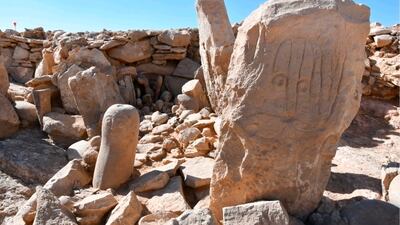
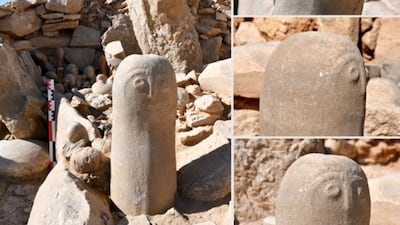
This photo provided by Jordan Tourism Ministry shows two carved standing stones at a remote Neolithic site in Jordan’s eastern desert. A team of Jordanian and French archaeologists said Tuesday, Feb. 22, 2022, that it had found a roughly 9,000-year-old shrine. The ritual complex was found in a Neolithic campsite near large structures known as “desert kites," or mass traps that are believed to have been used to corral wild gazelles for slaughter. (Tourism Ministry via AP)
This photo provided by Jordan Tourism Ministry shows two carved standing stones at a remote Neolithic site in Jordan’s eastern desert. A team of Jordanian and French archaeologists said Tuesday, Feb.


Today is a golden age for archaeology in the Middle East


  • English
  • Arabic

February 24, 2022

The past few days have been a joy for archaeologists in the Middle East, after a spate of diverse and significant discoveries that will shape, and in parts redefine, our understanding of the region's history.

Academics will be taking note, but so should everyone else. After all, a particular gift of archaeology is that it teaches us about more than the lives of kings, queens and generals. It sheds light as much on the lives of history's ordinary people as it does history’s greats.

Residents of Gaza can now see early excavations on a Roman cemetery that was uncovered last week. The team who did so expect to find 80 graves. It is described as the area's most important archaeological discovery in a decade. Such a setting would have been visited by dignitaries and everyday Roman citizens alike. Gaza's ruins already include Mongol, Alexandrian and Islamic heritage. Statues and royal documents might tell us about leaders, but an ever-expanding archaeological portfolio emphasises the role that the Mediterranean and its coastal cities, as well as the the day-to-day merchants, scholars and travellers that lived in them, have had on human development.

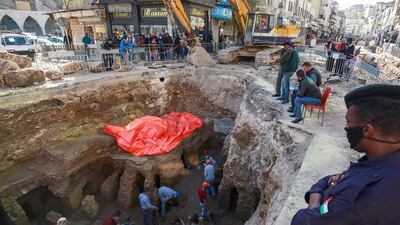
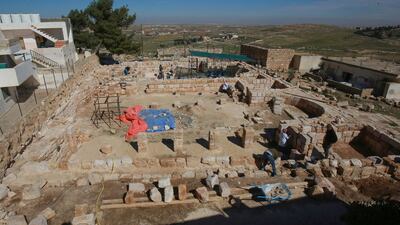
  • The ruins of a recently discovered Roman archaeological site in Amman, the capital of Jordan, are uncovered on the site of a water drainage system. AFP
    The ruins of a recently discovered Roman archaeological site in Amman, the capital of Jordan, are uncovered on the site of a water drainage system. AFP
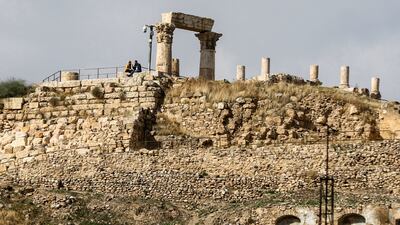
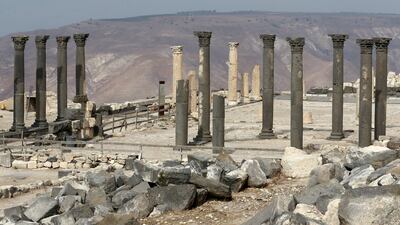
  • The Temple of Hercules at the Amman Citadel, where archaeological teams are looking learn more about the Jordanian capital's history. AFP
    The Temple of Hercules at the Amman Citadel, where archaeological teams are looking learn more about the Jordanian capital's history. AFP
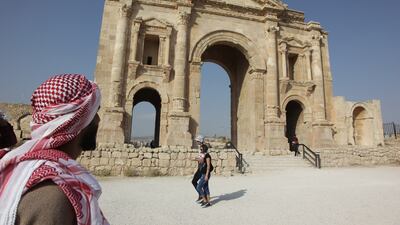
  • A Jordanian keffiyeh seller trades by a gate at the ancient Roman city of Jerash, a tourist attraction about 50 kilometres from Amman. AFP
    A Jordanian keffiyeh seller trades by a gate at the ancient Roman city of Jerash, a tourist attraction about 50 kilometres from Amman. AFP
  • The ruins of a recently discovered Roman archaeological site in Amman, the capital of Jordan, are uncovered on the site of a water drainage system. AFP
    The ruins of a recently discovered Roman archaeological site in Amman, the capital of Jordan, are uncovered on the site of a water drainage system. AFP
  • Workers employed by a Unesco pilot project restore a stone wall at an ancient church complex in the town of Rihab,about 70 kilometres north of Amman. AFP
    Workers employed by a Unesco pilot project restore a stone wall at an ancient church complex in the town of Rihab,about 70 kilometres north of Amman. AFP
  • The ancient Roman Decapolis city of Gadara, near the Jordanian town of Umm Quais. AFP
    The ancient Roman Decapolis city of Gadara, near the Jordanian town of Umm Quais. AFP
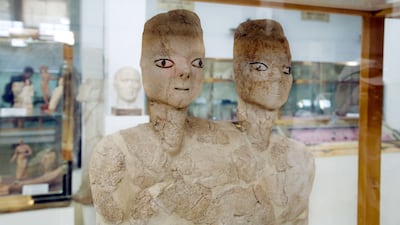
  • The two-headed Neolithic Ain Ghazal statue dating from between 8000BC to 6000BC in the Jordan Archaeological Museum, Amman. Alamy
    The two-headed Neolithic Ain Ghazal statue dating from between 8000BC to 6000BC in the Jordan Archaeological Museum, Amman. Alamy
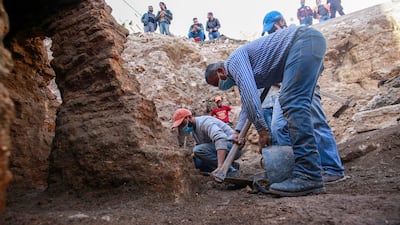
  • A team of Jordanian and French archaeologists said they found a 9,000-year-old shrine at a Neolithic campsite near large structures known as 'kites' in Jordan's Eastern Desert. AP
    A team of Jordanian and French archaeologists said they found a 9,000-year-old shrine at a Neolithic campsite near large structures known as 'kites' in Jordan's Eastern Desert. AP
  • Two carved standing stones at a remote neolithic site in Jordan’s eastern desert. AP
    Two carved standing stones at a remote neolithic site in Jordan’s eastern desert. AP
  • The Jordanian Antiquities Authority announced that antiquities linked to hunter-gatherers and dating to the Neolithic era (4500BC to 9000 BC) were discovered in Badia, in south-east of the kingdom. AFP
    The Jordanian Antiquities Authority announced that antiquities linked to hunter-gatherers and dating to the Neolithic era (4500BC to 9000 BC) were discovered in Badia, in south-east of the kingdom. AFP

In Oman, researchers have just learnt more about life 5,000 years ago at the Unesco World Heritage sites of Bat, Al Khutm and Al Ayn. Recently unearthed ovens, seeds and other everyday items from Iran and India are helping create a picture of the workings of the earliest settlements in the Gulf, and the regional interconnectedness of their economies. Archaeologists are particularly interested in what such sophisticated settlements so far inland mean for the story of the area's development. Clearly, mountains have something to tell archaeologists, not just coasts.

In Jordan, archaeologists are even discovering more about the lives one of history's most voiceless communities: children. Toys from 9,000 years ago, alongside art and vast hunting traps that are described by archaeologist Wael Abu Aziza as "the oldest huge human structures known to date”, show that the bonds and priorities of families and communities are little different from today's.

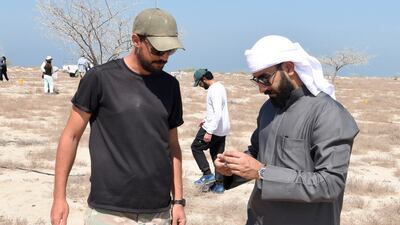
Historians of the Emirates have gained much from the past few weeks, too. Experts from Abu Dhabi’s Department of Culture and Tourism have unearthed evidence of the first known buildings in the Emirates, dating back more than 8,500 years, on the island of Ghagha, evidence that neolithic communities existed in the area more than 500 years than was previously thought.

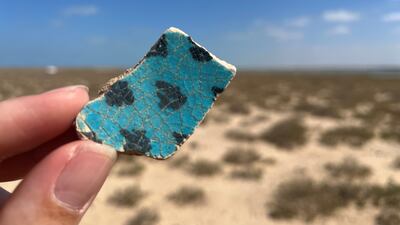
  • One of the pottery sherds found on Umm Al Quwain's Al Sinniyah Island. Archaeological work there has uncovered the existence of two towns. Photo: Timothy Power
    One of the pottery sherds found on Umm Al Quwain's Al Sinniyah Island. Archaeological work there has uncovered the existence of two towns. Photo: Timothy Power
  • Al Sinniyah Island and the two discovered towns, right, and UAQ today. Photo: UAQ’s Tourism and Archaeology Department
    Al Sinniyah Island and the two discovered towns, right, and UAQ today. Photo: UAQ’s Tourism and Archaeology Department
  • Some of the pottery discovered on Al Sinniyah Island in Umm Al Quwain. Pawan Singh / The National
    Some of the pottery discovered on Al Sinniyah Island in Umm Al Quwain. Pawan Singh / The National
  • Emirati students are helping with the archaeological work on the island. Photo: UAQ’s Tourism and Archaeology Department
    Emirati students are helping with the archaeological work on the island. Photo: UAQ’s Tourism and Archaeology Department
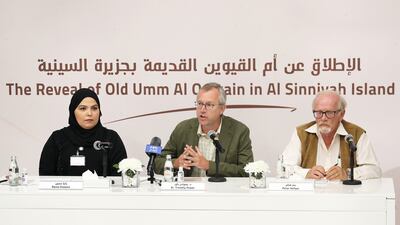
  • Left to right, Rania Hussein, head of the archaeology at UAQ department of tourism and archeology; Dr Timothy Power, associate professor of archaeology at United Arab Emirates University; and Peter Hellyer, adviser on cultural heritage at the UAE Ministry of Culture and Youth at the press conference about the latest archaeological discoveries on the emirate’s Al Sinniyah Island. Pawan Singh / The National
    Left to right, Rania Hussein, head of the archaeology at UAQ department of tourism and archeology; Dr Timothy Power, associate professor of archaeology at United Arab Emirates University; and Peter Hellyer, adviser on cultural heritage at the UAE Ministry of Culture and Youth at the press conference about the latest archaeological discoveries on the emirate’s Al Sinniyah Island. Pawan Singh / The National
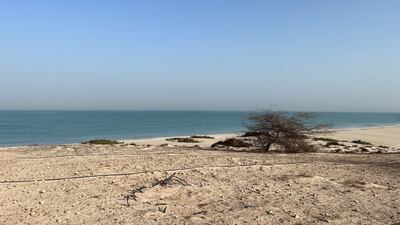
  • Al Sinniyah Island sits between the UAQ peninsula and the Gulf coast and it protects the mangrove-fringed Khor Al Beida lagoon. Photo: Timothy Power
    Al Sinniyah Island sits between the UAQ peninsula and the Gulf coast and it protects the mangrove-fringed Khor Al Beida lagoon. Photo: Timothy Power
  • Previously UAQ was thought to have grown up around the fort established by Sheikh Rashid bin Majid Al Mualla in 1768 and the remarkable new findings radically reshape the history of the emirate. Photo: Timothy Power
    Previously UAQ was thought to have grown up around the fort established by Sheikh Rashid bin Majid Al Mualla in 1768 and the remarkable new findings radically reshape the history of the emirate. Photo: Timothy Power
  • Safavid coins were among the treasures found. Pawan Singh / The National
    Safavid coins were among the treasures found. Pawan Singh / The National
  • Unearthed artefacts on the island such as rare coins, pottery sherds and the remnants of a vibrant pearl trade are painting a picture of a cosmopolitan settlement plugged into wider trade routes from the Atlantic to Indian Oceans. Photo: Timothy Power
    Unearthed artefacts on the island such as rare coins, pottery sherds and the remnants of a vibrant pearl trade are painting a picture of a cosmopolitan settlement plugged into wider trade routes from the Atlantic to Indian Oceans. Photo: Timothy Power
  • UAQ's Tourism and Archaeology Department has assembled a team from leading institutions including the UAE University, the Institute for the Study of the Ancient World at New York University, and representatives from the Italian Archaeological Mission. Photo: UAQ’s Tourism and Archaeology Department
    UAQ's Tourism and Archaeology Department has assembled a team from leading institutions including the UAE University, the Institute for the Study of the Ancient World at New York University, and representatives from the Italian Archaeological Mission. Photo: UAQ’s Tourism and Archaeology Department
  • Work started this year and it is hoped to locate the major public buildings of the settlement. Photo: Timothy Power
    Work started this year and it is hoped to locate the major public buildings of the settlement. Photo: Timothy Power
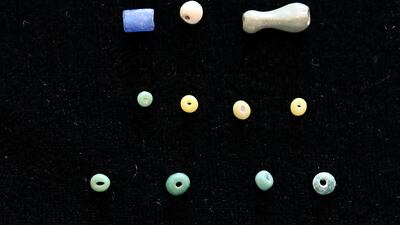
  • A set of gemstones found on the island. Pawan Singh / The National
    A set of gemstones found on the island. Pawan Singh / The National
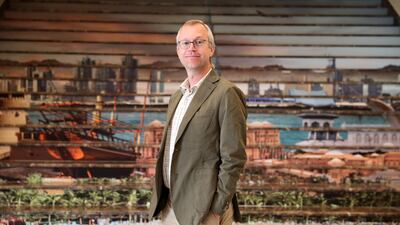
  • Dr Timothy Power, associate professor of archaeology at UAE University. Dr Power said the new findings were 'phenomenally exciting'. Pawan Singh / The National
    Dr Timothy Power, associate professor of archaeology at UAE University. Dr Power said the new findings were 'phenomenally exciting'. Pawan Singh / The National

Another discovery was made in Umm Al Quwain. Work on the previously unexplored Al Sinniyah Island has uncovered the existence of two coastal settlements, the oldest of which is believed to be from the 13th or 14th century. This pushes back understanding of the emirate's history by at least 500 years. Up until now, UAQ was thought to have grown up around a fort established in 1768.

In just a few weeks, the region has been able to learn about aspects of its life that have been kept hidden often for thousands of years. In a week where the UAE is celebrating the opening of the Museum of the Future, it is a brilliantly timed moment to appreciate in parallel the work of those who look into the past. After all, the work of futurists and archaeologists are fundamentally similar: probing the unknown ends of the human experience to enrich lives in the present.


EA Sports FC 26

Publisher: EA Sports

Consoles: PC, PlayStation 4/5, Xbox Series X/S

Rating: 3/5

RESULTS

Men – semi-finals

57kg – Tak Chuen Suen (MAC) beat Phuong Xuan Nguyen (VIE) 29-28; Almaz Sarsembekov (KAZ) beat Zakaria Eljamari (UAE) by points 30-27.

67kg – Mohammed Mardi (UAE) beat Huong The Nguyen (VIE) by points 30-27; Narin Wonglakhon (THA) v Mojtaba Taravati Aram (IRI) by points 29-28.

60kg – Yerkanat Ospan (KAZ) beat Amir Hosein Kaviani (IRI) 30-27; Long Doan Nguyen (VIE) beat Ibrahim Bilal (UAE) 29-28

63.5kg – Abil Galiyev (KAZ) beat Truong Cao Phat (VIE) 30-27; Nouredine Samir (UAE) beat Norapat Khundam (THA) RSC round 3.

71kg​​​​​​​ – Shaker Al Tekreeti (IRQ) beat Fawzi Baltagi (LBN) 30-27; Amine El Moatassime (UAE) beat Man Kongsib (THA) 29-28

81kg – Ilyass Hbibali (UAE) beat Alexandr Tsarikov (KAZ) 29-28; Khaled Tarraf (LBN) beat Mustafa Al Tekreeti (IRQ) 30-27

86kg​​​​​​​ – Ali Takaloo (IRI) beat Mohammed Al Qahtani (KSA) RSC round 1; Emil Umayev (KAZ) beat Ahmad Bahman (UAE) TKO round

The biog

Name: Younis Al Balooshi

Nationality: Emirati

Education: Doctorate degree in forensic medicine at the University of Bonn

Hobbies: Drawing and reading books about graphic design

The%20specs
%3Cp%3E%3Cstrong%3EEngine%3A%3C%2Fstrong%3E%201.8-litre%204-cyl%20turbo%0D%3Cbr%3E%3Cstrong%3EPower%3A%20%3C%2Fstrong%3E190hp%20at%205%2C200rpm%0D%3Cbr%3E%3Cstrong%3ETorque%3A%3C%2Fstrong%3E%20320Nm%20from%201%2C800-5%2C000rpm%0D%3Cbr%3E%3Cstrong%3ETransmission%3A%20%3C%2Fstrong%3ESeven-speed%20dual-clutch%20auto%0D%3Cbr%3E%3Cstrong%3EFuel%20consumption%3A%3C%2Fstrong%3E%206.7L%2F100km%0D%3Cbr%3E%3Cstrong%3EPrice%3A%3C%2Fstrong%3E%20From%20Dh111%2C195%0D%3Cbr%3E%3Cstrong%3EOn%20sale%3A%20%3C%2Fstrong%3ENow%3C%2Fp%3E%0A
COMPANY%20PROFILE
%3Cp%3E%3Cstrong%3EName%3A%20%3C%2Fstrong%3EElmawkaa%3Cbr%3E%3Cstrong%3EBased%3A%3C%2Fstrong%3E%20Hub71%2C%20Abu%20Dhabi%3Cbr%3E%3Cstrong%3EFounders%3A%3C%2Fstrong%3E%20Ebrahem%20Anwar%2C%20Mahmoud%20Habib%20and%20Mohamed%20Thabet%3Cbr%3E%3Cstrong%3ESector%3A%3C%2Fstrong%3E%20PropTech%3Cbr%3E%3Cstrong%3ETotal%20funding%3A%3C%2Fstrong%3E%20%24400%2C000%3Cbr%3E%3Cstrong%3EInvestors%3A%20%3C%2Fstrong%3E500%20Startups%2C%20Flat6Labs%20and%20angel%20investors%3Cbr%3E%3Cstrong%3ENumber%20of%20employees%3A%3C%2Fstrong%3E%2012%3Cbr%3E%3C%2Fp%3E%0A
AI traffic lights to ease congestion at seven points to Sheikh Zayed bin Sultan Street

The seven points are:

Shakhbout bin Sultan Street

Dhafeer Street

Hadbat Al Ghubainah Street (outbound)

Salama bint Butti Street

Al Dhafra Street

Rabdan Street

Umm Yifina Street exit (inbound)

Updated: February 24, 2022, 3:00 AM