


Diwali, one of the world’s biggest religious festivals, has started. That means that for about a billion people across the world, this week is being spent celebrating the triumph of light over darkness, at a time when this hope is needed more than ever.
Diwali is primarily a Hindu festival, but is celebrated in some form by other faiths, such as Sikhs, Jains and some Buddhists, as well an increasingly large number of people from around the world.
While the core themes of the celebration remain the same, aspects of Diwali’s story are as diverse as the people who celebrate it. In northern India, part of the celebration focuses on homecoming, based on the Sanskrit epic Ramayana, a story about the return of Rama, one of the Hindu deities, following his defeat of a 10-headed demon-king after 14 years in exile.
The theme of homecoming has always moved people, but today probably more so than usual. All over the world, families and friends have been separated, often for more than a year, by Covid-19. India, the main centre of Diwali celebrations, was one of the worst-affected countries and has a large diaspora, two ingredients that have been particularly harsh to those wanting to see loved ones.
-
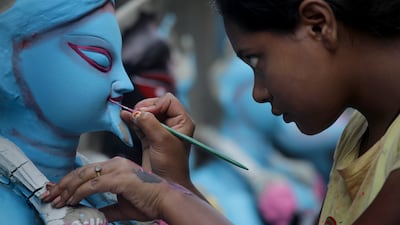
An Indian clay artist, Sujata Chitrakar, works with an idol of the goddess Kali ahead of Diwali in Kolkata. EPA -
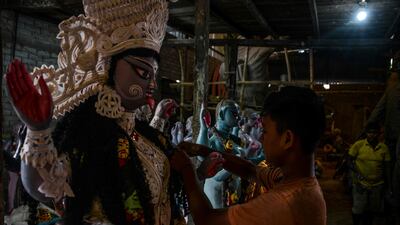
An artist gives the final touches to an idol of Kali, the Hindu goddess of power, in Siliguri, West Bengal. AFP -
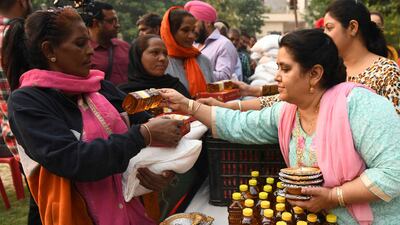
Members of the Just Sewa Society distribute lamps and grocery items to people in need during an event ahead of Diwali, in Amritsar. AFP -
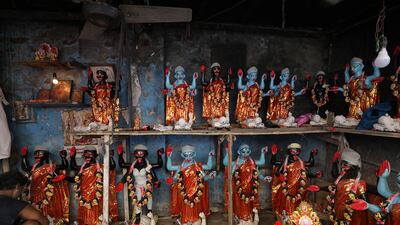
An Indian clay artist works with idols of the goddess Kali in Kolkata. EPA -
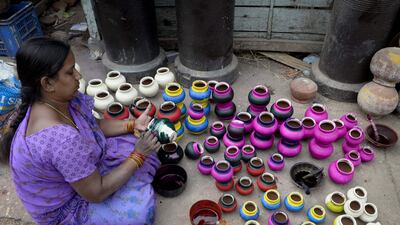
A street vendor applies dye to earthen pots to be used as decorative items, in Hyderabad. AFP -

People shop at a crowded market in New Delhi. Reuters -
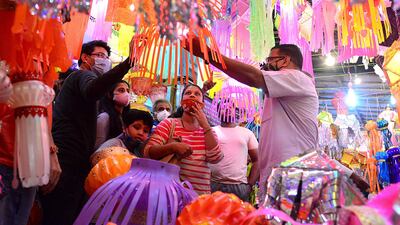
People shop for paper lanterns and other decorative items in Mumbai. AFP -
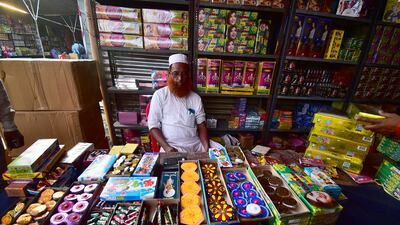
A vendor selling firecrackers in Allahabad. AFP -
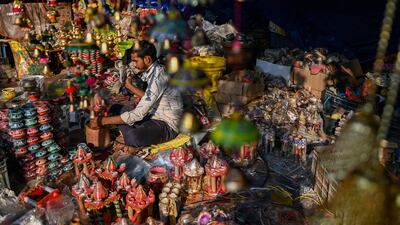
A street vendor sells decorative items at a market in New Delhi. AFP -
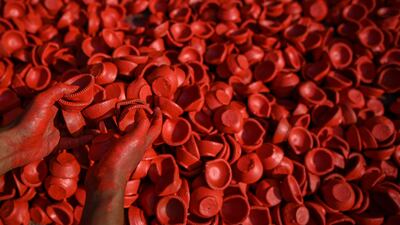
A street vendor dyes earthen lamps in New Delhi. AFP -
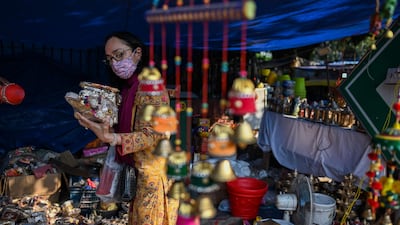
Shoppers buy decorative items in New Delhi. AFP -
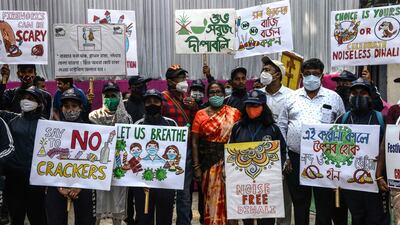
People hold placards to raise awareness on air pollution caused by firecrackers, in Siliguri. AFP -
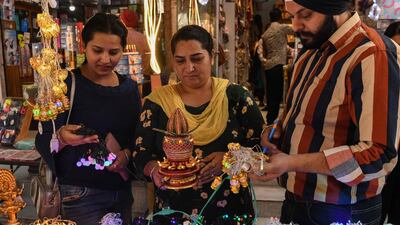
People buy decorative items at a market in Amritsar. AFP -
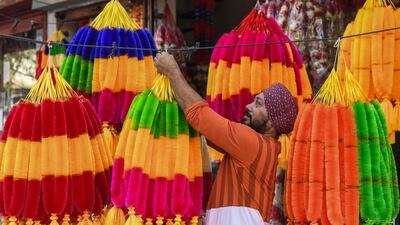
A shopkeeper hangs artificial flower garlands in Amritsar. AFP -
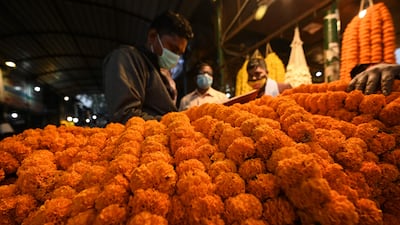
Flower garlands at a shop in New Delhi. AFP -
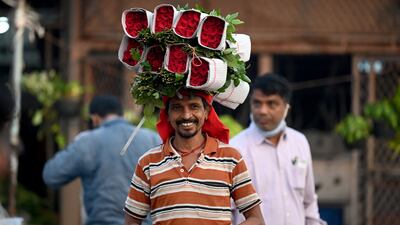
A vendor carries a bunch of roses at a flower market in New Delhi. AFP -

A woman makes garlands in New Delhi. AFP -
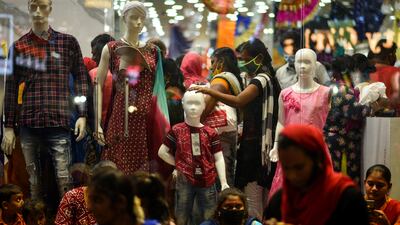
Shoppers in Chennai. EPA -

An artist gives finishing touches to an idol of Lakshmi in Kolkata. AP -
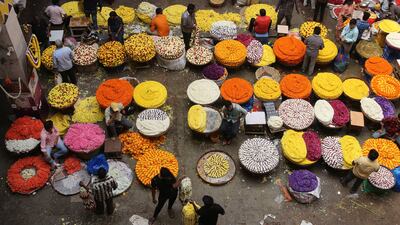
People buy flowers, fruits and essentials at a city market in Bengaluru. EPA -
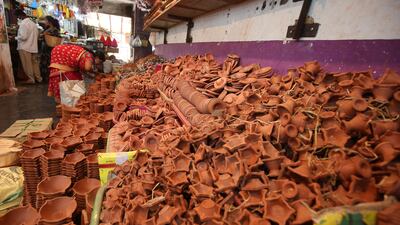
A shop selling earthen lamps in Bengaluru. EPA -

A worker hangs decoration items in Amritsar. AFP -
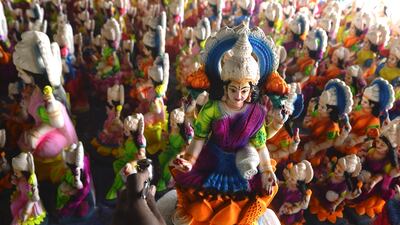
An artisan paints a statue of Lakshmi on the outskirts of Hyderabad. AFP -
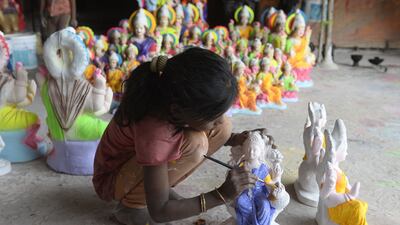
A young artisan at work in Hyderabad. AFP -
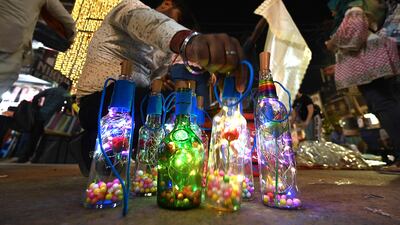
A vendor arranges decorative lights at a market in New Delhi. AFP -
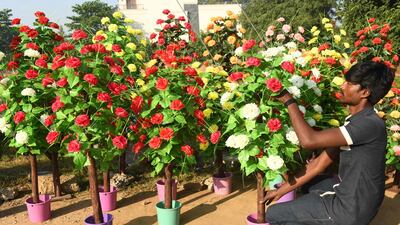
A worker arranges artificial flowers in Amritsar. AFP -

A potter loads dried clay earthen lamps into a furnace in Allahabad. AFP -
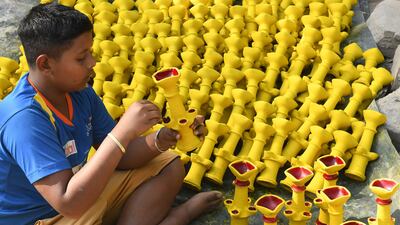
A craftsman paints earthen lamps in Amritsar. AFP -
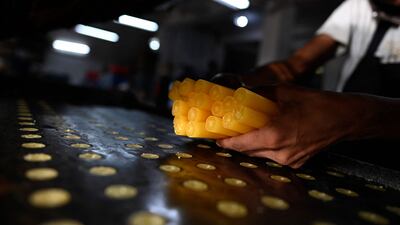
A visually impaired youth makes candles to be sold for Diwali in New Delhi. AFP -
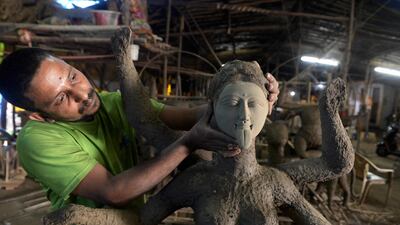
An artisan works on an idol of the goddess Kali on the outskirts of Hyderabad. AFP -

Customers visit a shop selling decorative electric lights in Kolkata. EPA -
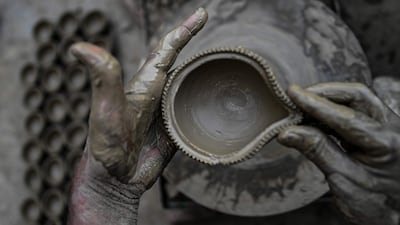
Potters make diyas or earthen oil lamps in New Delhi. AFP -

A worker makes candles in Ahmedabad. AFP -
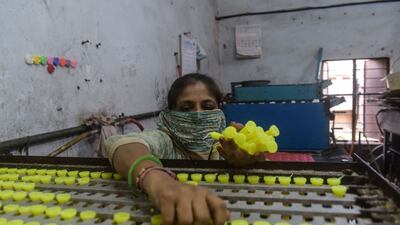
A worker at a candle making shop in Ahmedabad. AFP -
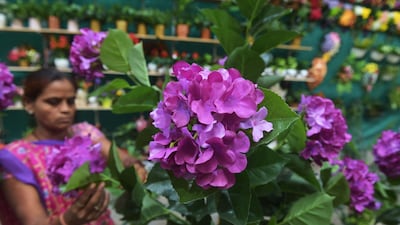
A woman at a flower shop on the outskirts of Ahmedabad. AFP -

Women work inside an artifical flower shop in Ahmedabad. AFP -
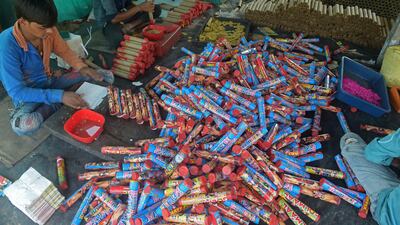
Workers make firecrackers at a workshop in Ahmedabad. AFP -

Girls prepare wax-filled earthen lamps ahead of Diwali, at a centre for visually challenged girls in Ahmedabad. AFP


This is why today’s Diwali will probably be one for the history books, and an especially poignant one in people’s memories. There is much to celebrate, but also much to mourn. The official Covid-19 death toll in India is around 450,000 people. Worldwide, it is more than five million.
Today, parts of the globe are able to start thinking about, at least, the temporary end of the worst of the pandemic. Daily deaths lower than at peaks of the disease, vaccines, new drugs, increased understanding and a willingness to reopen are building confidence. While welcome, it is still not the case for many people, and in the partly triumphant atmosphere of this year’s Diwali, those still struggling must not be forgotten.
Nor is the battle against other ills over. The international community is gathered in the British city of Glasgow at the moment at Cop26, the most important climate change meeting of the year. Getting the world to act is the primary objective of the conference. There is a long way to go, but we can celebrate some good news. India, for example, has said it will commit to net-zero carbon emissions by 2070. And this year, Diwali, at least in India, is set to be greener than ever, after the country's top court upheld a ban on toxic firecrackers often used in celebrations.
At home in the UAE, this year’s Diwali will come at a special time, with large celebrations expected at Expo2020. And throughout the year, The National has been following progress at a massive new Hindu temple that is currently under construction in Abu Dhabi. Roughly 2,000 sculptors are working on the project, as well as many other construction workers, and the site will be spread across 55,000 square metres. It is expected to open in 2023.
It has been a difficult year for many around the world, and the numerous stories of enduring difficult times at the core of Diwali will seem more relevant than usual. But alongside the theme of resilience, Diwali is also about our knack for overcoming hardship, and that is why, this week, we should all be celebrating.

