
Last Thursday, the world was relieved to hear of the release of 344 schoolboys kidnapped in northern Nigeria. Boko Haram, the terrorist group which haunts that area, claimed the attack as one of their own. Although some now believe the incident was carried out by bandits, the kidnapping drew inevitable comparisons to a similar outrage in 2014, when Boko Haram abducted 276 female pupils in the Nigerian town of Chibok.
Why would such a group be so keen to conduct and claim school kidnappings? The very fact the story received so much global media attention is one clue; many terrorist attacks are barely reported, particularly if they take place outside the West.
It is depressing but important to recognise that extremists know an atrocity is more likely to attract the attention of the world if it targets the young. This was also the case in the 2014 Taliban murder of 157 people, most of whom were children, at a school in Peshawar, Pakistan. This horrific attack received more media attention in 2014 than any other terrorist atrocity in the country, in a year when a total of 1,760 Pakistanis were killed by extremists according to the 2015 Global Terrorism Index.
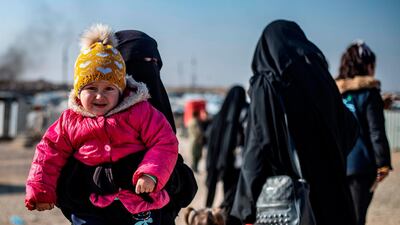
Terrorists shock us into paying attention not just by targeting children, but also by exploiting them in propaganda. This was never more true than with ISIS. Alongside the brutality of its crimes, the group was also remarkable in the history of terrorism for its slick media operation, which disseminated its rapid rise to global notoriety. Some of the most shocking images broadcast by the group – and there are many to choose from – depicted toddlers touting pistols and, on one occasion, even a video of a seemingly apathetic young Kazakhstani boy executing two alleged Russian informants. ISIS viewed the children as a crucial pillar in plans to guarantee the future of the organisation. Child soldiers were grotesquely labelled "cubs of the caliphate". It is a perhaps difficult fact to stomach, but one the international community must recognise, that extremists are increasingly prepared to corrupt young people and deny them a childhood, if it suits their ideological ends.Despite what they might say, terrorists rarely operate for ideological reasons alone. Their brazen and violent tactics also reveal a desire for infamy. Brenton Tarrant, the far-right terrorist who killed 51 worshippers in a New Zealand mosque in 2019, was not satisfied with the physical act of his massacre. He also livestreamed the attack, which turned out to be part of his strategy to leave a permanent record of his atrocity in the dark recesses of like-minded message boards. He even announced his intentions on one such forum just before his rampage.

In the violent extremist narratives that inspire Islamic terrorists today, there is an emphasis on a jihadist's true mission to speed up the inevitable triumph of a misinformed and false brand of Islam, over non-believers. Or, as some British ISIS fighters put it, a desire to raise the ISIS flag over Buckingham Palace, the UK monarch's palace in London.
For others, terrorism is a means of preventing what is perceived to be the impending doom of their cause. In 2011 Anders Breivik, a far-right Norwegian terrorist, massacred 77 people, 69 of whom were at a summer gathering for children. Breivik believed in a future where white Europeans and their culture – he thought both superior to others – would be overrun by Muslim migrants. He targeted the summer camp because it was organised by the Workers' Youth League, a Norwegian political association for young people interested in the country's Labour Party. Breivik described the atrocity as "cruel but necessary", believing that by targeting the next generation of Norwegian social democrats – in his words, "state traitors" – he was ridding his country of those supposedly committed to erasing the national culture.
At one point during his subsequent trial, Breivik broke down in tears. His display of emotion was not a result of being confronted with the many families devastated by his actions. It was because the court played a 12-minute, anti-Muslim propaganda video he had posted online the day of the attack and which he apparently still found to be very moving. This unshakeable commitment to hate and death over human decency gives us an idea of how insidious the descent into terrorism is. It is not just an extreme shift of political beliefs. It is the willingness to give up so many elements of one's humanity, for the single-minded pursuit of a twisted ideology.
During recent years, it has felt as if terrorists are trying to outdo one another's brutality, whether by joking over footage of massacres, or by filming the immolation of people in cages. Targeting children, who by their nature are innocent and entirely vulnerable, could be one of the last badges of baleful honour on an extremist's road to total nihilism.

