It has been a peculiar few weeks for US President Donald Trump. He suggested against all medical advice – and common sense – that disinfectant could be a cure for coronavirus. He claimed that he self-medicates with hydroxychloroquine – something his own government says is a bad idea. He faces domestic turmoil over race relations and a difficult presidential election.
And yet in the midst of all this, Mr Trump has suggested something that could re-shape one of the world's power structures. He wants to scrap the G7 as it is currently organised. Formally it is a Group of Seven rich democracies whose leaders meet to discuss the world economy and other matters.
This year, coronavirus made a face-to-face meeting seem impossible but Mr Trump persisted until Angela Merkel, the German Chancellor, said she would not attend. (She and Mr Trump do not get on.) Mr Trump suddenly cancelled the meeting announcing that he did not feel that "it properly represents what’s going on in the world. It’s a very outdated group of countries".
France's President Emmanuel Macron and US President Donald Trump pose during a joint press conference in Biarritz, south-west France on August 26, 2019. AFP
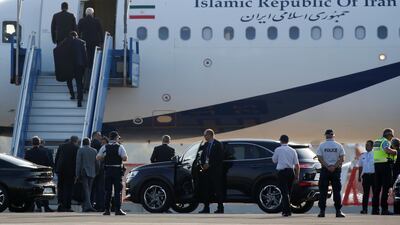
An Iranian government plane is seen on the tarmac at Biarritz airport in Anglet during the G7 summit, August 25, 2019. Reuters
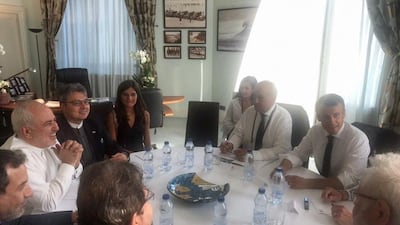
French President Emmanuel Macron receives Iranian Foreign Minister Mohammad Javad Zarif during a meeting in the city hall of Biarritz, southwestern France, on the sidelines of the G7 summit. AFP / Javad Zarif's official twitter account
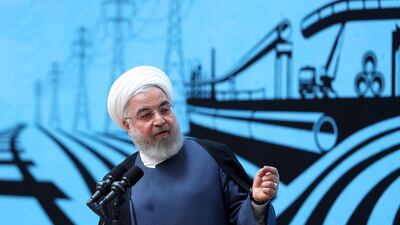
In this photo released by the official website of the office of the Iranian Presidency, President Hassan Rouhani speaks in a conference in Tehran, Iran, Monday, Aug. 26, 2019. Rouhani defended his foreign minister's surprise visit to the G-7 summit, saying he ready to go anywhere to negotiate a way out of the crisis following the US pullout from the nuclear deal. Iranian Presidency Office via AP
(Left to right) Italy's Prime Minister Giuseppe Conte, European Council President Donald Tusk, Japan's Prime Minister Shinzo Abe, US President Donald Trump, Britain's Prime Minister Boris Johnson, France's President Emmanuel Macron, Germany's Chancellor Angela Merkel and Canada's Prime Minister Justin Trudeau attend a working session on "International Economy and Trade, and International Security Agenda" in Biarritz, south-west France. AFP
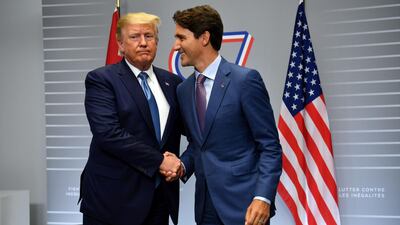
US President Donald Trump and Canada's Prime Minister Justin Trudeau shake hands during a bilateral meeting at the Bellevue centre in Biarritz, south-west France. AFP
Britain's Prime Minister, Boris Johnson meets with President of the European Council, Donald Tusk at the G7 summit in Biarritz, France. Getty Images
US President Donald Trump with wife and US First Lady Melania Trump as they disembark from an airplane upon landing at the Biarritz Pays Basque Airport in Biarritz on the opening day of the G7 summit in France. EPA
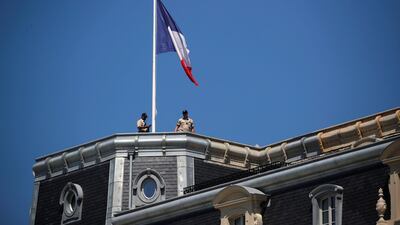
Security members are seen on top of the Hotel du Palais summit venue ahead of the G7 summit in Biarritz, France. Reuters
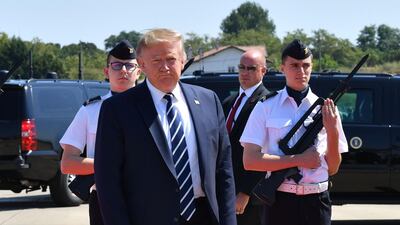
US President Donald Trump walks past French airforce soldiers after disembarking from an airplane upon landing at the Biarritz Pays Basque Airport in Biarritz, south-west France on the first day of the annual G7 Summit. AFP
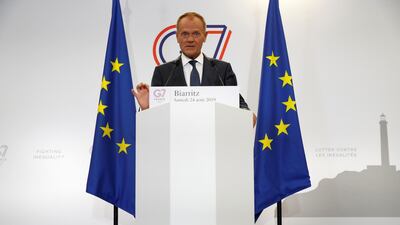
European Council President Donald Tusk speaks during a news conference on the margins of the G7 summit in Biarritz, France. Reuters
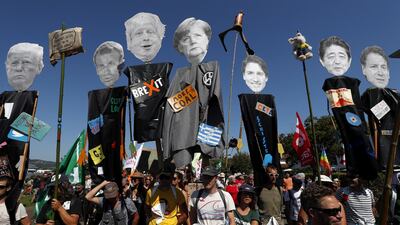
Protestors hold portraits representing G7 leaders on the opening day of the G7 summit. EPA
US President Donald Trump disembarks from Air Force One upon landing at the Biarritz Pays Basque Airport in Biarritz on the opening day of the G7 summit in Biarritz, France. EPA
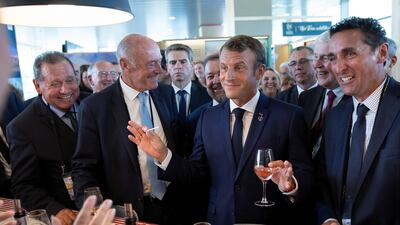
French President Emmanuel Macron,flanked by President of the Nouvelle-Aquitaine region Alain Rousset, samples local produce and wine, as he tours the exhibition hall above the international press center on the opening day of the G7 summit, in Anglet, France. Reuters
A placard reading 'stop climate crime' is seen as demonstrators take part in a march in Hendaye, south-west France to protest against the annual G7 Summit. AFP
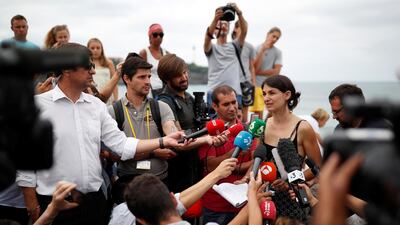
Attac and Alternatives G7 spokesperson Aurelie Trouve speaks during a news conference in Anglet near Biarritz as part of the G7 summit, France. Reuters
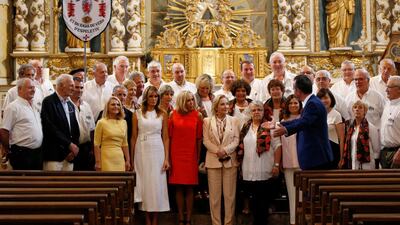
Brigitte Macron, wife of French President Emmanuel Macron, U.S. First Lady Melania Trump , Akie Abe, wife of Japan's Prime Minister Shinzo Abe, Chile's First Lady Cecilia Morel, Jenny Morrison, wife of Australia's Prime Minister Scott Morrison, and Malgorzata Tusk, wife of European Council President Donald Tusk visit a church in Espelette, near Biarritz, southwestern France. AP
Italian Premier Giuseppe Conte, right, arrives at the G-7 summit in Biarritz, France. AP
Mr Trump had planned to stage G7 this year at a golf resort he owns in Florida. Because of coronavirus he tried to change the location to the presidential retreat at Camp David. It is entirely possible that he cancelled the whole summit in a fit of pique. It is also true that Mr Trump has shown scant regard for multilateral organisations.
The World Health Organisation, the United Nations and the European Union are among those pillars of international co-operation that he does not like. He barely tolerates Nato although the alliance has been a rock of stability and peace in western Europe for generations. But with the G7 he does have a point – well, almost.
The G7 idea began in 1973 during the worldwide oil crisis. Then US treasury secretary George Shultz wanted to bring together his counterparts in France, the UK and West Germany. The group expanded to include Japan, Canada and then Italy. With the fall of communism in 1991, Russia's then president Boris Yeltsin was given a boost by being invited and the G7 became the "G7 Plus 1" – until Vladimir Putin annexed Crimea in 2014 and Russia was no longer invited.
When I attended a G7 meeting as a TV correspondent, what struck me was simply the lack of news. There was a bland joint communique but the event was an extended photo-opportunity to show leaders rubbing shoulders with other leaders. In terms of the G7 making policy pronouncements, I suspect some readers may be able to think of something that has changed their lives for the better, but right now I cannot.
This is not to denigrate the idea of leaders using the G7 to get to know each other and understand the need to co-operate on economic issues, climate change, coronavirus, money laundering, mass migration and other matters. But the G7 format and the structure – as Mr Trump rightly says – does not reflect power in the world as it is now.
Some argue that there is no reason for France, Germany and Italy all to be there when they are all together in the eurozone. An EU representative would surely be enough. Jim O'Neill, a former chairman of Goldman Sachs Asset Management and a former UK treasury minister, coined the term "Brics" – Brazil, Russia, India, China and South Africa – and suggested that "at a minimum … global-governance bodies should include China, if not all of the Brics". Lord O'Neill also wondered if Canada should be represented in the G7 at all.
From left to right: China's Xi Jinping, India's Narendra Modi, South Africa's Cyril Ramaphosa, Brazil's Michel Temer and Russia's Vladimir Putin at a Brics summit in 2018. EPA
Mr Trump suggested a different cast list bringing Russia back plus Australia, India and South Korea. Omitting China defies all logic and appears to be merely another dig at Beijing from a President whose anti-China rhetoric is part of his re-election campaign. Roughly half of the increase in world GDP since 2010 has come from China alone, and whatever the difficulties between Washington and Beijing, the Asian superpower should be at the top table.
The core question though is what, if anything, is the G7 for?
As presently constituted, it is a talking shop for seven democratic countries with advanced economies. If it is truly an economic forum then the massive economies of China, India and probably Brazil need to take part. But since 1999, there already exists a G20 that brings together the Brics and the G7, plus Nigeria, Saudi Arabia and South Korea, and other countries that could serve instead as a wider forum.
However, a White House adviser once wryly explained to me the dilemma here. Big international meetings are absolutely necessary to achieve worldwide co-operation, but there is a catch. Behind the scenes government officials from all the countries involved try to hammer out a communique that all the leaders can agree unanimously so that they can return home with a “success". The more leaders involved, the less likely to achieve total agreement and the more bland the final communique.
Talking shops such as the G7 may serve a purpose, but I doubt many readers will feel their lives have taken a turn for the worse now that this year's G7 summit will not earn its place in the history books.
Gavin Esler is a journalist, author and presenter

Benefits of first-time home buyers' scheme
Priority access to new homes from participating developers
Discounts on sales price of off-plan units
Flexible payment plans from developers
Mortgages with better interest rates, faster approval times and reduced fees
DLD registration fee can be paid through banks or credit cards at zero interest rates
Starring: Baneen Ahmad Nayyef, Waheed Thabet Khreibat, Sajad Mohamad Qasem
Rating: 4/5
Who was Alfred Nobel?
The Nobel Prize was created by wealthy Swedish chemist and entrepreneur Alfred Nobel.
In his will he dictated that the bulk of his estate should be used to fund "prizes to those who, during the preceding year, have conferred the greatest benefit to humankind".
Nobel is best known as the inventor of dynamite, but also wrote poetry and drama and could speak Russian, French, English and German by the age of 17. The five original prize categories reflect the interests closest to his heart.
Nobel died in 1896 but it took until 1901, following a legal battle over his will, before the first prizes were awarded.
Ten tax points to be aware of in 2026
1. Domestic VAT refund amendments: request your refund within five years
If a business does not apply for the refund on time, they lose their credit.
2. E-invoicing in the UAE
Businesses should continue preparing for the implementation of e-invoicing in the UAE, with 2026 a preparation and transition period ahead of phased mandatory adoption.
3. More tax audits
Tax authorities are increasingly using data already available across multiple filings to identify audit risks.
4. More beneficial VAT and excise tax penalty regime
Tax disputes are expected to become more frequent and more structured, with clearer administrative objection and appeal processes. The UAE has adopted a new penalty regime for VAT and excise disputes, which now mirrors the penalty regime for corporate tax.
5. Greater emphasis on statutory audit
There is a greater need for the accuracy of financial statements. The International Financial Reporting Standards standards need to be strictly adhered to and, as a result, the quality of the audits will need to increase.
6. Further transfer pricing enforcement
Transfer pricing enforcement, which refers to the practice of establishing prices for internal transactions between related entities, is expected to broaden in scope. The UAE will shortly open the possibility to negotiate advance pricing agreements, or essentially rulings for transfer pricing purposes.
7. Limited time periods for audits
Recent amendments also introduce a default five-year limitation period for tax audits and assessments, subject to specific statutory exceptions. While the standard audit and assessment period is five years, this may be extended to up to 15 years in cases involving fraud or tax evasion.
8. Pillar 2 implementation
Many multinational groups will begin to feel the practical effect of the Domestic Minimum Top-Up Tax (DMTT), the UAE's implementation of the OECD’s global minimum tax under Pillar 2. While the rules apply for financial years starting on or after January 1, 2025, it is 2026 that marks the transition to an operational phase.
9. Reduced compliance obligations for imported goods and services
Businesses that apply the reverse-charge mechanism for VAT purposes in the UAE may benefit from reduced compliance obligations.
10. Substance and CbC reporting focus
Tax authorities are expected to continue strengthening the enforcement of economic substance and Country-by-Country (CbC) reporting frameworks. In the UAE, these regimes are increasingly being used as risk-assessment tools, providing tax authorities with a comprehensive view of multinational groups’ global footprints and enabling them to assess whether profits are aligned with real economic activity.
Contributed by Thomas Vanhee and Hend Rashwan, Aurifer
Position: legal consultant with Al Rowaad Advocates and Legal Consultants.
MATCH INFO
Syria v Australia
2018 World Cup qualifying: Asia fourth round play-off first leg
Venue: Hang Jebat Stadium (Malacca, Malayisa)
Kick-off: Thursday, 4.30pm (UAE)
Watch: beIN Sports HD
* Second leg in Australia scheduled for October 10
The Settlers
Director: Louis Theroux
Starring: Daniella Weiss, Ari Abramowitz
Rating: 5/5
Essentials
The flights
Return flights from Dubai to Windhoek, with a combination of Emirates and Air Namibia, cost from US$790 (Dh2,902) via Johannesburg. The trip
A 10-day self-drive in Namibia staying at a combination of the safari camps mentioned – Okonjima AfriCat, Little Kulala, Desert Rhino/Damaraland, Ongava – costs from $7,000 (Dh25,711) per person, including car hire (Toyota 4x4 or similar), but excluding international flights, with The Luxury Safari Company. When to go
The cooler winter months, from June to September, are best, especially for game viewing.
Our legal consultant
Name: Hassan Mohsen Elhais
Position: legal consultant with Al Rowaad Advocates and Legal Consultants.
THE BIO
Bio Box
Role Model: Sheikh Zayed, God bless his soul
Favorite book: Zayed Biography of the leader
Favorite quote: To be or not to be, that is the question, from William Shakespeare's Hamlet
Favorite food: seafood
Favorite place to travel: Lebanon
Favorite movie: Braveheart
Tearful appearance
Chancellor Rachel Reeves set markets on edge as she appeared visibly distraught in parliament on Wednesday.
Legislative setbacks for the government have blown a new hole in the budgetary calculations at a time when the deficit is stubbornly large and the economy is struggling to grow.
She appeared with Keir Starmer on Thursday and the pair embraced, but he had failed to give her his backing as she cried a day earlier.
A spokesman said her upset demeanour was due to a personal matter.
Stars: Vahid Mobasseri, Mariam Afshari, Ebrahim Azizi, Hadis Pakbaten, Majid Panahi, Mohamad Ali Elyasmehr
Rating: 4/5
THE SPECS
Engine: 3.5-litre supercharged V6
Power: 416hp at 7,000rpm
Torque: 410Nm at 3,500rpm
Transmission: 6-speed manual
Fuel consumption: 10.2 l/100km
Price: Dh375,000
On sale: now
Company Fact Box
Company name/date started: Abwaab Technologies / September 2019
Founders: Hamdi Tabbaa, co-founder and CEO. Hussein Alsarabi, co-founder and CTO
Based: Amman, Jordan
Sector: Education Technology
Size (employees/revenue): Total team size: 65. Full-time employees: 25. Revenue undisclosed
Stage: early-stage startup
Investors: Adam Tech Ventures, Endure Capital, Equitrust, the World Bank-backed Innovative Startups SMEs Fund, a London investment fund, a number of former and current executives from Uber and Netflix, among others.
UAE central contracts
Full time contracts
Rohan Mustafa, Ahmed Raza, Mohammed Usman, Chirag Suri, Mohammed Boota, Sultan Ahmed, Zahoor Khan, Junaid Siddique, Waheed Ahmed, Zawar Farid
Blockchain is a form of distributed ledger technology, a digital system in which data is recorded across multiple places at the same time. Unlike traditional databases, DLTs have no central administrator or centralised data storage. They are transparent because the data is visible and, because they are automatically replicated and impossible to be tampered with, they are secure.
The main difference between blockchain and other forms of DLT is the way data is stored as ‘blocks’ – new transactions are added to the existing ‘chain’ of past transactions, hence the name ‘blockchain’. It is impossible to delete or modify information on the chain due to the replication of blocks across various locations.
Blockchain is mostly associated with cryptocurrency Bitcoin. Due to the inability to tamper with transactions, advocates say this makes the currency more secure and safer than traditional systems. It is maintained by a network of people referred to as ‘miners’, who receive rewards for solving complex mathematical equations that enable transactions to go through.
However, one of the major problems that has come to light has been the presence of illicit material buried in the Bitcoin blockchain, linking it to the dark web.
Other blockchain platforms can offer things like smart contracts, which are automatically implemented when specific conditions from all interested parties are reached, cutting the time involved and the risk of mistakes. Another use could be storing medical records, as patients can be confident their information cannot be changed. The technology can also be used in supply chains, voting and has the potential to used for storing property records.
MOUNTAINHEAD REVIEW
Starring: Ramy Youssef, Steve Carell, Jason Schwartzman
Director: Jesse Armstrong
Rating: 3.5/5
Results
6.30pm Madjani Stakes Rated Conditions (PA) I Dh160,000 I 1,900m I Winner: Mawahib, Tadhg O’Shea (jockey), Eric Lemartinel (trainer)
7.05pm Maiden Dh150,000 I 1,400m I Winner One Season, Antonio Fresu, Satish Seemar
7.40pm: Maiden Dh150,000 I 2,000m I Winner Street Of Dreams, Pat Dobbs, Doug Watson
8.15pm Dubai Creek Listed I Dh250,000 I 1,600m I Winner Heavy Metal, Royston Ffrench, Salem bin Ghadayer
8.50pm The Entisar Listed I Dh250,000 I 2,000m I Winner Etijaah, Dane O’Neill, Doug Watson
9.25pm The Garhoud Listed I Dh250,000 I 1,200m I Winner Muarrab, Dane O’Neill, Ali Rashid Al Raihe
10pm Handicap I Dh160,000 I 1,600m I Winner Sea Skimmer, Patrick Cosgrave, Helal Al Alawi
Investors: Accel, Oaktree Capital (US); Chiratae Ventures, Epiq Capital, Innoven Capital, Kalaari Capital, Kotak Mahindra Bank, Piramal Group’s Anand Piramal, Pratithi Investment Trust, Ratan Tata (India); and Unilever Ventures (Unilever’s global venture capital arm)
How to donate
Send “thenational” to the following numbers or call the hotline on: 0502955999
2289 – Dh10
2252 – Dh 50
6025 – Dh20
6027 – Dh 100
6026 – Dh 200
How the bonus system works
The two riders are among several riders in the UAE to receive the top payment of £10,000 under the Thank You Fund of £16 million (Dh80m), which was announced in conjunction with Deliveroo's £8 billion (Dh40bn) stock market listing earlier this year.
The £10,000 (Dh50,000) payment is made to those riders who have completed the highest number of orders in each market.
There are also riders who will receive payments of £1,000 (Dh5,000) and £500 (Dh2,500).
All riders who have worked with Deliveroo for at least one year and completed 2,000 orders will receive £200 (Dh1,000), the company said when it announced the scheme.
Micro-retirement is not a recognised concept or employment status under Federal Decree Law No. 33 of 2021 on the Regulation of Labour Relations (as amended) (UAE Labour Law). As such, it reflects a voluntary work-life balance practice, rather than a recognised legal employment category, according to Dilini Loku, senior associate for law firm Gateley Middle East.
“Some companies may offer formal sabbatical policies or career break programmes; however, beyond such arrangements, there is no automatic right or statutory entitlement to extended breaks,” she explains.
“Any leave taken beyond statutory entitlements, such as annual leave, is typically regarded as unpaid leave in accordance with Article 33 of the UAE Labour Law. While employees may legally take unpaid leave, such requests are subject to the employer’s discretion and require approval.”
If an employee resigns to pursue micro-retirement, the employment contract is terminated, and the employer is under no legal obligation to rehire the employee in the future unless specific contractual agreements are in place (such as return-to-work arrangements), which are generally uncommon, Ms Loku adds.
The specs
Engine: 0.8-litre four cylinder
Power: 70bhp
Torque: 66Nm
Transmission: four-speed manual
Price: $1,075 new in 1967, now valued at $40,000
On sale: Models from 1966 to 1970
Squads
Pakistan: Sarfaraz Ahmed (c), Babar Azam (vc), Abid Ali, Asif Ali, Fakhar Zaman, Haris Sohail, Mohammad Hasnain, Iftikhar Ahmed, Imad Wasim, Mohammad Amir, Mohammad Nawaz, Mohammad Rizwan, Shadab Khan, Usman Shinwari, Wahab Riaz
Founded over 50 years ago, the National Archives collects valuable historical material relating to the UAE, and is the oldest and richest archive relating to the Arabian Gulf.
Much of the material can be viewed on line at the Arabian Gulf Digital Archive - https://www.agda.ae/en