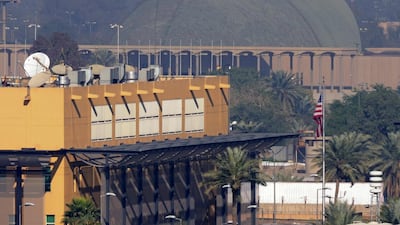
It was an evening run in Baghdad that I will never forget. Our rocket warning system bleated urgently as I finished my final lap of the embassy compound. I dove into a small concrete bunker just as two rockets exploded nearby. The pressure from the explosions shook the shelter while shrapnel blasted into our thankfully solid perimeter walls. I breathed a sigh of relief at another bullet dodged.
During my three tours of duty as a senior American diplomat in Iraq, including as ambassador from 2016 to 2019, our embassy was attacked by rockets and sniper fire, and spied upon by surveillance drones. No other embassy in the world is subjected to this kind of regular assault. As ambassador, I demanded from two Iraqi prime ministers – but failed to get – concrete steps to counter these constant threats to the lives of my staff.
Since I left Iraq, the danger has become even more acute. Leaders of Iraq’s Iran-backed militias, including some claiming membership in the Popular Mobilisation Forces (PMF) – ostensibly part of the Iraqi government, though they continually undermine it – have declared war on the embassy and threatened to attack it with newly obtained, “precise” weapons.
This week, seven innocent Iraqis were killed by a rocket apparently aimed at US-led coalition forces near Baghdad International Airport. US Secretary of State Mike Pompeo has reportedly warned the Iraqi government the embassy might be shuttered if these attacks continue.
Iraq’s Prime Minister, Mustafa Al Kadhimi, with whom I dealt when he served as intelligence chief, seems to understand that the attacks are aimed really at weakening the Iraqi state and subordinating the elected government to a minority sectarian agenda and to Iran’s expansionist policies.
Since 1979, the Iranian regime, in its backing of Iraqi and regional militias, has adopted a policy perfectly expressed by a saying in American sports: the best defence is a good offence. Iran keeps its regional adversaries off balance by fomenting just enough chaos to make them focus on internal instability, but not enough to force them into an open armed conflict that no party wants.
It has created parallel, sectarian security and economic structures in Iraq, Lebanon, Syria and elsewhere. They operate outside the control of those governments and pursue through violence and corruption their own domestic sectarian agendas, furthering Iran’s ambitions. They are a chilling and very effective hybrid of militia and mafia.
Since 1979, Iran has adopted a policy of the best defence being a good offence
Unfortunately, Washington has contributed in its own way to the rise of tensions. The withdrawal of President Donald Trump’s administration from the Iran nuclear deal and “maximum pressure” sanctions against Iran raised the stakes. Iran’s initial “maximum resistance” response – downing a US drone, attacks on shipping in the Gulf and strikes on Saudi Arabian oil infrastructure – elicited little more than rhetoric from Washington.
The Trump administration made it clear that a substantial response would come should any American be killed. Iran and the militias were happy to oblige. The death of an American in Iraq in December 2019 provoked retaliatory US airstrikes. The subsequent attempt to storm the US embassy in Baghdad led to the targeting of Iranian Quds Force leader Qassem Suleimani.
Senior Iranian officials have been very clear that the retribution they seek for the killing of Suleimani is the gradual expulsion of the United States from the region. Iraq is where Iran sees its greatest chance of success in the short term.
In this context, targeting the US embassy is a highly risky, but potentially effective, strategy to employ against the Trump administration. The President promised voters that he would bring US troops home from the “endless wars” in Iraq and Afghanistan. Like all Americans, Mr Pompeo, an ambitious politician, does not want to see Americans killed or kidnapped in Iraq, particularly after the allegations he levelled against one of his predecessors, Hillary Clinton, after the attack on the US mission in Benghazi.
By directly targeting the embassy, Iran and its militia allies in Iraq seek to bring about the very withdrawal that Mr Pompeo has threatened. Tehran and its proxies would welcome the closure of the embassy as a major victory. In contrast, some Americans would see removing their diplomats from the crosshairs of Shia militias as a way to free Washington to target those militias directly.
Lost in all of this are the interests of Iraqis.
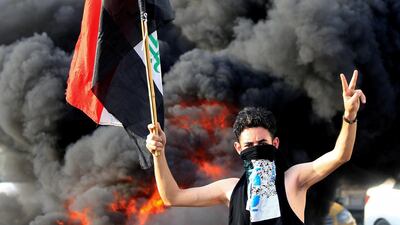
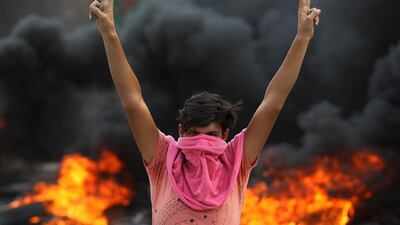
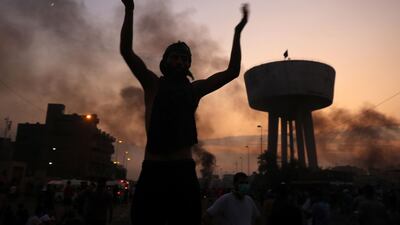
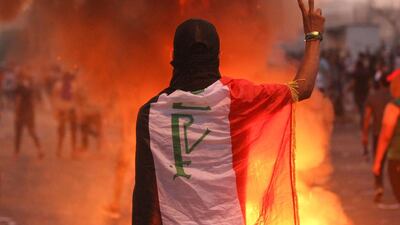
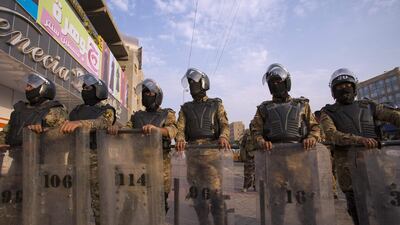
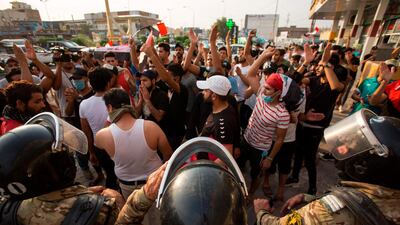
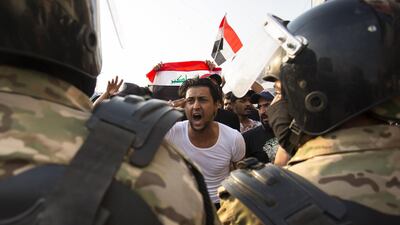
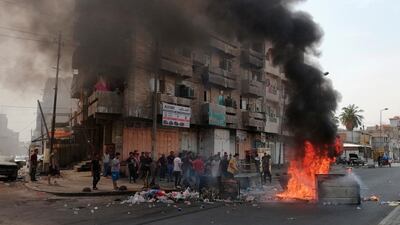
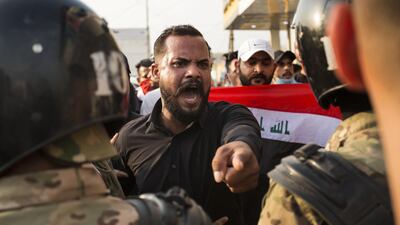
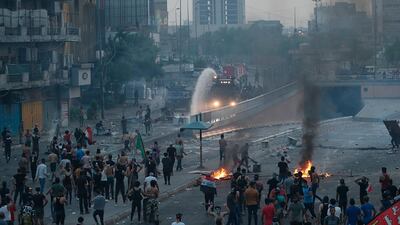
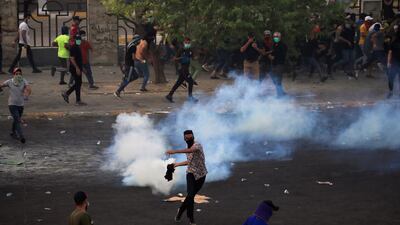
The mass demonstrations that started in Basra in 2018 and spread to Baghdad and southern Iraq in 2019 are a popular outcry for competent governance, much-needed services, reforming a stagnant economy, confronting corruption and controlling the militias that harass and extort ordinary citizens. A majority of the demonstrators are young and Shia and lack hope that their current fractious and corrupt political structure can provide them opportunities for a better future.
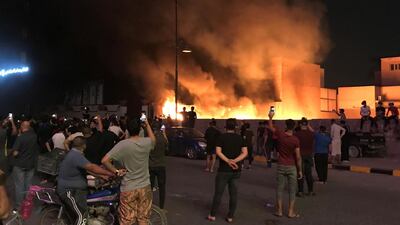
There was, at first, a strong anti-Iran tint to the protests. In Basra, young Shia protestors sacked and burned the offices of Shia militias and – to my dismay – the Iranian consulate. That sentiment permeated the protests elsewhere as well. However, the American military strikes in December and January caused many Iraqis to fear that Washington, like Tehran, only wants to control Iraq, not empower it.
So how can Prime Minister Al Kadhimi deal with the current crisis? While he hopes to address the demands of Iraqis for a better life, the threats against the U.S. embassy and the apparent American ultimatum may force him to take steps he had hoped to delay. He should focus on measures that can reduce the threat to American interests without igniting a sectarian civil war.
The government must once again restrict access (including by militias) to the most sensitive centres of government authority and the international presence – Baghdad's International (“Green”) Zone and Baghdad International Airport. While that may not prevent all attacks, it would make them more difficult.
Mr Al Kadhimi must also work with Iraqi politicians and religious figures to define the actions of the militias as criminal and as anti-Iraqi rather than anti-American. Iraqis know the criminality of the militias and their sectarian and pro-Iranian agendas, but need political empowerment to express or act on that understanding.
Ultimately, the government must remove militia rockets and heavy weapons from urban centres and areas near bases that house coalition troops. This will be fraught with peril, but the process will clearly demonstrate which units of the PMF owe their allegiance to Baghdad, and which follow Tehran.
Iraq is a proud country with a diverse population, deep history and great-but-poorly-utilised wealth. Iraqis do not want to be forced to choose between Tehran and Washington. Rather, most seek a truly independent, democratic and prosperous nation. Lest we forget, those also happen to be the original goals of the American intervention in 2003.
Douglas Silliman was US ambassador to Iraq from 2016-2019 and to Kuwait from 2014-2016. He is now president of the Arab Gulf States Institute in Washington

Greatest of All Time
Starring: Vijay, Sneha, Prashanth, Prabhu Deva, Mohan
What is the FNC?
The Federal National Council is one of five federal authorities established by the UAE constitution. It held its first session on December 2, 1972, a year to the day after Federation.
It has 40 members, eight of whom are women. The members represent the UAE population through each of the emirates. Abu Dhabi and Dubai have eight members each, Sharjah and Ras al Khaimah six, and Ajman, Fujairah and Umm Al Quwain have four.
They bring Emirati issues to the council for debate and put those concerns to ministers summoned for questioning.
The FNC’s main functions include passing, amending or rejecting federal draft laws, discussing international treaties and agreements, and offering recommendations on general subjects raised during sessions.
Federal draft laws must first pass through the FNC for recommendations when members can amend the laws to suit the needs of citizens. The draft laws are then forwarded to the Cabinet for consideration and approval.
Since 2006, half of the members have been elected by UAE citizens to serve four-year terms and the other half are appointed by the Ruler’s Courts of the seven emirates.
In the 2015 elections, 78 of the 252 candidates were women. Women also represented 48 per cent of all voters and 67 per cent of the voters were under the age of 40.
How the bonus system works
The two riders are among several riders in the UAE to receive the top payment of £10,000 under the Thank You Fund of £16 million (Dh80m), which was announced in conjunction with Deliveroo's £8 billion (Dh40bn) stock market listing earlier this year.
The £10,000 (Dh50,000) payment is made to those riders who have completed the highest number of orders in each market.
There are also riders who will receive payments of £1,000 (Dh5,000) and £500 (Dh2,500).
All riders who have worked with Deliveroo for at least one year and completed 2,000 orders will receive £200 (Dh1,000), the company said when it announced the scheme.
Who has lived at The Bishops Avenue?
- George Sainsbury of the supermarket dynasty, sugar magnate William Park Lyle and actress Dame Gracie Fields were residents in the 1930s when the street was only known as ‘Millionaires’ Row’.
- Then came the international super rich, including the last king of Greece, Constantine II, the Sultan of Brunei and Indian steel magnate Lakshmi Mittal who was at one point ranked the third richest person in the world.
- Turkish tycoon Halis Torprak sold his mansion for £50m in 2008 after spending just two days there. The House of Saud sold 10 properties on the road in 2013 for almost £80m.
- Other residents have included Iraqi businessman Nemir Kirdar, singer Ariana Grande, holiday camp impresario Sir Billy Butlin, businessman Asil Nadir, Paul McCartney’s former wife Heather Mills.
Hunting park to luxury living
- Land was originally the Bishop of London's hunting park, hence the name
- The road was laid out in the mid 19th Century, meandering through woodland and farmland
- Its earliest houses at the turn of the 20th Century were substantial detached properties with extensive grounds
Shubh Mangal Saavdhan
Directed by: RS Prasanna
Starring: Ayushmann Khurrana, Bhumi Pednekar
Polarised public
31% in UK say BBC is biased to left-wing views
19% in UK say BBC is biased to right-wing views
19% in UK say BBC is not biased at all
Source: YouGov
Specs
Engine: 51.5kW electric motor
Range: 400km
Power: 134bhp
Torque: 175Nm
Price: From Dh98,800
Available: Now
Auron Mein Kahan Dum Tha
Starring: Ajay Devgn, Tabu, Shantanu Maheshwari, Jimmy Shergill, Saiee Manjrekar
Director: Neeraj Pandey
Rating: 2.5/5
Managing the separation process
- Choose your nursery carefully in the first place
- Relax – and hopefully your child will follow suit
- Inform the staff in advance of your child’s likes and dislikes.
- If you need some extra time to talk to the teachers, make an appointment a few days in advance, rather than attempting to chat on your child’s first day
- The longer you stay, the more upset your child will become. As difficult as it is, walk away. Say a proper goodbye and reassure your child that you will be back
- Be patient. Your child might love it one day and hate it the next
- Stick at it. Don’t give up after the first day or week. It takes time for children to settle into a new routine.And, finally, don’t feel guilty.
Groom and Two Brides
Director: Elie Semaan
Starring: Abdullah Boushehri, Laila Abdallah, Lulwa Almulla
Rating: 3/5
Dubai Bling season three
Cast: Loujain Adada, Zeina Khoury, Farhana Bodi, Ebraheem Al Samadi, Mona Kattan, and couples Safa & Fahad Siddiqui and DJ Bliss & Danya Mohammed
Rating: 1/5
Other workplace saving schemes
- The UAE government announced a retirement savings plan for private and free zone sector employees in 2023.
- Dubai’s savings retirement scheme for foreign employees working in the emirate’s government and public sector came into effect in 2022.
- National Bonds unveiled a Golden Pension Scheme in 2022 to help private-sector foreign employees with their financial planning.
- In April 2021, Hayah Insurance unveiled a workplace savings plan to help UAE employees save for their retirement.
- Lunate, an Abu Dhabi-based investment manager, has launched a fund that will allow UAE private companies to offer employees investment returns on end-of-service benefits.
Ten tax points to be aware of in 2026
1. Domestic VAT refund amendments: request your refund within five years
If a business does not apply for the refund on time, they lose their credit.
2. E-invoicing in the UAE
Businesses should continue preparing for the implementation of e-invoicing in the UAE, with 2026 a preparation and transition period ahead of phased mandatory adoption.
3. More tax audits
Tax authorities are increasingly using data already available across multiple filings to identify audit risks.
4. More beneficial VAT and excise tax penalty regime
Tax disputes are expected to become more frequent and more structured, with clearer administrative objection and appeal processes. The UAE has adopted a new penalty regime for VAT and excise disputes, which now mirrors the penalty regime for corporate tax.
5. Greater emphasis on statutory audit
There is a greater need for the accuracy of financial statements. The International Financial Reporting Standards standards need to be strictly adhered to and, as a result, the quality of the audits will need to increase.
6. Further transfer pricing enforcement
Transfer pricing enforcement, which refers to the practice of establishing prices for internal transactions between related entities, is expected to broaden in scope. The UAE will shortly open the possibility to negotiate advance pricing agreements, or essentially rulings for transfer pricing purposes.
7. Limited time periods for audits
Recent amendments also introduce a default five-year limitation period for tax audits and assessments, subject to specific statutory exceptions. While the standard audit and assessment period is five years, this may be extended to up to 15 years in cases involving fraud or tax evasion.
8. Pillar 2 implementation
Many multinational groups will begin to feel the practical effect of the Domestic Minimum Top-Up Tax (DMTT), the UAE's implementation of the OECD’s global minimum tax under Pillar 2. While the rules apply for financial years starting on or after January 1, 2025, it is 2026 that marks the transition to an operational phase.
9. Reduced compliance obligations for imported goods and services
Businesses that apply the reverse-charge mechanism for VAT purposes in the UAE may benefit from reduced compliance obligations.
10. Substance and CbC reporting focus
Tax authorities are expected to continue strengthening the enforcement of economic substance and Country-by-Country (CbC) reporting frameworks. In the UAE, these regimes are increasingly being used as risk-assessment tools, providing tax authorities with a comprehensive view of multinational groups’ global footprints and enabling them to assess whether profits are aligned with real economic activity.
Contributed by Thomas Vanhee and Hend Rashwan, Aurifer
UAE squad
Rohan Mustafa (captain), Ashfaq Ahmed, Ghulam Shabber, Rameez Shahzad, Mohammed Boota, Mohammed Usman, Adnan Mufti, Shaiman Anwar, Ahmed Raza, Imran Haider, Qadeer Ahmed, Mohammed Naveed, Amir Hayat, Zahoor Khan
Tamkeen's offering
- Option 1: 70% in year 1, 50% in year 2, 30% in year 3
- Option 2: 50% across three years
- Option 3: 30% across five years
The specs
Engine 60kwh FWD
Battery Rimac 120kwh Lithium Nickel Manganese Cobalt Oxide (LiNiMnCoO2) chemistry
Power 204hp Torque 360Nm
Price, base / as tested Dh174,500
Roll%20of%20Honour%2C%20men%E2%80%99s%20domestic%20rugby%20season
%3Cp%3E%3Cstrong%3EWest%20Asia%20Premiership%3C%2Fstrong%3E%0D%3Cbr%3EChampions%3A%20Dubai%20Tigers%0D%3Cbr%3ERunners%20up%3A%20Bahrain%0D%3C%2Fp%3E%0A%3Cp%3E%3Cstrong%3EUAE%20Premiership%3C%2Fstrong%3E%0D%3Cbr%3EChampions%3A%20Jebel%20Ali%20Dragons%0D%3Cbr%3ERunners%20up%3A%20Dubai%20Hurricanes%0D%3C%2Fp%3E%0A%3Cp%3E%3Cstrong%3EUAE%20Division%201%3C%2Fstrong%3E%0D%3Cbr%3EChampions%3A%20Dubai%20Sharks%0D%3Cbr%3ERunners%20up%3A%20Abu%20Dhabi%20Harlequins%20II%0D%3C%2Fp%3E%0A%3Cp%3E%3Cstrong%3EUAE%20Division%202%3C%2Fstrong%3E%0D%3Cbr%3EChampions%3A%20Dubai%20Tigers%20III%0D%3Cbr%3ERunners%20up%3A%20Dubai%20Sharks%20II%0D%3C%2Fp%3E%0A%3Cp%3E%3Cstrong%3EDubai%20Sevens%3C%2Fstrong%3E%0D%3Cbr%3EChampions%3A%20Dubai%20Tigers%0D%3Cbr%3ERunners%20up%3A%20Dubai%20Hurricanes%3C%2Fp%3E%0A
UAE currency: the story behind the money in your pockets
BAD%20BOYS%3A%20RIDE%20OR%20DIE
%3Cp%3E%3Cstrong%3EDirector%3A%3C%2Fstrong%3E%20Adil%20El%20Arbi%20and%20Bilall%20Fallah%3C%2Fp%3E%0A%3Cp%3E%3Cstrong%3EStarring%3A%20%3C%2Fstrong%3EWill%20Smith%2C%20Martin%20Lawrence%2C%20Joe%20Pantoliano%3C%2Fp%3E%0A%3Cp%3E%3Cstrong%3ERating%3A%3C%2Fstrong%3E%203.5%2F5%3C%2Fp%3E%0A