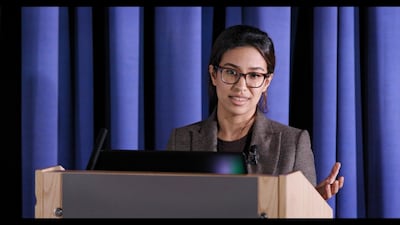
A still from the documentary series, 'History of the Emirates'. Image Nation

Emirati students abroad are informal ambassadors for the UAE


  • English
  • Arabic

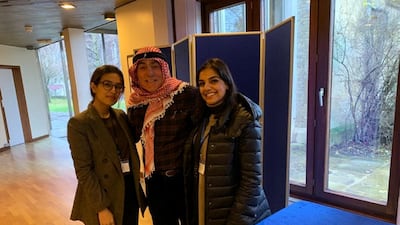
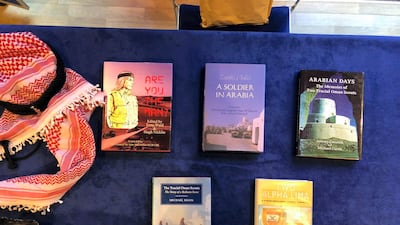
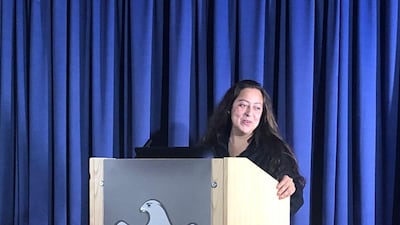
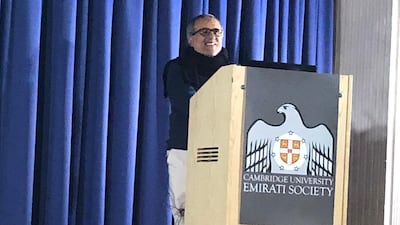
Last week Emirati students at one of the top universities in Britain decided to make an early start to their celebration of the UAE’s 48th National Day by launching the Cambridge University Emirati Society. I was pleased and honoured to be invited, along with a couple of colleagues, to talk about aspects of the history of the UAE.

Besides Emiratis, the audience included non-Emiratis, both students and others, some of whom already had some knowledge about the country while others knew little or nothing but were curious to learn. That made it a little difficult to decide on the degree of detail required, with the limited time available, but my colleagues and I seemed to get a reasonable response. The underlying theme of my talk was an attempt to dispel the false image that the UAE has little in the way of history. On the contrary, I noted, it has a heritage of nearly 9,000 years of engagement in international trade.

A couple of days earlier, following the launch here in the UAE of the new documentary series on the history of the Emirates, its producers, Image Nation Abu Dhabi and Atlantic Productions, in association with the UAE embassy, held a separate event in London to discuss this important initiative.

History of the Emirates: a five-part series that tells the story of the UAE across thousands of years. Image Nation Abu Dhabi / Atlantic Productions

I am naturally delighted that a serious effort to promote knowledge of this country’s fascinating past, both at home and overseas, now seems to be well under way. It is about time.

While few people overseas are likely to be interested in much of the detail of our history, there are plenty of aspects to it which should surprise almost everyone. I describe these as "wow factor" details – the kind of information that will make people sit up and think: “I didn’t know that.”

We have plenty of "wow factor" details in our past. About 125,000 years ago, early humans travelled out of Africa through what is now the UAE on the way to populate Asia. The oldest evidence of pearls about 7,800 years ago comes from Abu Dhabi’s western island of Marawah, with the pearl that provides the proof now on display at Louvre Abu Dhabi. The earliest evidence of man consuming dates more than 7,000 years ago comes from another island, Dalma. And some 4,500 years ago, we were trading with the Indian subcontinent. Two thousand years ago, Gulf seamen were sailing from here to China. Two centuries ago, the Al Qawasim of today’s Sharjah and Ras Al Khaimah had a navy of more than 60 large ships, contesting control of the seas between here and India.

The main point of my column this week though is to recognise the efforts being made by Emiratis overseas to promote knowledge of the country and facilitate a better understanding of it. For our diplomats, that is their job. It is part of the job too for those promoting trade or tourism or selling airline seats. For others, though, such as the undergraduate and postgraduate students and researchers I met in Cambridge last week, it is all voluntary work. They undertake it in their spare time, creating and running organisations like the Cambridge University Emirati Society, often chipping in their own money to support events. Their enthusiasm is laudable. Their commitment is impressive. Their pride in their country and in its achievements is both self-evident and inspiring.

As more Emiratis travel overseas to study or work, there is scope for the creation of many more organisations like the Cambridge society. Other such bodies do already exist – in the US, for example – and I focus on the Cambridge University Emirati Society only because it is one of which I have personal experience.

Such groups have the potential to be an invaluable adjunct to the useful work being done by the foreign ministry’s office of public and cultural diplomacy. Indeed, in some ways precisely because they are voluntary bodies, they have the capacity to be effective in different ways, reaching out to different people, building informal networks that are – or should be – as much a part of the UAE’s outreach programme as more formal events and structures.

I was somewhat disappointed therefore and a bit surprised to discover that my hosts in Cambridge had been prepared to fund the event out of their own pockets, from room hire to hotels and flights. Fortunately, some help came from the foreign ministry at the last minute.

There is scope surely for some of our larger semi-public and private corporations to support such initiatives. I appreciate that the need for such bodies to budget well in advance does not always enable them to respond swiftly to an ad hoc initiative, as will often be the case with events organised by voluntary bodies. Relatively small amounts of money, however, or a few complimentary air tickets for speakers could go a long way.

There are now Emirati students at dozens of universities around the world. They are, in a real sense, informal ambassadors for the Emirates. Let us give them not just recognition but help and support for the role they play.

Peter Hellyer is a consultant specialising in the UAE's history and culture

White hydrogen: Naturally occurring hydrogenChromite: Hard, metallic mineral containing iron oxide and chromium oxideUltramafic rocks: Dark-coloured rocks rich in magnesium or iron with very low silica contentOphiolite: A section of the earth’s crust, which is oceanic in nature that has since been uplifted and exposed on landOlivine: A commonly occurring magnesium iron silicate mineral that derives its name for its olive-green yellow-green colour

box

COMPANY PROFILE

Company name: Letstango.com

Started: June 2013

Founder: Alex Tchablakian

Based: Dubai

Industry: e-commerce

Initial investment: Dh10 million

Investors: Self-funded

Total customers: 300,000 unique customers every month

Islamic%20Architecture%3A%20A%20World%20History
%3Cp%3E%3Cstrong%3EAuthor%3A%3C%2Fstrong%3E%20Eric%20Broug%3Cbr%3E%3Cstrong%3EPublisher%3A%3C%2Fstrong%3E%20Thames%20%26amp%3B%20Hudson%3Cbr%3E%3Cstrong%3EPages%3A%3C%2Fstrong%3E%20336%3Cbr%3E%3Cstrong%3EAvailable%3A%3C%2Fstrong%3E%20September%3C%2Fp%3E%0A
Our legal columnist

Name: Yousef Al Bahar

Advocate at Al Bahar & Associate Advocates and Legal Consultants, established in 1994

Education: Mr Al Bahar was born in 1979 and graduated in 2008 from the Judicial Institute. He took after his father, who was one of the first Emirati lawyers

ORDER OF PLAY ON SHOW COURTS

Centre Court - 4pm (UAE)
Gael Monfils (15) v Kyle Edmund
Karolina Pliskova (3) v Magdalena Rybarikova
Dusan Lajovic v Roger Federer (3)

Court 1 - 4pm
Adam Pavlasek v Novak Djokovic (2)
Dominic Thiem (8) v Gilles Simon
Angelique Kerber (1) v Kirsten Flipkens

Court 2 - 2.30pm
Grigor Dimitrov (13) v Marcos Baghdatis
Agnieszka Radwanska (9) v Christina McHale
Milos Raonic (6) v Mikhail Youzhny
Tsvetana Pironkova v Caroline Wozniacki (5)

Youth YouTuber Programme

The programme will be presented over two weeks and will cover the following topics:

- Learning, scripting, storytelling and basic shots

- Master on-camera presence and advanced script writing

- Beating the algorithm and reaching your core audience

Teaching your child to save

Pre-school (three - five years)

You can’t yet talk about investing or borrowing, but introduce a “classic” money bank and start putting gifts and allowances away. When the child wants a specific toy, have them save for it and help them track their progress.

Early childhood (six - eight years)

Replace the money bank with three jars labelled ‘saving’, ‘spending’ and ‘sharing’. Have the child divide their allowance into the three jars each week and explain their choices in splitting their pocket money. A guide could be 25 per cent saving, 50 per cent spending, 25 per cent for charity and gift-giving.

Middle childhood (nine - 11 years)

Open a bank savings account and help your child establish a budget and set a savings goal. Introduce the notion of ‘paying yourself first’ by putting away savings as soon as your allowance is paid.

Young teens (12 - 14 years)

Change your child’s allowance from weekly to monthly and help them pinpoint long-range goals such as a trip, so they can start longer-term saving and find new ways to increase their saving.

Teenage (15 - 18 years)

Discuss mutual expectations about university costs and identify what they can help fund and set goals. Don’t pay for everything, so they can experience the pride of contributing.

Young adulthood (19 - 22 years)

Discuss post-graduation plans and future life goals, quantify expenses such as first apartment, work wardrobe, holidays and help them continue to save towards these goals.

* JP Morgan Private Bank 

World record transfers

1. Kylian Mbappe - to Real Madrid in 2017/18 - €180 million (Dh770.4m - if a deal goes through)
2. Paul Pogba - to Manchester United in 2016/17 - €105m
3. Gareth Bale - to Real Madrid in 2013/14 - €101m
4. Cristiano Ronaldo - to Real Madrid in 2009/10 - €94m
5. Gonzalo Higuain - to Juventus in 2016/17 - €90m
6. Neymar - to Barcelona in 2013/14 - €88.2m
7. Romelu Lukaku - to Manchester United in 2017/18 - €84.7m
8. Luis Suarez - to Barcelona in 2014/15 - €81.72m
9. Angel di Maria - to Manchester United in 2014/15 - €75m
10. James Rodriguez - to Real Madrid in 2014/15 - €75m

Zodi%20%26%20Tehu%3A%20Princes%20Of%20The%20Desert
%3Cp%3E%3Cstrong%3EDirector%3A%20%3C%2Fstrong%3EEric%20Barbier%26nbsp%3B%3C%2Fp%3E%0A%3Cp%3E%3Cstrong%3EStarring%3A%20%3C%2Fstrong%3EYoussef%20Hajdi%2C%20Nadia%20Benzakour%2C%20Yasser%20Drief%3C%2Fp%3E%0A%3Cp%3E%3Cstrong%3ERating%3A%3C%2Fstrong%3E%204%2F5%3C%2Fp%3E%0A
ALRAWABI%20SCHOOL%20FOR%20GIRLS
%3Cp%3ECreator%3A%20Tima%20Shomali%3C%2Fp%3E%0A%3Cp%3EStarring%3A%C2%A0Tara%20Abboud%2C%C2%A0Kira%20Yaghnam%2C%20Tara%20Atalla%3C%2Fp%3E%0A%3Cp%3ERating%3A%204%2F5%3C%2Fp%3E%0A
COMPANY%20PROFILE
%3Cp%3E%3Cstrong%3EDate%20started%3A%3C%2Fstrong%3E%202020%3Cbr%3E%3Cstrong%3EFounders%3A%3C%2Fstrong%3E%20Khaldoon%20Bushnaq%20and%20Tariq%20Seksek%3Cbr%3E%3Cstrong%3EBased%3A%3C%2Fstrong%3E%20Abu%20Dhabi%20Global%20Market%3Cbr%3E%3Cstrong%3ESector%3A%3C%2Fstrong%3E%20HealthTech%3Cbr%3E%3Cstrong%3ENumber%20of%20staff%3A%3C%2Fstrong%3E%20100%3Cbr%3E%3Cstrong%3EFunding%20to%20date%3A%3C%2Fstrong%3E%20%2415%20million%3C%2Fp%3E%0A
THE APPRENTICE

Director: Ali Abbasi

Starring: Sebastian Stan, Maria Bakalova, Jeremy Strong

Rating: 3/5

Tips to keep your car cool
  • Place a sun reflector in your windshield when not driving
  • Park in shaded or covered areas
  • Add tint to windows
  • Wrap your car to change the exterior colour
  • Pick light interiors - choose colours such as beige and cream for seats and dashboard furniture
  • Avoid leather interiors as these absorb more heat
The specs
Engine: 2.0-litre turbo 4-cyl

Transmission: eight-speed auto

Power: 190bhp

Torque: 300Nm

Price: Dh169,900

On sale: now